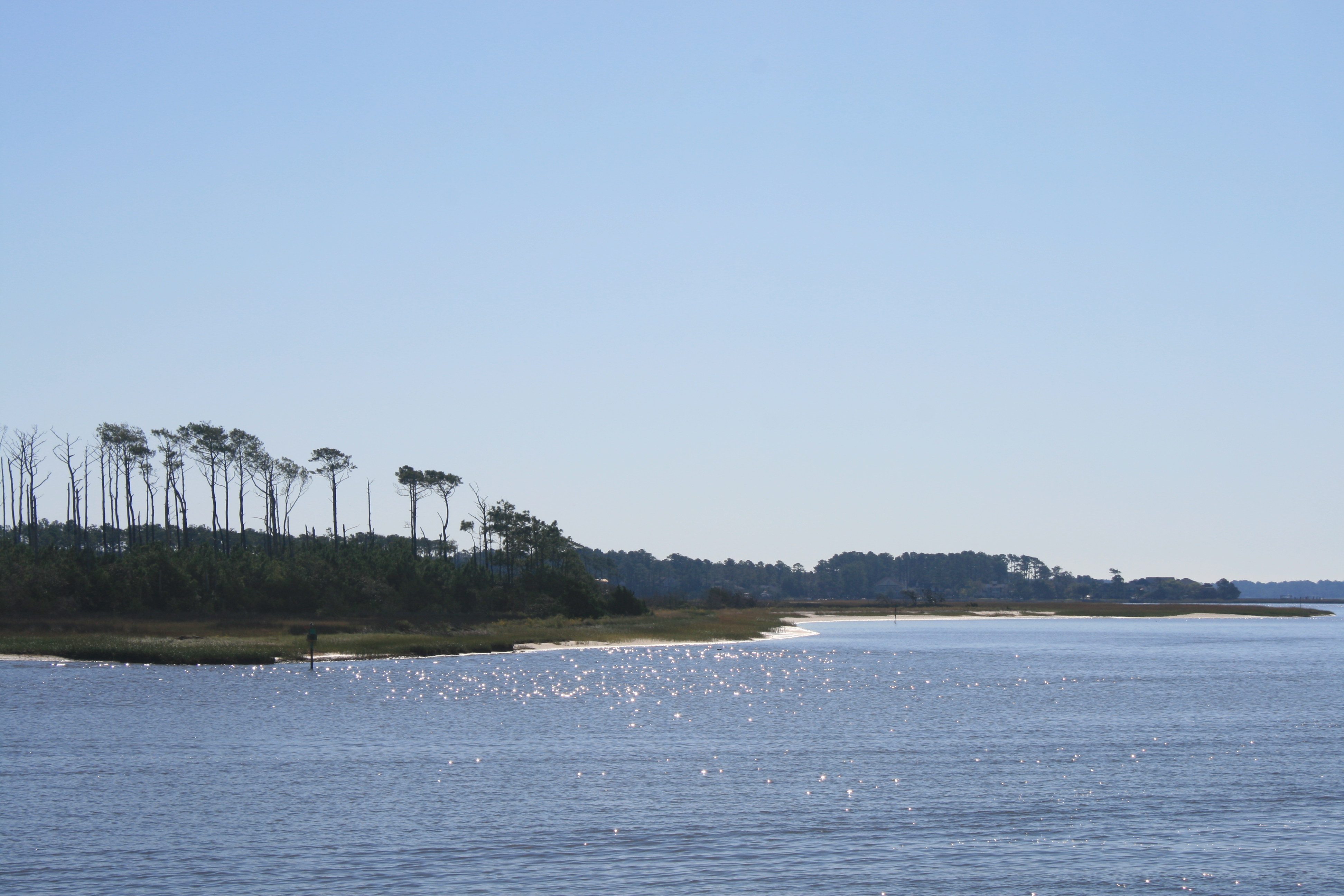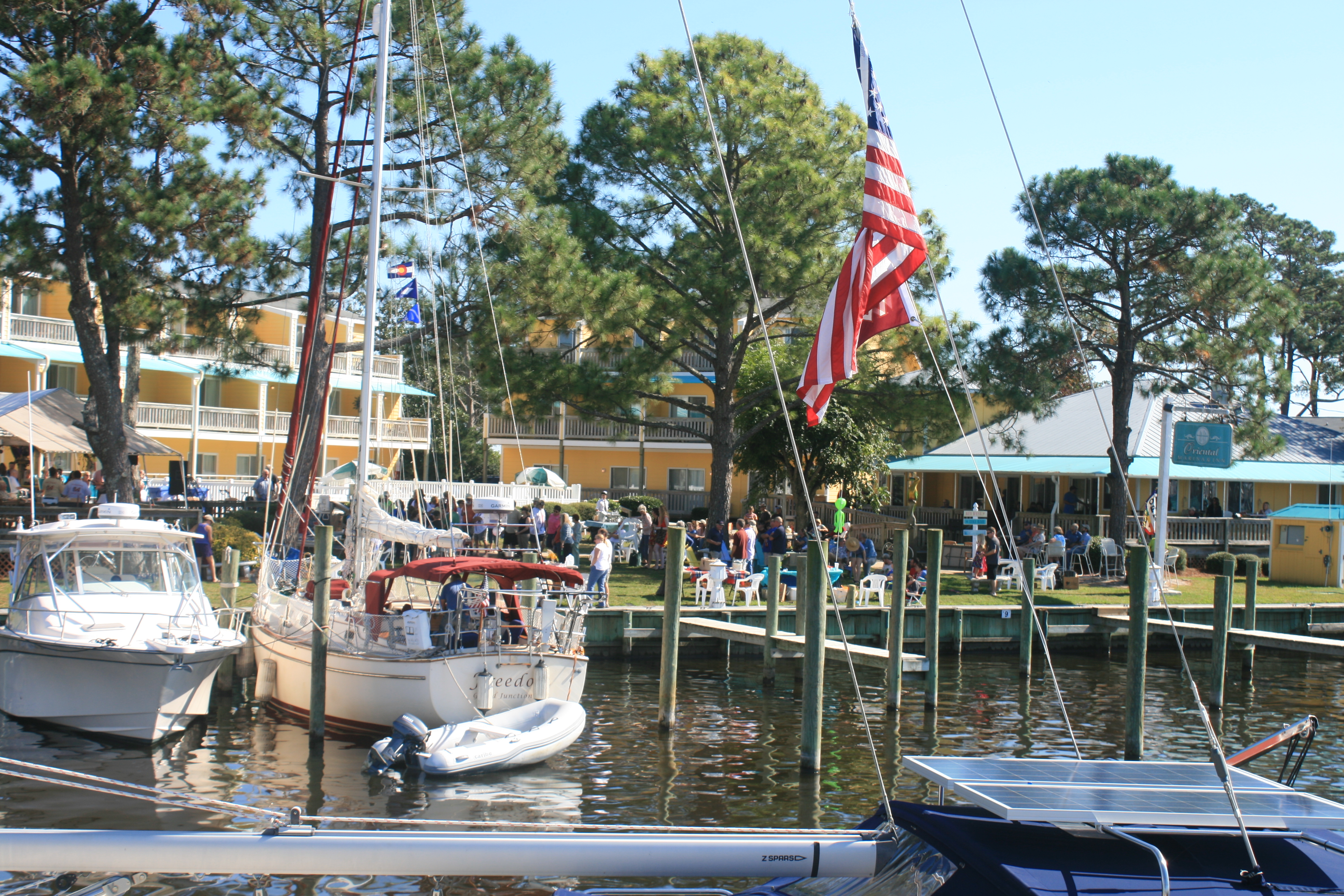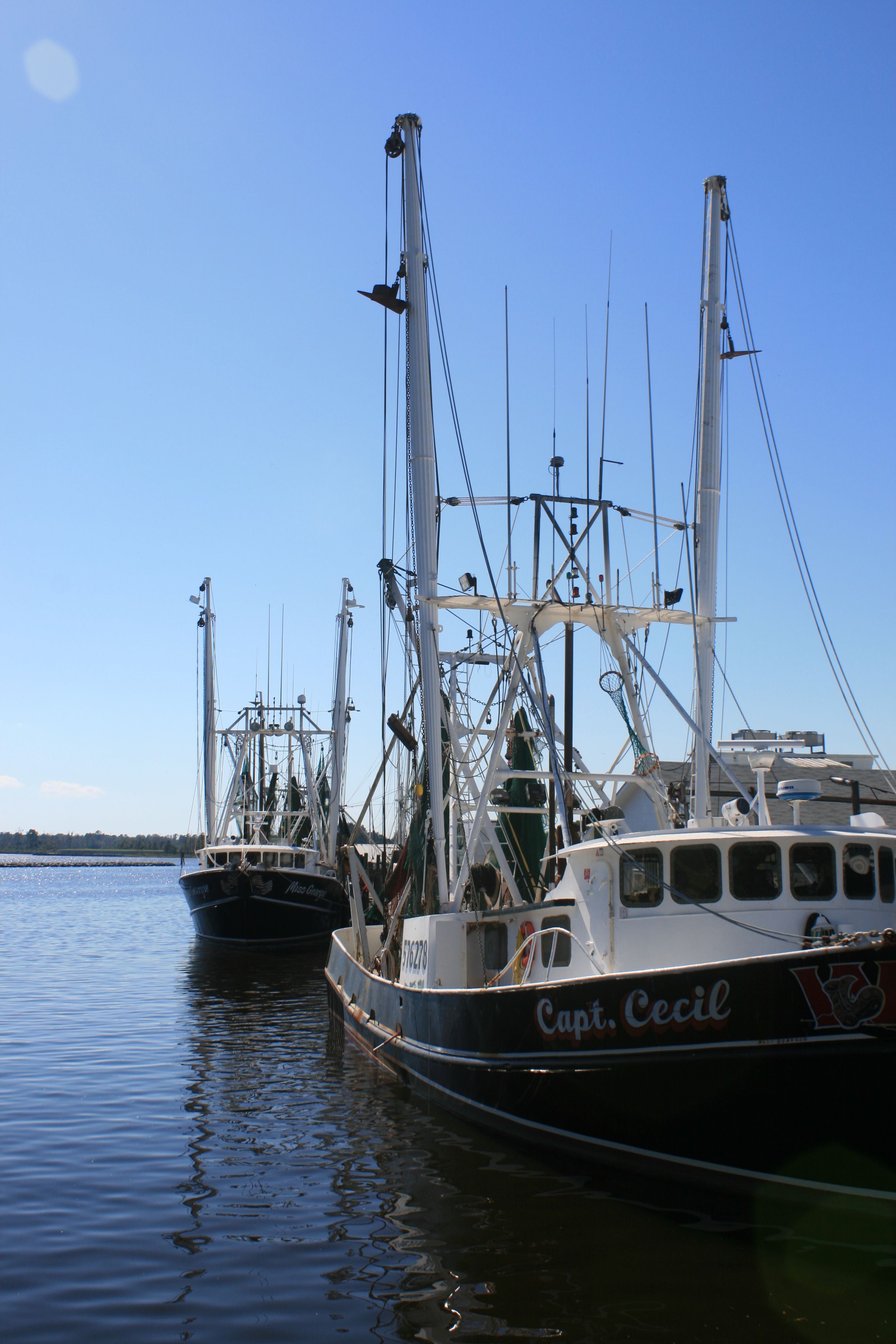
Things that go Bump……..Yorktown to Tangier Island

Our arrival at Gloucester Point, just across the river from Yorktown, was slightly delayed when, embarrassingly, we ran aground within sight of the York River Yacht Haven, having just advised them that we were about to moor up. Fortunately, it was only half an hour to low tide, so not long after lunch we were afloat again. Lisa, the dockmaster, assured us that ‘everyone’ runs aground not once, but several times, during the course of their boating adventures on the Chesapeake Bay, and how right she was.
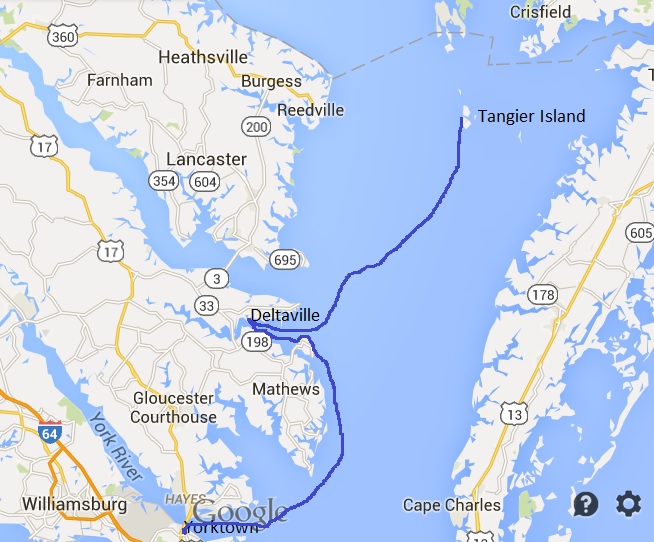
Yorktown to Tangier Island

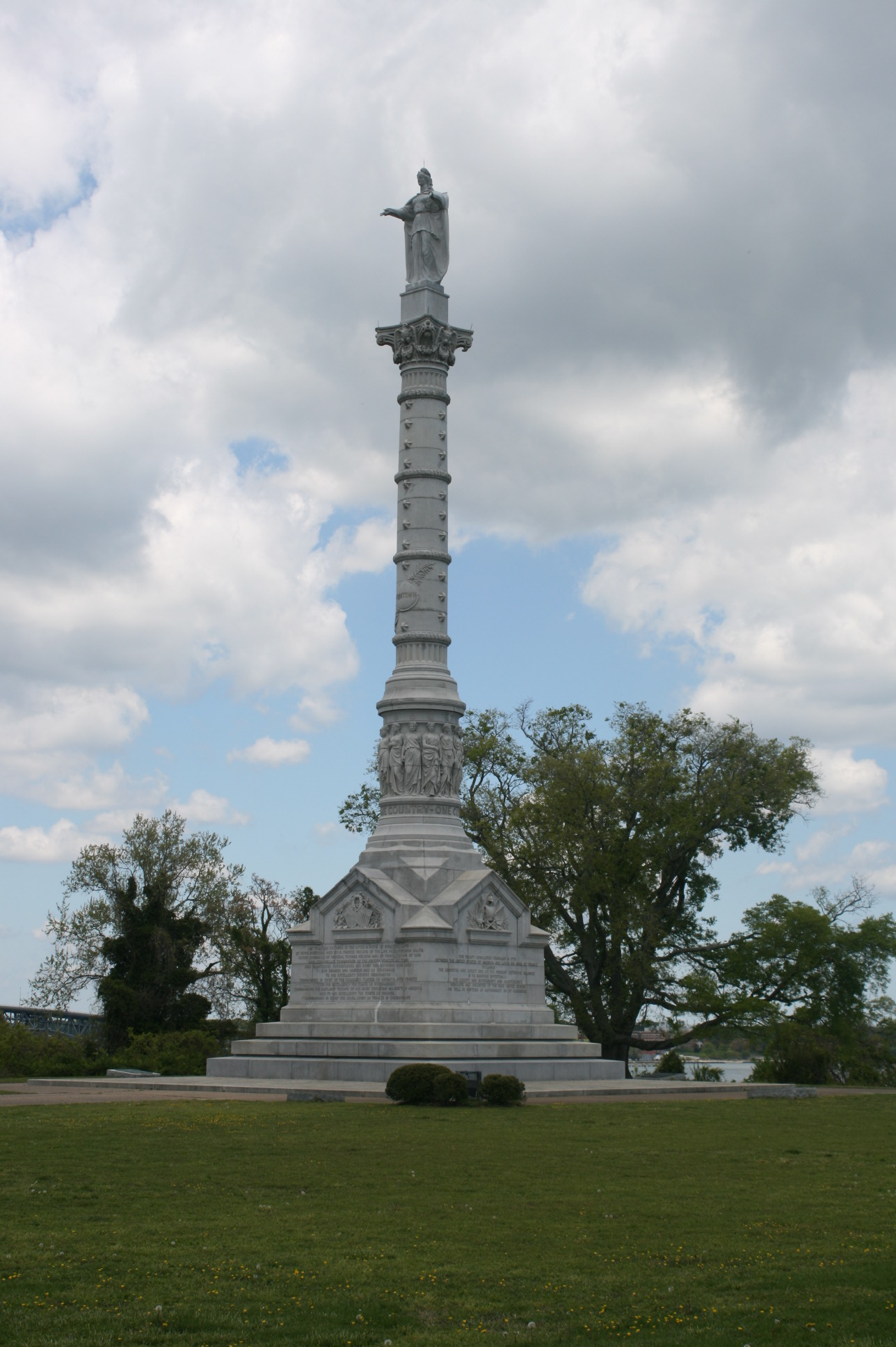
Yorktown was founded in 1691 as a port to enable the export of tobacco from Virginia, although the area was explored by Captain John Smith in his exploration of Virginia in 1608. It was also the site, in 1781, of the defeat of the British under Lord Cornwallis by the combined forces of George Washington and the French, led by the Comte de Rochambeau, the final siege and battle of the Revolutionary Wars.  As we approached the village from the York River, the Victory Monument and the schooner Alliance set the scene.
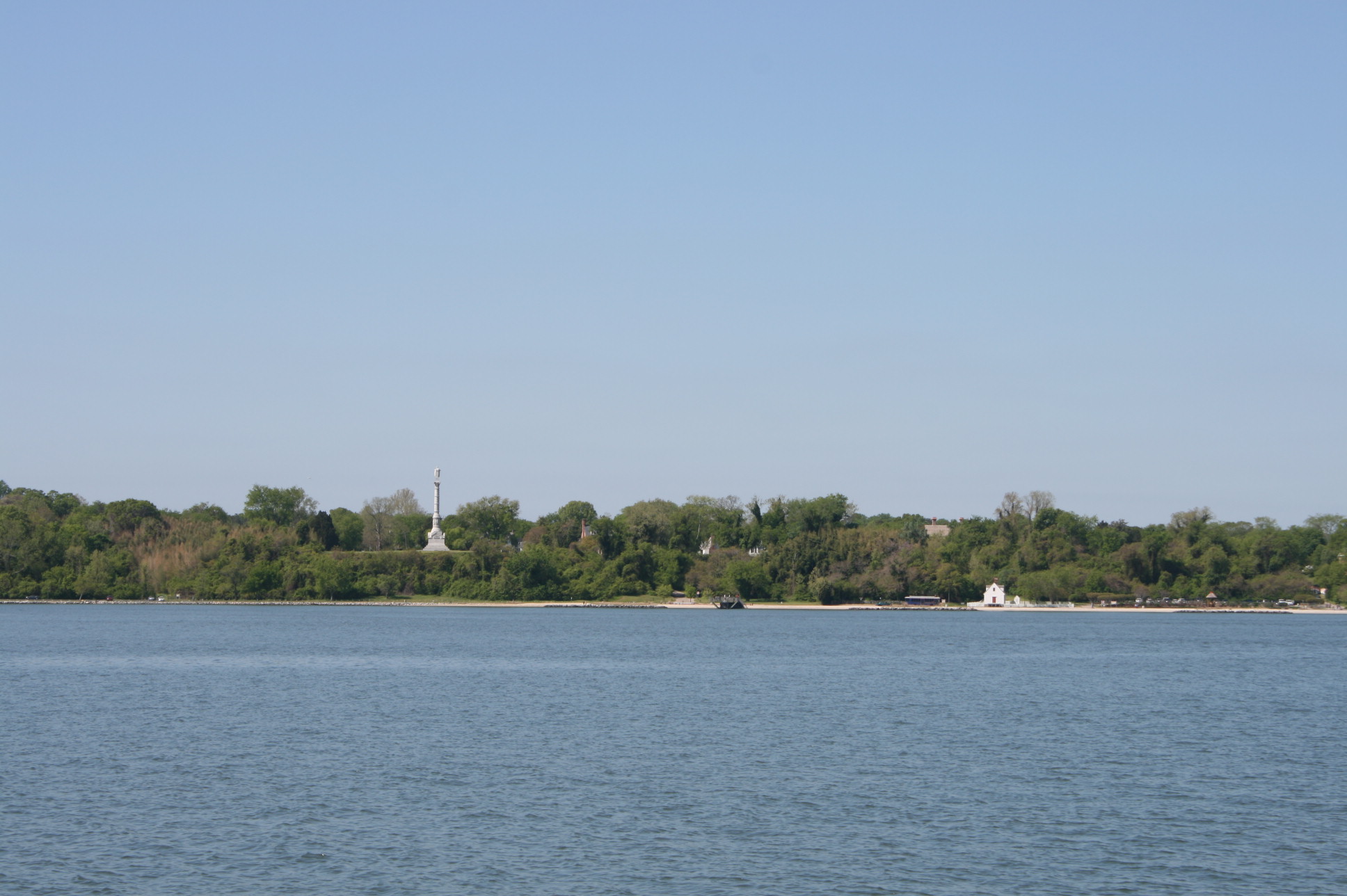
Approaching Yorktown
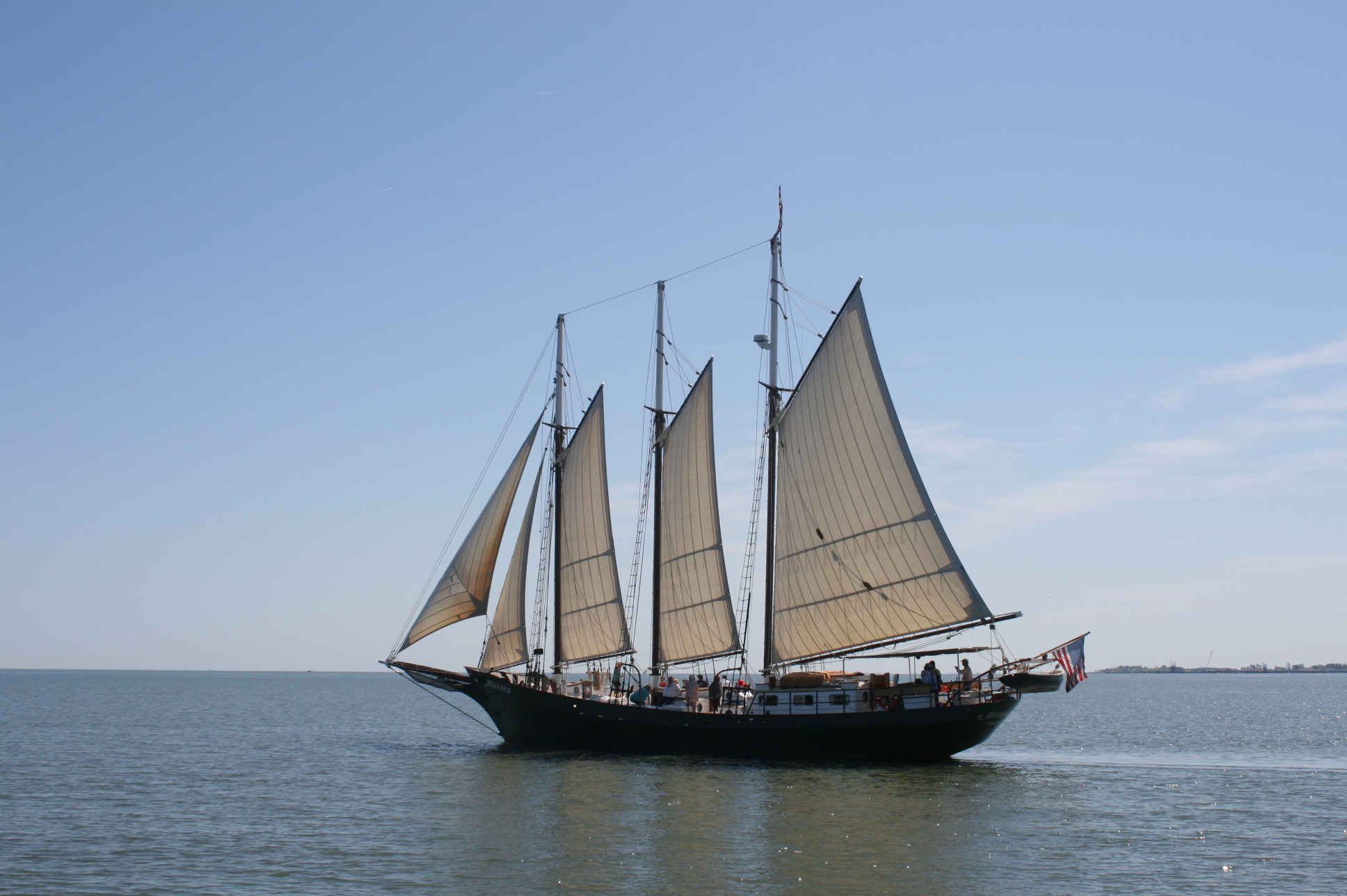
Approaching Yorktown

The sShooner Alliance

The Schooner Alliance

Disinclinitis quickly sets in when it rains continuously for two days, but the York River Yacht Haven had a courtesy car, so we were able to go grocery shopping in comfort, visit a hardware store (Ian is never short of an excuse) and drive over the Coleman Bridge to Yorktown itself, to visit the Watermen’s Museum. Although tobacco was Yorktown’s first industry, eventually the soil became depleted and fishing and crabbing took over as the main source of income. The term ‘watermen’ to describe the families whose generations made a living on the waters of the Chesapeake Bay is taken from the Watermen of the Thames barges.

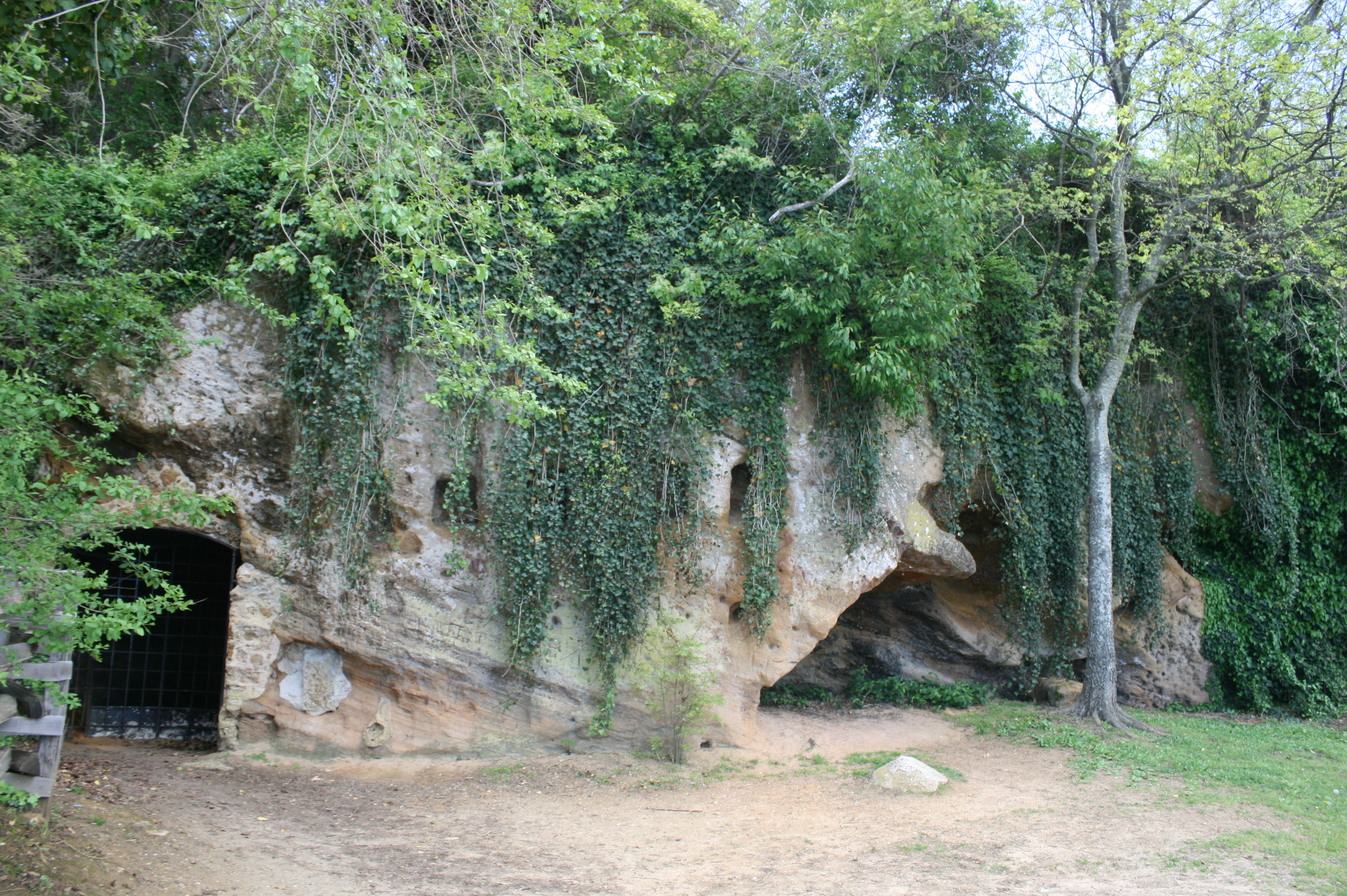
On Saturday the weather was bright and sunny, so we crossed the river to Yorktown itself and moored at the town dock, got the bikes out and rode along the waterfront past Cornwallis Cove, and the caves in the bluff where Lord Cornwallis hid out in the last days of the Siege of Yorktown, and up the hill to the Victory Monument.
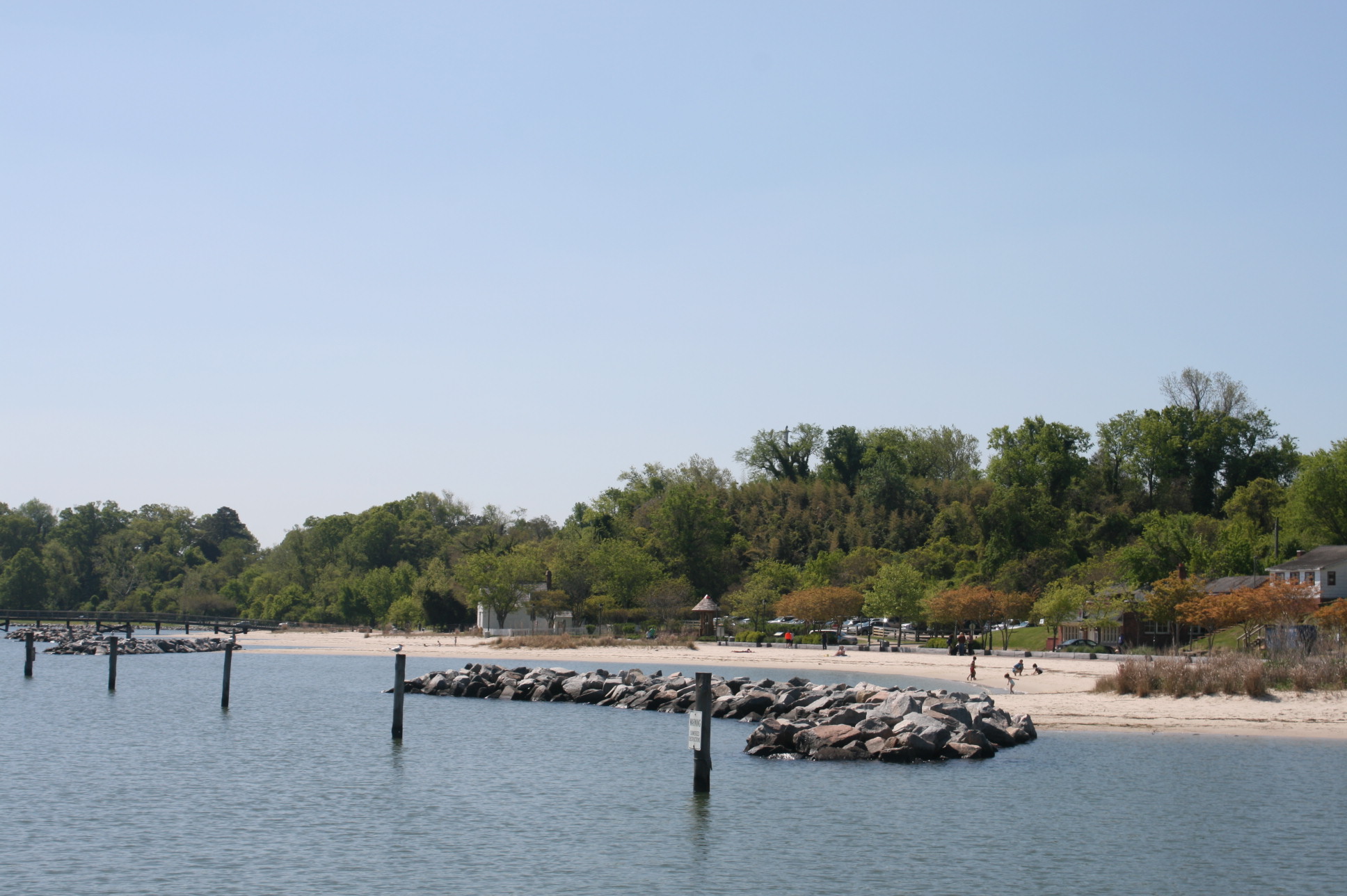
Cornwallis Cove, Yorktown
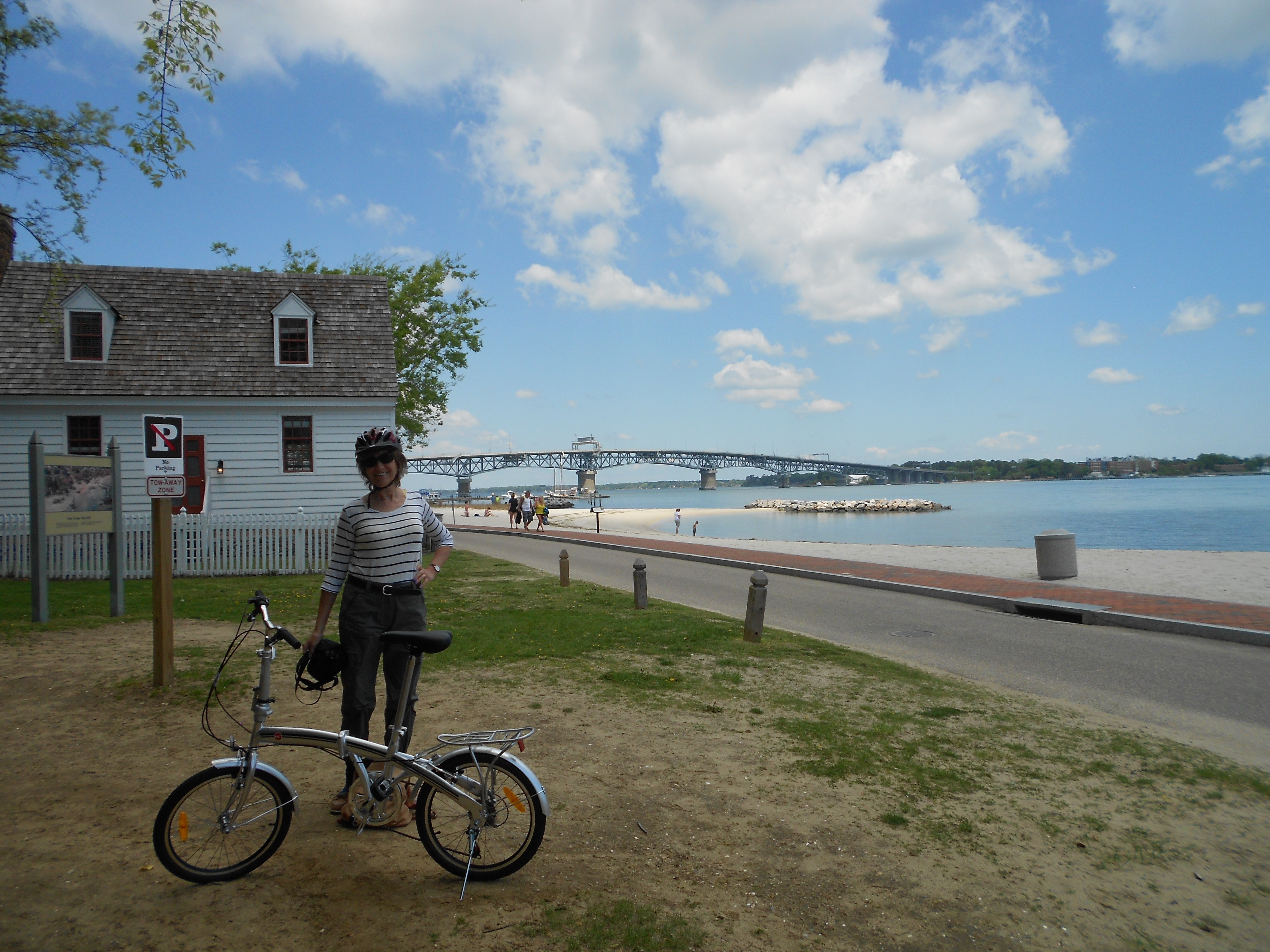
Cornwallis Cove, Yorktown

The Waterfront, Yorktown
The Waterfront, Yorktown

Caves under the bluff
Caves under the bluff

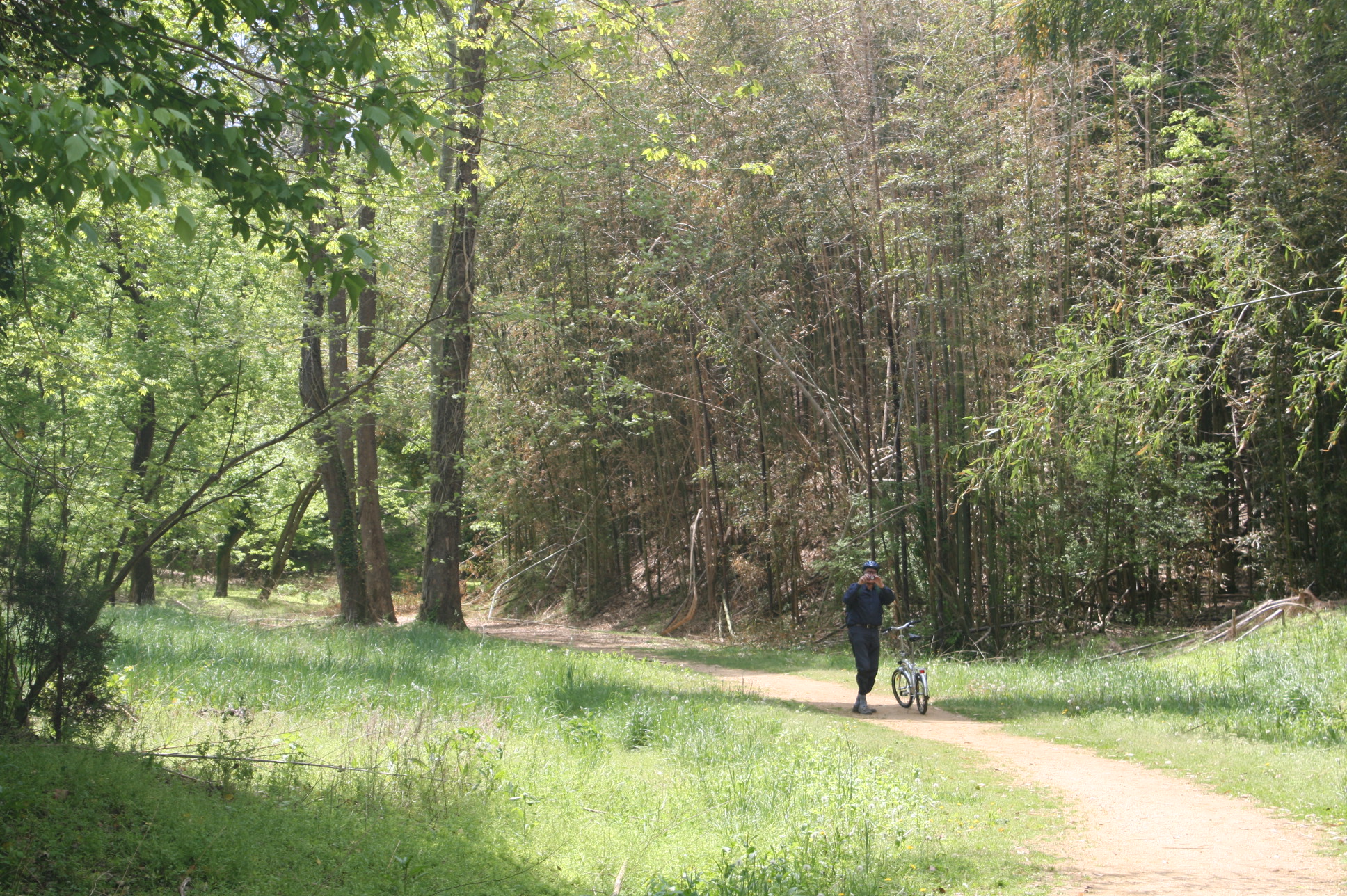
Tobacco Road - where the tobacco was transported down to the docks
Tobacco Road – where the tobacco was transported down to the docks

The Victory Monument

The Victory Monument

'One Country One Constitution'

‘One Country One Constitution’

View of the Bay from the Victory Monument

View of the Bay from the Victory Monument

Yorktown is unspoiled and has many old houses and a lovely village atmosphere.
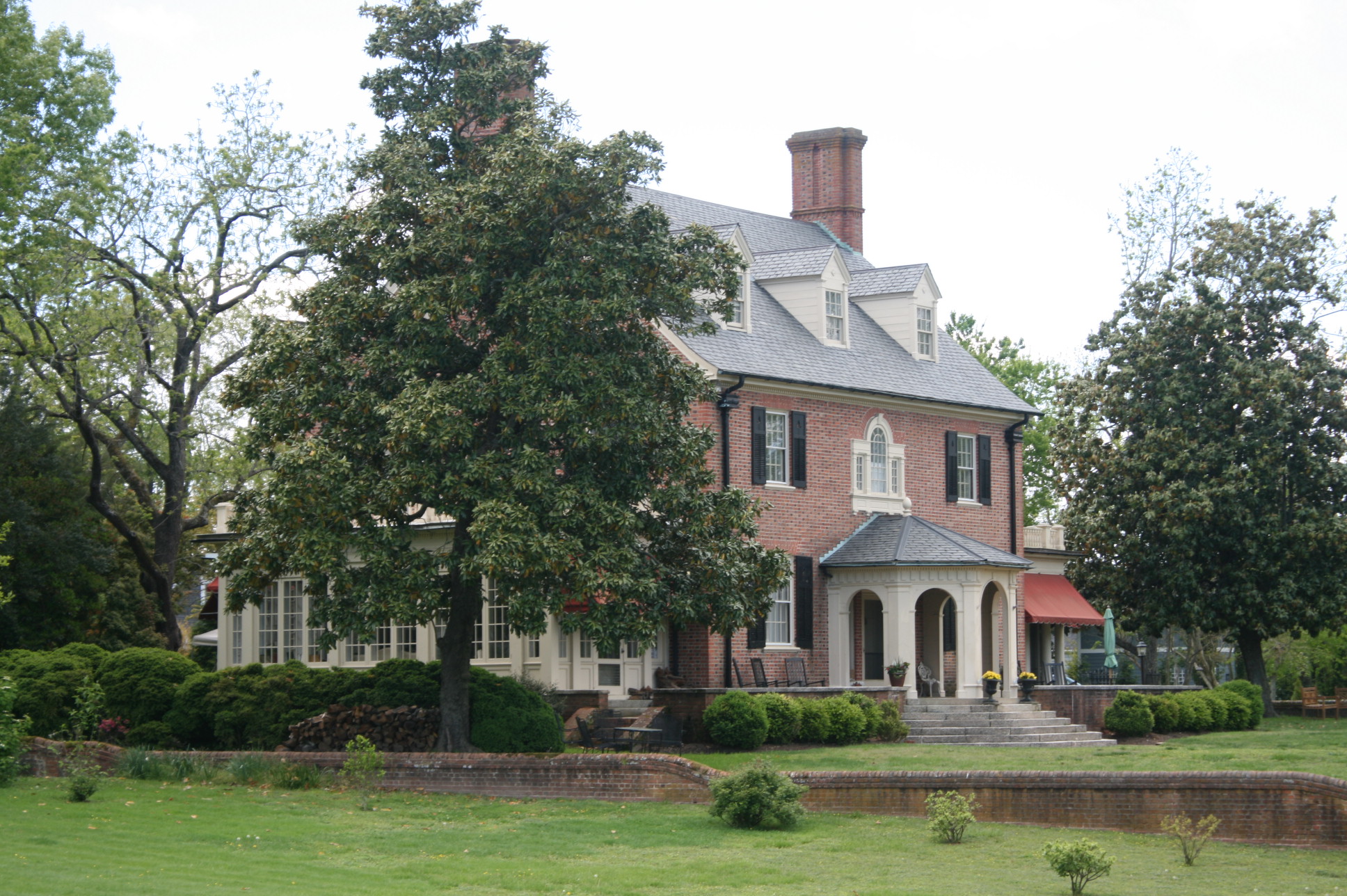
Hornsby House
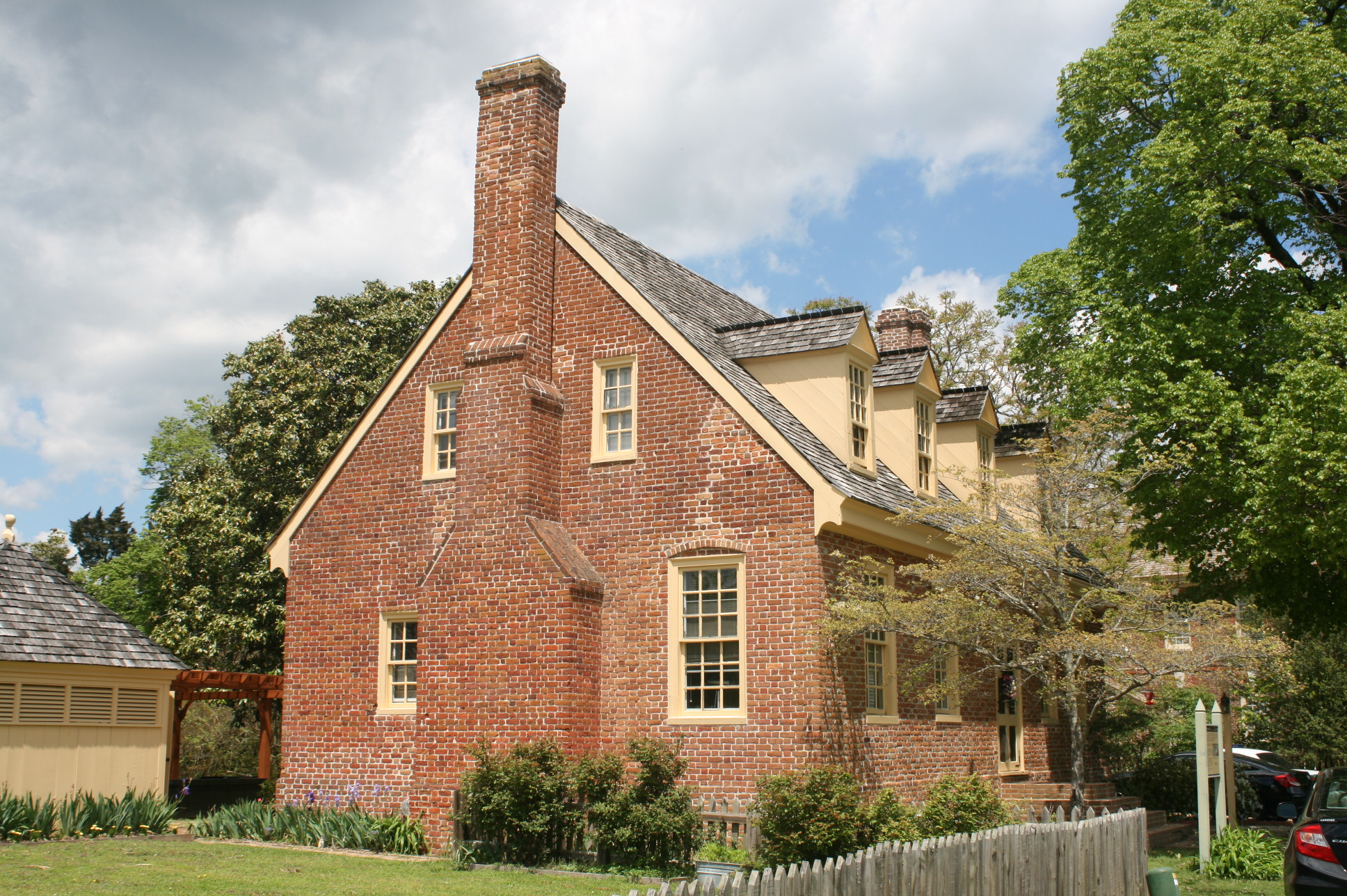
Hornsby House

Smith House

Smith House

In the afternoon, there was a BBQ and Blues Festival on the waterfront, and we took that in too. $30  a head admission seemed a bit steep, until we realised that the price included  a half-pint glass, with a 2 fl oz marker on the side. You could go to any of the many craft beer tents and get a free 2 fl oz sample of their beers.

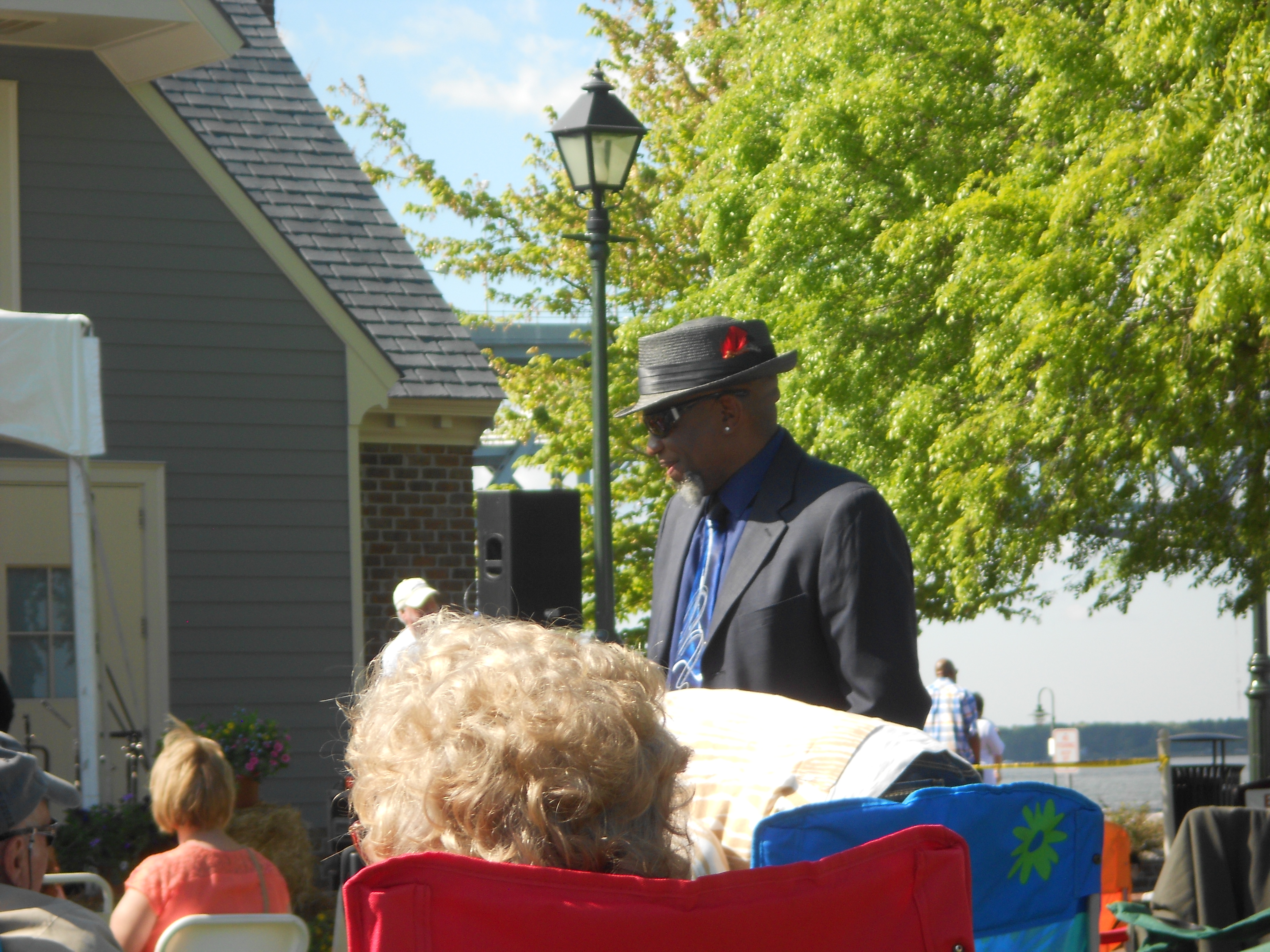
The music was good too, and we particularly liked Bobby ‘Blackhat’ Walters’ style.
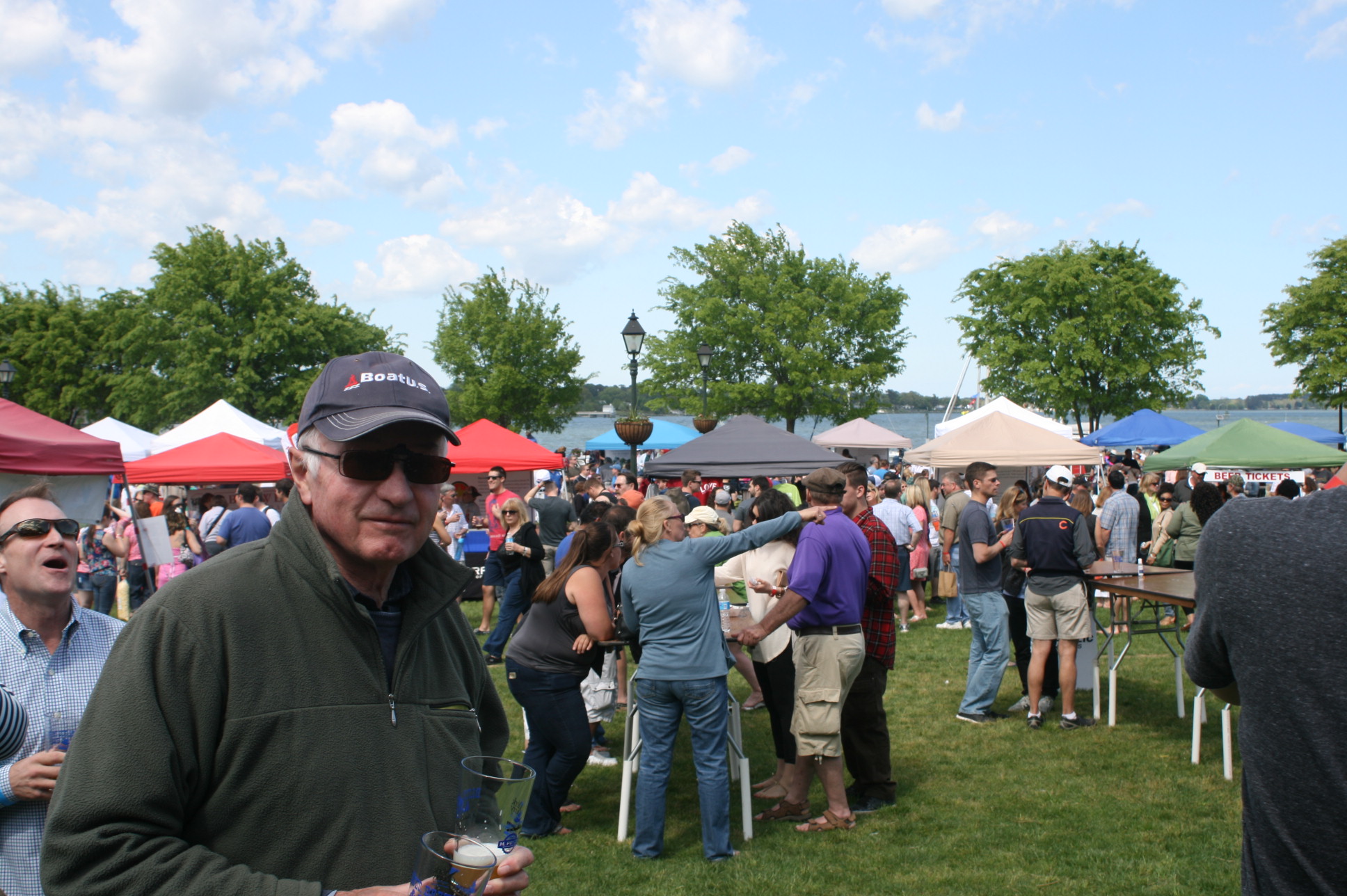
At the Blues Festival, Yorktown
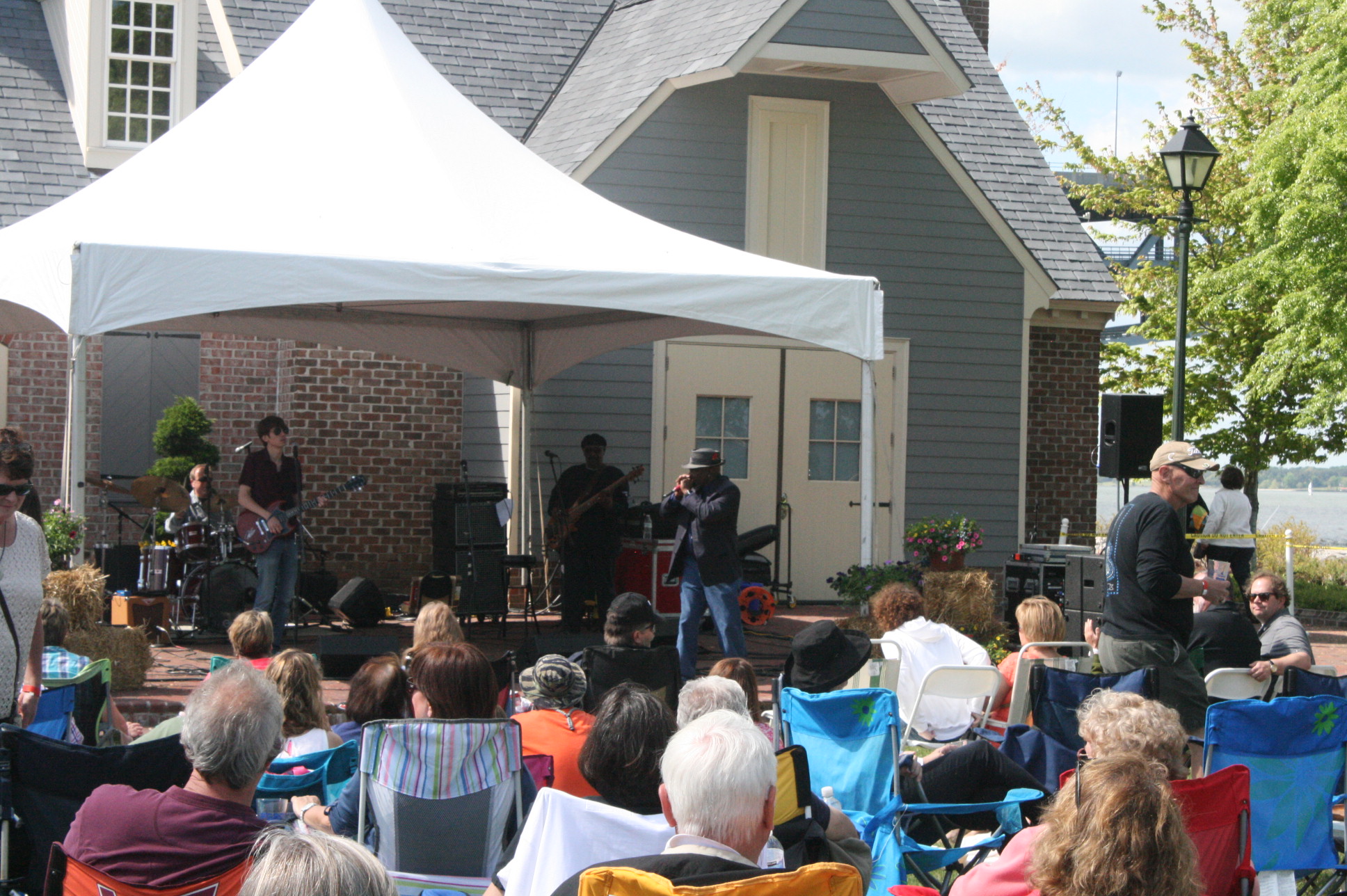
At the Blues Festival, Yorktown

Bobby 'Blackhat' Walters and the band

Bobby ‘Blackhat’ Walters and the band
DSCN0625

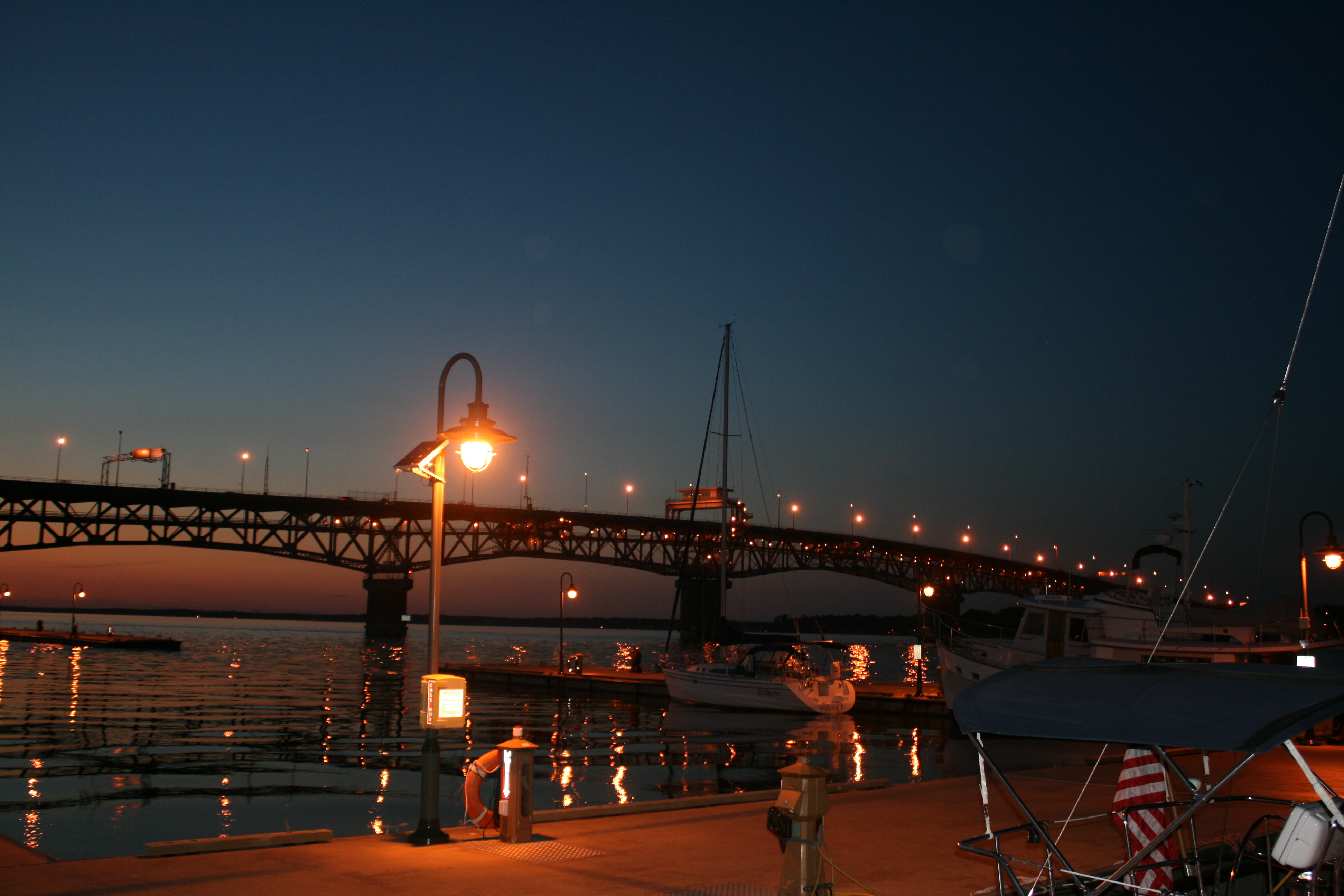
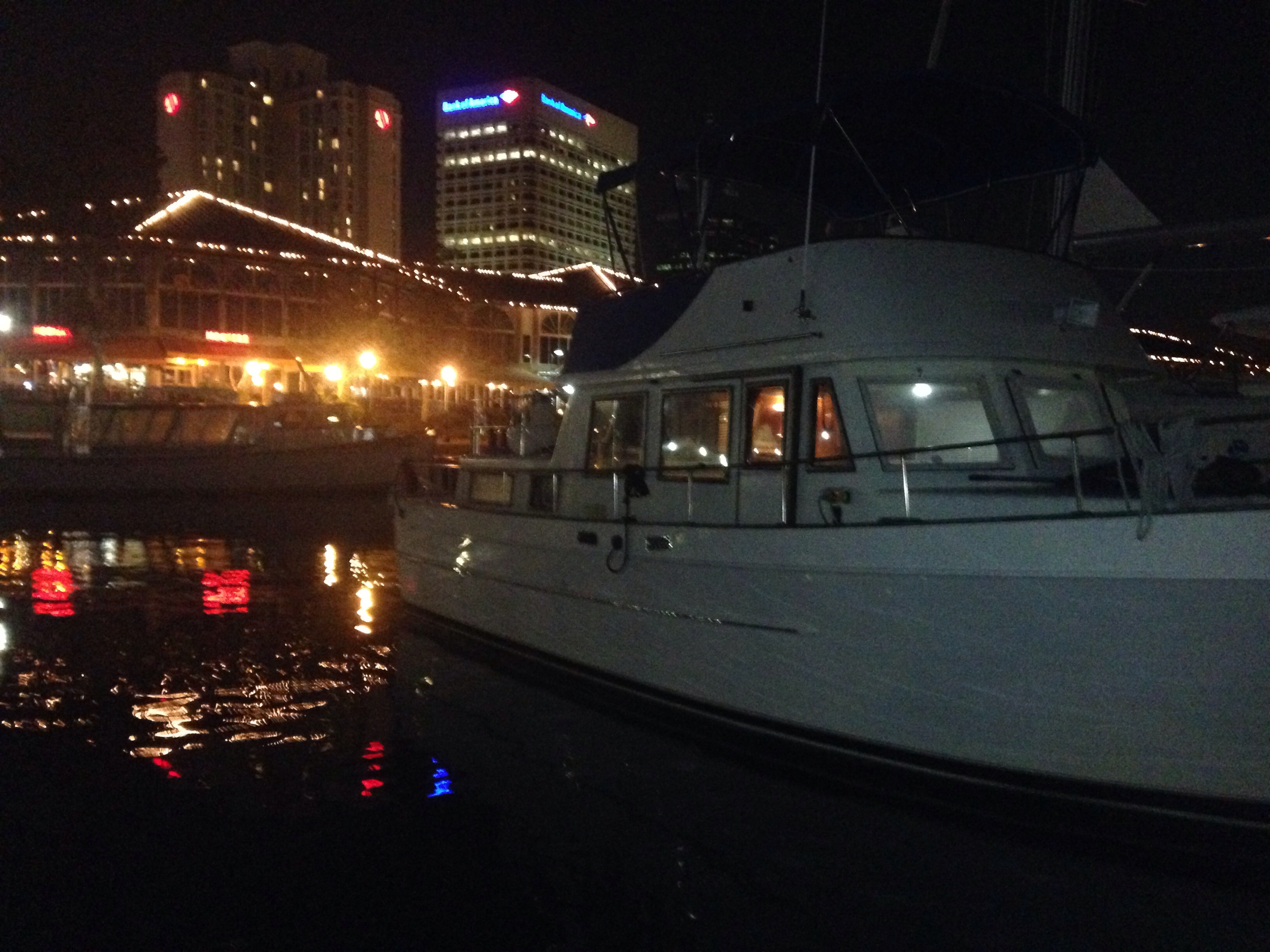
Coleman Bridge at nightfall

Coleman Bridge at nightfall

Bridge engineers: it’s a double swing bridge.

The town certainly works hard at attracting visitors and enticing them to spend money. After the Blues festival ended at 6pm, the stalls and gazebos were quickly dismantled. Next morning, they were being re-erected for an Arts and Crafts Fair.

We went to have a look round and Ian’s attention was drawn to Steven Rodrig’s stall. He uses printed circuit boards to make sculptures and we both liked a glistening, blue-green pineapple – we now have the problem of transporting it safely back to England. I had liked it for itself, but also because the pineapple is the symbol of welcome and hospitality in Virginia. And creating works of art out of things that would otherwise go to landfill seems a good idea too.

Unlike  Florida, on Sundays in Chesapeake Bay the waters are quiet and we saw very few other boats as we made our way north towards Deltaville. Or perhaps it’s simply that the season here hasn’t really started yet – at most places we’ve been the only visitors in the marina.

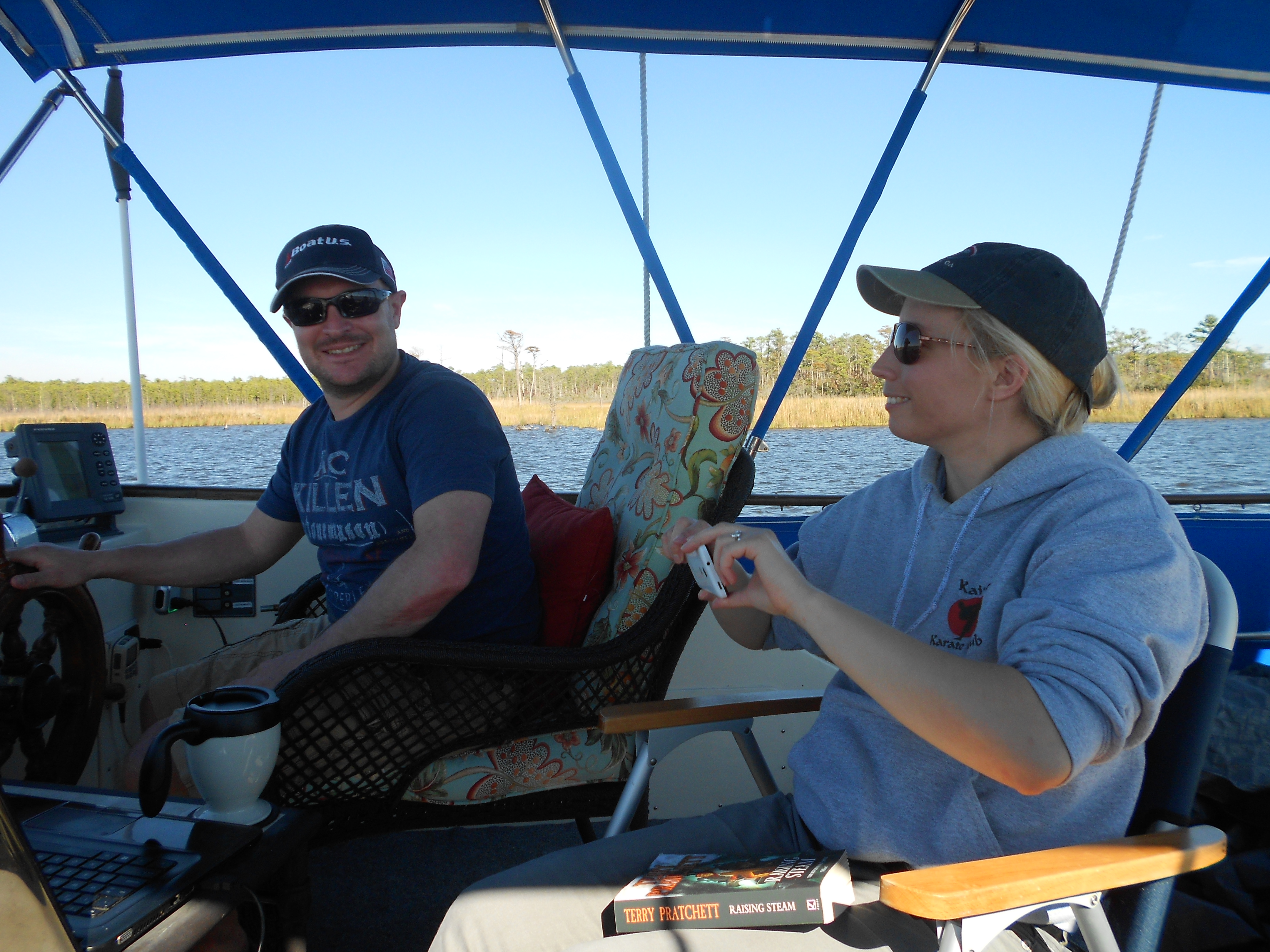
We’d entered the Piankatank River and were just turning into Jackson Creek where we intended to drop anchor, when Carina gave a now-familiar thud. After ten  minutes of reversing and wiggling, the Captain gave up and phoned TowBoat US. After all, we do have Gold Membership and he wears the BoatUS cap. Clearly, we now have the T-shirt too.

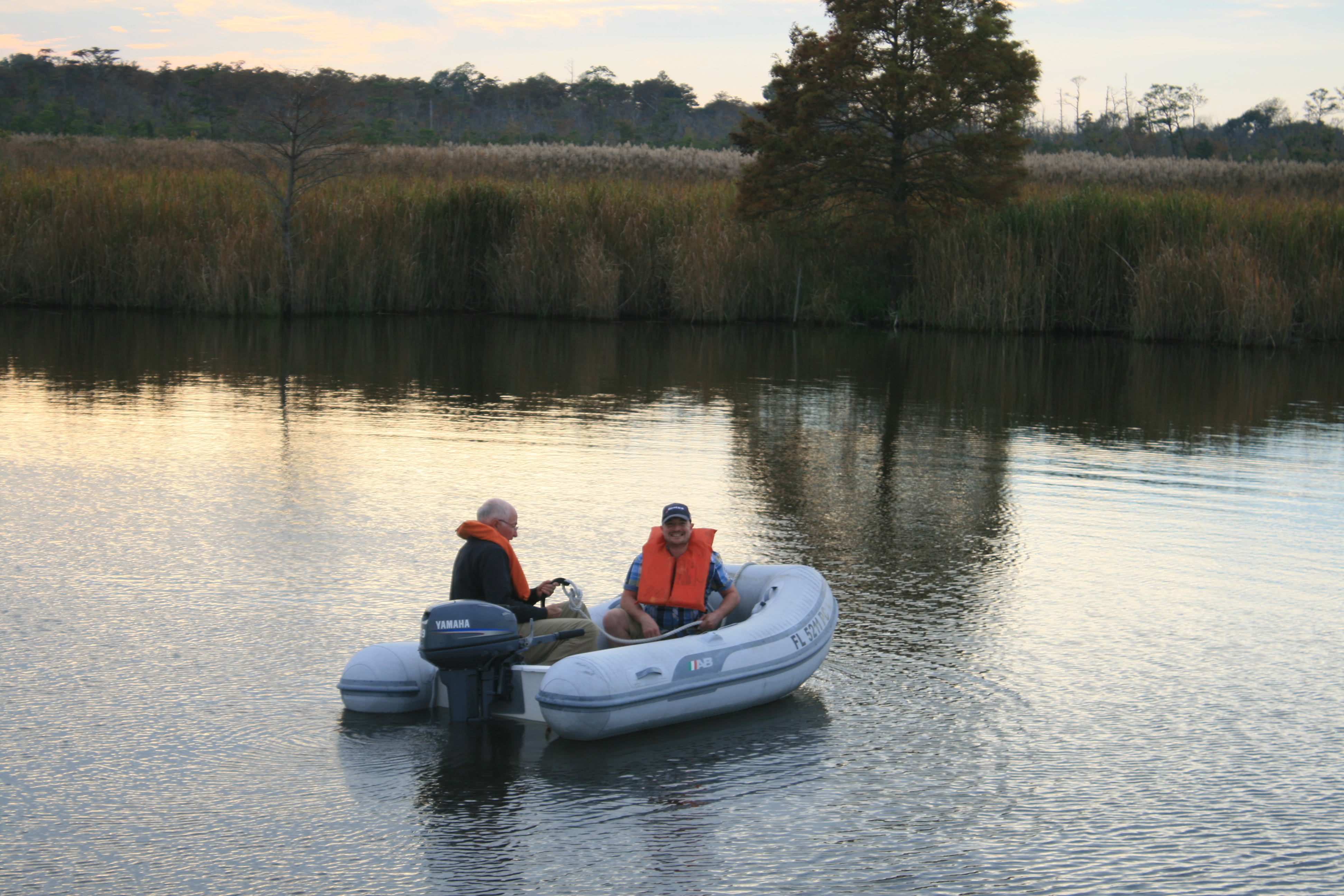
The TowBoatUS chaps were kind, professional and completely non-judgemental, commiserating on the trickiness of finding the channels in the creeks and expressing interest in our trip. After half an hour we were free, and a short time later safely anchored for the night.

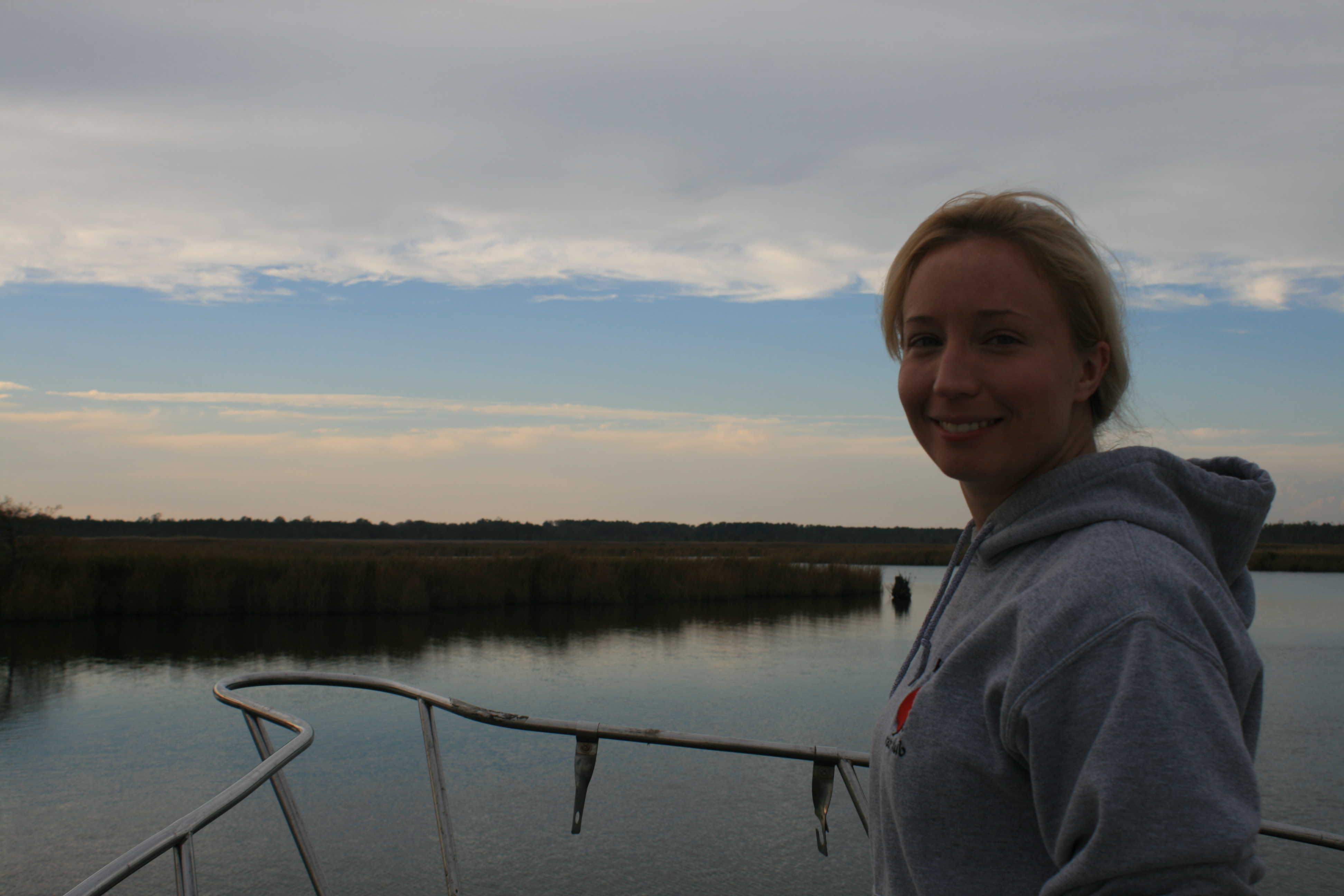
Jacksons Creek, Piankatank River
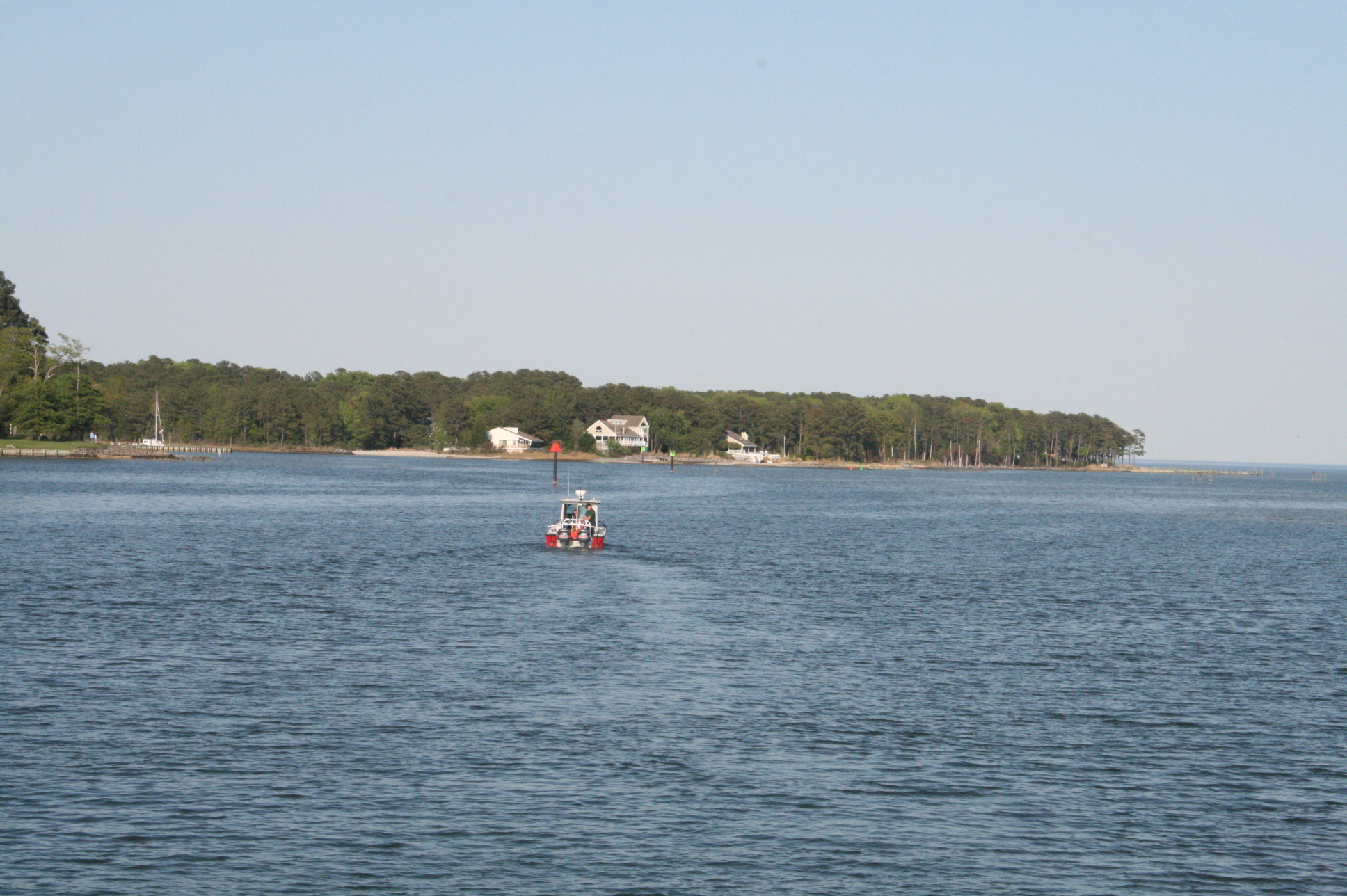
Jacksons Creek, Piankatank River

TowBoatUS disappearing back to Deltaville
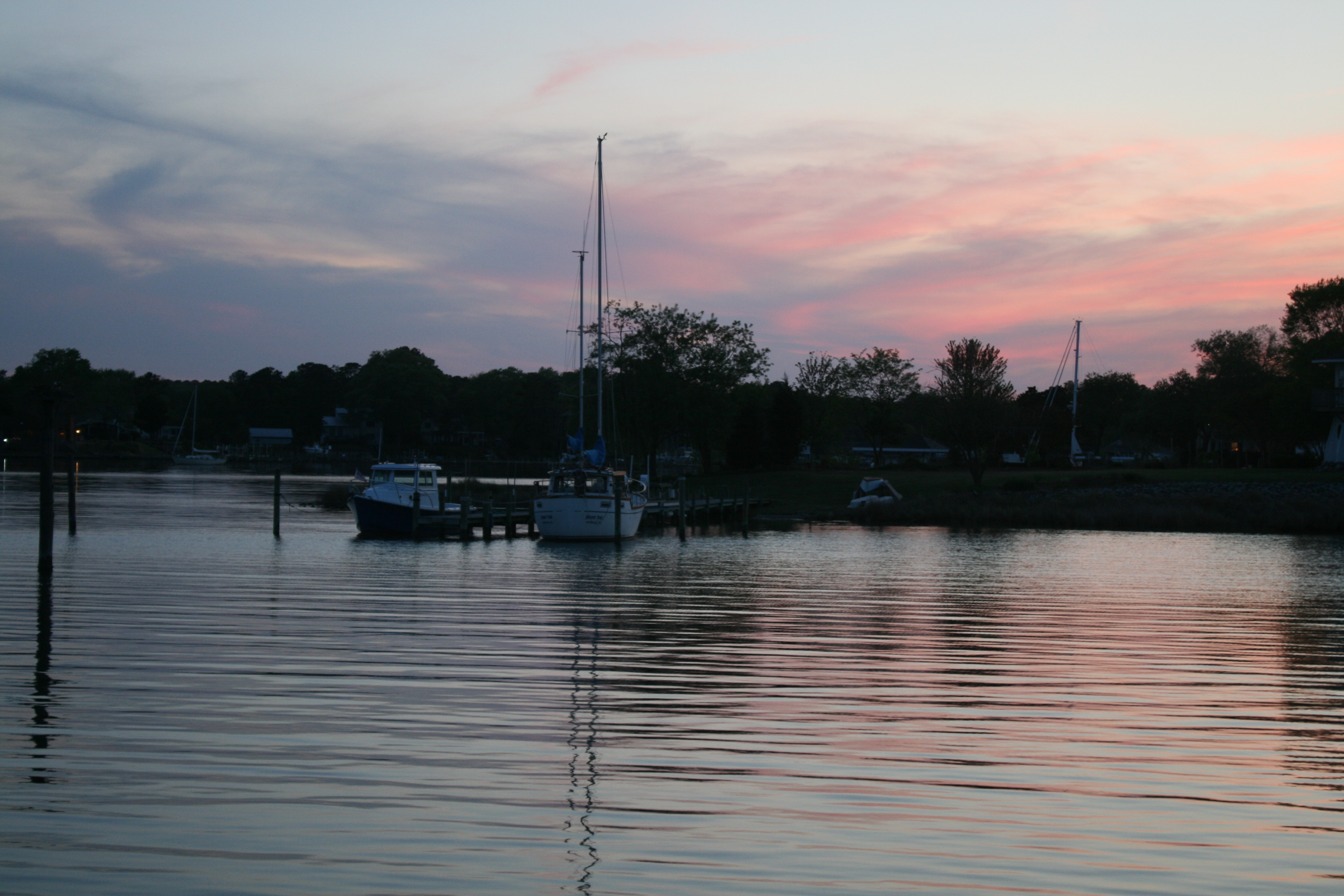
TowBoatUS disappearing back to Deltaville

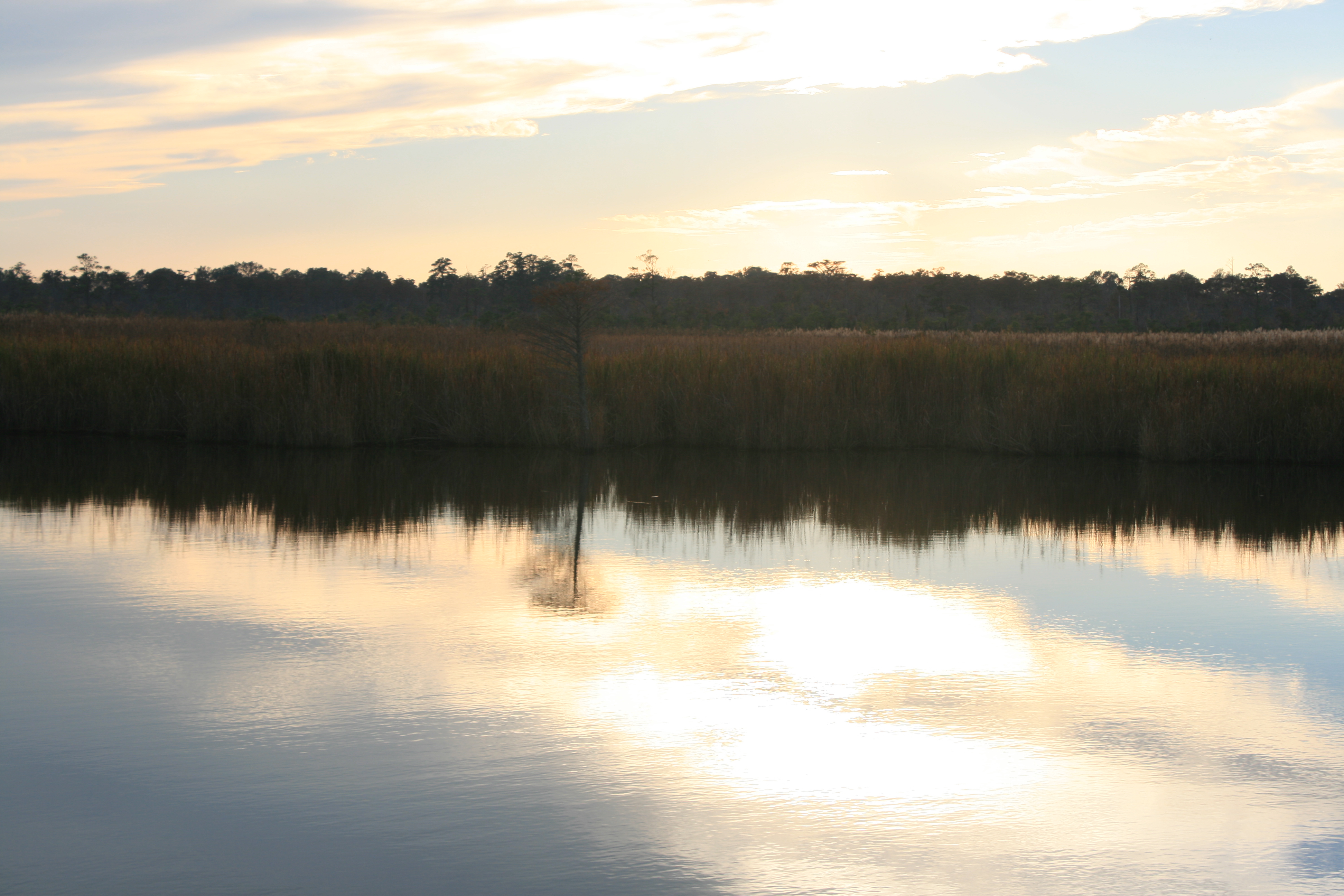
Evening at Jacksons Creek
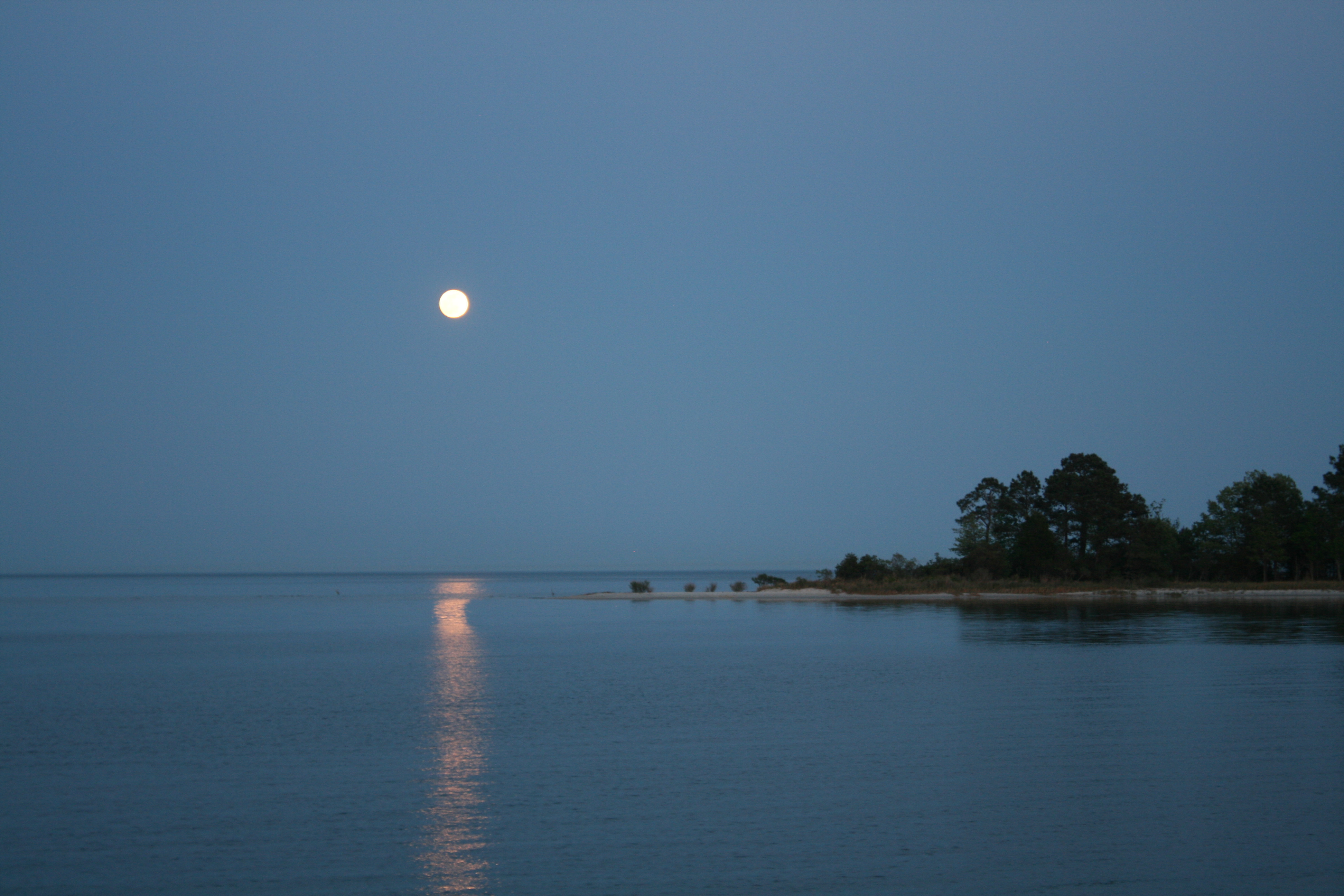
Evening at Jacksons Creek

Full Moon on the Piankatank River

Full Moon on the Piankatank River

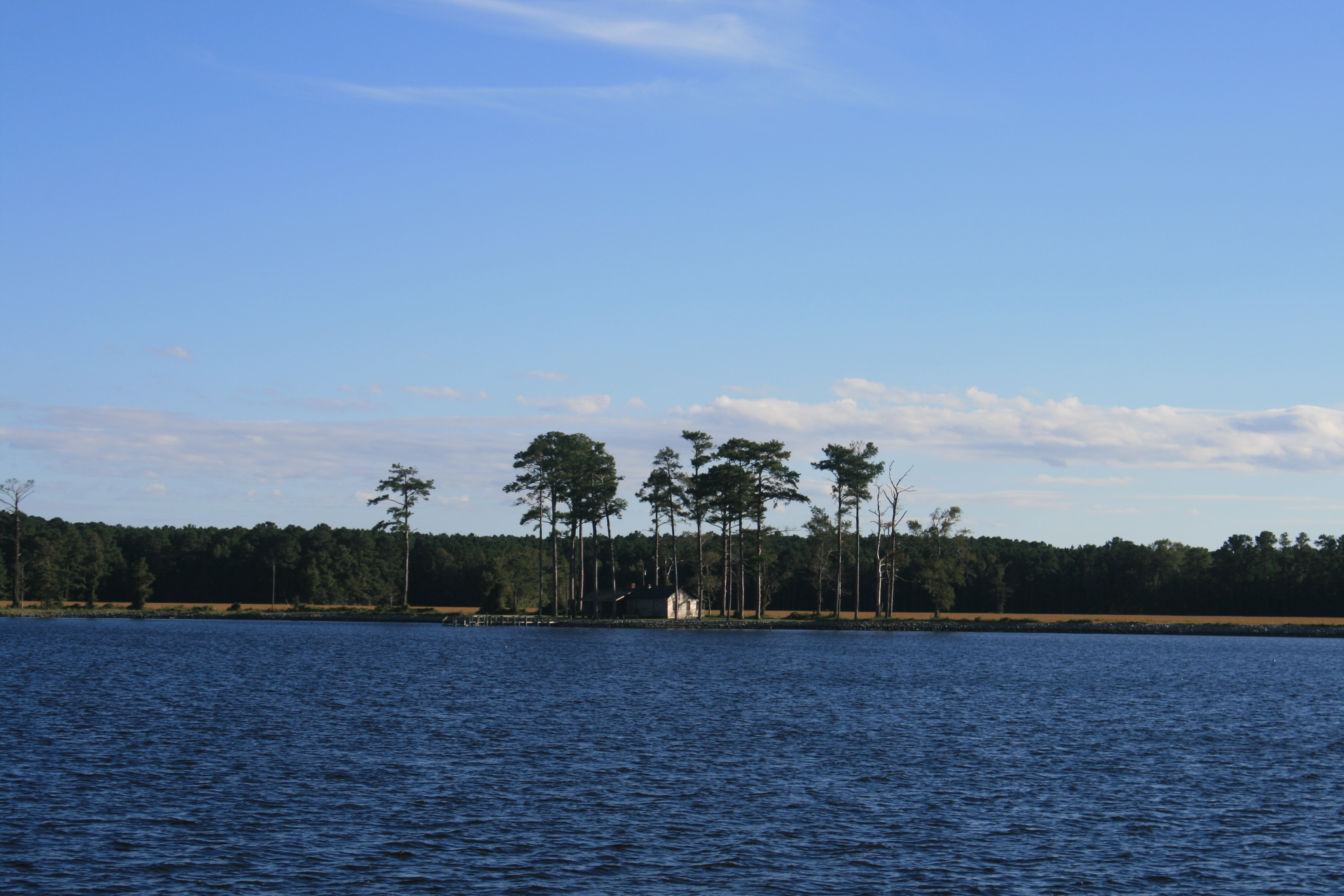
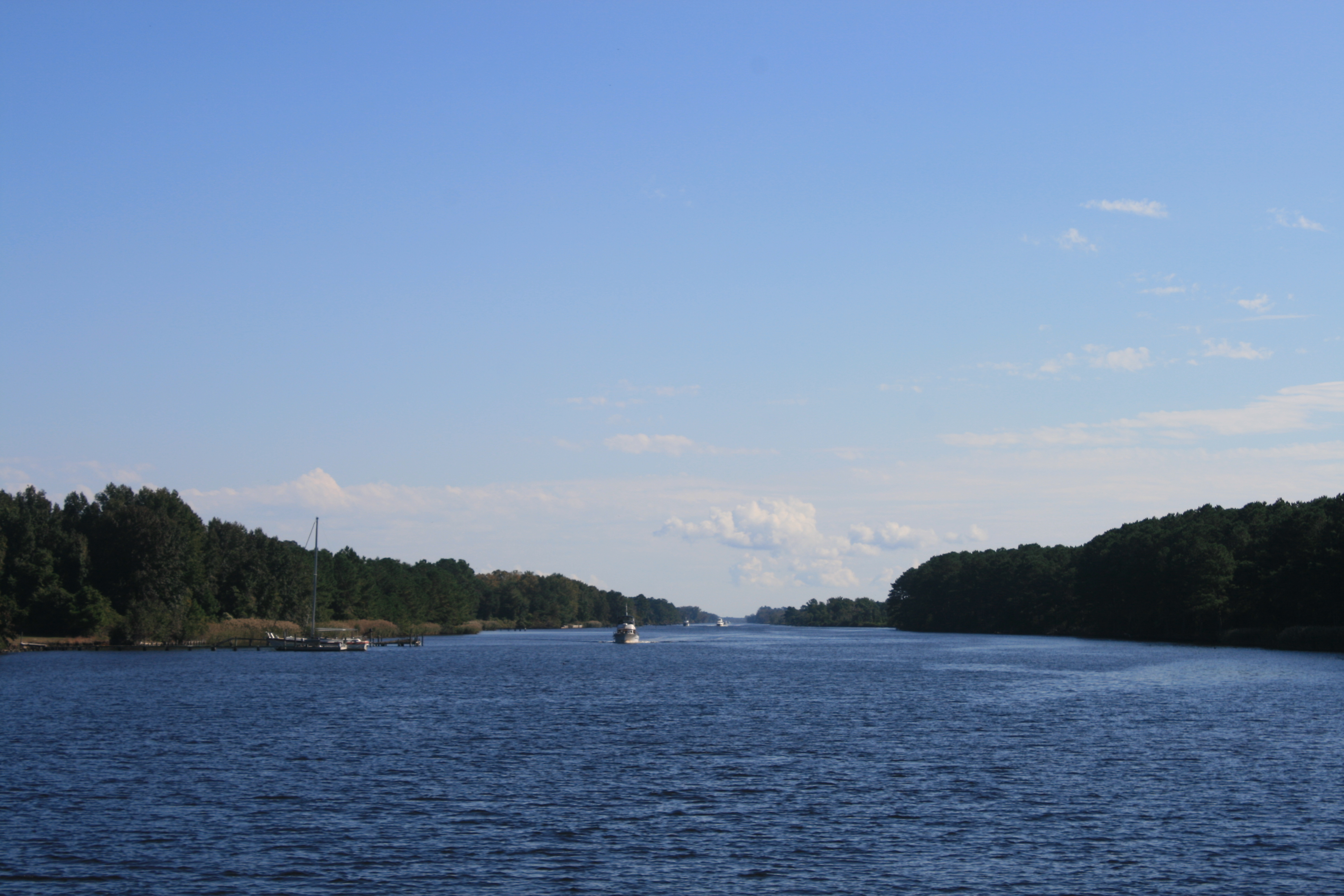
The next day the Captain proceeded with extreme caution through the channel, but even so, at one point there was a suspicious-sounding bump, just before the depth sounder peeped. This time though, he was in time to avert disaster and after a quick gear change into reverse and some hasty manipulation of the steering wheel, we were safely on our way to Tangier Island, thirty miles to the east of us across the bay.
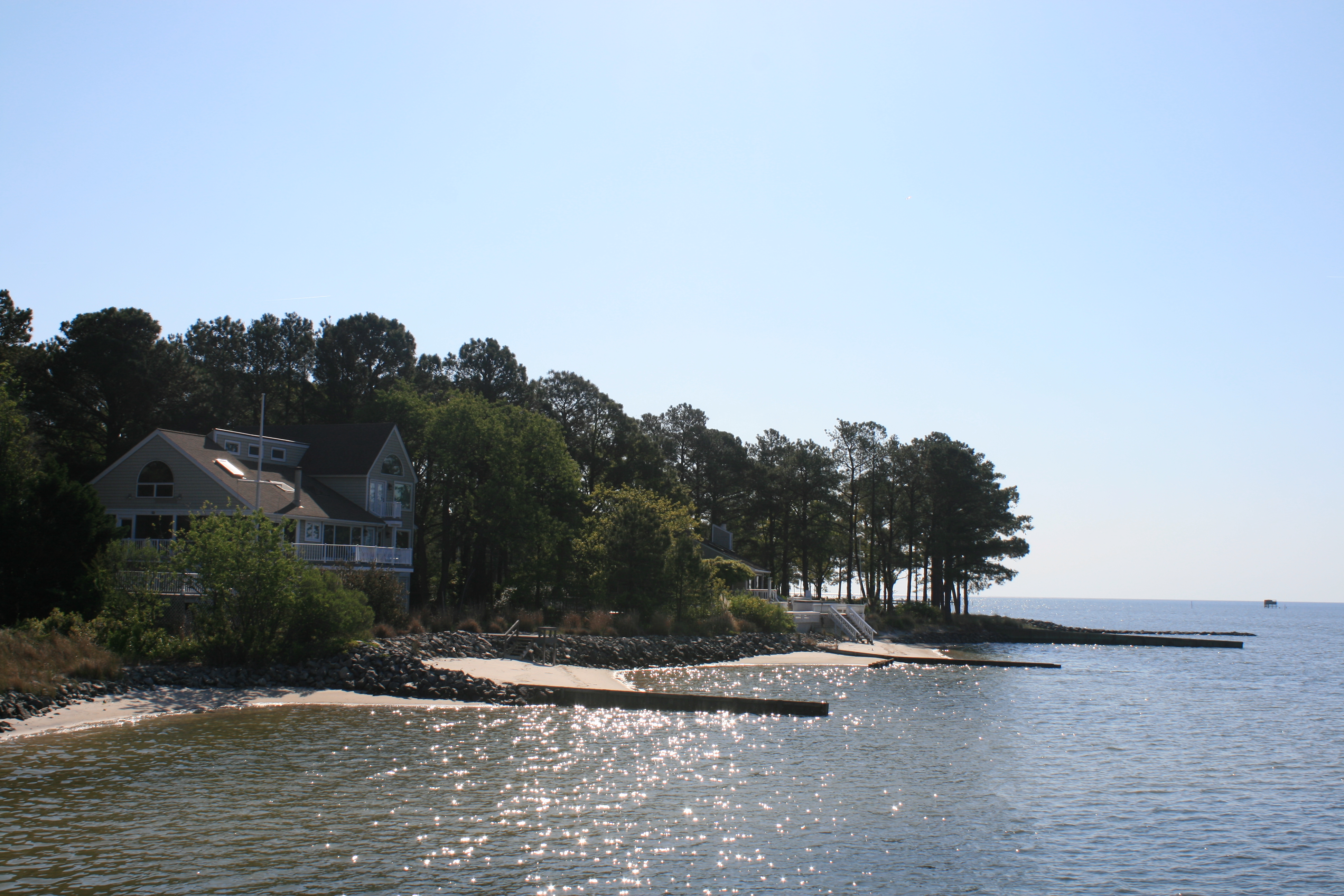
Morning sunshine on Jackson Creek

Morning sunshine on Jackson Creek

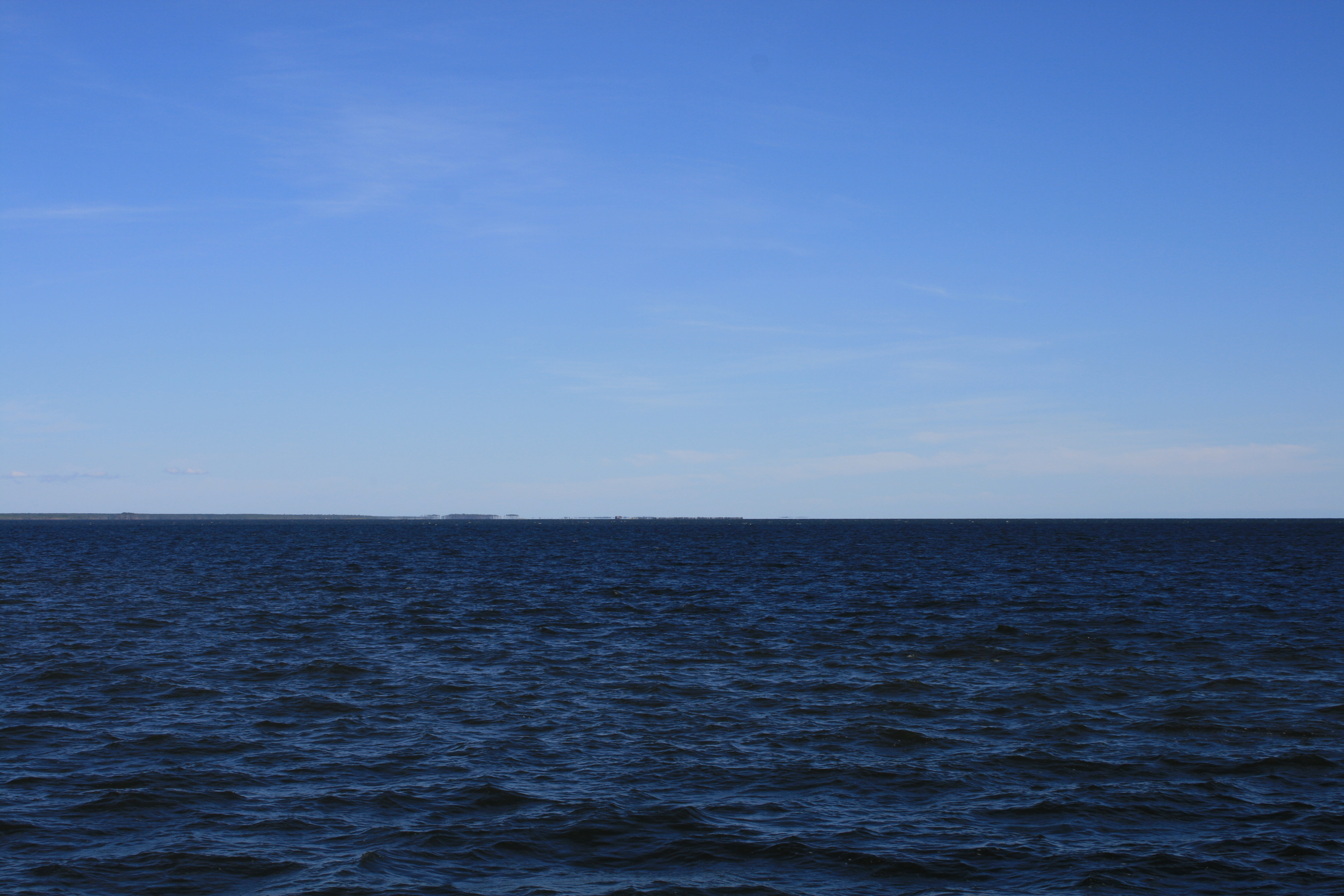
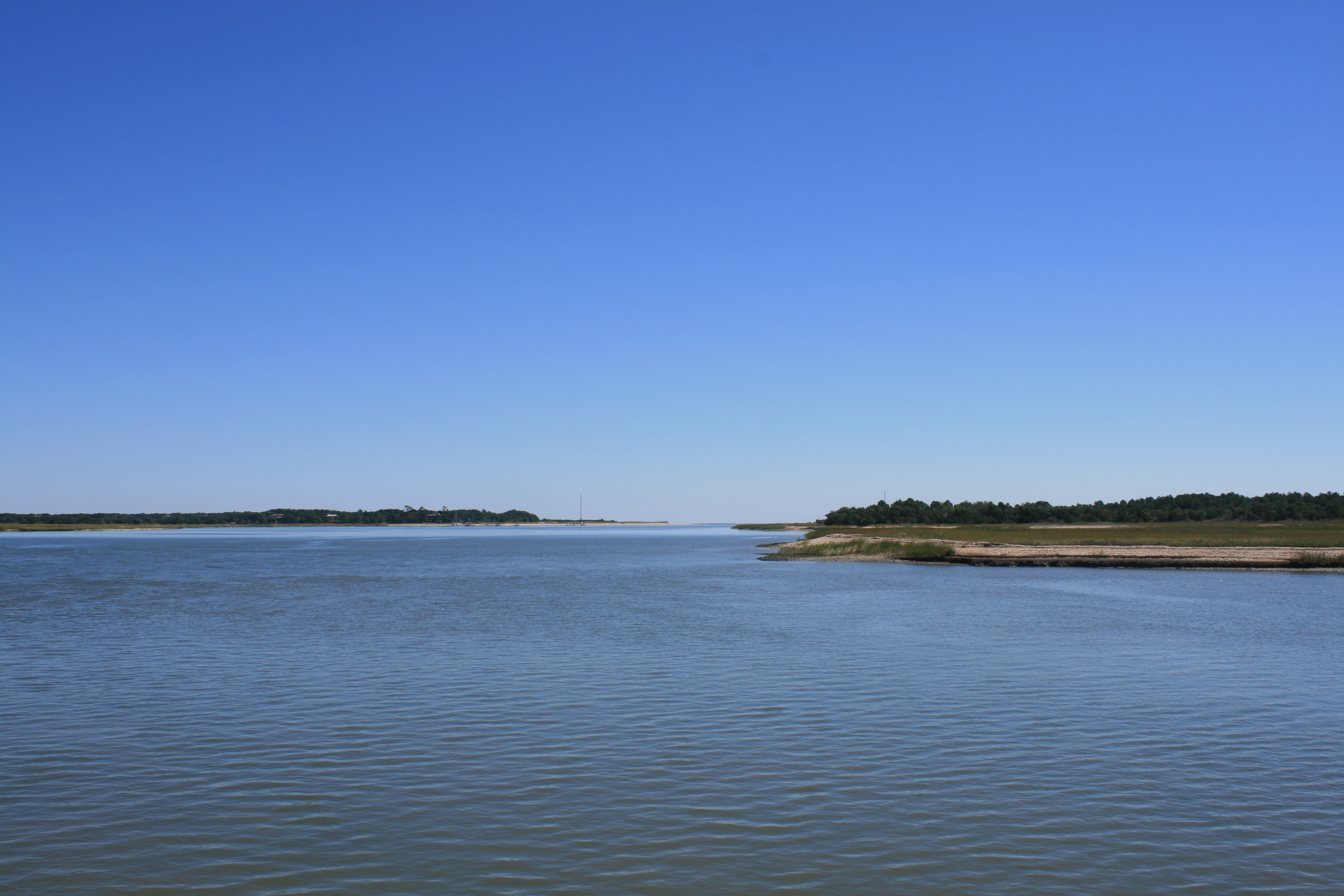
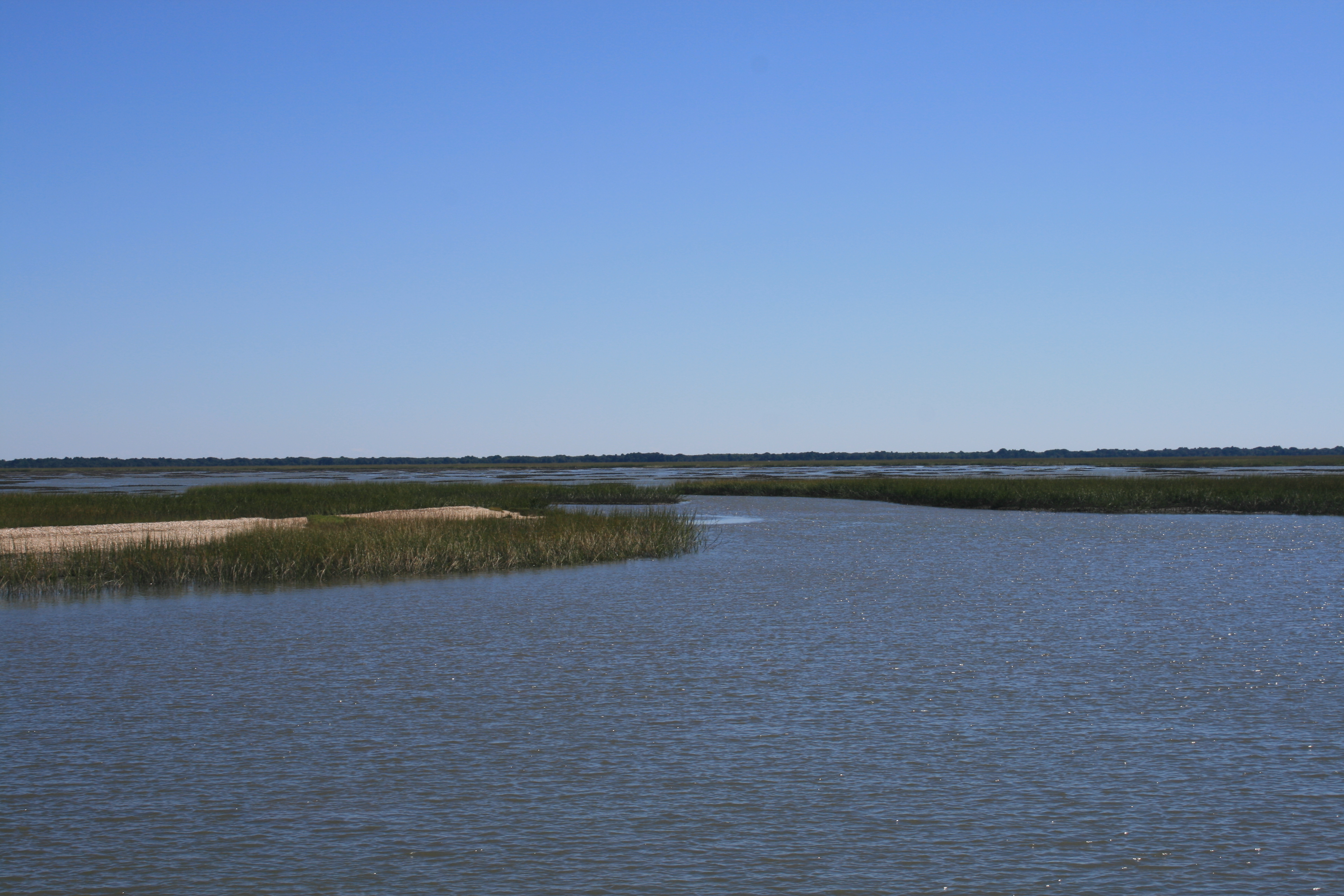
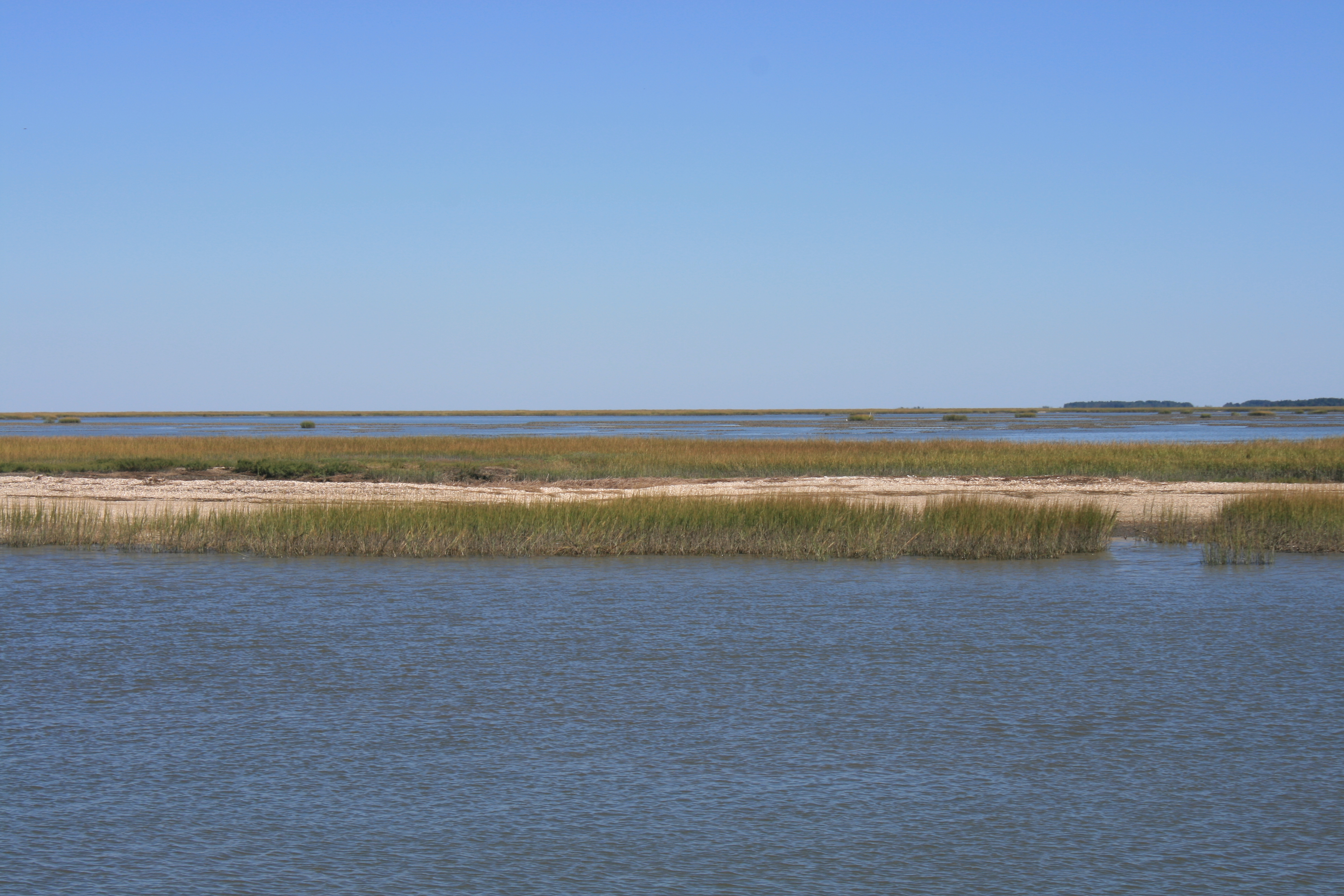
I’m still finding it hard to appreciate the size and scale of the Chesapeake Bay. On a map of North America, it looks like a moderate-sized inlet. The reality is that it’s 170 miles long, and you can’t see from the Western shore to the Eastern one. From Deltaville, crossing to Tangier Island was further than crossing the English Channel from Dover to Calais.

But it was worth the effort. We passed Stingray Point, where Captain John Smith was injured by the eponymous fish and had to interrupt his voyage round Chesapeake Bay in 1608. Although he landed at Tangier Island, it wasn’t settled until 1670.

Tangier was used by the British as a base during the war of 1812, when they unsuccessfully attacked Baltimore and Fort McHenry,  which inspired Francis Scott Key to write the Star-Spangled Banner,  after he witnessed the bombardment there.

The island was also a refuge for escaped slaves, who as free men were relocated to Nova Scotia, Bermuda or Trinidad.


There are 3 main families on the island, the Crocketts, the Pruitts and the Parks, and they speak a dialect that is said to be related to Elizabethan English. At least to my untrained ear, they sounded more like inhabitants of Norfolk, England, than Norfolk, Virginia.

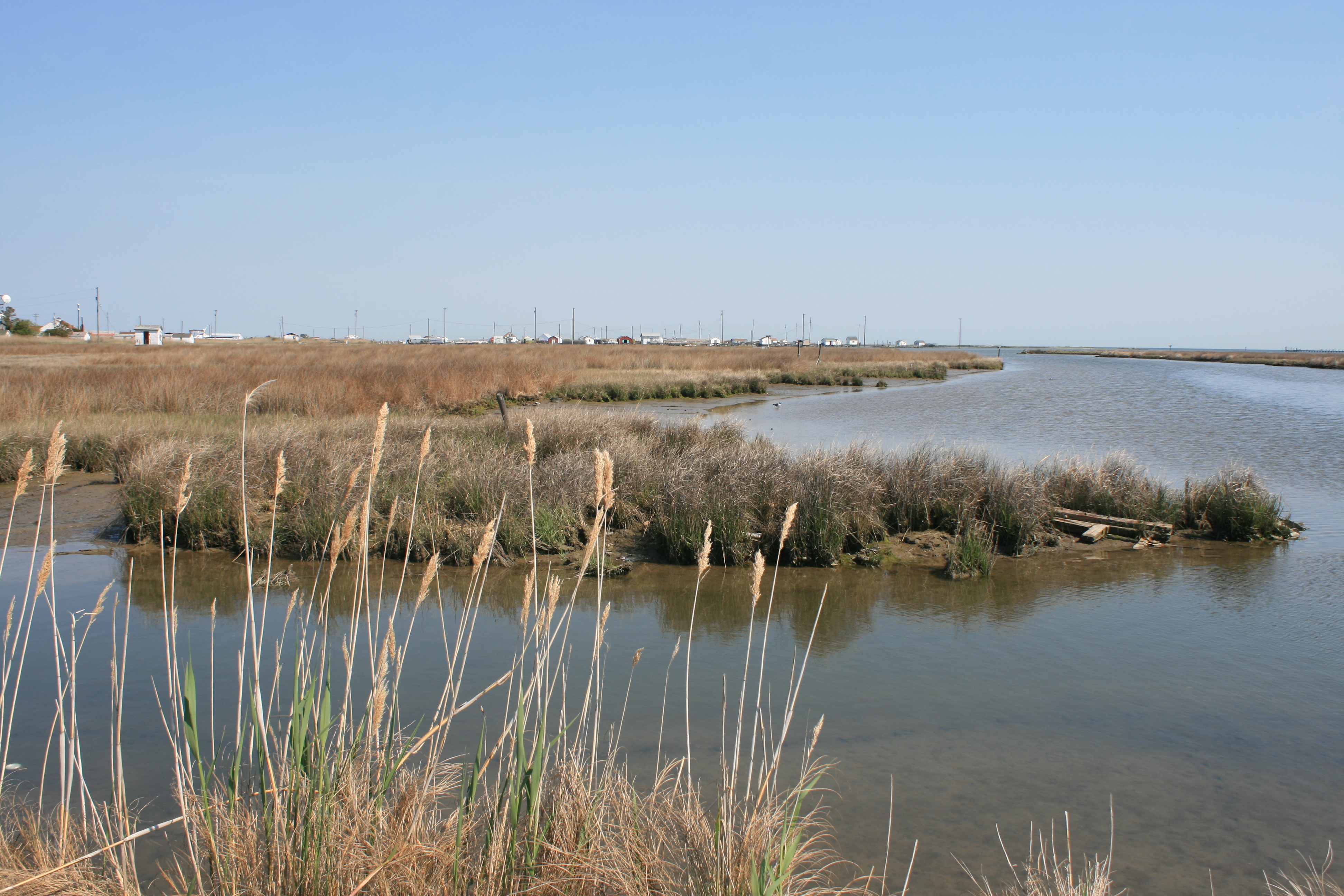
Arriving at Tangier Island
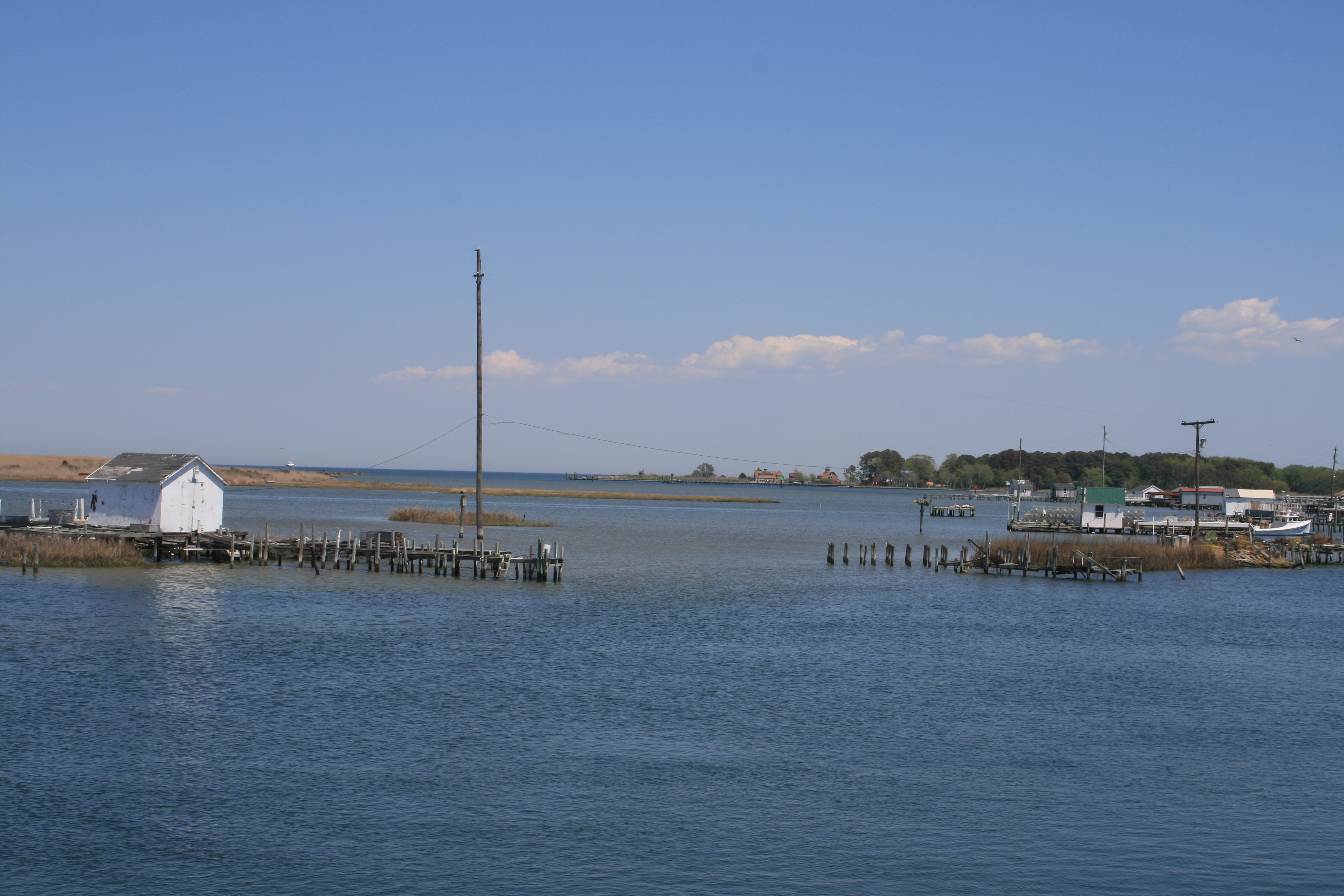
Arriving at Tangier Island

View from the marina
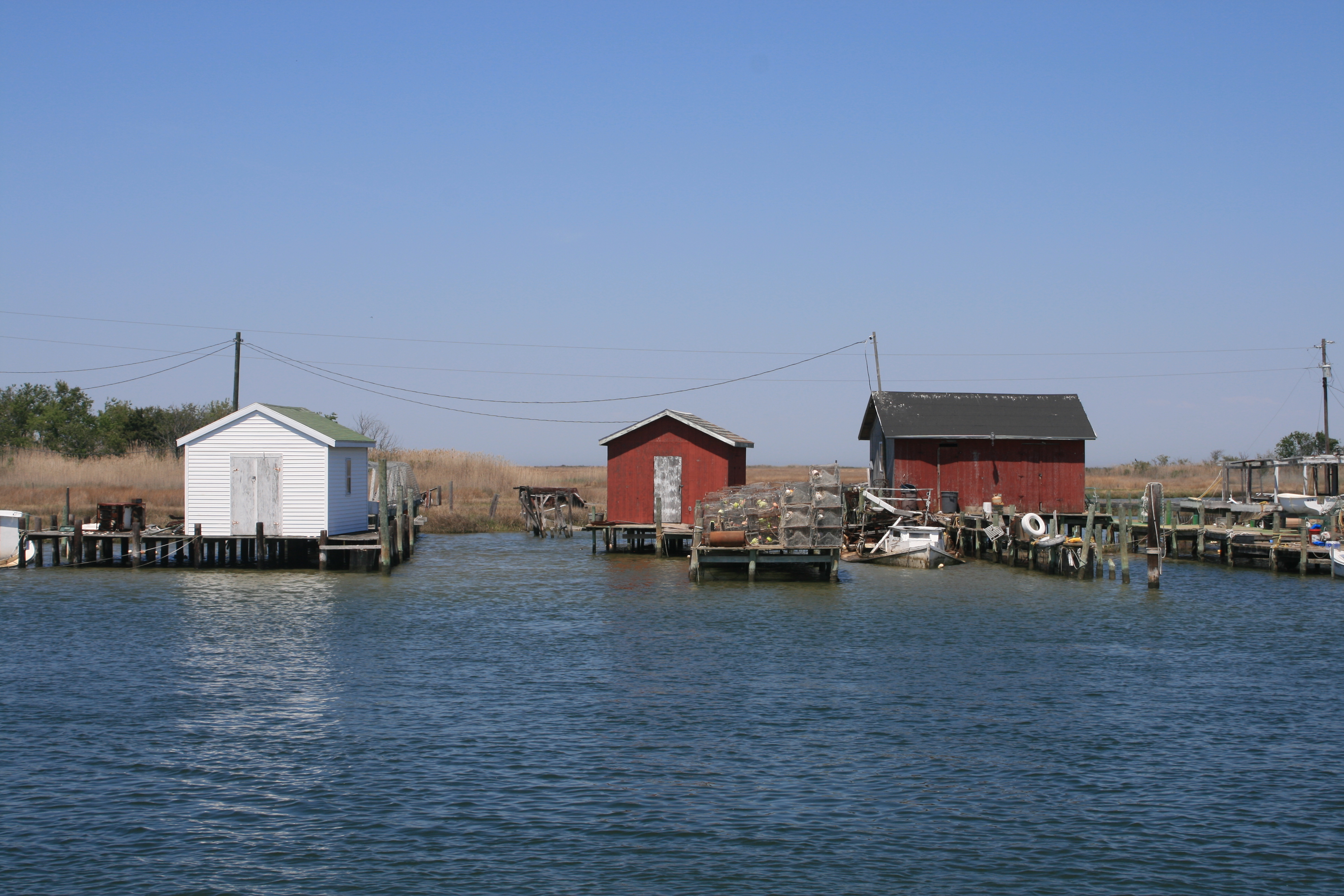
View from the marina

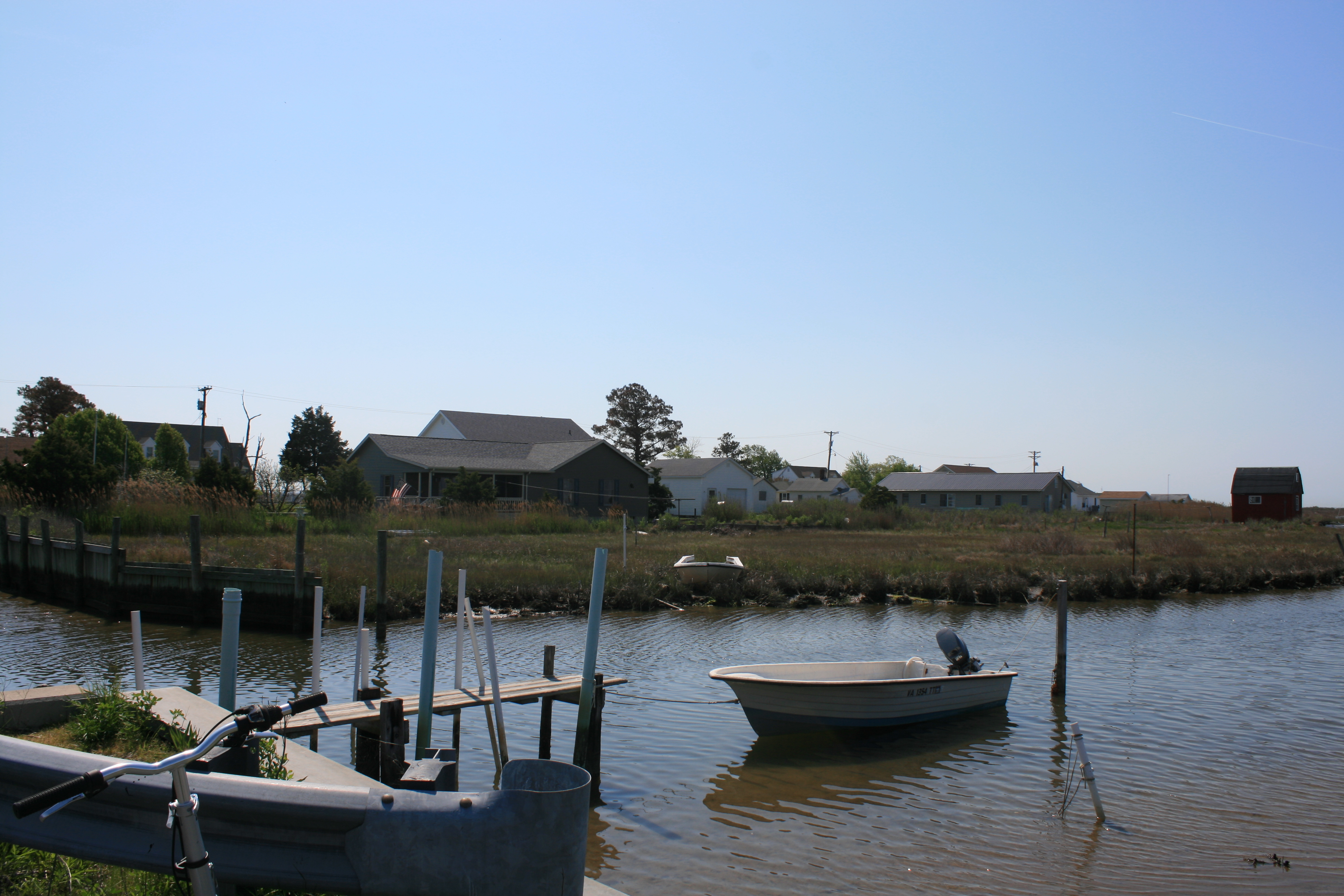
Watermen's sheds, Tangier Island

Watermen’s sheds, Tangier Island

Mr Milton Parks, the owner of Parks Marina, met us and helped us dock. He told us he was 84, but emended this to 83, as he will actually be 84 in July. We were his first visitors this season, and were given a warm welcome. Sadly, of the several restaurants on the island, only one, Lorraine’s Seafood Restaurant, was open, but the crabcakes were delicious so it didn’t really matter that  everywhere else was shut.

The population of the island is declining, although both the Federal Government and the Commonwealth of Virginia are supporting measures to encourage and preserve the island way of life. There’s a school, an airstrip and a new Health Centre. We met a couple of people who had chosen to retire to the island – Joe, a shoe-repairer from upstate New York, and Linda from Florida, who had boated in Chesapeake Bay for years with her husband before coming to live there permanently.

Ian and Linda had a conversation about hurricanes.

‘Florida people don’t mind hurricanes,’ Linda said. ‘They keep those damn Yankees away.’

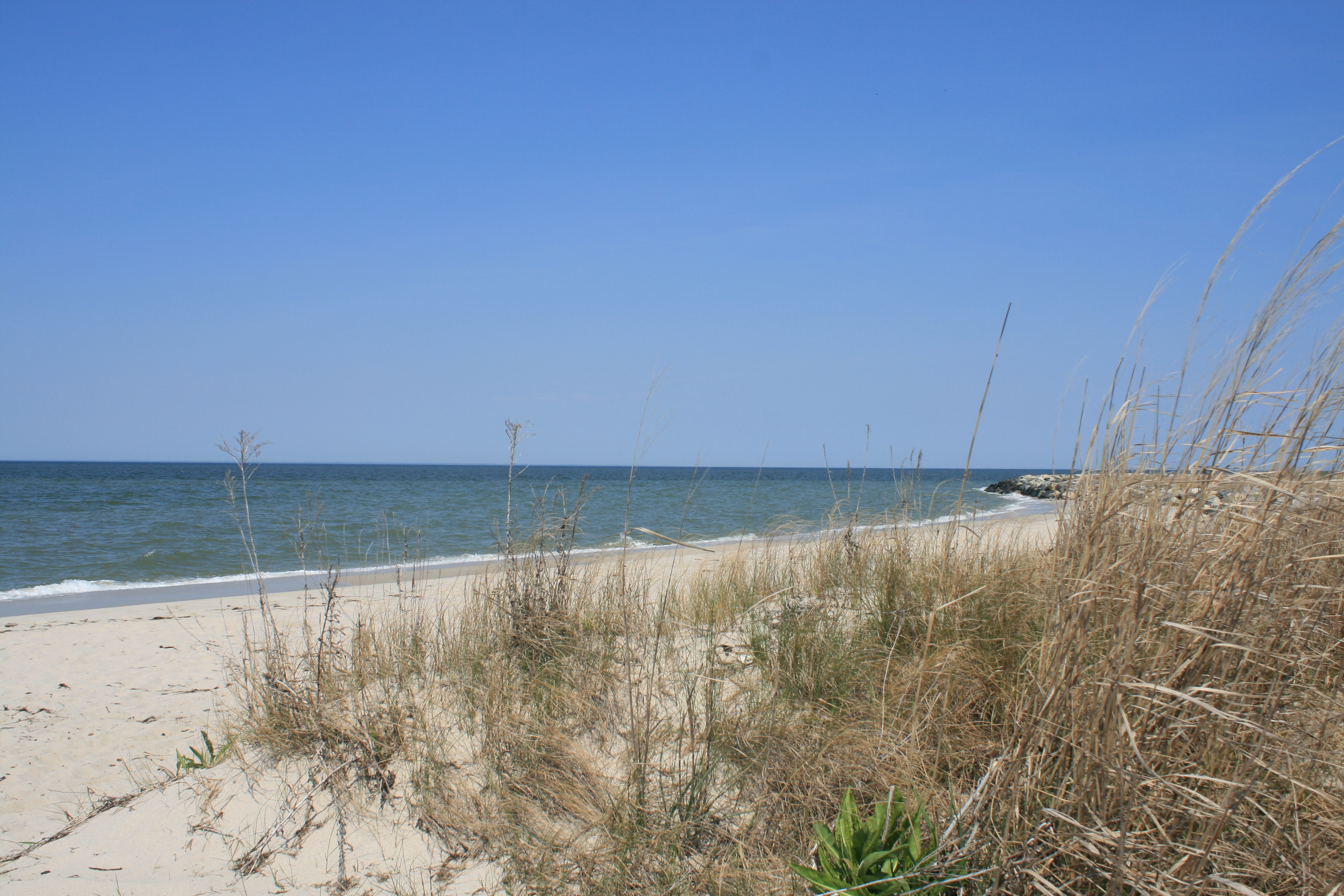
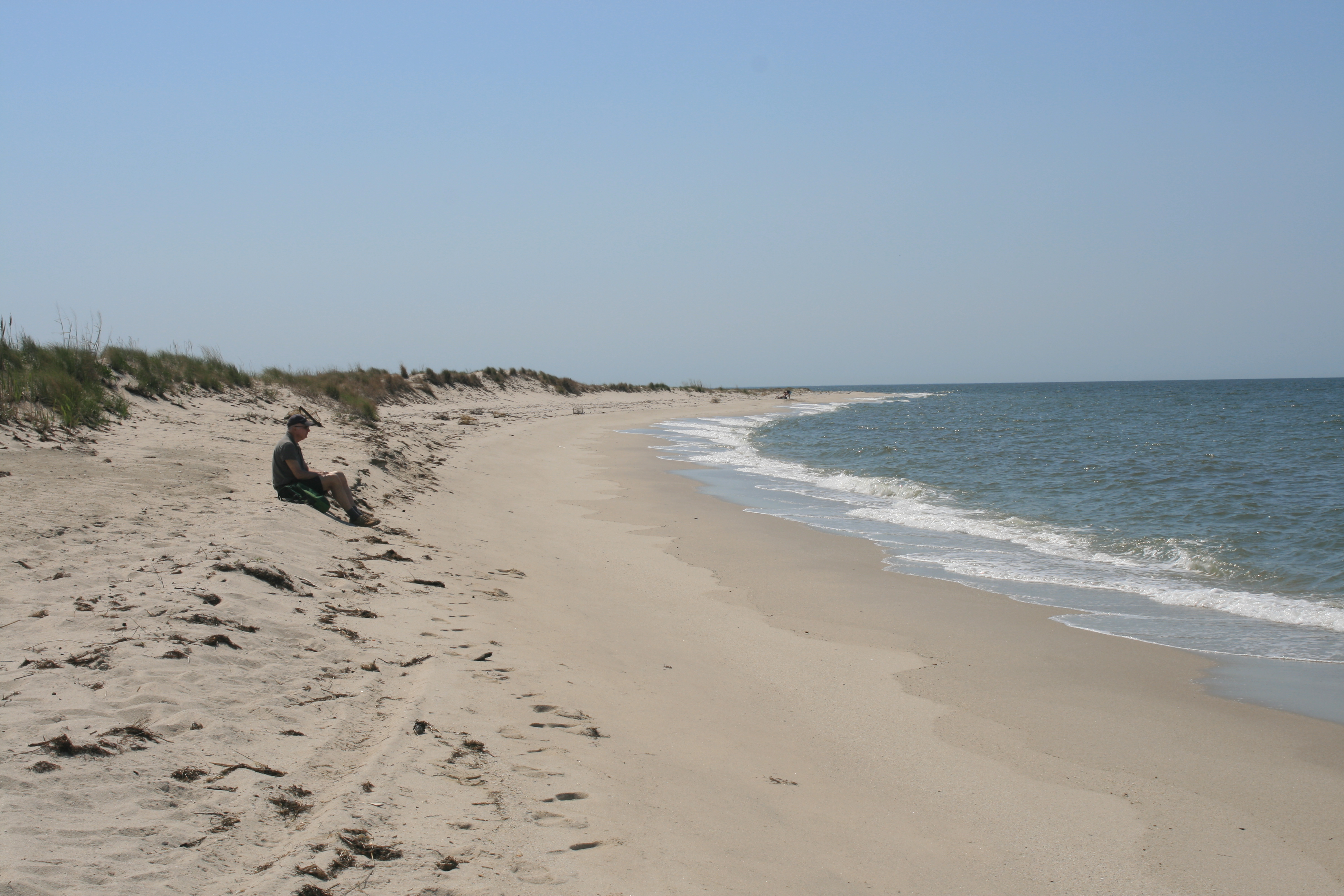
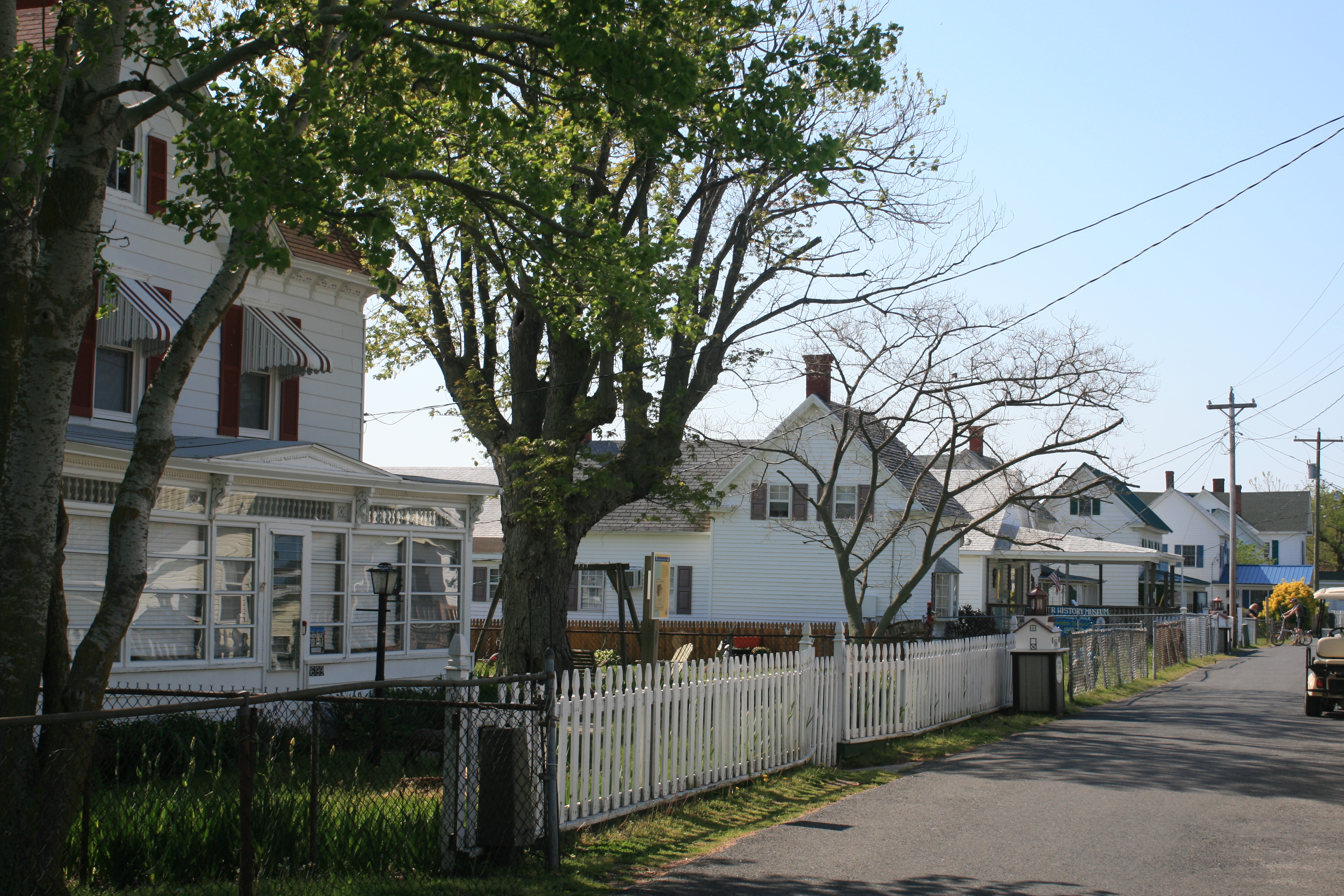
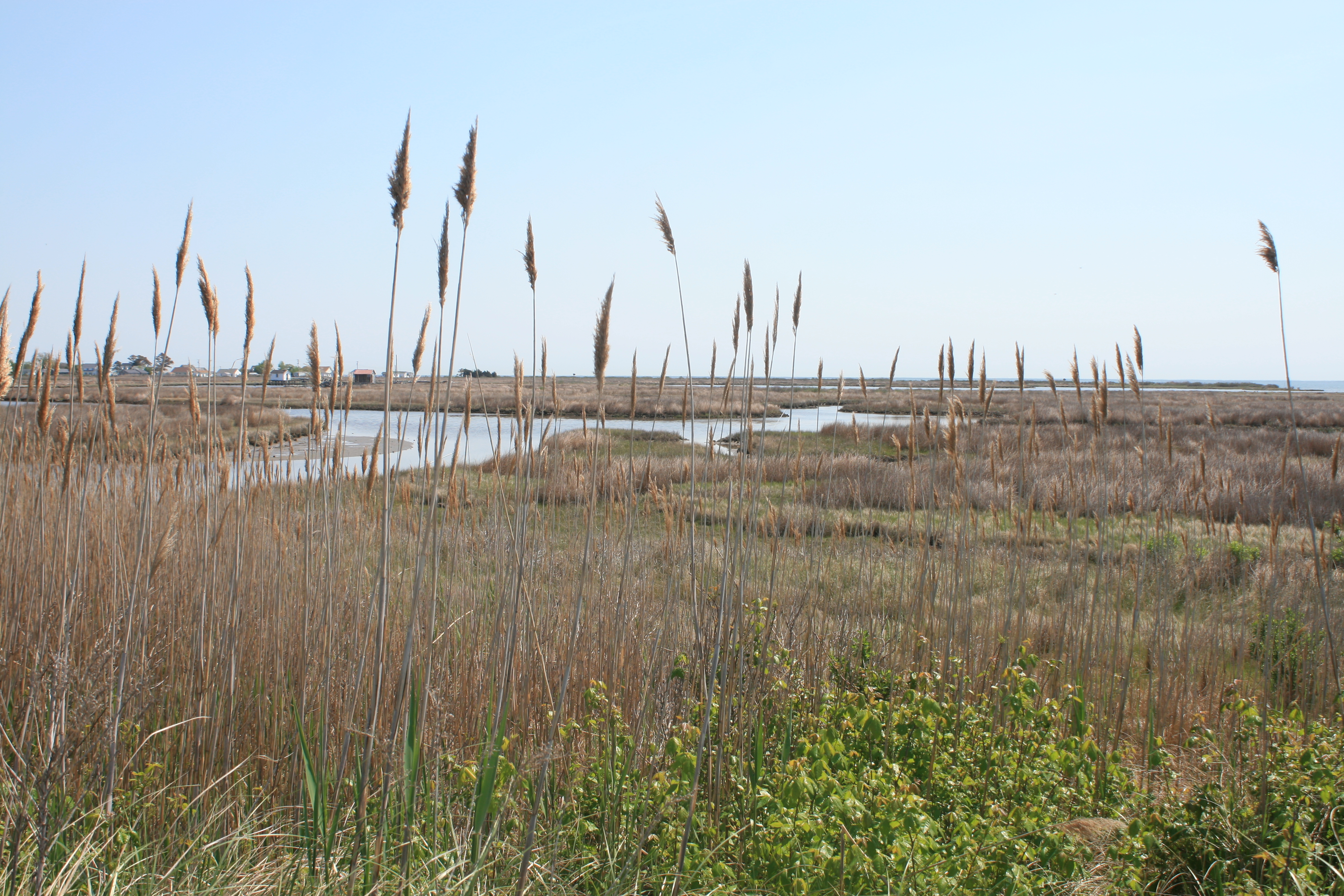
There are no cars on Tangier – people get round on buggies and motorbikes, so our bikes proved very suitable for going through the little town and across the marshes to the beach.
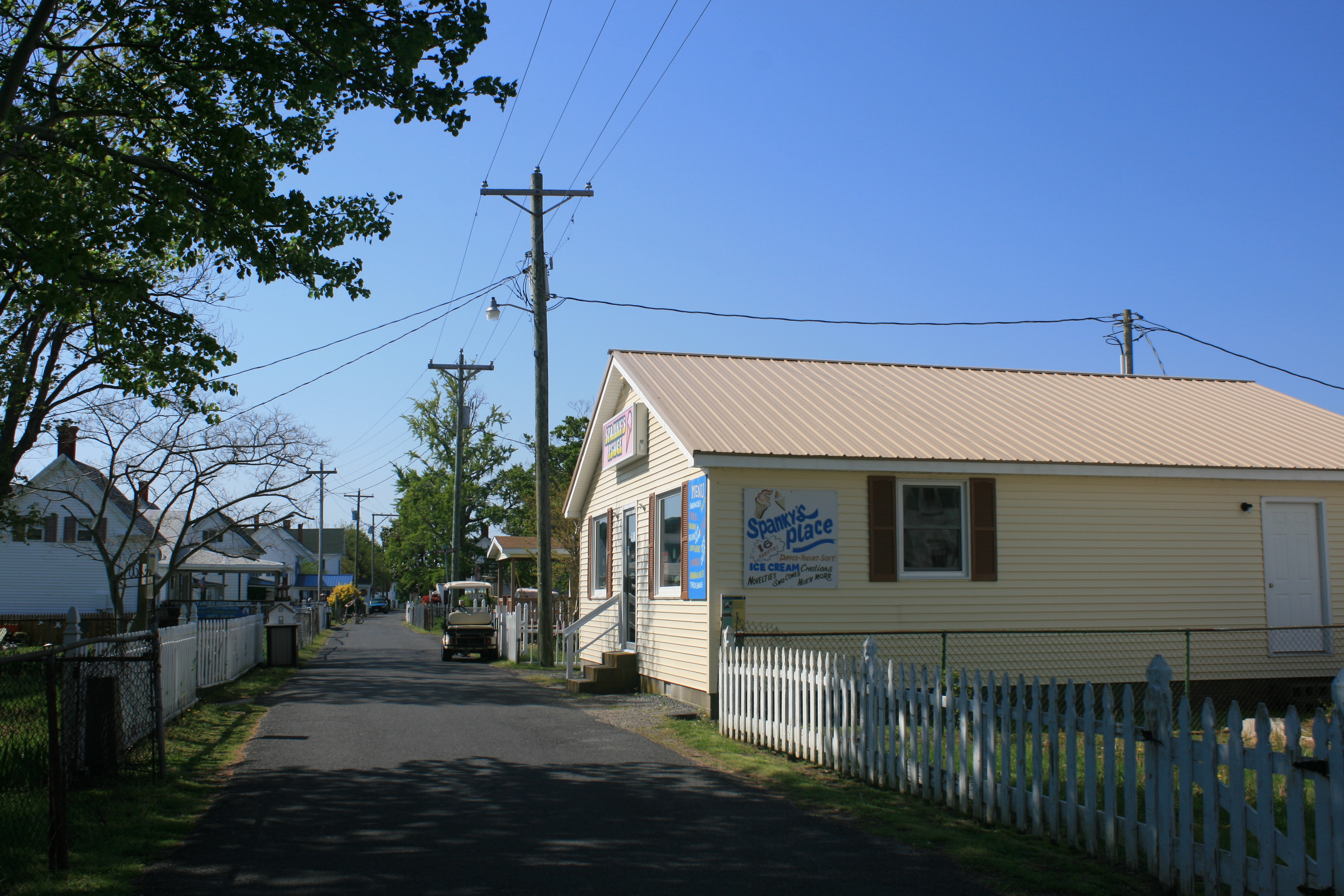
Ice-cream shop, Tangier Island
Ice-cream shop, Tangier Island

Main Street, Tangier
Main Street, Tangier

IMG_9324

IMG_9326

IMG_9329


IMG_9330


IMG_9337

The history of the island is beautifully summarised on the Welcome Board which you pass on the way from the dock to the Main Street.

In many ways, Tangier Island is hallowed ground. Here lie the remains of some of the native Americans who were banished here or used Tangier as hunting grounds. Here lie many of the sons and daughters of Tangier who so bravely served their country in the Armed Forces. Here rest the remains of British soldiers and sailors who dutifully served their country during the war of 1812. Here is what remains of the soil upon which those African Americans first walked as free people.
IMG_9332

As we returned to the boat from the beach, we saw the Tangier Island Fire Truck, blue lights flashing, making its way slowly down the narrow lane. A young woman was in labour. We knew this from another woman in her front yard, hollering to her friend a few doors down. A helicopter of the Maryland State Troopers was waiting on the airstrip, to take the young woman to the mainland.

The next day, the Captain made a faultless exit from Parks Marina, and  we travelled 24 miles north, to Smith Island, Maryland.


Taking the Rough with the Smooth

British Airways is still My Favourite Airline, having delivered a hassle-free and comfortable trip from Newcastle. We’ve taken to arriving in the States via Philadelphia, as the flight is shorter than to DC and the US Customs and Immigration procedures take on average about two hours less. Then we stay in a hotel, have a little look round Philly and lunch in Reading Terminal Market, and take the train to DC, at least partially recovered from the flight.

We’ve been to Philadelphia before and done the must-sees, so this time we just took a pleasant stroll where the fancy took us, taking in a short lesson in 20th century economics at the Federal Reserve Bank of Philadelphia which had an exhibition on. Outside, a young man in an Uncle Sam outfit holding a placard wished us a Happy Tax Day. Perhaps unwisely, we told him we weren’t US taxpayers, and he asked us  what we thought of Michael Bloomberg running for the Mayor of London. Ian suggested he could simply swap with Boris.

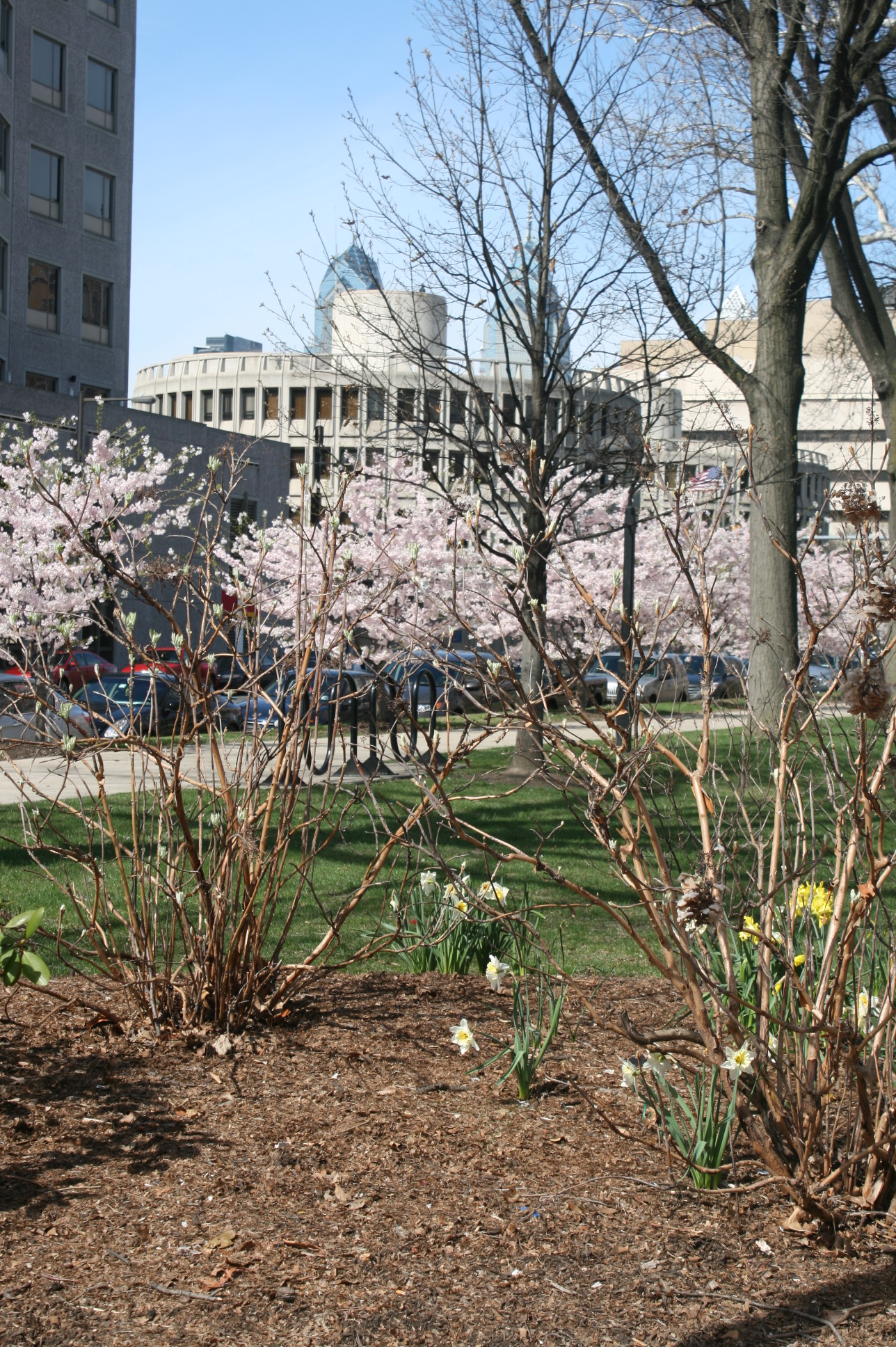
Blossom trees lining Franklin Square, Philadelphia

Blossom trees lining Franklin Square, Philadelphia

The Carousel in Franklin Square, Philadelphia

The Carousel in Franklin Square, Philadelphia

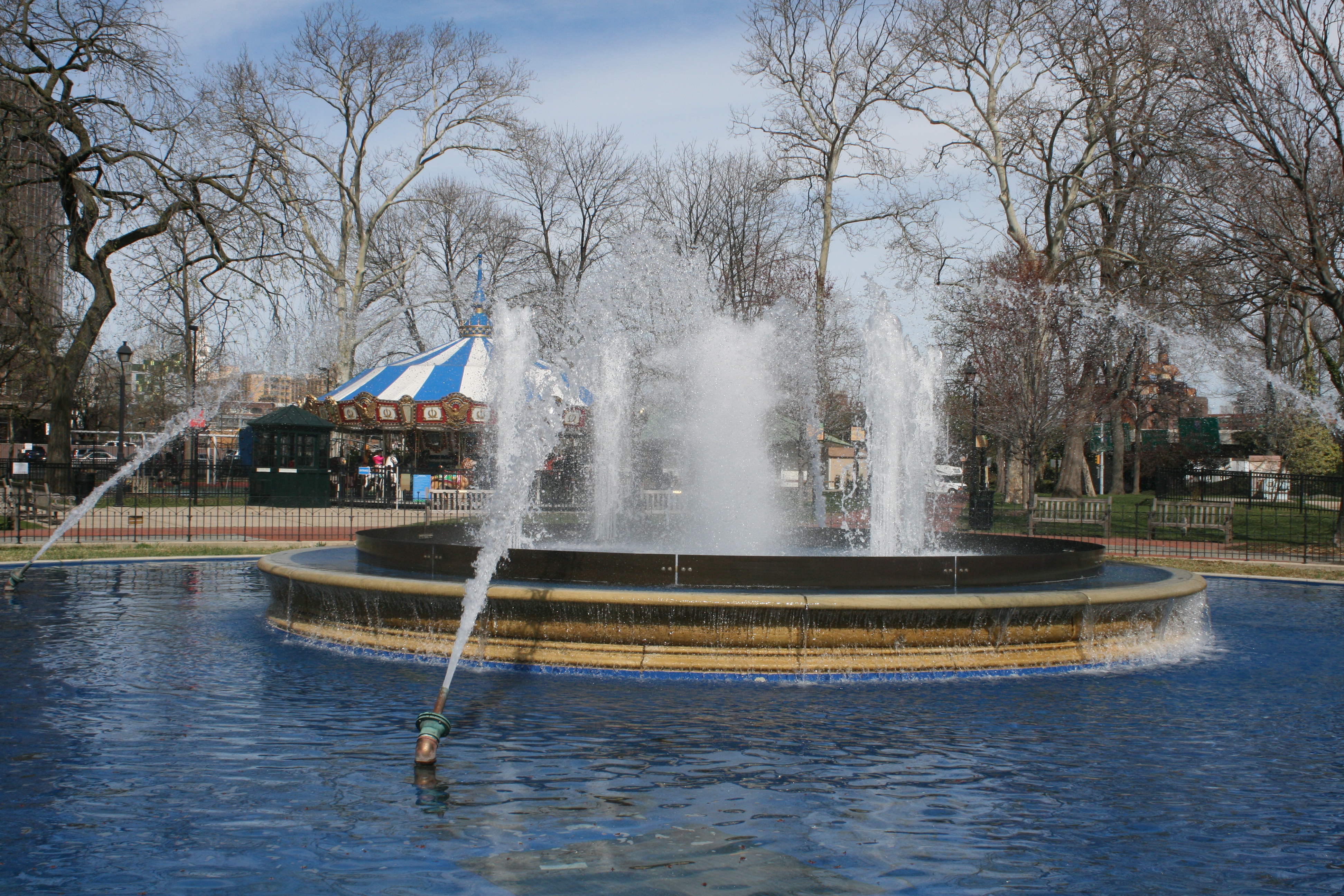
The fountain, Franklin Square

The fountain, Franklin Square

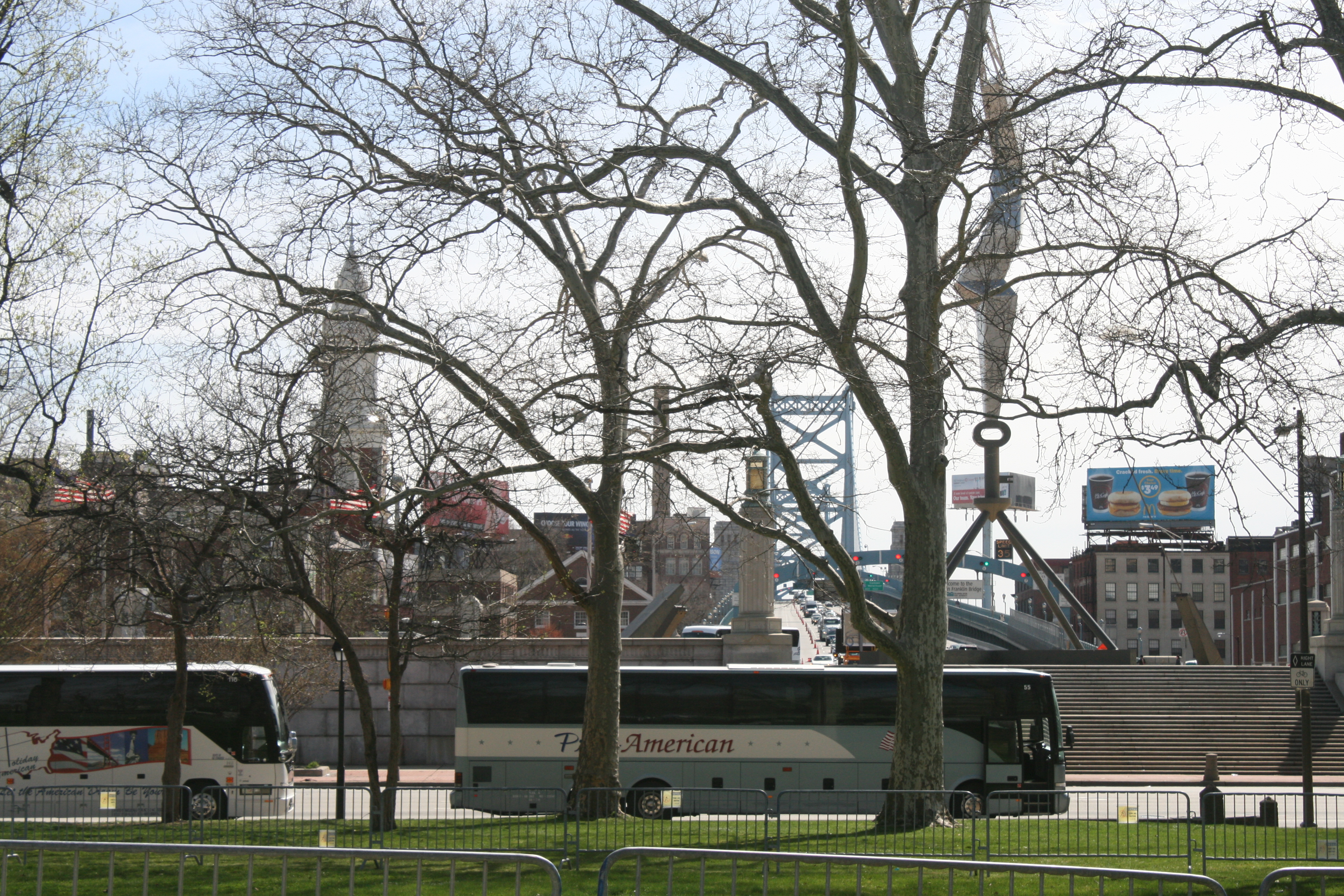
Cityscape, Philadelphia

Cityscape, Philadelphia

We had a super few days doing family stuff in Centreville.

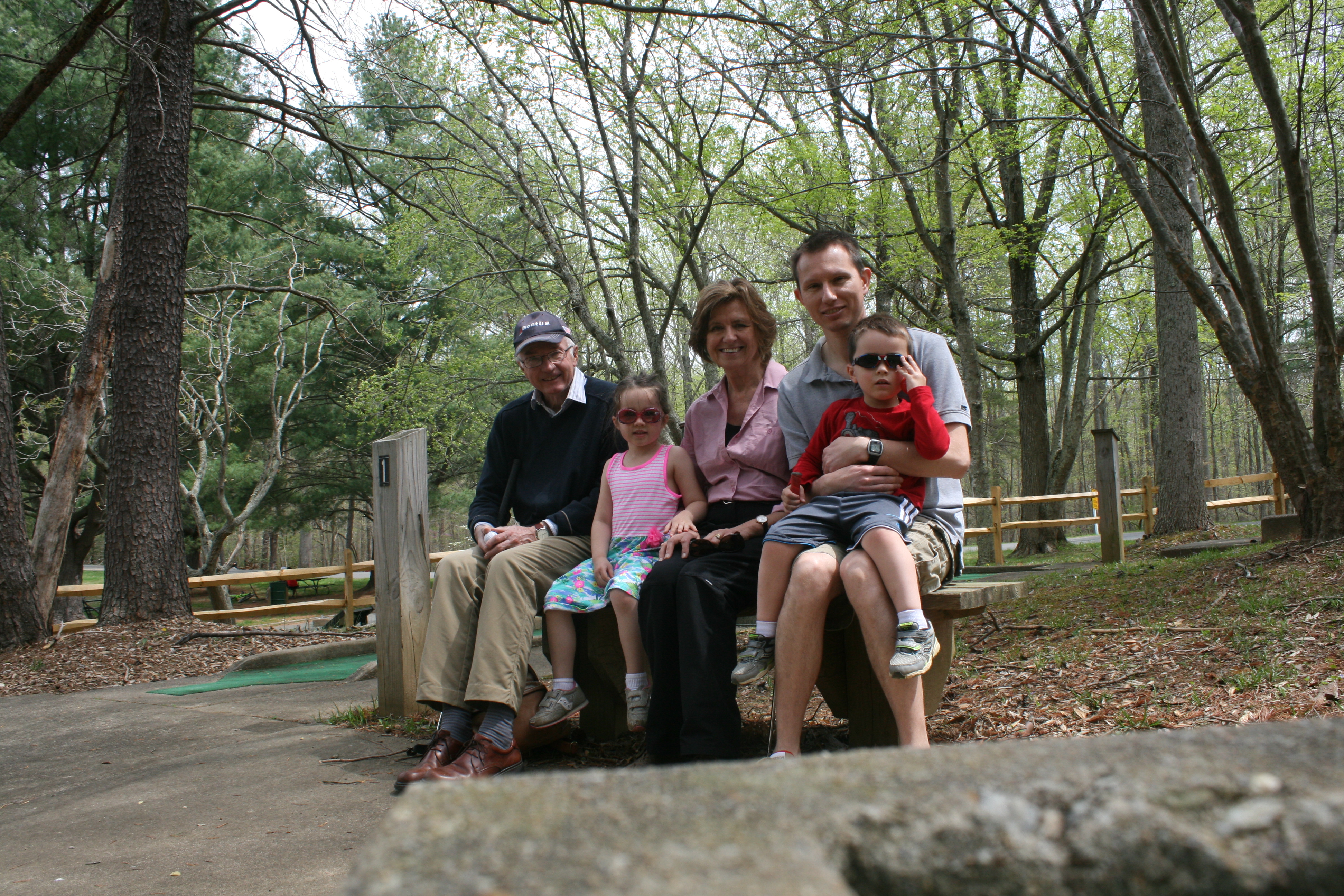
At Fountainhead Regional Park

At Fountainhead Regional Park

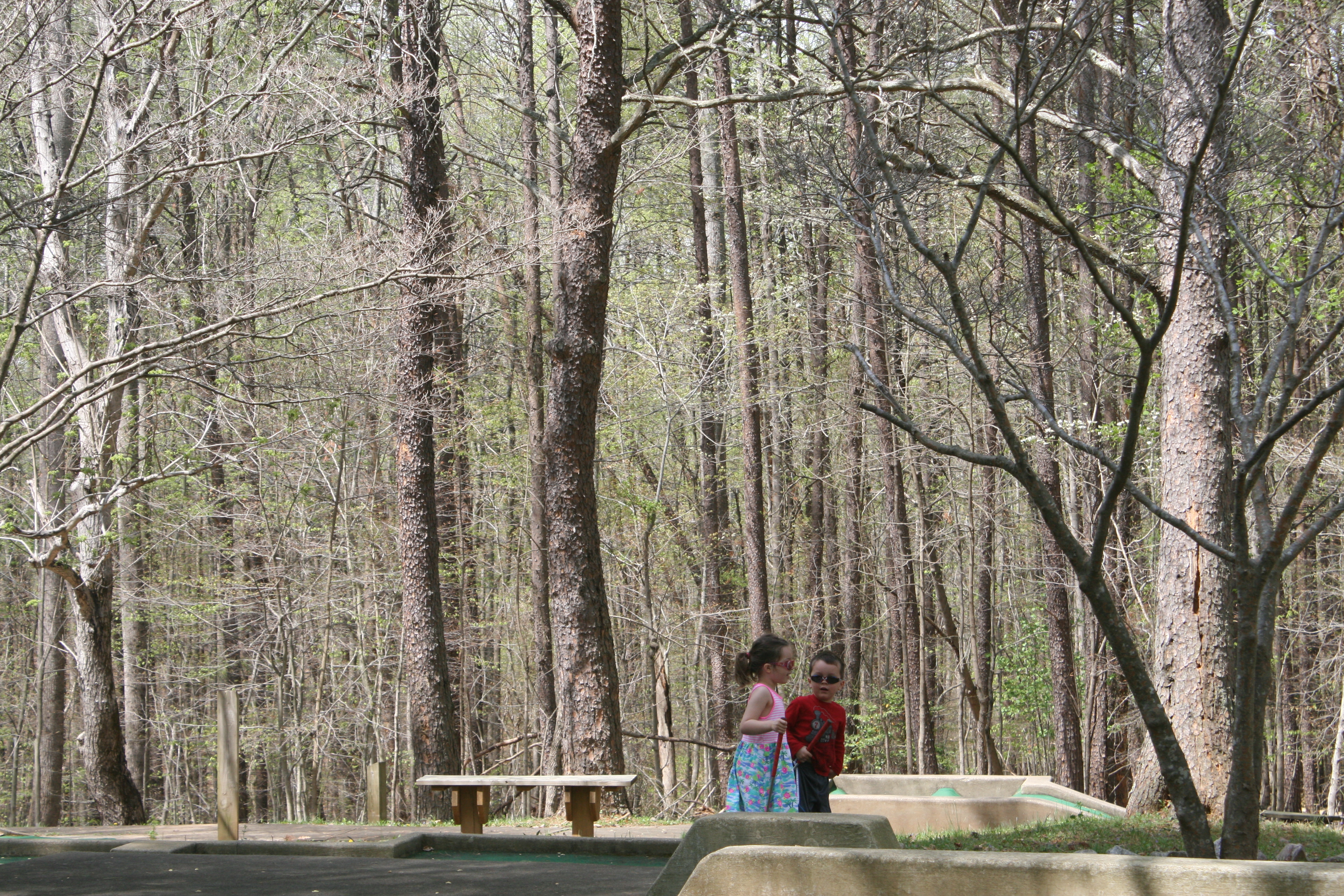
Serious conversation among the tall trees

Serious conversation among the tall trees

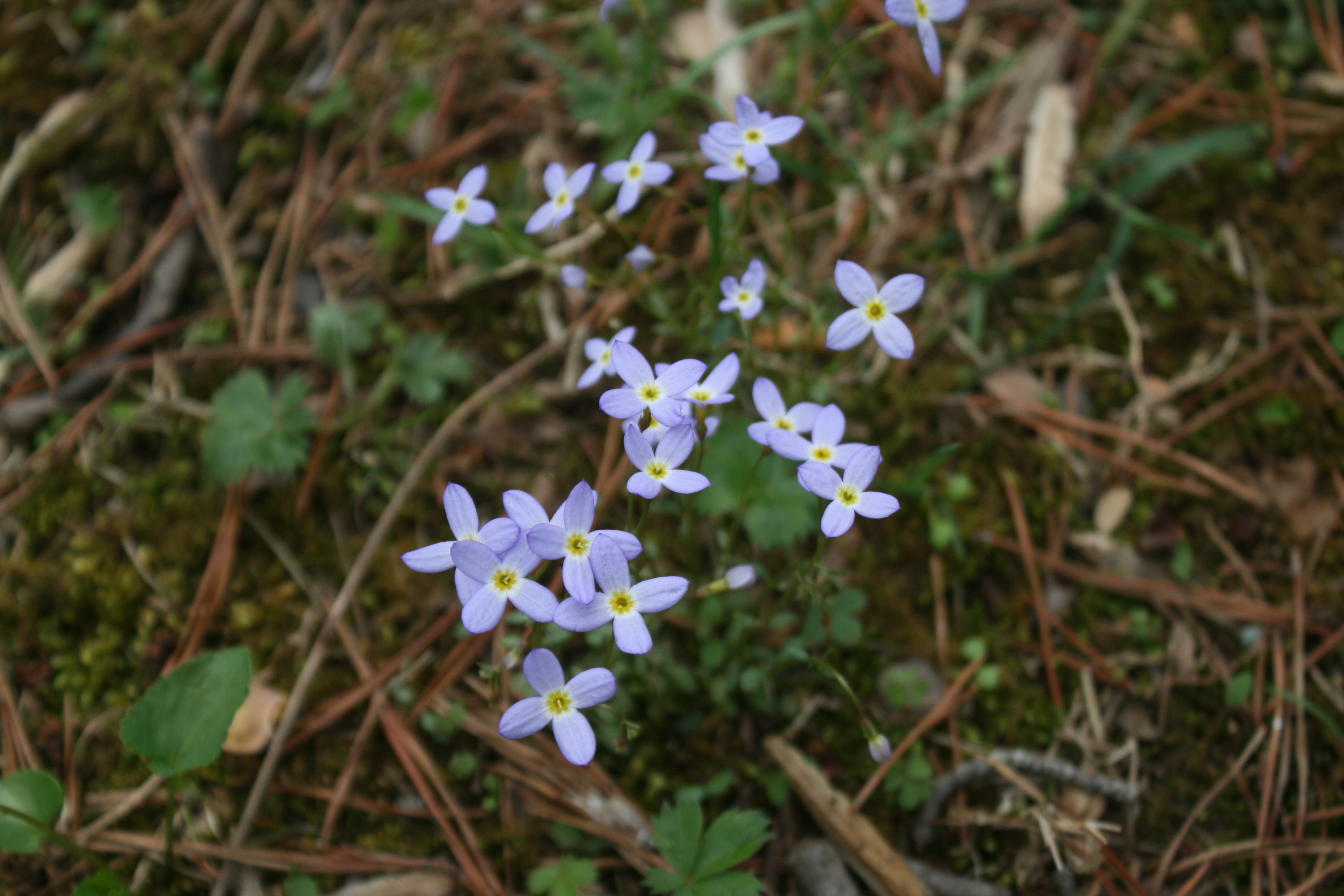
Spring flowers in the forest

Spring flowers in the forest

A week after arriving, we drove down to Great Bridge near Norfolk, where Carina had been in storage since November. I hadn’t wanted to leave the garden at home and miss the English spring, but Virginia was lovely too, with the bright green leaves bursting out, the dogwood and the other flowering trees and shrubs making a beautiful display.

We’d hoped to see the famous cherry trees in  blossom in DC, which we’d missed three years ago. That year, spring had come very early, followed by strong winds which destroyed the blossom before we arrived. This year, we were on target (the best dates are forecast on the internet), but when Ted drove us through the Tidal Basin after picking us up from the station, it was obvious that heavy rain the night before had ruined most of the blossom, and the heavy grey skies didn’t enhance what little remained.

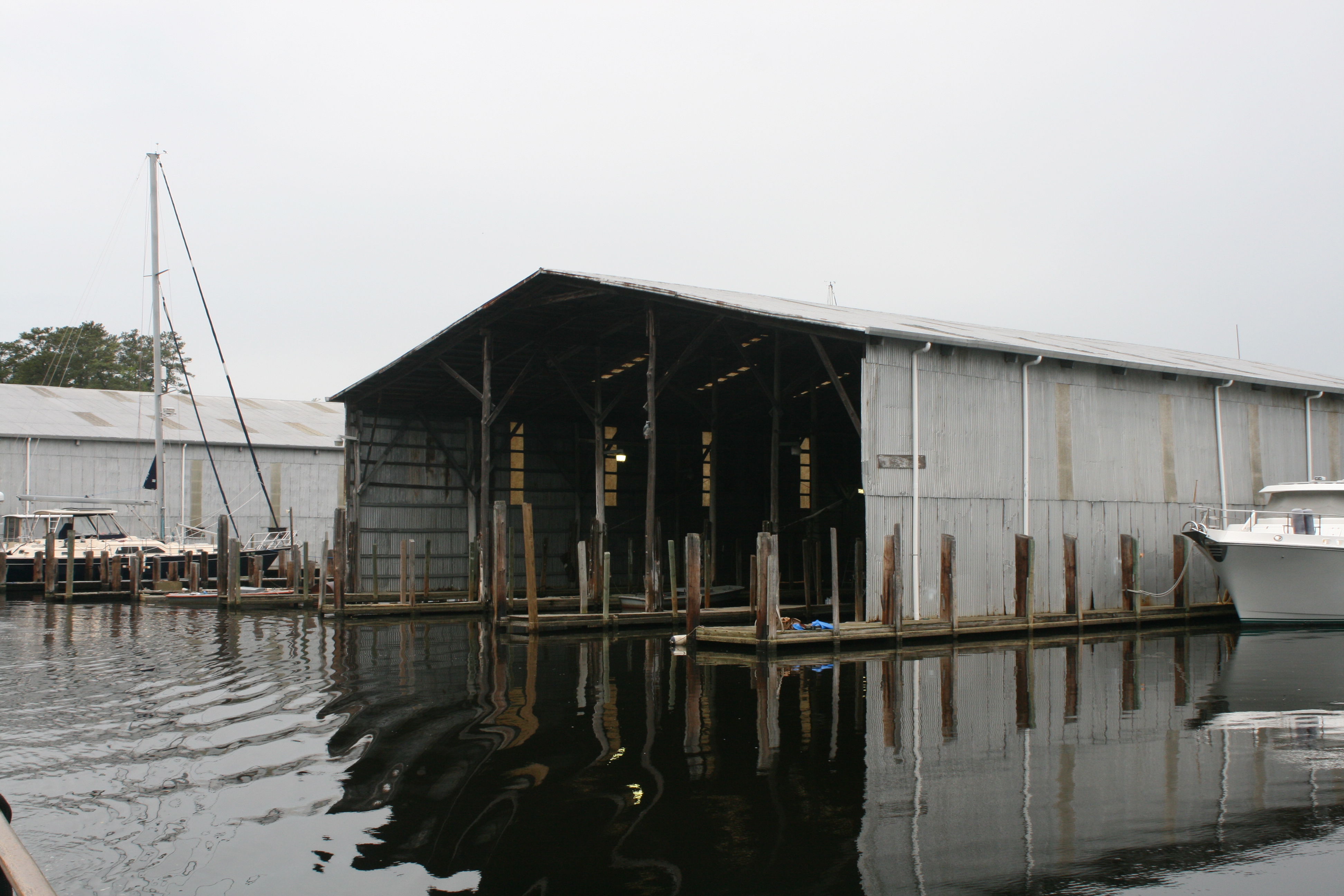
Carina had spent the winter in a big workshed at Atlantic Yacht Basin, Chesapeake. We had 3 nights in a hotel while we cleaned, scrubbed, unpacked, bought provisions and generally made the boat fit to be lived in again, and managed a return visit to a favourite haunt, Tautog’s Bar and Restaurant at Virginia Beach, where the food is excellent and the atmosphere small and friendly.

All this time, although the temperature was cool, the sun shone continuously. Our departure on Saturday morning was marked by grey skies and steadily increasing rain.

The shed at AYB where Carina stayed over the winter

The shed at AYB where Carina stayed over the winter

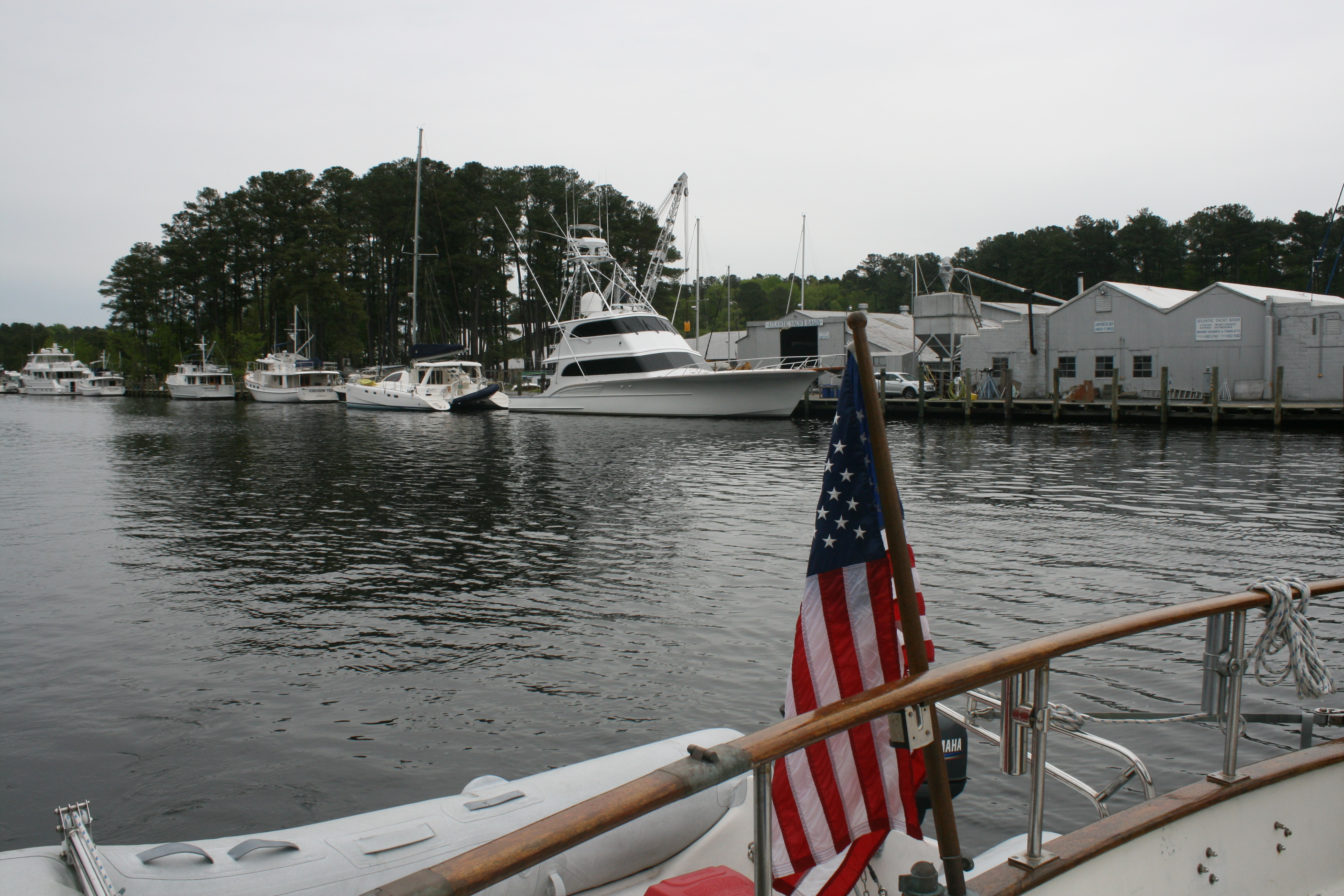
Leaving Atlantic Yacht Basin

Leaving Atlantic Yacht Basin

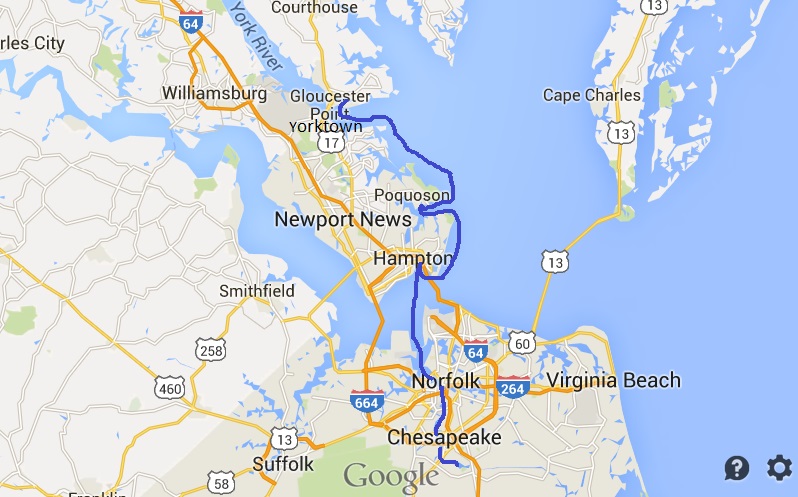
We decided to by-pass Norfolk this time and head straight for Hampton, impatient to explore Chesapeake Bay with its many rivers and inlets, and colonial history.

Chesapeake to Yorktown

Chesapeake to Yorktown

Despite the rain, it was a relief to get the boat out of the shed and into the fresh air. As an economy measure after three nights’ extravagance, we spent the first night moored out in a sheltered inlet near Hampton. The following morning we covered the short distance to Sunset Boatyard, about half a mile from downtown Hampton.

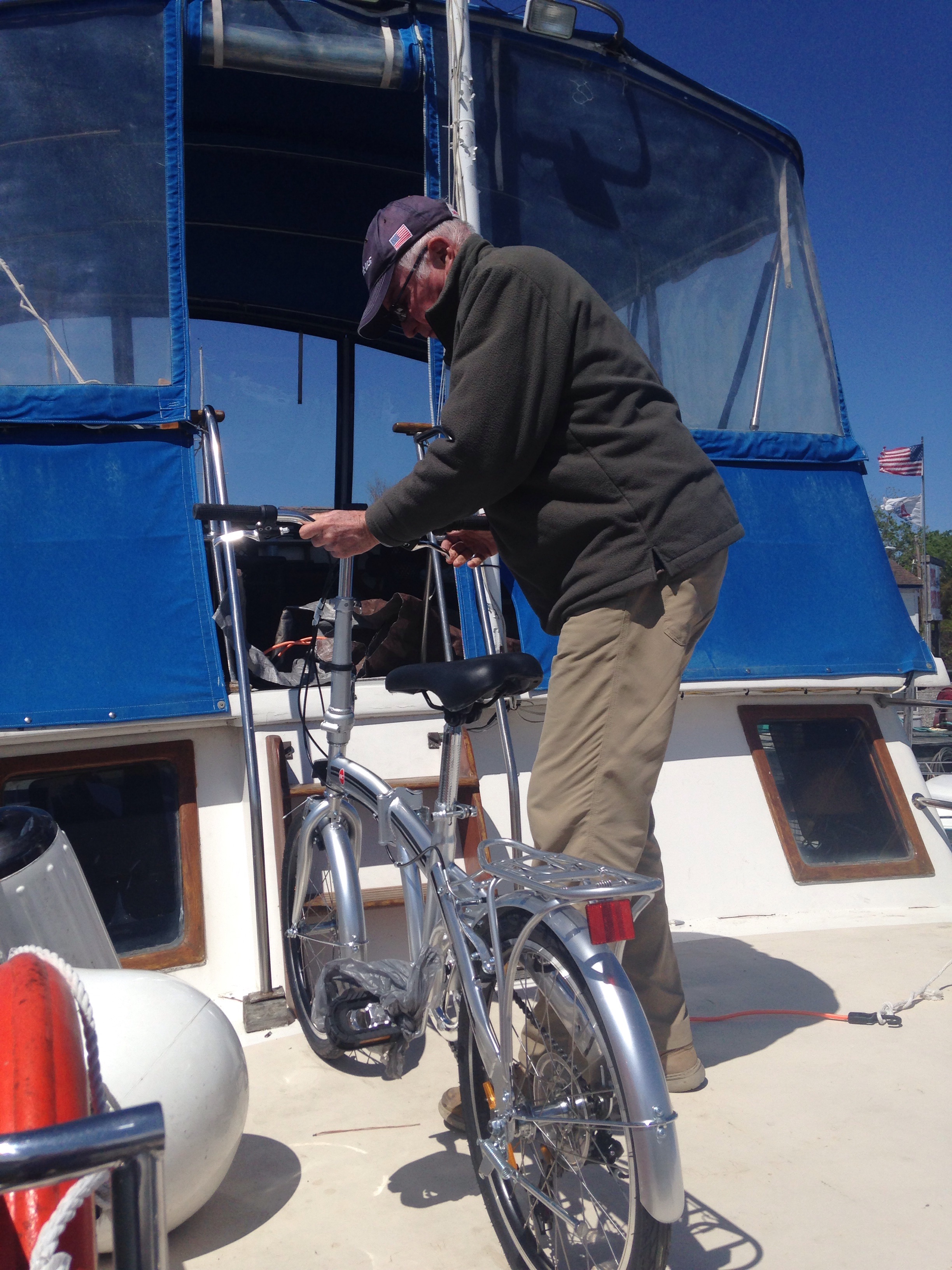
We’re still finding plenty of things to spend money on, and there’s a certain amount of negotiation involved. As in, well, you had those new widgets to make the internet connection better, so maybe I could have new a worktop in the galley. Our latest acquisitions are two folding bikes from Walmart, plus accoutrements, and we tried them out in Hampton, cycling through the wide shady streets lined with flowering trees and elegant houses.

Assembling the bikes

Assembling the bikes


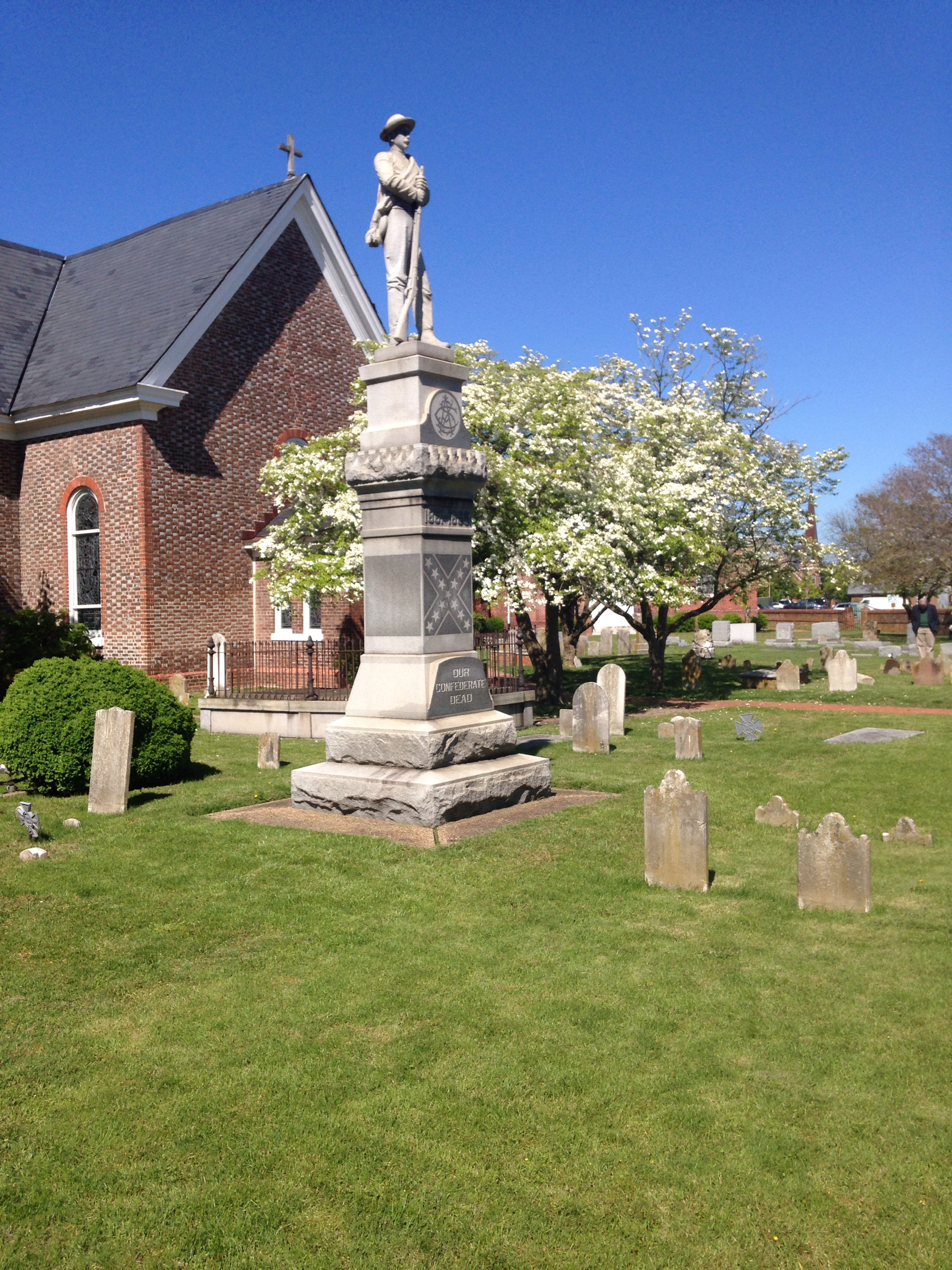
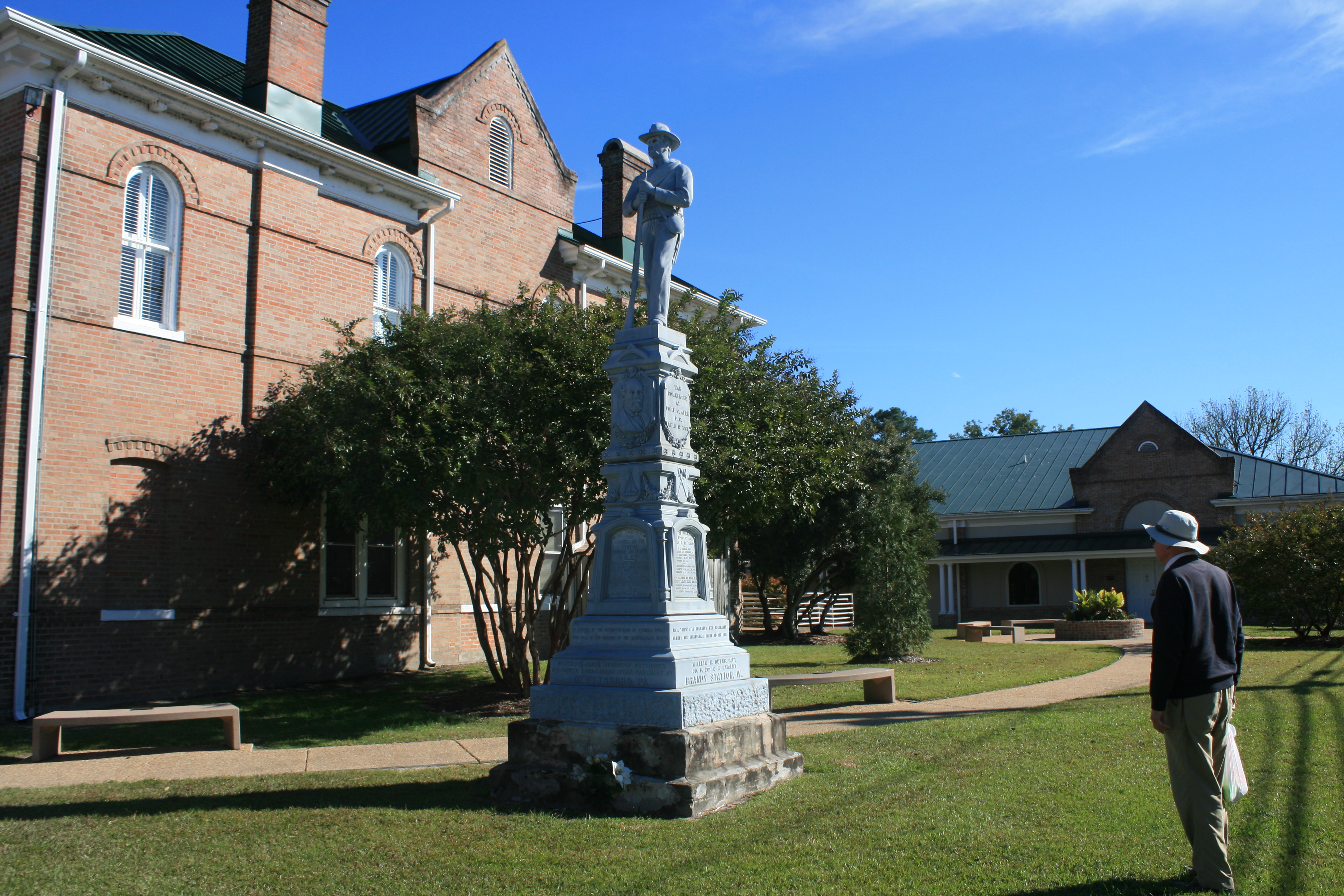
At the end of the main street we came to St John’s Anglican Church, the oldest permanent Anglican Church in America, founded in 1610, three years after the first settlement at Jamestown.

St John's Hampton, with the statue of the Confederate Soldier

St John’s Hampton, with the statue of the Confederate Soldier

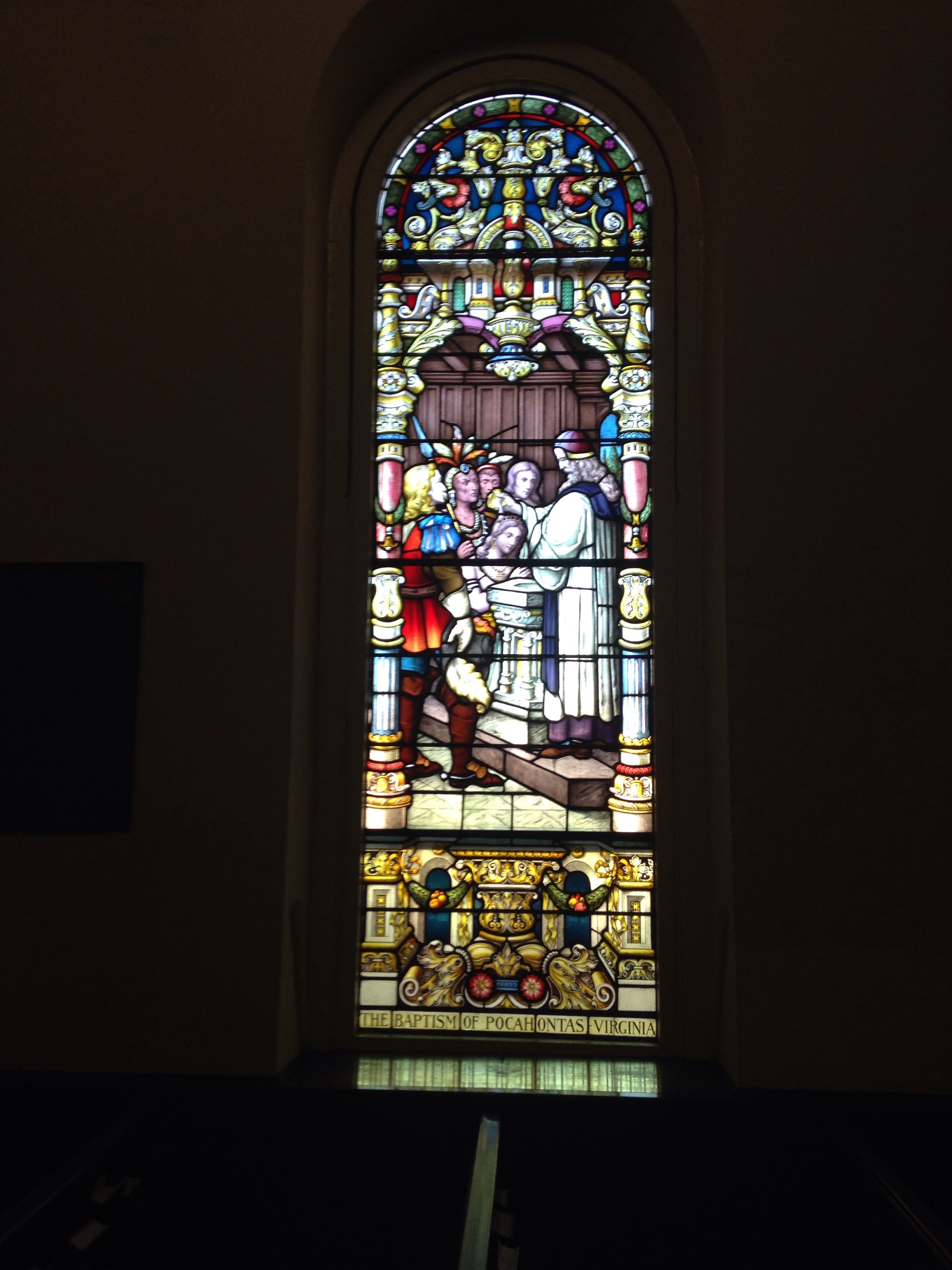
Inside, there is a stained glass window depicting the baptism of Pocahontas.

The Baptism of Pocahontas

The Baptism of Pocahontas

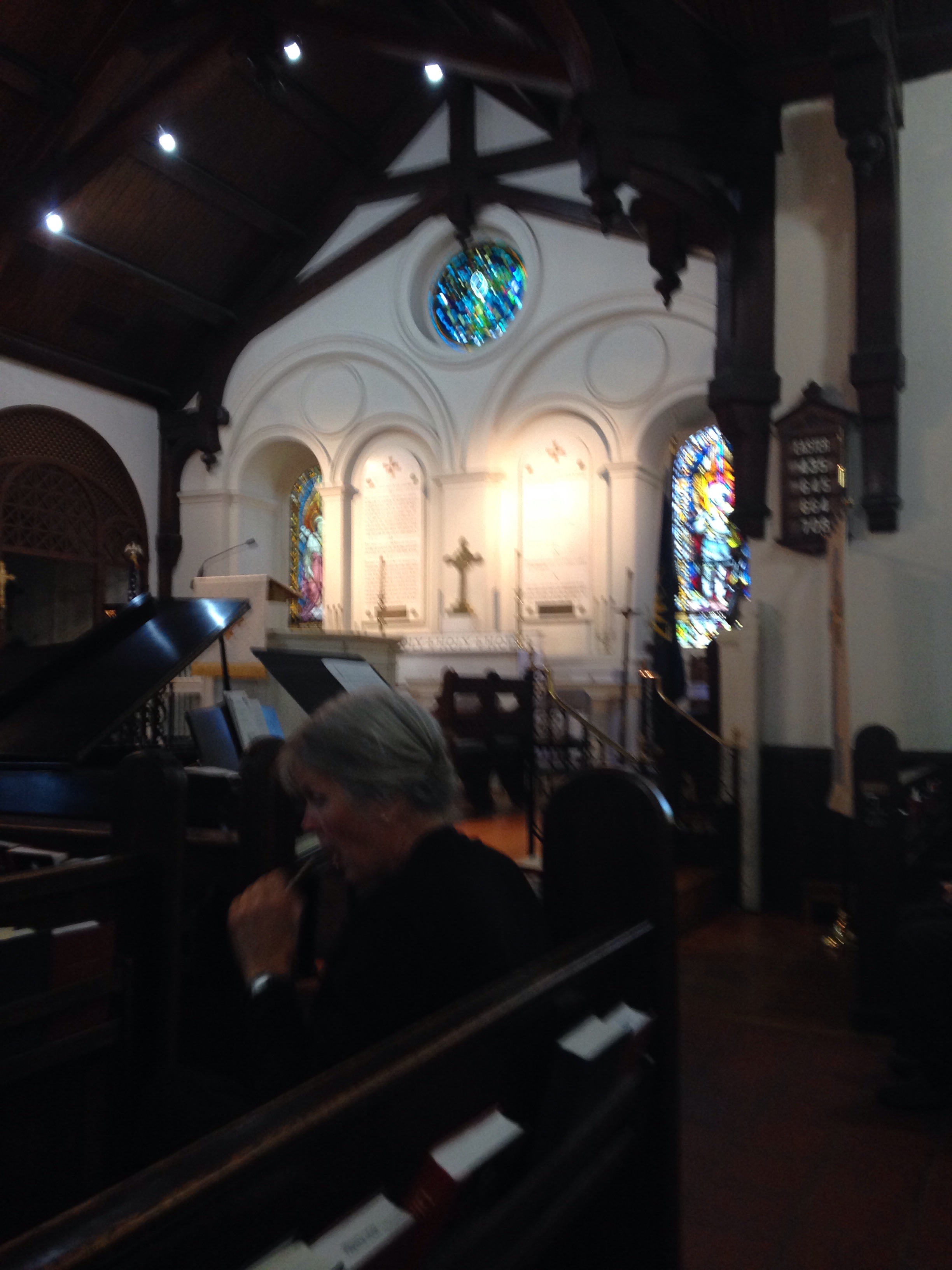
There was a notice pinned to the door advertising ‘Spring Promises’, a concert by Bellissima, a Women’s Choir which is based in the area. It was due to start at 4 o’clock, so after some discussion it was agreed we could go. The programme varied from Schumann, Vaughan Williams and the Song of Solomon, to  ‘Perhaps They are Not Stars’, a traditional Inuit text set to music, sung in memory of one of the choir members.

Perhaps they are not stars, but rather openings to Heaven, Where the love of our lost ones pours through and shines down on us to let us know that they are happy.They are not stars, but Love.

Waiting for the concert to start

Waiting for the concert to start

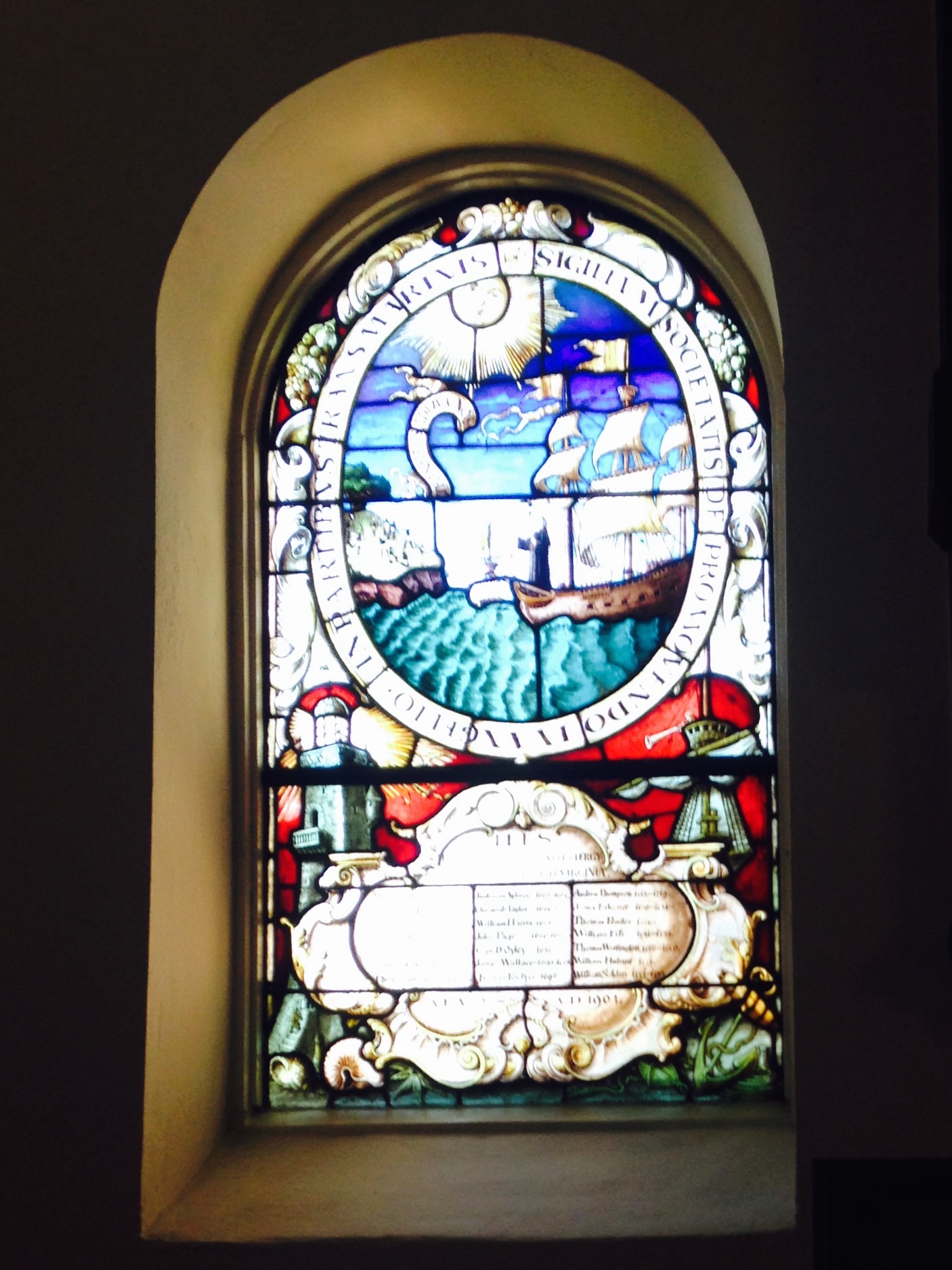
There is another window in the church, with the inscription inpartibus transmarinus sigillum societatis de promovendo evangelico – the seal of the Society for the Propagation of the Gospel in Foreign Parts. Still in existence today as the United Society for the Propagation of the Gospel, it was founded in 1701 to promote the Anglican Church in North America, in the face of competition from the Congregationalists, Baptists and Methodists, and Dissenters. Thanks to Jeni, Jill and Karen for your help with that one!

Window in St John's Church bearing the Seal of the Society for the Propagation of the Gospel in Foreign Parts

Window in St John’s Church bearing the Seal of the Society for the Propagation of the Gospel in Foreign Parts

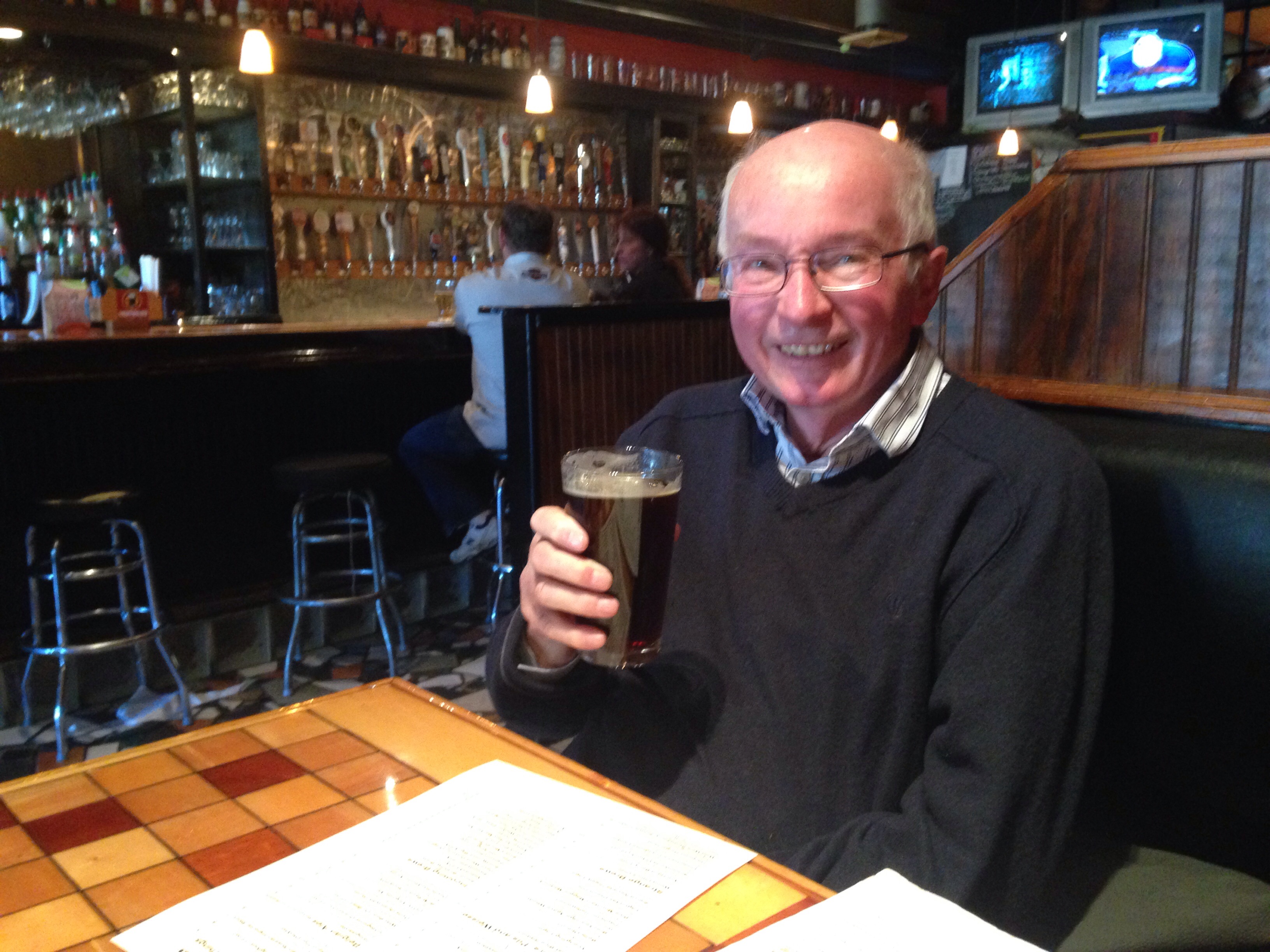
We’d been recommended by the boatyard staff to try the Taphouse on the Main Street, so after the concert we went there to sample a couple of the 157 different varieties of ale on offer. Trying the beer seems to be a rather more interesting activity than trying the wine, we find.

Ian enjoying the Dirty Bastard ale in the Taphouse, Hampton

Ian enjoying the Dirty Bastard ale in the Taphouse, Hampton

We stayed for dinner, and perhaps emboldened by the beer, I decided to try blackened tuna with garlic green beans and smoked tomato sauce, on bacon and blue cheese grits. Good call!

Our perfect afternoon was marred slightly on the way home. As I was crossing the road at a controlled junction to go to a 7-11 store to get some cash, a car swerved round the corner at speed and stopped about a foot from me and my bike. Ian yelled something at the driver.

In front of the store was a gas station (please note use of appropriate terminology) and the driver pulled onto the forecourt and came over as we were propping the bikes up.

‘Wouldn’t leave those bikes there.’

‘You wouldn’t?’

‘Nah – not safe.’

I stayed outside with the bikes while Ian went in to get the cash, followed by the driver who emerged a minute later.

‘Where you guys from?’

I allowed a pause of several seconds before answering.

‘England.’

‘Y’all got a weapons permit?’

Another studied pause.

‘No.’

‘Well, youse might like to think about gettin’ one. This is a weapons state.’

For the first time in America, I felt slightly uncomfortable. But not so intimidated as the time when some teenage boys threw stones at our narrowboat on the Grand Union Canal near Leicester, or some teenage girls hurled abuse as we passed under a long bridge on the Ashton Canal at Stalybridge. Or the time when, hitch-hiking through France in 1970, we had to smartly jump out of  a Spanish lorry driver’s cab when he started brandishing a knife.


We had to decide the next day whether to stay in Hampton, or move up to Yorktown. The weather was complicated and if we didn’t go early, the strengthening winds would mean we couldn’t go at all for the next two days.

We went.

After half an hour of pitching up and down I began to feel queasy, remembering at this point that I had forgotten to bring from home the First Aid Box, containing the stugeron and all the other over-the-counter meds that we never have need of.

I spent the next two hours lying horizontal, covering my eyes and groaning theatrically from time to time.

The Captain decided to abort the journey and instead of going all the way to Yorktown, diverted into a sheltered inlet at Poquoson where we anchored. Unusually solicitous, he made me tea and toast, but it was some hours before I started to recover.

We discovered later that the weather forecast had been amended the morning we left Hampton, and a small craft warning had  been in place since late morning.  We spent Tuesday on the mooring, glad that we weren’t out in the Bay.

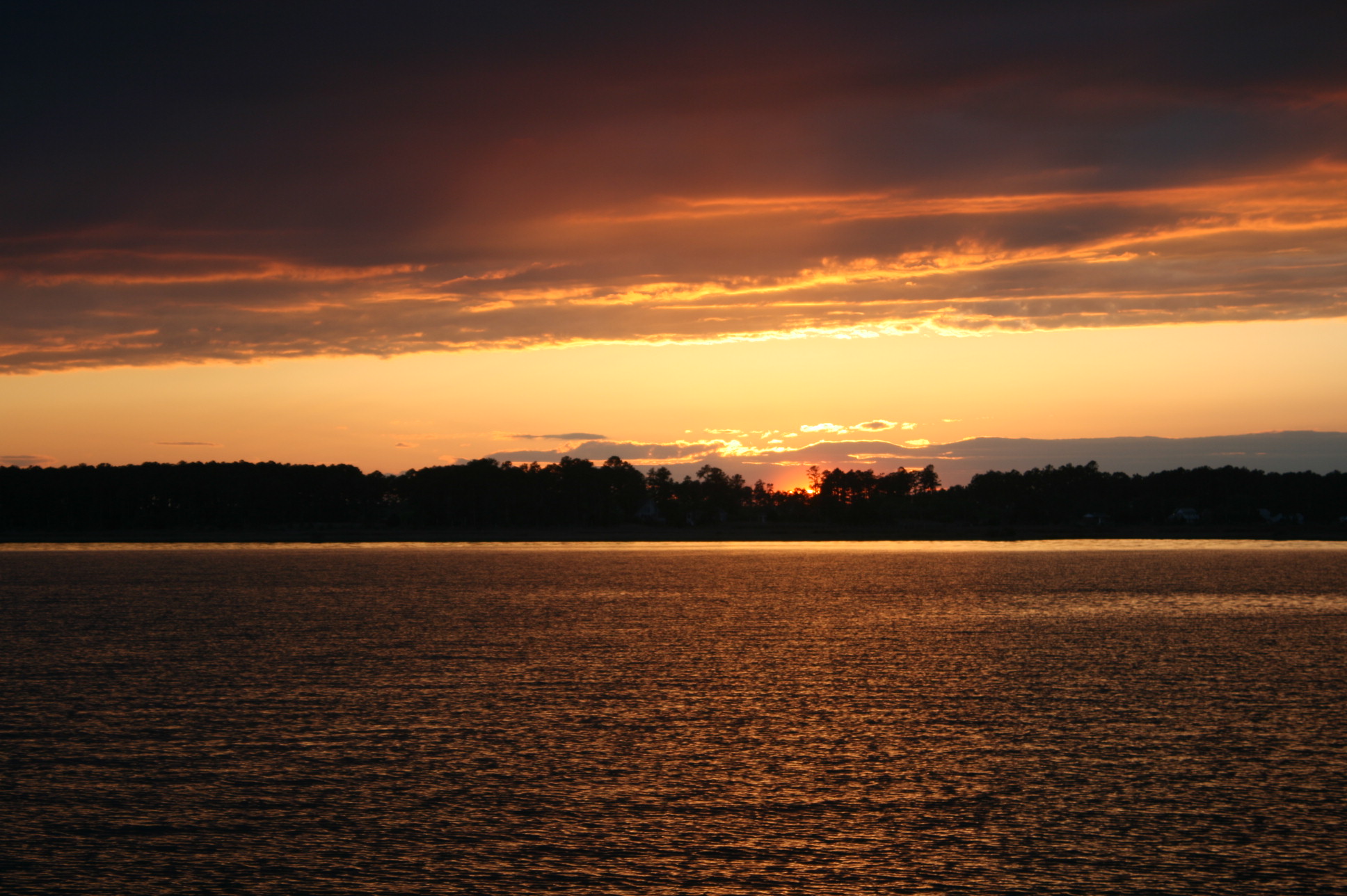
But there was a lovely sunset.

Sunset near Poquoson

Sunset near Poquoson


New crew and new scenery

We spent 3 days in Elizabeth City after our trip across Albemarle Sound, waiting for our visitors (Liz and Nick) to arrive. I cleaned the inside of the boat in readiness – it’s odd how ingrained these rituals are – and Ian decided to include testing the sea-worthiness of the RIB in his list of maintenance jobs. We have hardly used it on this trip, and the angle of the boat as he whizzes round the Pasquotank River gives a clue as to why I’m sometimes a little reluctant to join him.

Testing the RIB at Elizabeth City

Testing the RIB at Elizabeth City

New crew members

New crew members

We had the choice of two routes from Elizabeth City to Norfolk, VA, the end-point of this leg of the trip. The Dismal Swamp route had an alluring name, but  consisted of a straight, 50-mile canal. The other more easterly route which we followed, through the Pasquotank River, Albemarle Sound, North River and North Carolina Cut to Coinjock, and then to Pungo Ferry and Norfolk via Great Bridge,  would offer more variety of scene.

Elizabeth City - Coinjock - Pungo Ferry Road - Norfolk

Elizabeth City – Coinjock – Pungo Ferry Road – Norfolk

North River

North River

The North River narrowed into the North Carolina Cut as we approached Coinjock.

North Carolina Cut

North Carolina Cut

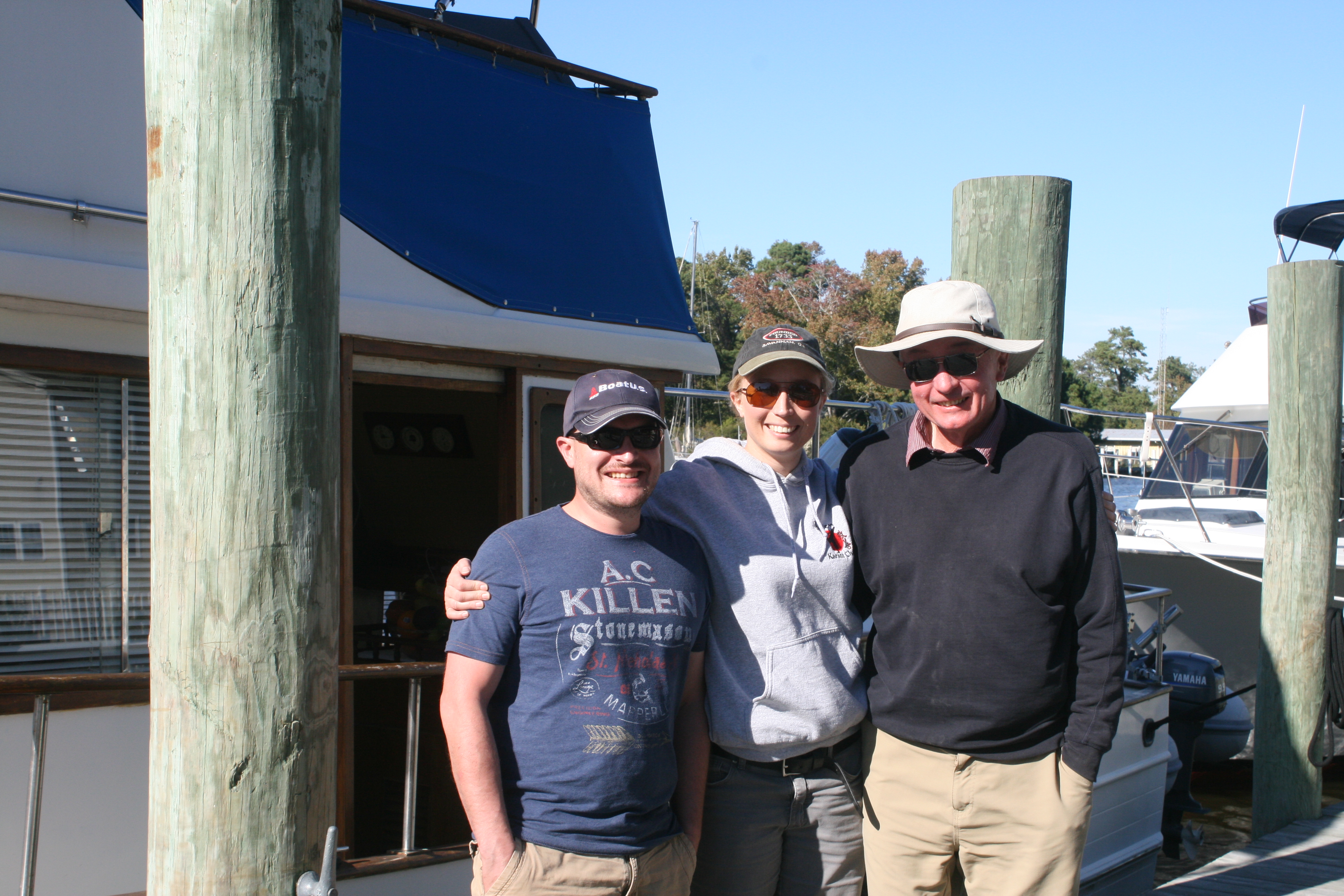
Nick, Liz and Ian at Coinjock Marina

Nick, Liz and Ian at Coinjock Marina

Coinjock Marina was a long, straight dock full with about 20 boats, all except Carina going south. There was an excellent restaurant, and that was full too.

Next morning, we met our first fellow Brit, who was single-handedly  sailing his small yacht  Wind in the Willows, to the Bahamas. It  seemed a suitable name, given that its owner, who looked nearly as old as the barber of Columbia, was an archetypal English gentleman, with a shock of white hair, Queen-Mother teeth, spindly tanned legs and an RP accent. We helped him cast off as he was leaving, and he expressed concern that I might damage my fingernails untying the knots in his mooring ropes.

Later, in the marina office, the dockmaster said to one of the dockhands, ‘Wind in the Willows gone? He forgot to pay.’

Then, ‘Well, we’ll get him on the way back.’

‘Yeah,’ said the dockhand . ‘And he did eat in the bar last night. A 16oz steak.’

Wind in the Willows had been making the journey south, via Coinjock, and back again, every year for the past 24 years. There was some  speculation about his country of origin, but given our accents, the marina staff were being polite. ‘Well, he sure ain’t from anywhere around here.’

Coinjock Marina & Restaurant

Coinjock Marina & Restaurant

The ICW followed the North Carolina Cut north of Coinjock, then opened out into Coinjock Bay, and Currituck Bay, before entering North Landing River just before the Virginia State Line.

Passing Piney Island

Passing Piney Island

Virginia coming into view

Virginia coming into view

First sight of Virginia

First sight of Virginia

We were looking for a sheltered anchorage, as the forecast that night was for wind and rain. The waterways guide had suggested a disused dock at Pungo Ferry Road, but when we got there, the wind was already gusting quite strongly, and rain seemed imminent. The dock looked delapidated, and there was a suspiciously neglected-looking boat already tied up. Perhaps most importantly, there was an uncompromising notice, stating ‘No Mooring’.

We went back to a side creek which was a little more sheltered and tried to drop anchor there, but the anchor just pulled through the silt and dragged. The anchor and chain, covered with thick black mud, had to be hauled back into the boat and a better site found. In shallow water, with the depth alarm constantly going off, this was less than easy, and we made at least five attempts before the Captain was finally satisfied that we wouldn’t drift off into the marshes, and even then we had to put both anchors out, and Ian and Nick went out in the RIB with a rope to secure us to a handy tree.

Carina has proved she’s more than capable of accommodating visitors, and it was great to find the breakfast dishes washed, or the mooring ropes stowed away, and the fenders taken in. But where Nick really excelled himself was in dropping the mud-covered anchor and pulling it up again six times at Pungo Ferry Road, with uncomplaining equanimity.

However, it was a nice mooring once the stress had dissipated, but it was perhaps just as well that we had not forgotten to replenish the beer supplies back at the marina.

Dramatic sky at our mooring near  Pungo River Ferry

Dramatic sky at our mooring near Pungo Ferry

Liz at Pungo Ferry Road

Liz at Pungo Ferry

Ian and Nick securing the boat

Ian and Nick securing the boat

Mooring near Pungo River Ferry

Mooring near Pungo Ferry

Evening reflections at the mooring

Evening reflections at the mooring

Mooring near Pungo River Ferry

Mooring near Pungo Ferry

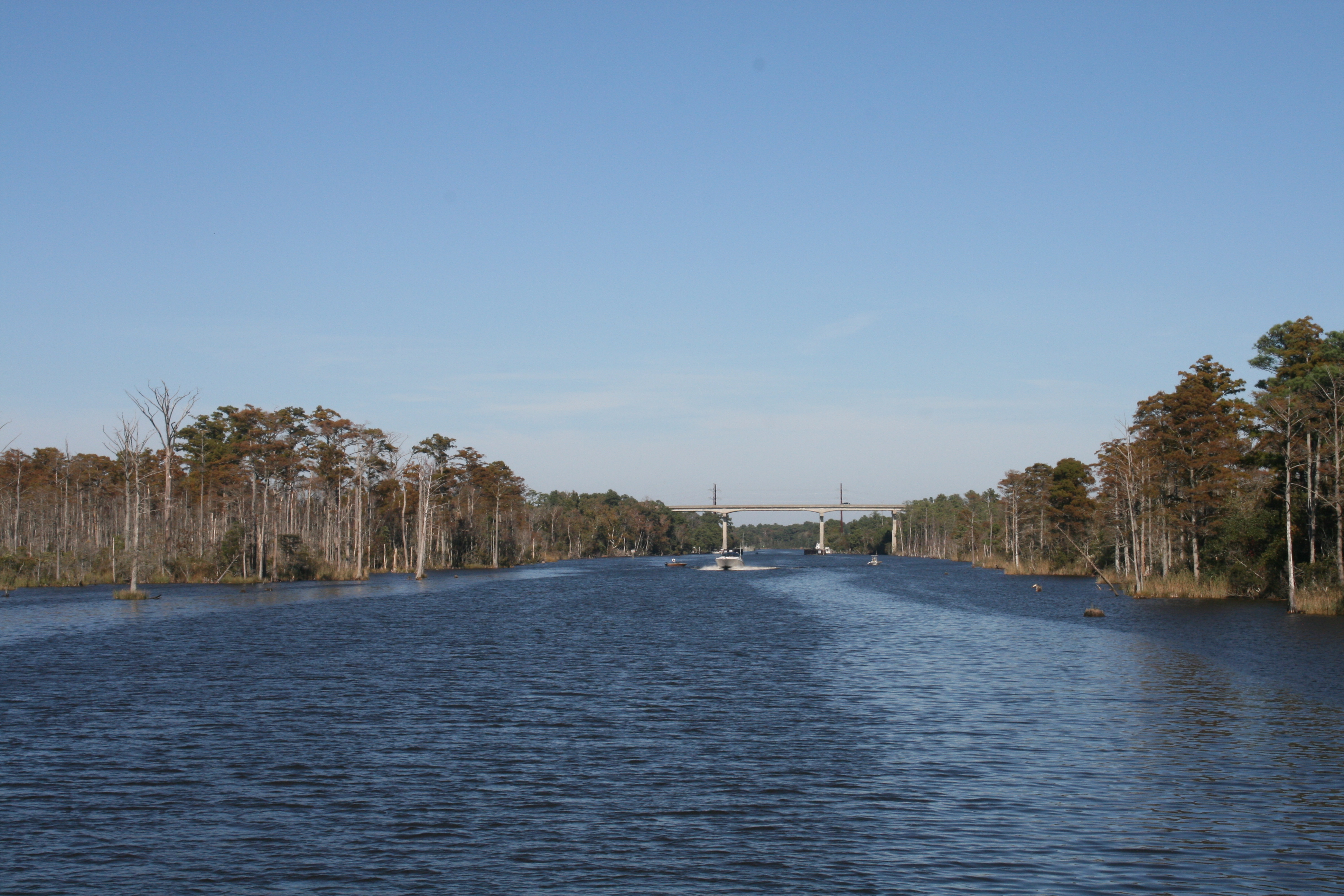
The winding North Landing River continued up to the Centerville Waterway, which linked to the Elizabeth River.

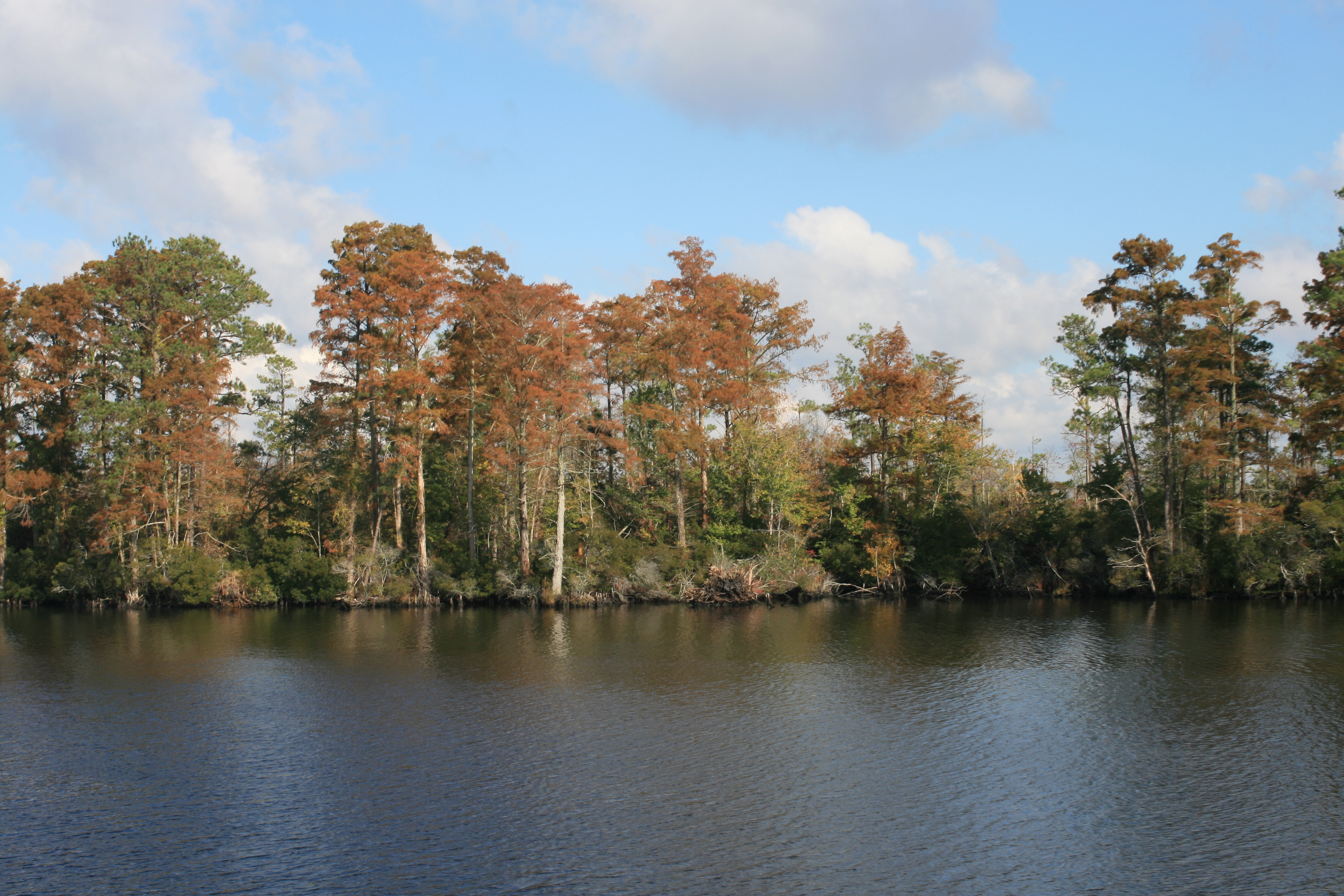
Fall tints on the North Landing River

Fall tints on the North Landing River

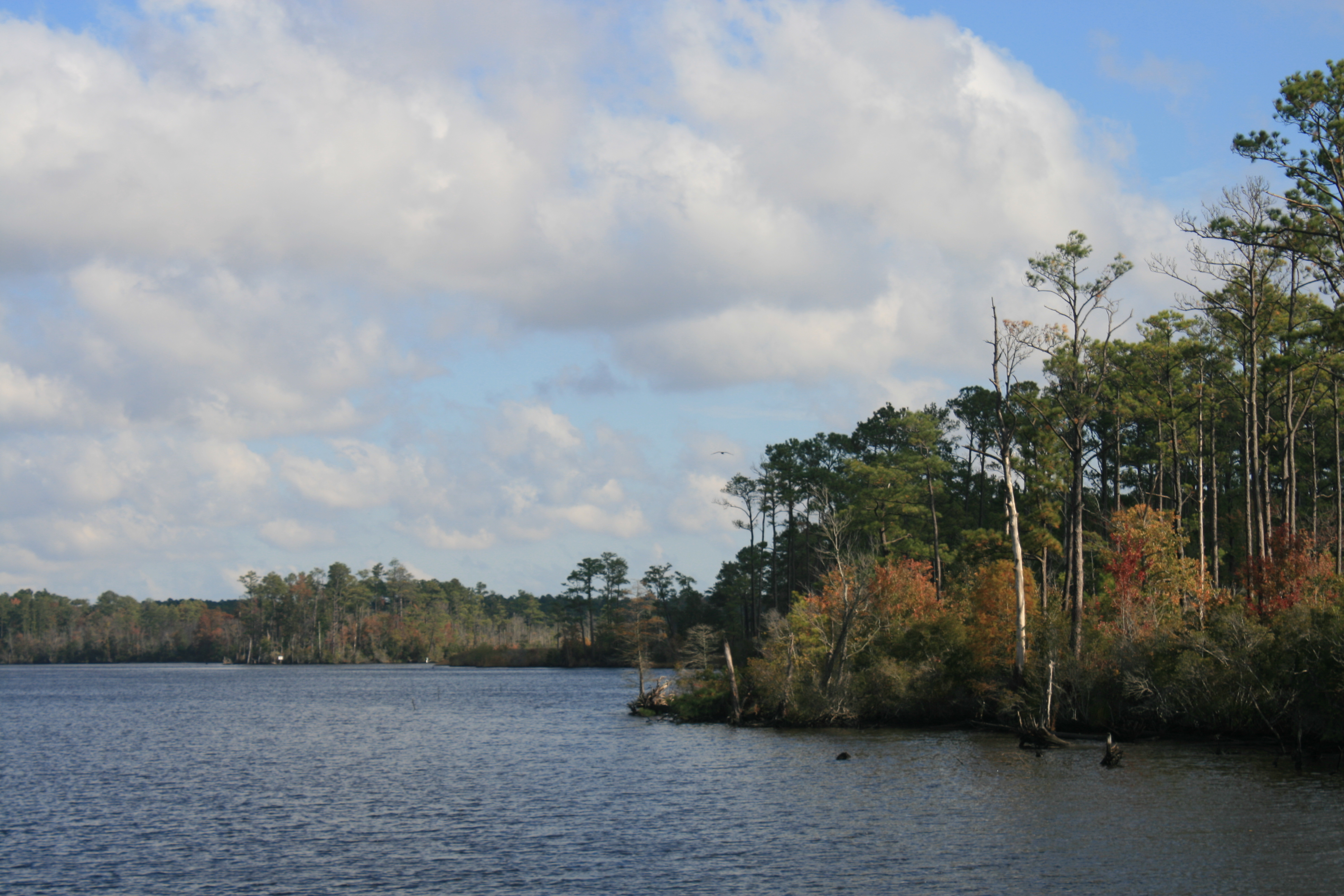
North Landing River

North Landing River

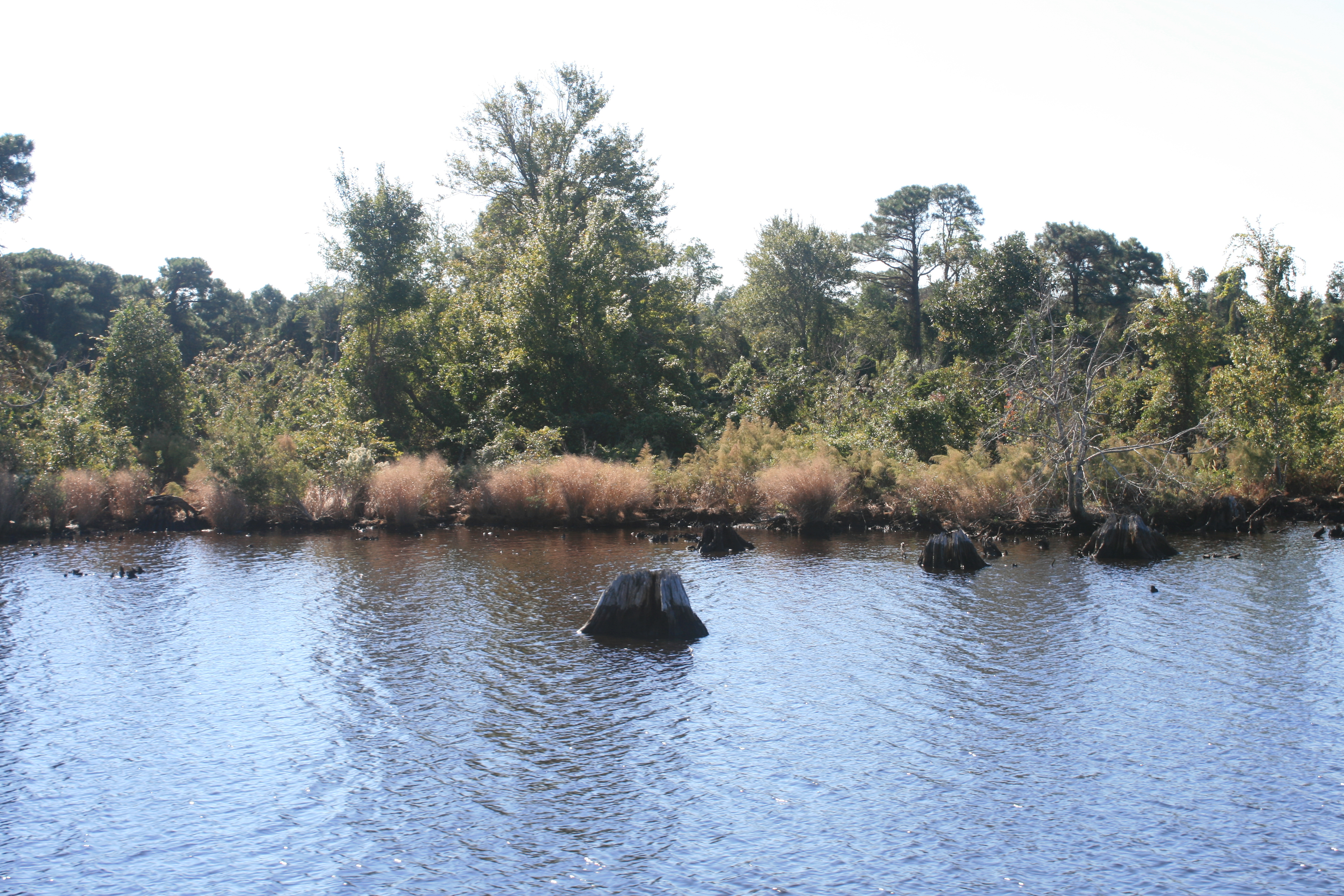
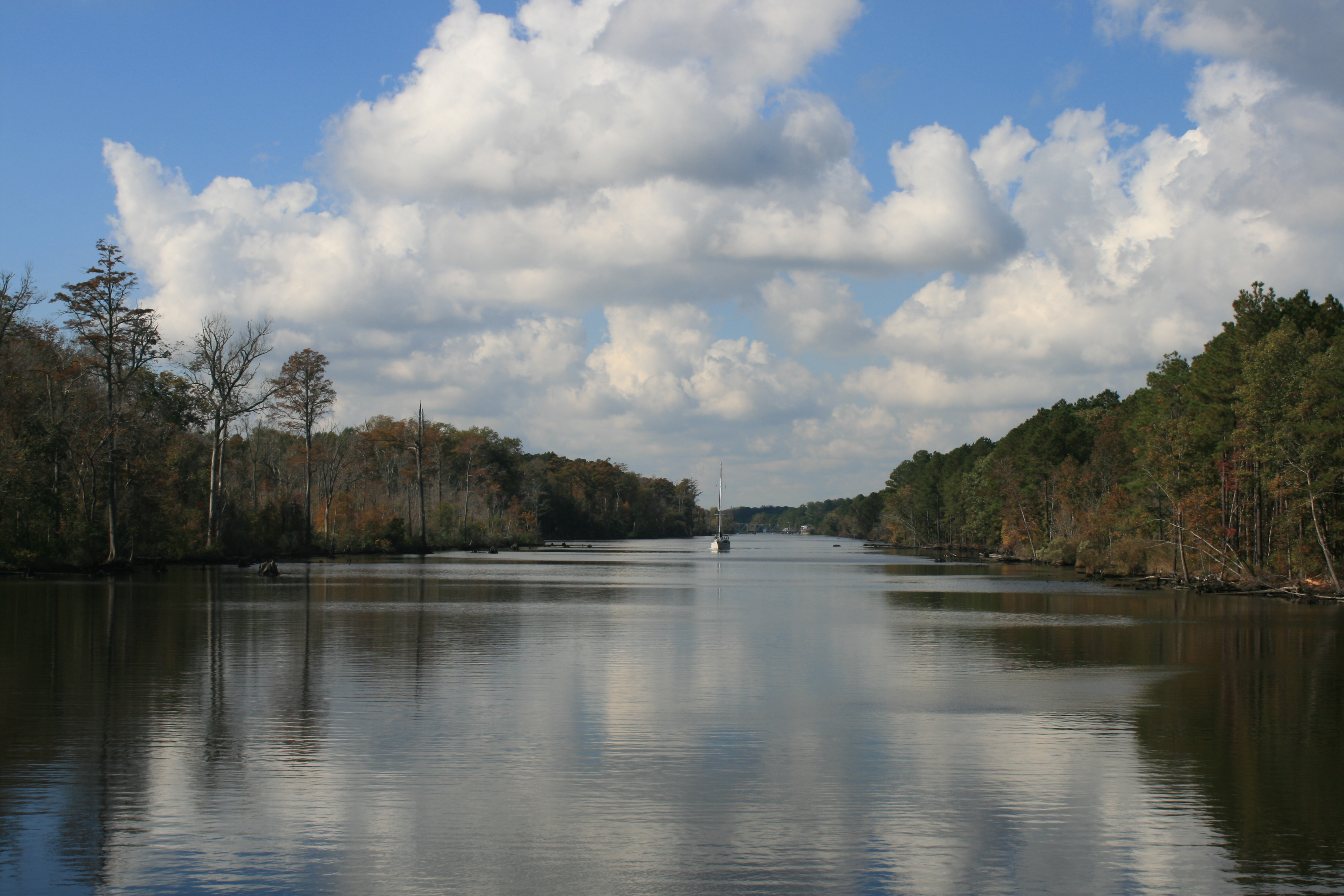
All along the waterway   in North Carolina and now Virginia, we’ve seen lots of Cypress knees. These aren’t, as they might appear, the stumps of dead trees, but a living part of the root system of the cypress tree. Their function is a subject of debate amongst botanists. One popular suggestion was that they help to aerate the root system in brackish water, but this isn’t supported by evidence.

Cypress Knees, Chesapeake - Albemarle Canal

Cypress Knees, Centerville Waterway

More autumn tints

More autumn tints

Centerville Waterway

Centerville Waterway

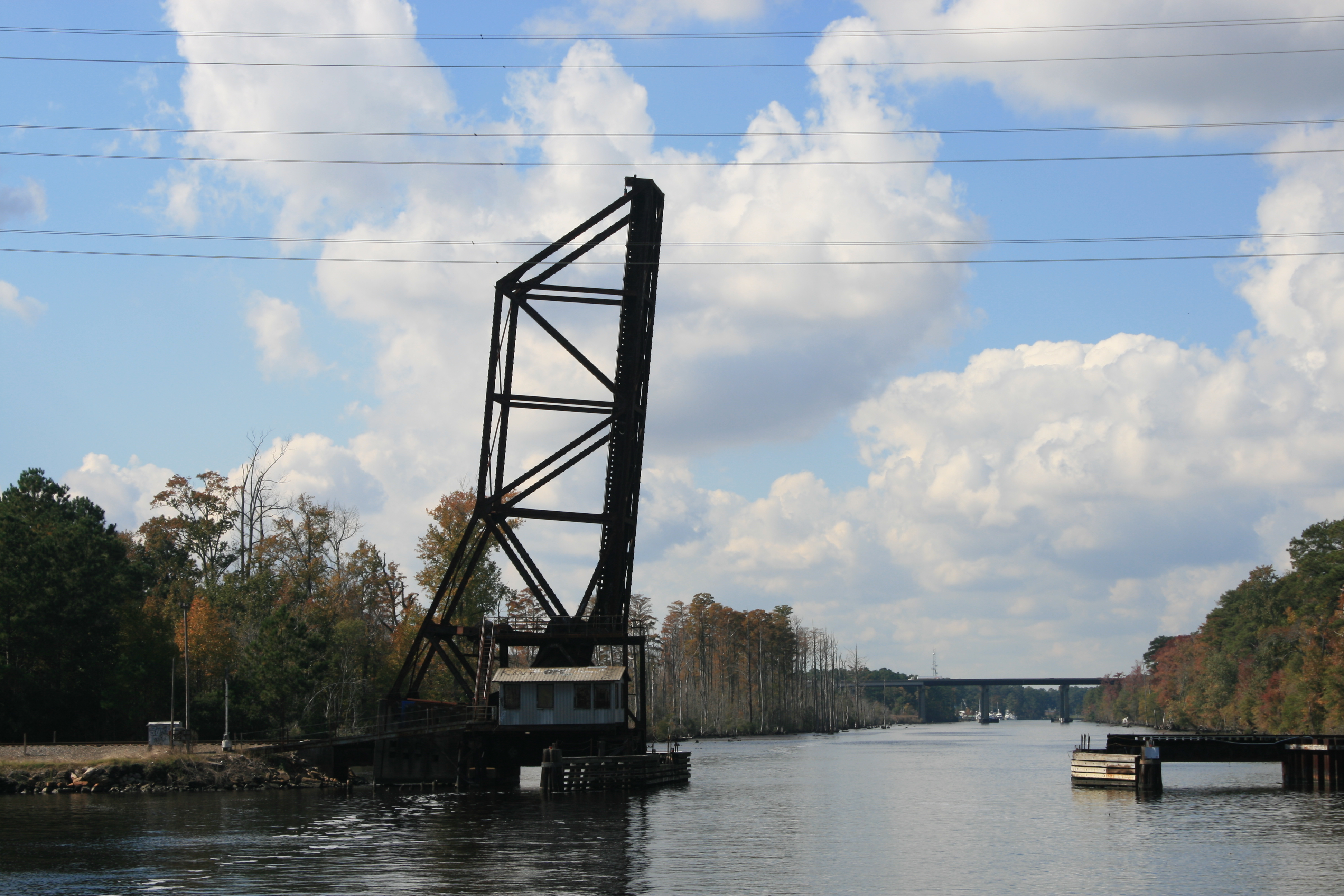
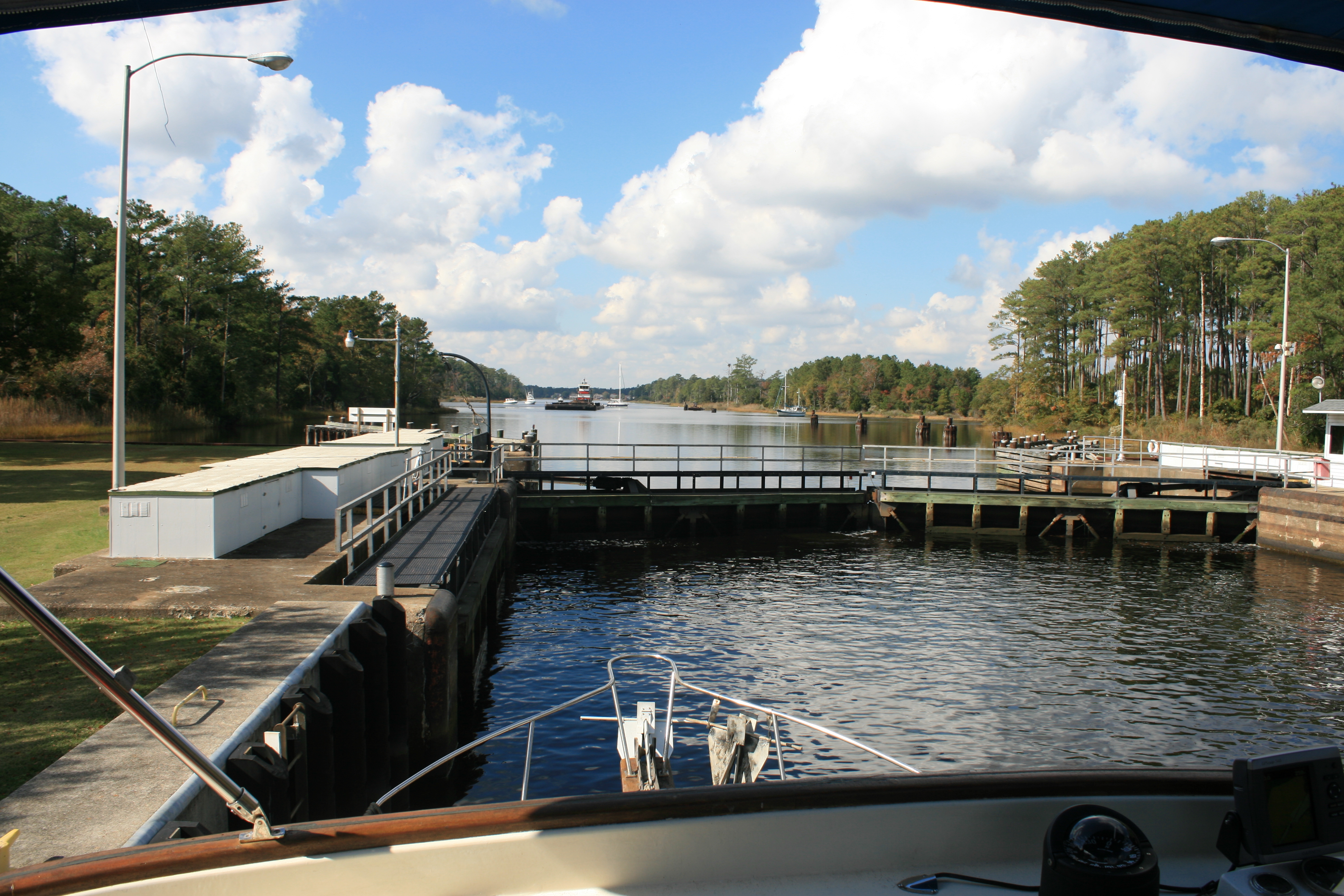
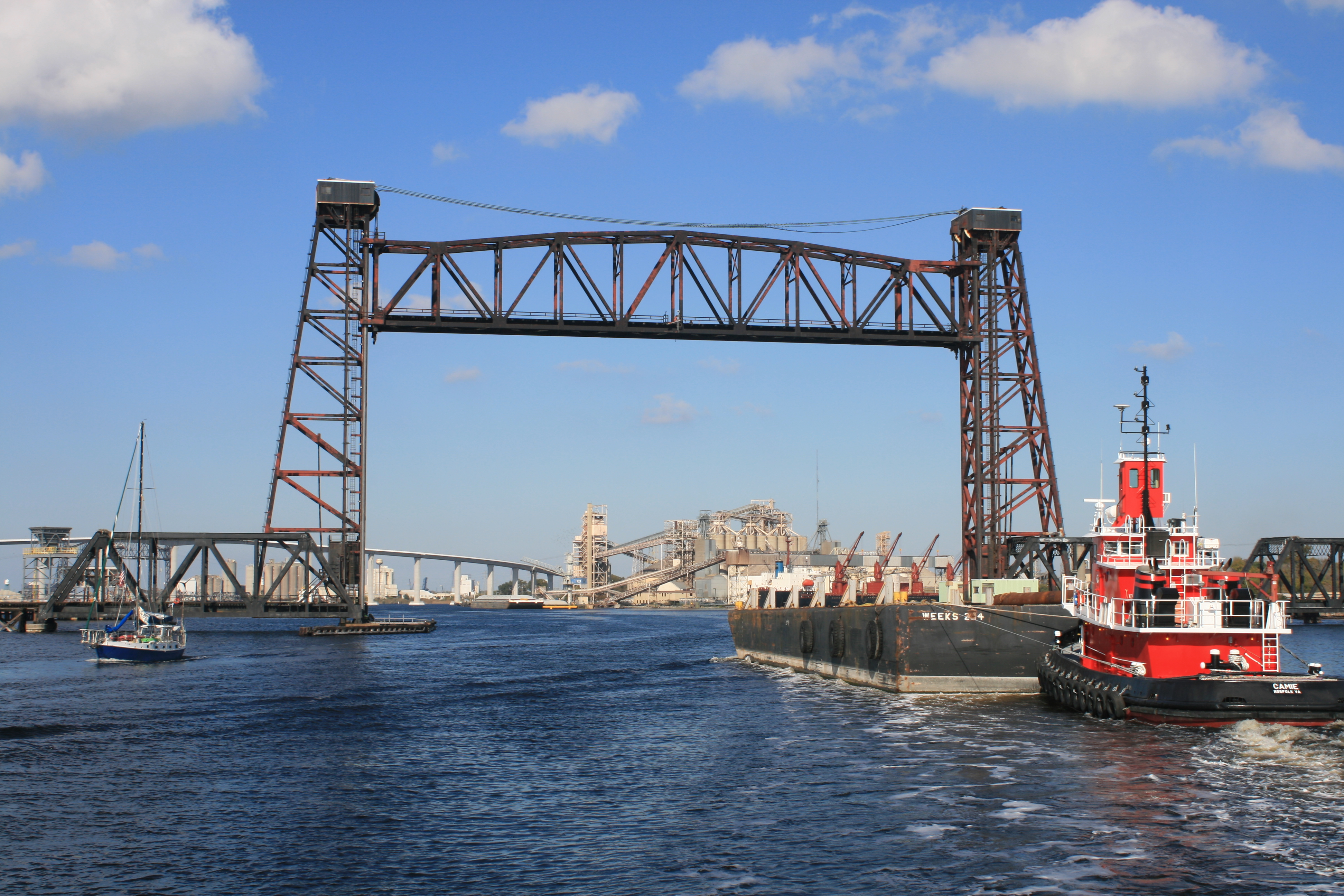
There were several obstacles in the form of bridges which only opened at certain times, and the only locks on the ICW, at Great Bridge, so there was some waiting around.

Centerville Turnpike Swing Bridge

Centerville Turnpike Swing Bridge

Norfolk and South Railroad Bridge

Norfolk and South Railroad Bridge

Great Bridge Swing Bridge

Great Bridge Swing Bridge

Great Bridge Locks

Great Bridge Locks

Gilmerton Bridge, Chesapeake

Gilmerton Bridge, Chesapeake

Norfolk and South Railroad Lift Bridge

Norfolk and South Railroad Lift Bridge

And, for something completely different, the new South Norfolk Jordan Bridge, curving elegantly over the Elizabeth River.

The new South Norfolk Jordan Bridge

The new South Norfolk Jordan Bridge

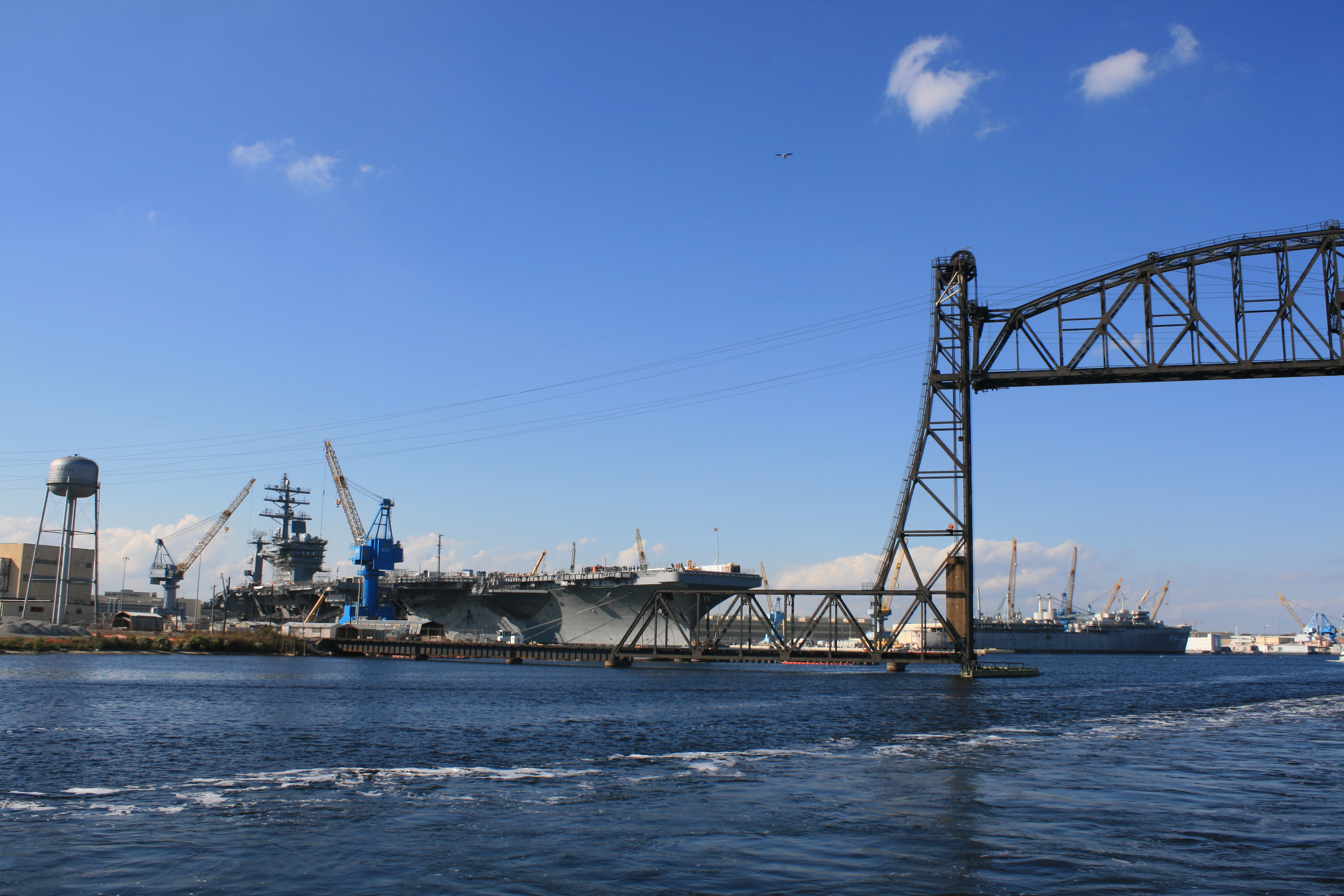
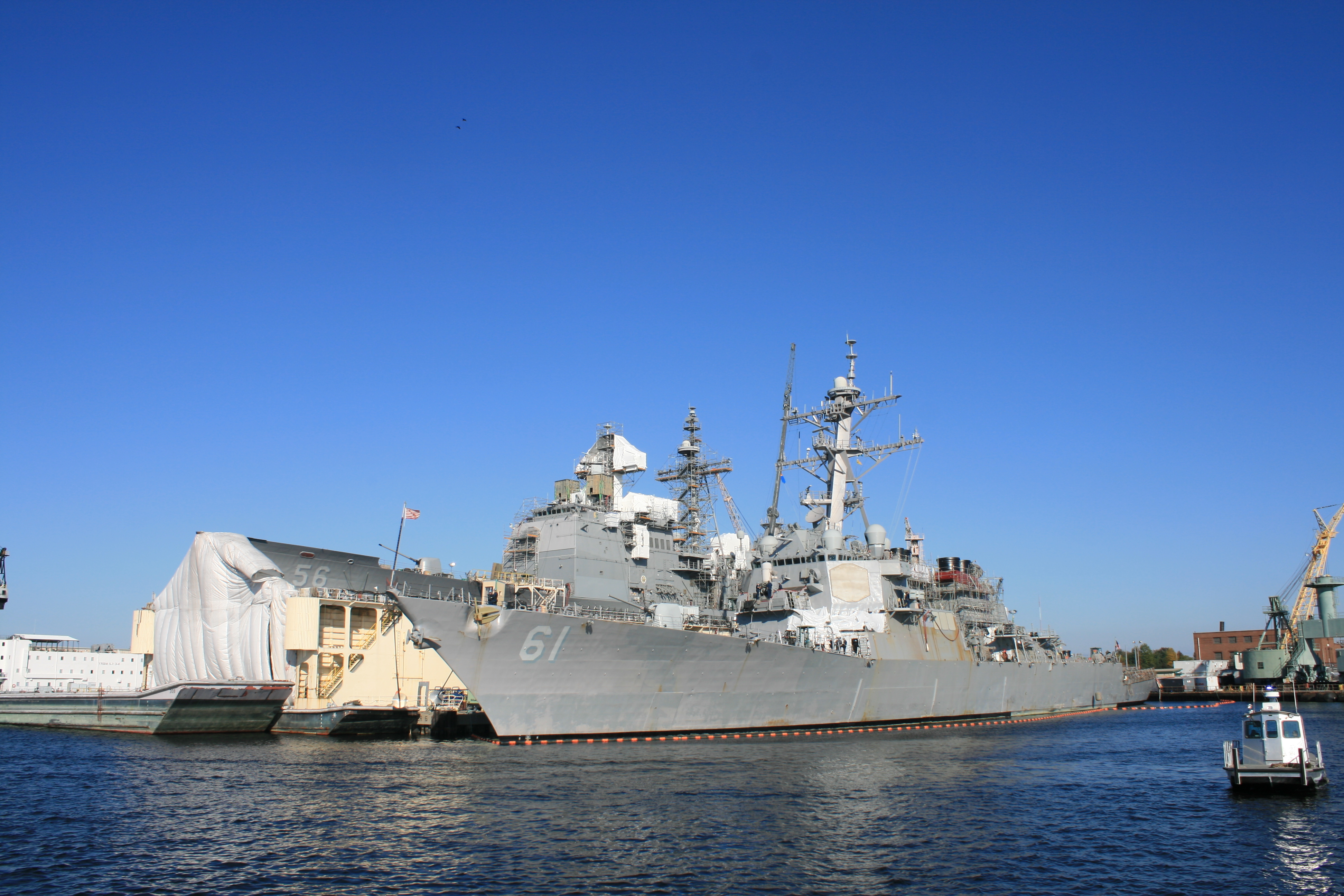
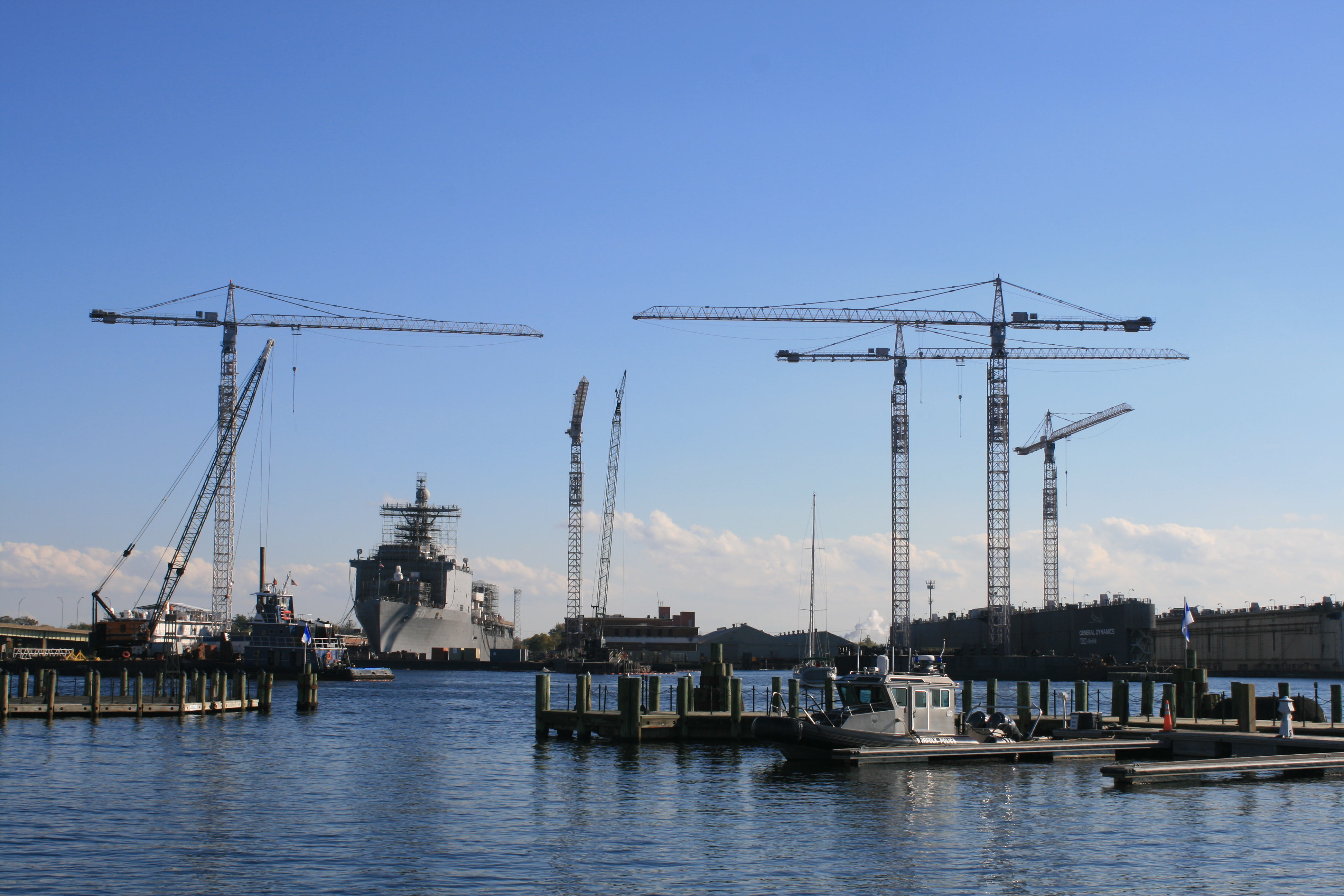
The approach to Norfolk was spectacular. It’s a real city, and the home of a large US Naval Base, and the cranes, ships and  skyscrapers made a sharp but beautiful contrast to the gentility of Savannah and Charleston, and the rural landscapes we’ve seen so far.

USS Eisenhower at Norfolk Naval Base

USS Eisenhower at Norfolk Naval Base

IMG_9149

Coming in to Norfolk

Coming in to Norfolk

IMG_9151 Coming in to Norfolk

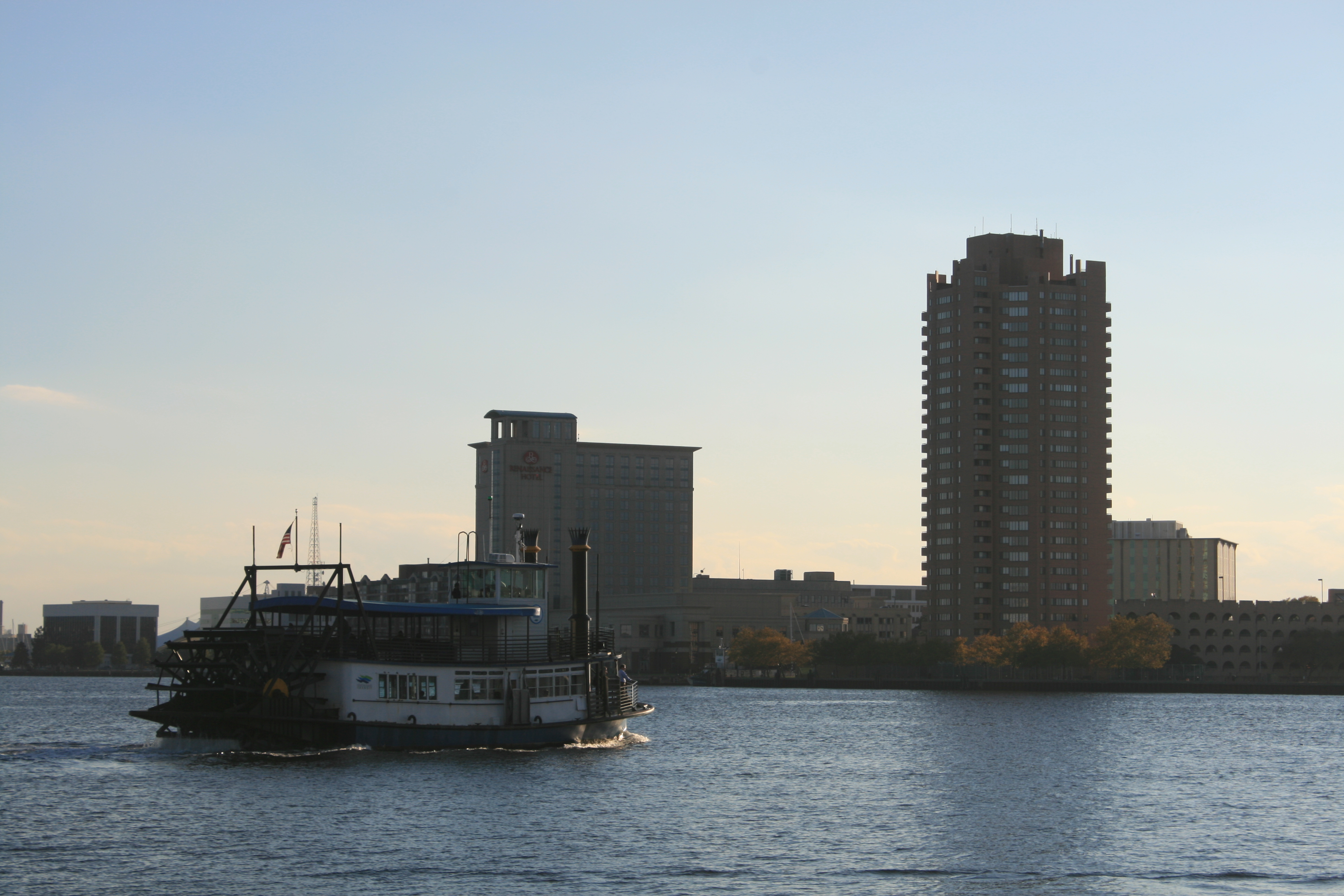
Elizabeth River Paddle Ferry

Elizabeth River Paddle Ferry

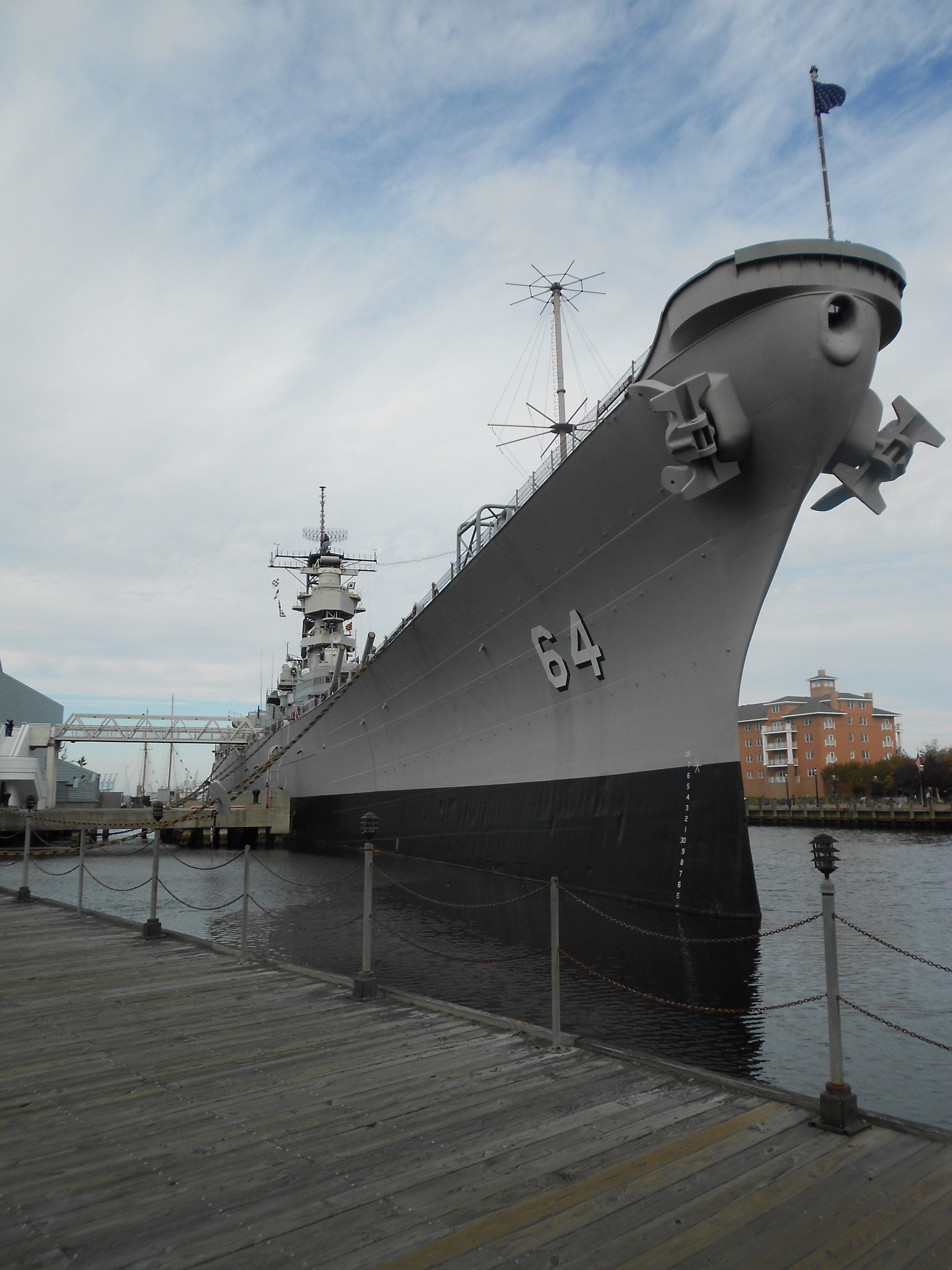
USS Wisconsin at the Nauticus Maritime Museum, Norfolk,VA

USS Wisconsin at the Nauticus Maritime Museum, Norfolk,VA

Carina at Waterside Marina, Norfolk

Carina at Waterside Marina, Norfolk

We asked the dockmaster where we should go to eat American food. Hell’s Kitchen on Granby Street, he said. It seemed an appropriate choice for Hallowe’en. It was full of young people and the food was great.

At Hell's Kitchen, Granby St

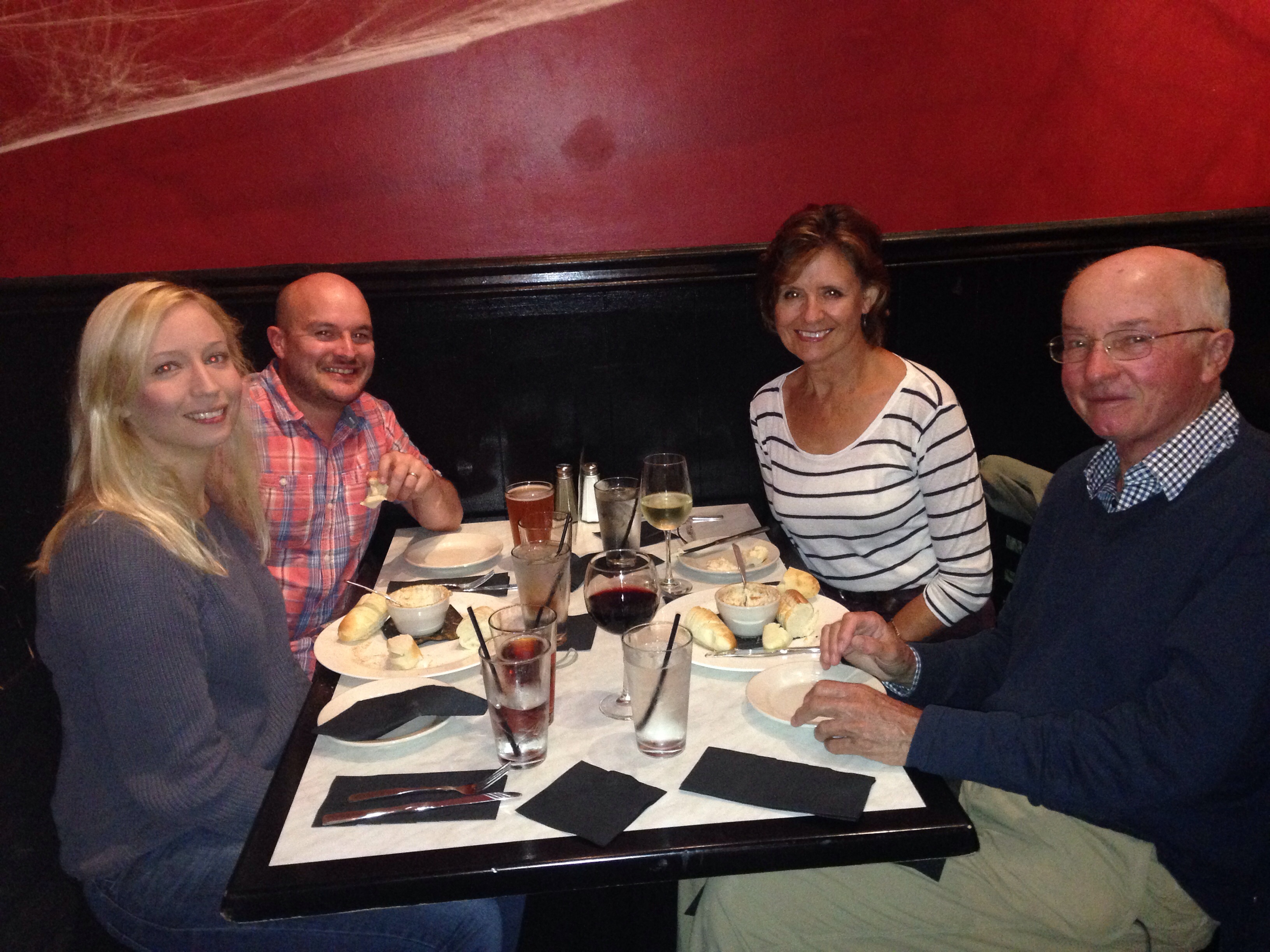
Dinner at Hell’s Kitchen, Granby St

The next day, I mentioned to the dockmaster that we’d been there and liked it. “Yeah,’ said another man who was listening. ‘Y’all just need to get a few tattoos and you’d fit right in!’. He was right about some of the staff and the clientele, but we were still made to feel welcome.

The following day, Liz and  Nick went home, and we took Carina back up the Elizabeth River to the Atlantic Boatyard at  Great Bridge, where she’s staying over the winter.

And we’re looking forward to exploring Norfolk properly when we come back next Spring.


“Y’all goin’ North?”

….said in an incredulous tone. It seems that mad dogs and Englishmen don’t just go out in the midday sun, they take their boats up the ICW in the Fall, too.

Everyone else is going south, to the Bahamas or the Florida Keys. It sounds like a nice idea. We explain the several reasons why we’re going north in the Fall, but even so, our listeners’ faces adopt an expression suggesting that they’ve weighed us up as verging on bonkers, and they judge it wise not to pursue that topic of conversation. They revert to the familiar ‘Where y’all from?’, which is obviously a lot safer.

But we’ve had quite a few ‘Y’all come back and see us again!’, which is really nice.


The coastline of Eastern North Carolina is an amazing pattern of wide sounds, the land indented by  inlets, creeks and rivers, with the islands of the Outer Banks strung like a necklace 40 miles out into the Atlantic.

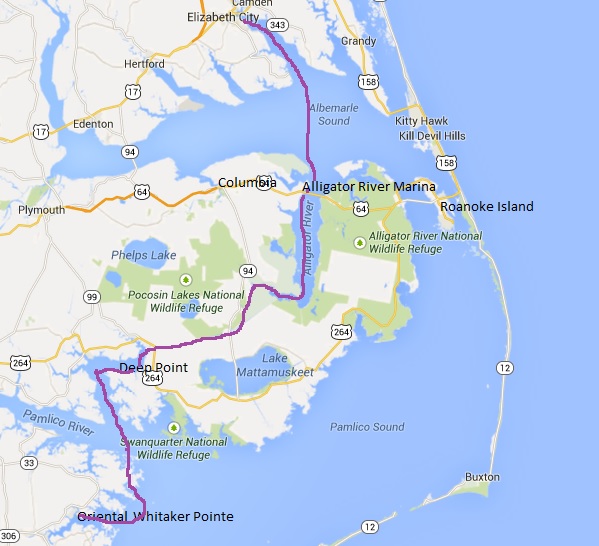
Whitaker Pointe to Elizabeth City

Whitaker Pointe to Elizabeth City

From Whitaker Pointe at Oriental, we went a few miles along the Adams River and then were out at last into the deep blue waters of Pamlico Sound.

Leaving Whitaker Pointe

Leaving Whitaker Pointe

Morning sun, Whitaker Pointe

Morning sun, Whitaker Pointe

Adams Creek looking south to Cedar Island

Adams Creek looking south to Cedar Island

The morning was idyllic, but the peaceful air was suddenly rent by two fighter jets flying low above us. A disembodied voice commented over the VHF, ‘Well, there’s the sound of freedom going by!’

Fishing boats near Hobucken Bridge

Fishing boats near Hobucken Bridge

Bay River

Bay River

Pamlico Sound and the Outer Banks just visible on the horizon

The deep blue of Pamlico Sound and the Outer Banks just visible on the horizon

We moored out at Deep Point on the Pungo River.

Mooring at Deep Point

Mooring at Deep Point

The weather forecast for the middle of the week was for high winds and 2 ft waves, so we had to move on to the marina at Alligator River, and wait there until it was safe to  cross Albemarle Sound to Elizabeth City.

We passed through the Alligator River-Pungo River Canal, before the waterway opened up again at Alligator River.

Alligator River - Pungo River Canal

Alligator River – Pungo River Canal

Alligator River -Pungo River Canal

Alligator River -Pungo River Canal

Tree stumps and beautiful colour

Tree stumps and beautiful colour

We had read about Alligator River Marina, and its owner Ms Wanda, in Terry Darlington’s book Narrow Dog to Indian River. According to Terry, Ms Wanda could be a bit sharp if she didn’t like you, and she tended to prefer men, so we approached with some trepidation.

Ms Wanda and her late husband had built the marina, and a petrol station with a shop-cum-diner, at a strategic point on the US 64 over 30 years ago. Tall, blonde and imposing, unlike most marina owners she presided over her establishment with the demeanour of an awe-inspiring headmistress, augmenting her authority with a series of typed notices in a large, bold font.

(In the laundry) ‘Keep the door shut at all times to prevent insects getting in. No Pets! No Smoking! Ms Wanda.’

(Outside the diner) ‘The grill closes at 6.30 promptly, so if you are dining with us, please be sure to join us by 6.00 at the latest. Ms Wanda.’ The standard of dress was also stipulated. ‘No hoods or caps.’

(In the restrooms) ‘The restrooms are cleaned to a high standard. If there is anything requiring our attention, please let the staff or Ms Wanda know.’ As if you’d dare.

And in front of the till in the shop/diner: ‘We will be happy to serve you when you have finished your telephone conversation.’

As we were staying at least 3 days, it seemed politic to eat at least once in the diner. We decided to have breakfast out for a change, and having learned that American biscuits are really scones, I opted for bacon with biscuits. This was presented with the scone sliced in half, and the thin, crispy bacon sandwiched in between. It worked very well – perhaps one to try at home.

Ms Wanda came to chat to us, pointing out the photos on the wall of a couple of large alligators that had been caught near the marina, and some others of a large black bear helping himself to apples in Ms Wanda’s garden.

Ian asked her if she remembered Terry and his narrowboat. She did, but hadn’t read his book, and laughed when we told her she was in it.

The marina was 12 miles from Columbia, the nearest town, so we had thought hiring a car wasn’t a possibility. But Ms Wanda had an arrangement with a garage on Roanoke Island, and drove us 20 miles across the bridge to Manteo to pick up a car.

Roanoke was as lovely as its name sounds.

Roanoke Colony  was the first English settlement in America. In 1587, 118 pioneers set sail from Plymouth, after Sir Walter Raleigh had advised Elizabeth I that she must stake a claim to the New World, before the Spanish and French became dominant. At least one child, Virginia Dare, was born there. But the colonists became desperate for provisions, and Virginia’s grandfather, Captain White, went back to England for help. When he returned 3 years later, there was no trace of the colonists, and their fate has been the subject of much speculation, and recently, some scientific research.

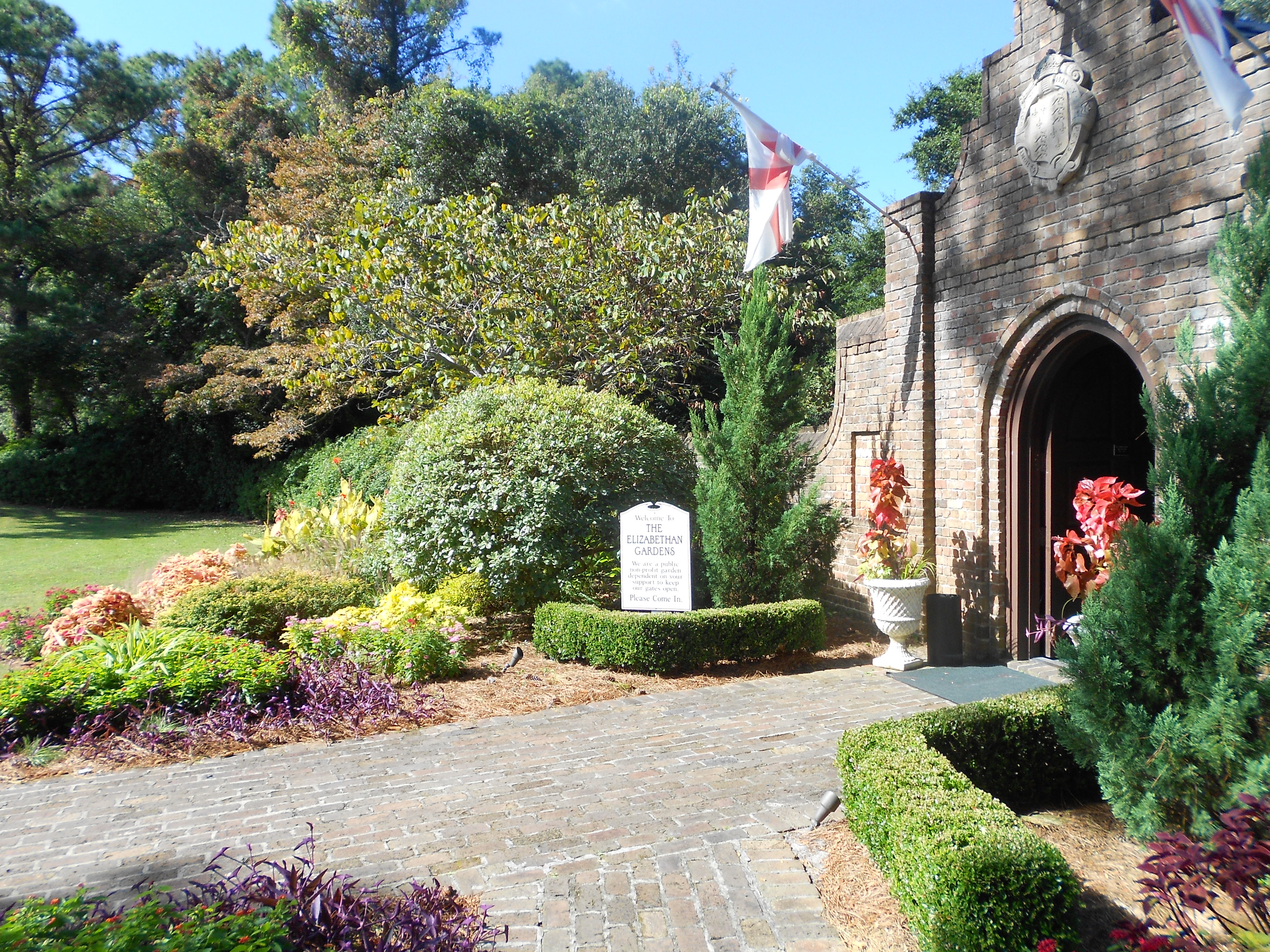
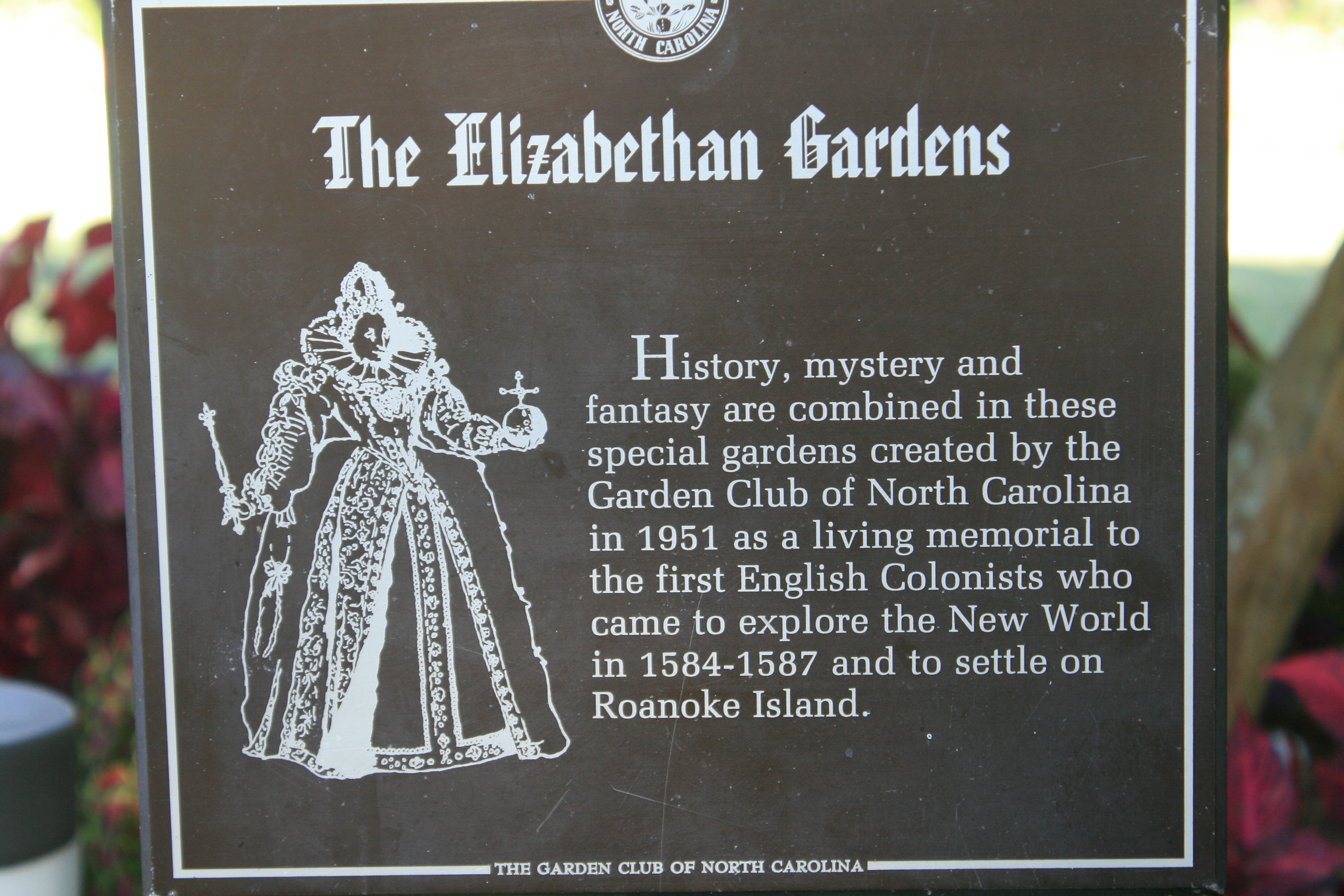
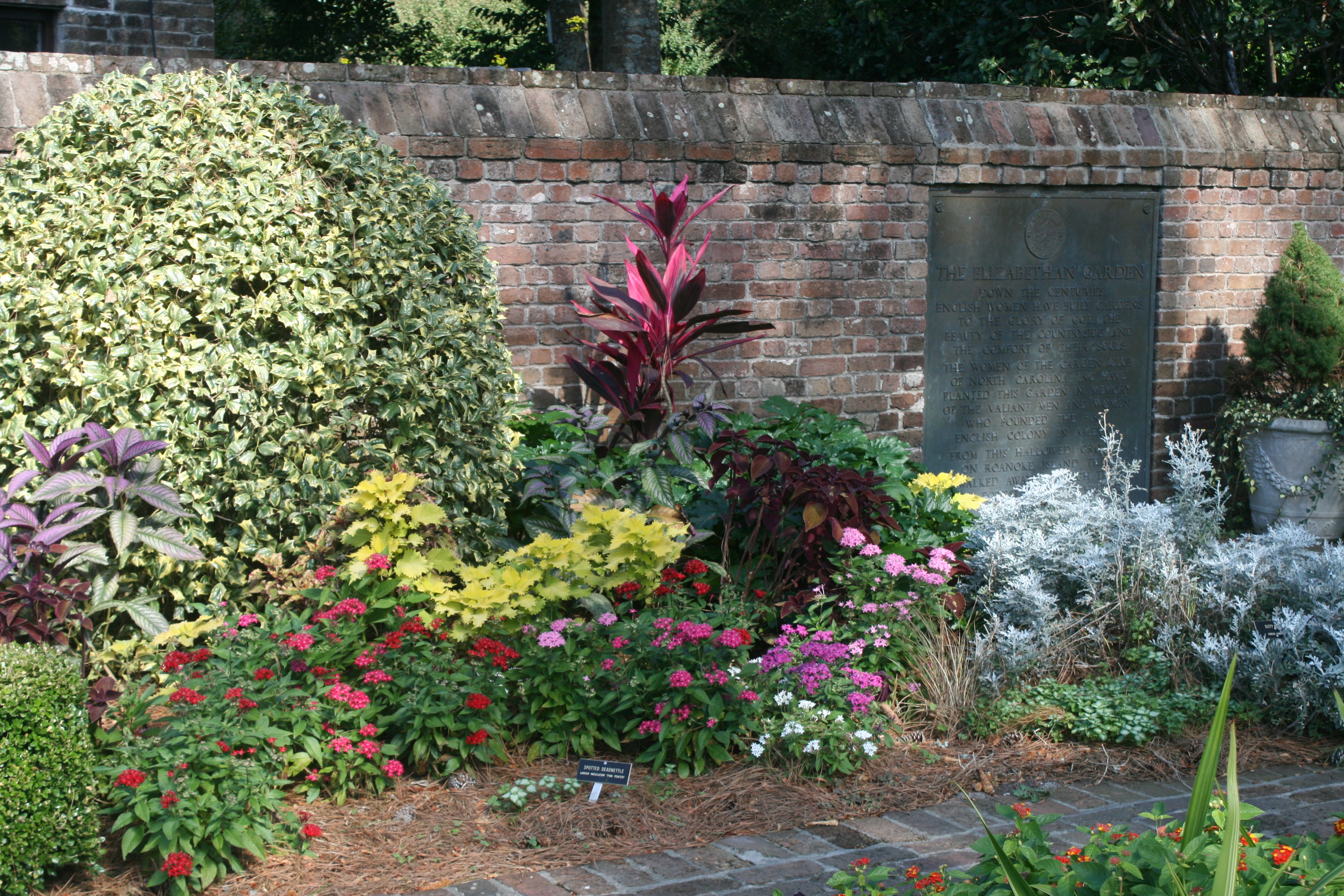
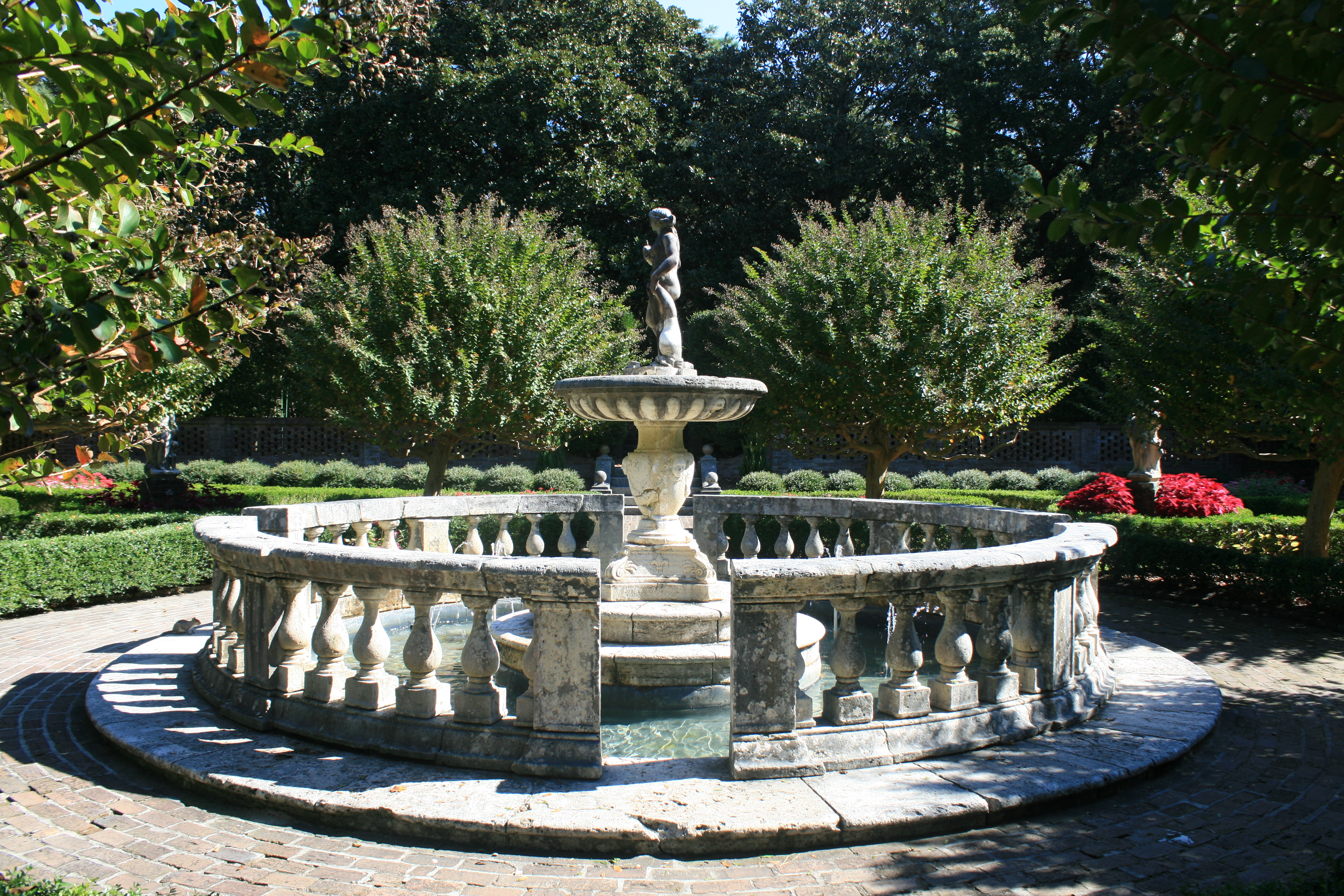
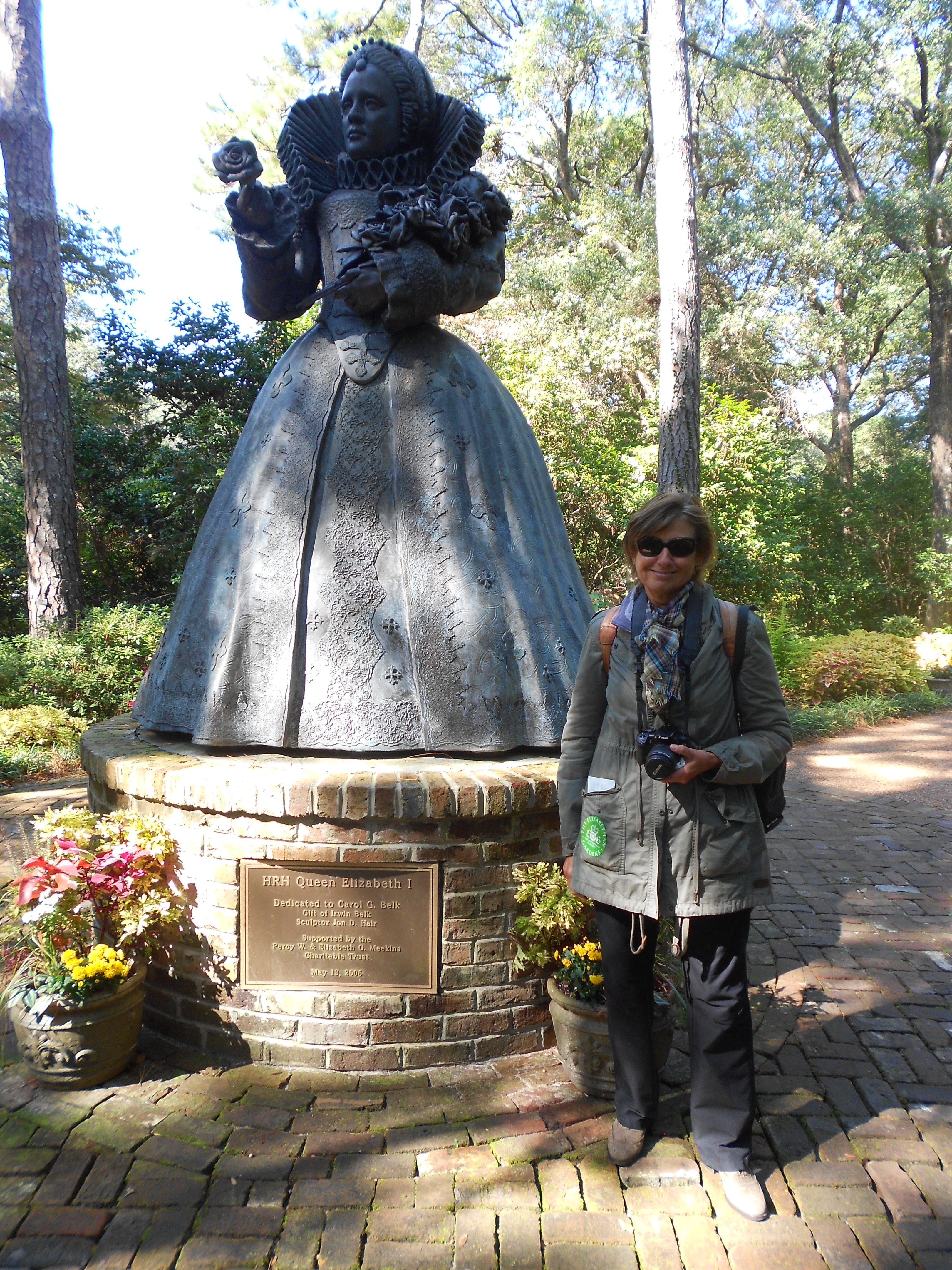
In the visitor centre, the lady we spoke to said the islanders felt strong ties with England, growing up with the story of the Lost Colony, which is enacted every year in the outdoor theatre at Fort Raleigh, where the colony was. We went to Fort Raleigh, and walked round the lovely Elizabethan Gardens, created by the Garden Club of North Carolina in memory of the pioneers of the Lost Colony.

Entrance to the Elizabethan Gardens, Fort Raleigh, Roanoke

Entrance to the Elizabethan Gardens, Fort Raleigh, Roanoke

IMG_9019

IMG_9022

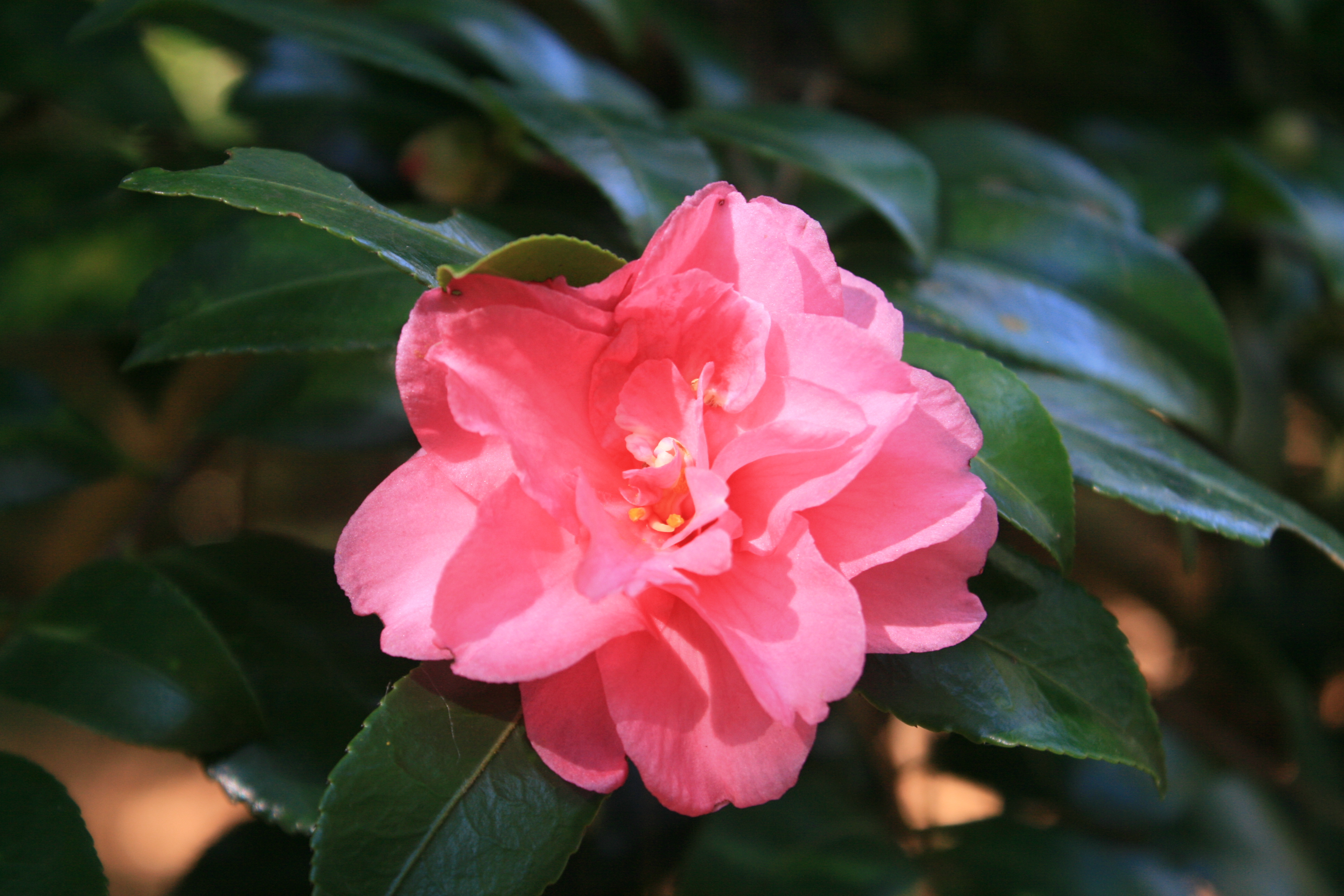
Camellia in bloom in the autumn

Camellia in bloom in the autumn

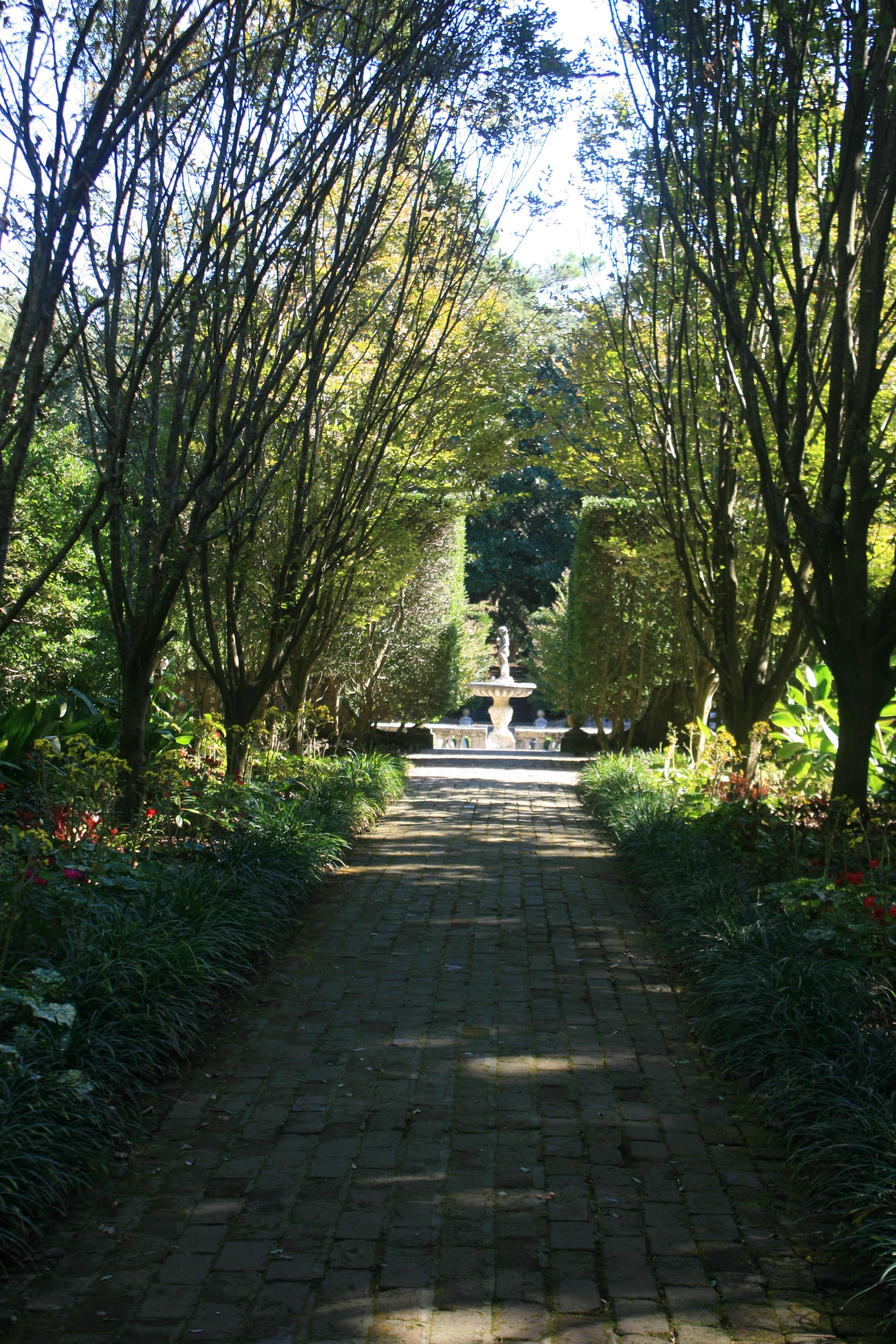
The Hornbeam Walk

The Hornbeam Walk

IMG_9036

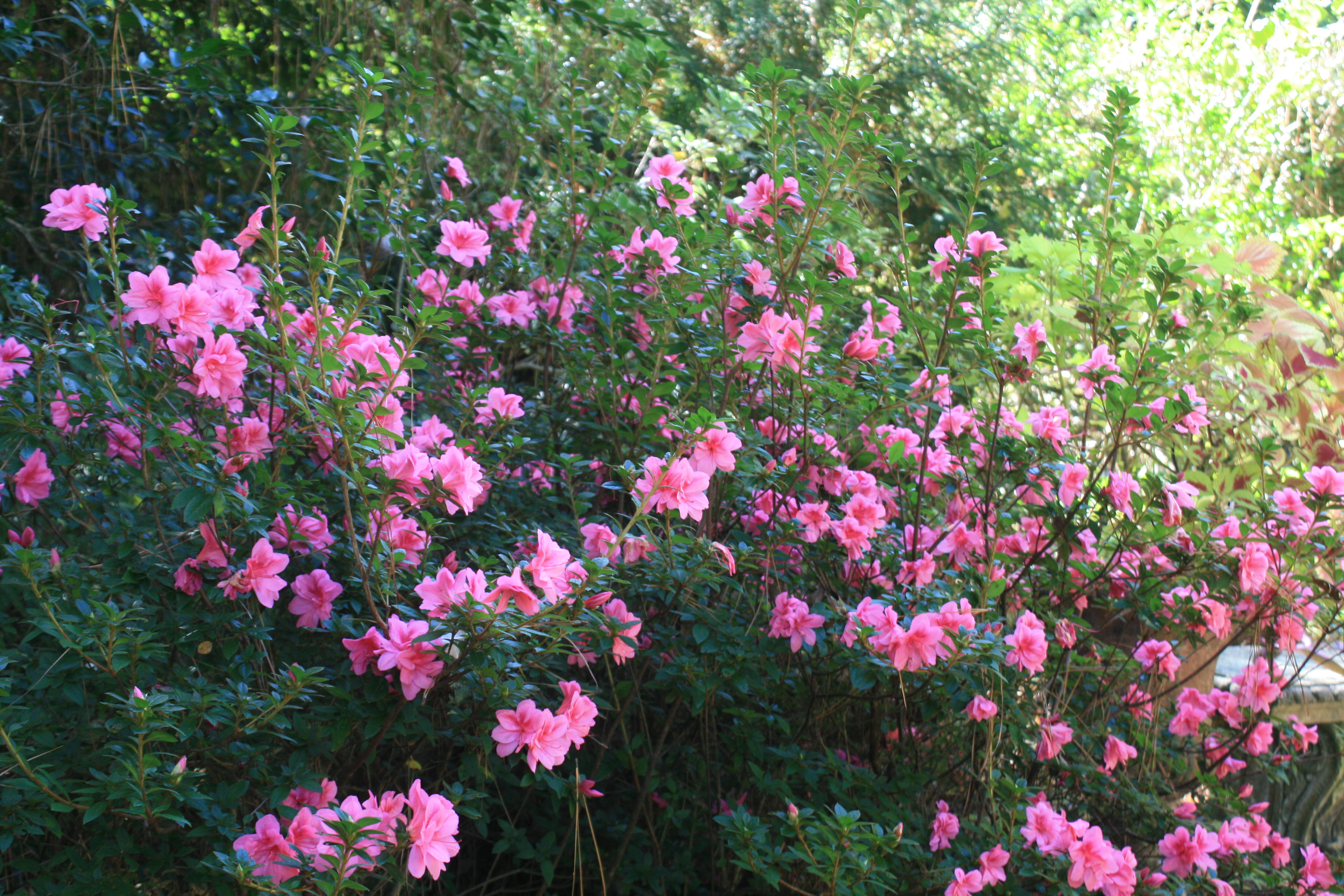
Camellias

Camellias

With Queen Elizabeth 1

With Queen Elizabeth 1

Where the colonists landed

Where the colonists landed


We had lunch in Poor Richard’s Sandwich Bar in Manteo, the main town of  Roanoke. I was dubious about an establishment that would include the word ‘poor’ in its name, suggesting as it perhaps does, that the business wasn’t doing all that well. I was reminded too of the infamous Waitrose campaign in which shoppers were asked to complete the statement  ‘I shop at Waitrose because……….’ and one of the answers was ‘because I don’t like shopping around poor people’. The small shop front was unprepossessing, with no menu outside, and a couple of chairs in the window. It didn’t even look open, let alone as though it had any customers. But by now, Ian was determined to try it, so we had to go in. The long narrow hallway led to a large room at the back, full of people enjoying Poor Richard’s fare. We sat on the verandah overlooking Manteo waterfront and Roanoke Festival Island, where we could see the replica of  Raleigh’s ship Elizabeth II, and had a good lunch.

I’ve now been advised by a correspondent that ‘Poor Richard’ is a reference to Poor Richard’s Almanack, a yearly almanac published by Benjamin Franklin,  from 1732 to 1758.

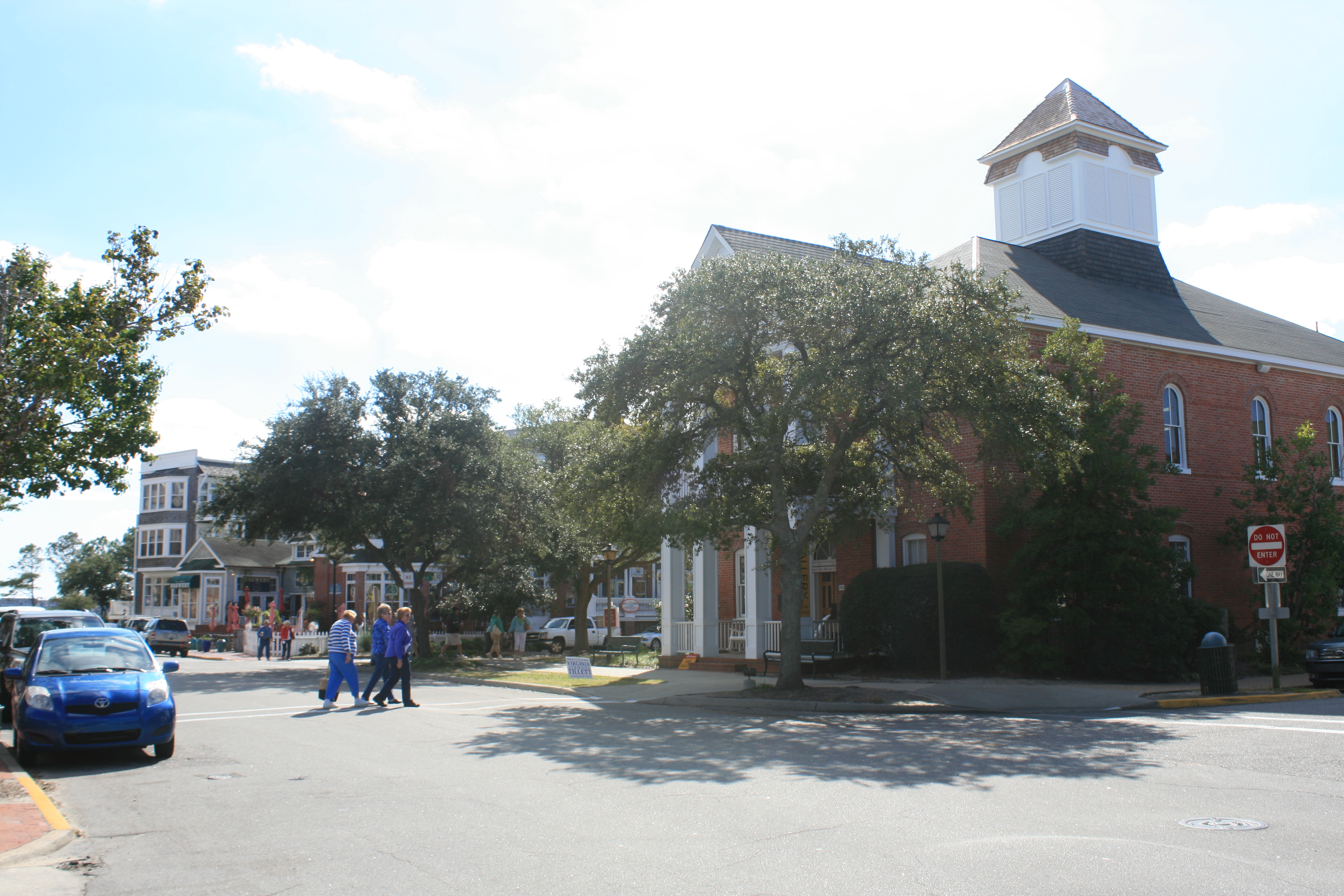
Main St, Manteo

Main St, Manteo

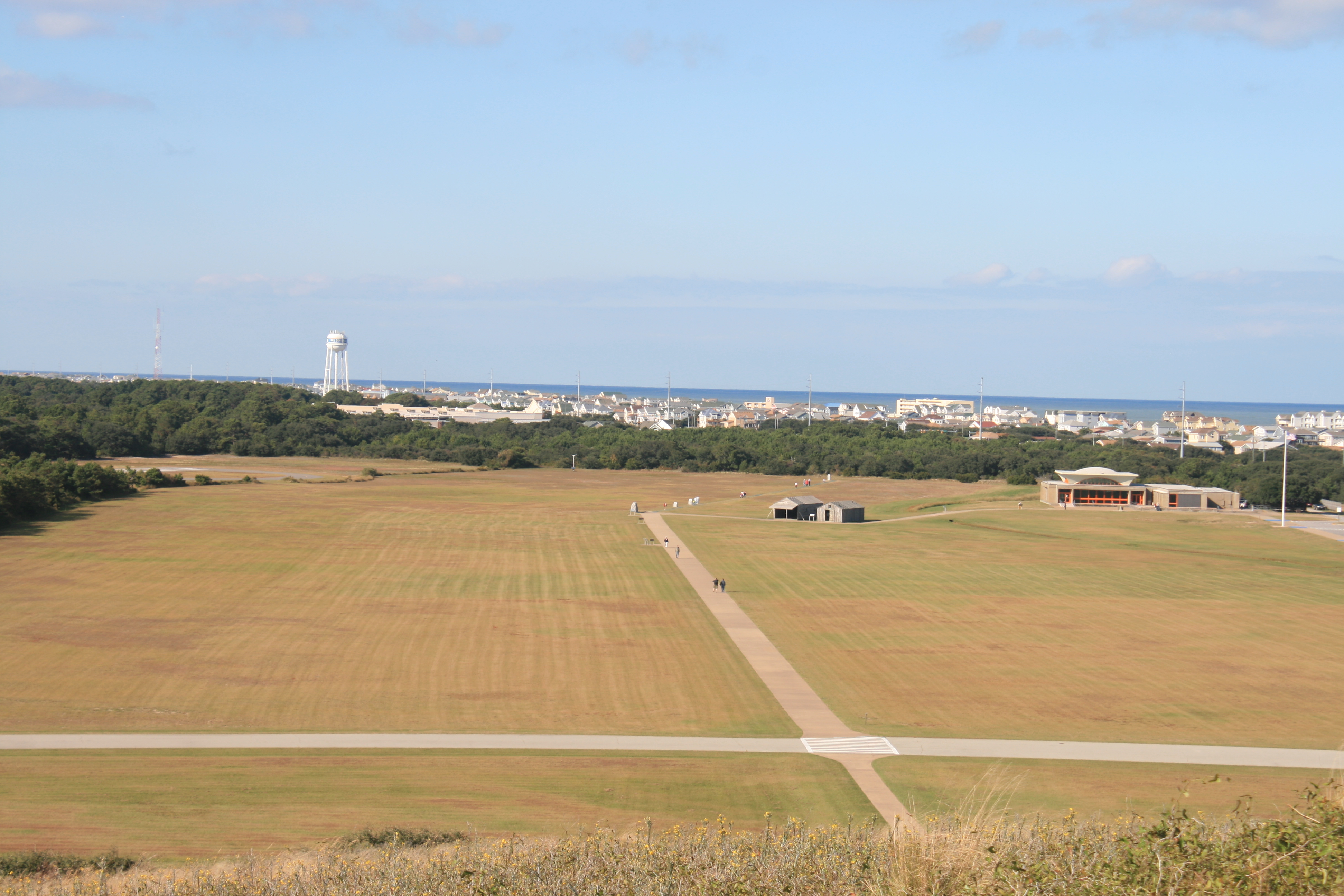
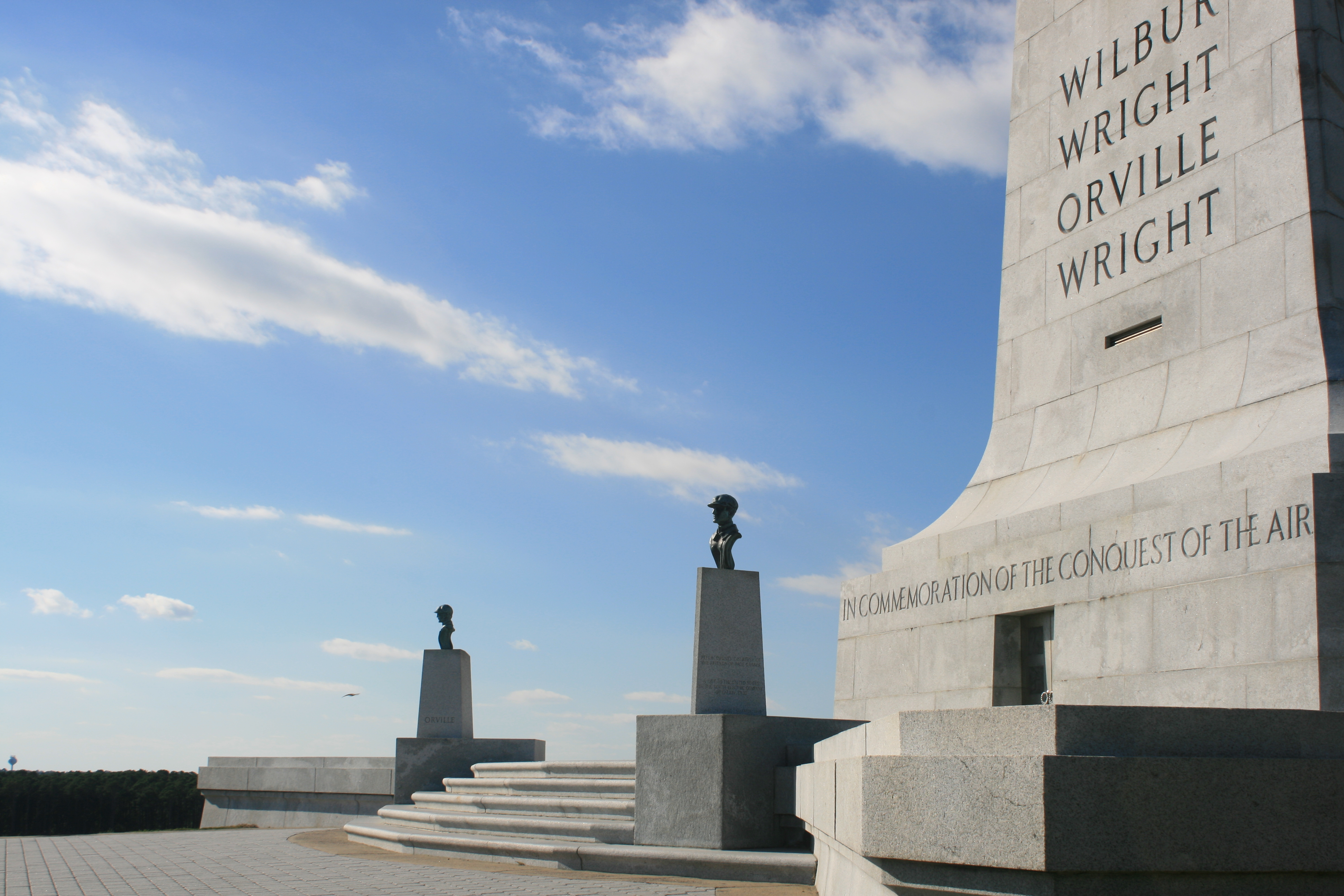
Later, we drove to Kitty Hawk on the Outer Banks, to the Wright Brothers National Memorial.
Orville and Wilbur Wright had identified Kill Devil Hills and Kitty Hawk  as a suitable place for their experiments, as the area was sandy and there were no high trees. On 17th December, 1903, after many unsuccessful attempts, they made 3 flights, the longest one lasting 59 seconds.

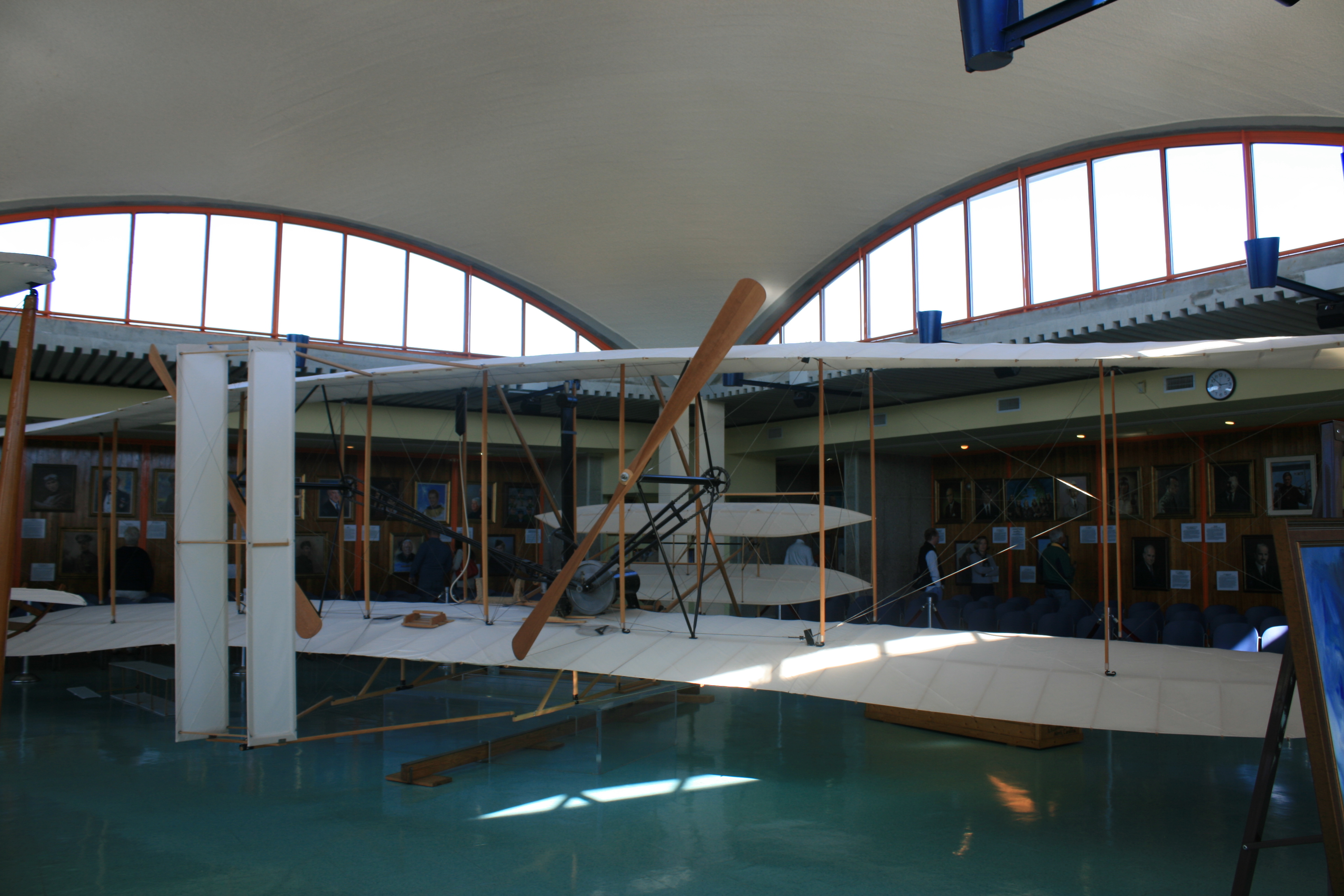
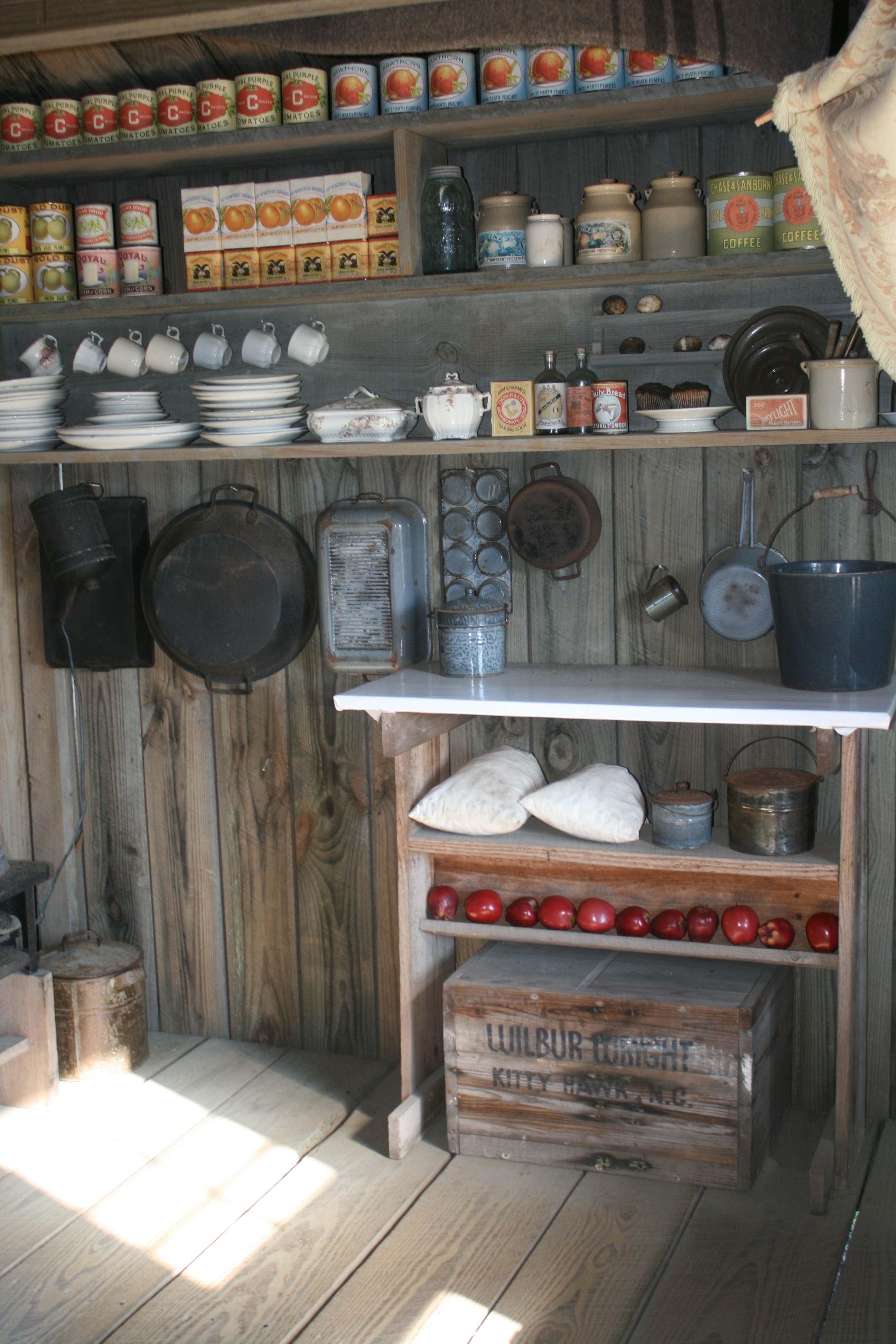
Inside the centre, there was an actual size replica of the plane, and a great deal about the aeronautical experiments and calculations they made. But it was the human side that touched me – the telegram Orville sent to their father, a bishop in Dayton, Ohio, and the sheds in which they had lived, cooked, worked and slept in the years before their first successful flight.

Replica of the first aeroplane

Replica of the first aeroplane

The kitchen at the Wrights' camp

The kitchen at the Wrights’ camp

They had to bring all their provisions by schooner from Elizabeth City, as there were no roads to the Outer Banks.

The site of the first flight. The two sheds are the camp.

The site of the first flight. The two sheds are the camp.

The memorial

The memorial

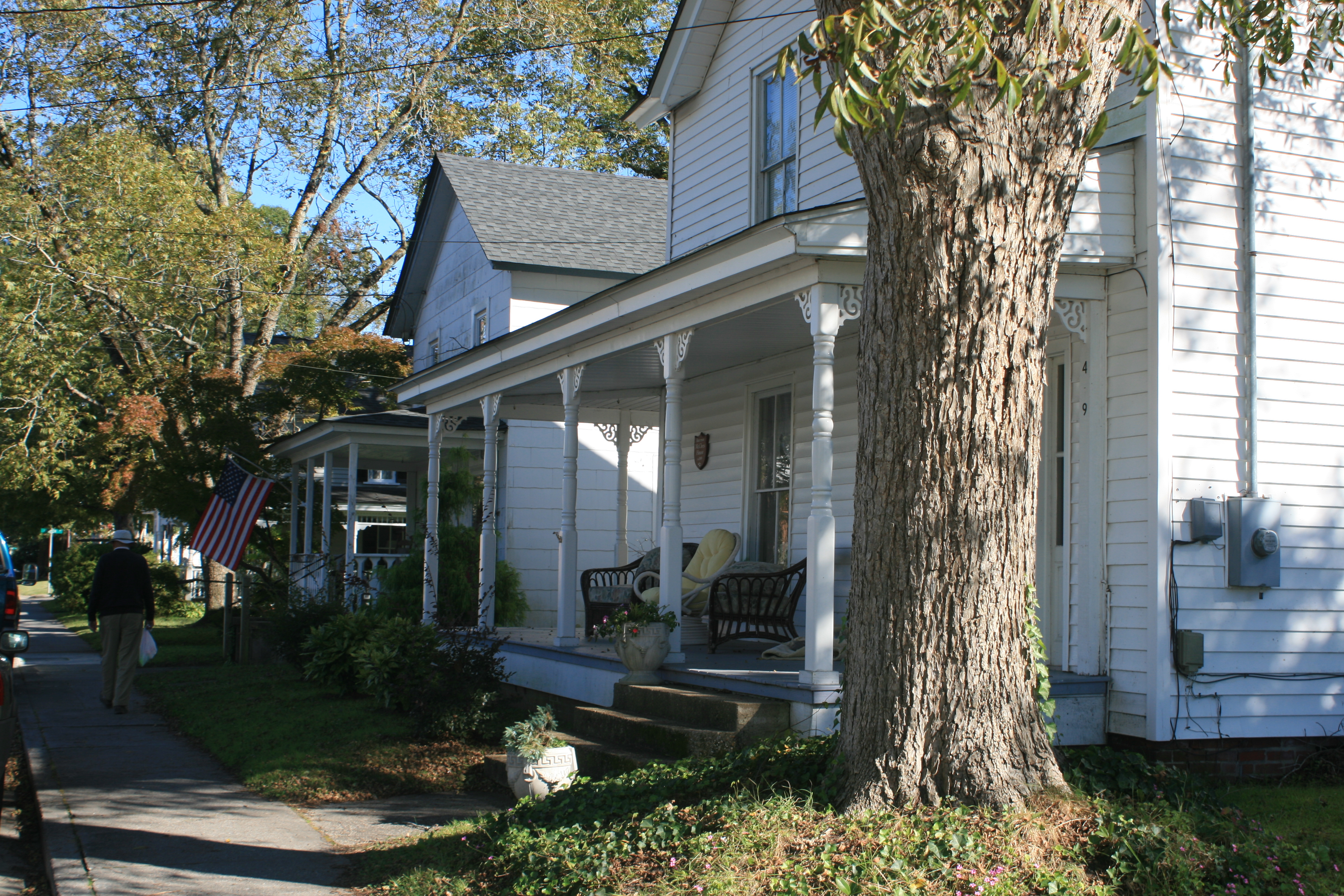
Columbia, North Carolina, doesn’t feature in the guidebooks, but we went there the next day to have a look round. It was pleasant and unpretentious. Ian had been keen to get a haircut for some weeks and the opportunity suddenly presented itself on Main Street. There was an old-fashioned barber’s shop, so we went in. The barber was asleep in the back, but he got to his feet when he  heard us, and made us welcome. I thought he looked in his late 70’s, but this proved a conservative estimate. He mentioned that he had been in the Pacific in WW2, and then that he had put up with his wife for 75 years, at which point the Captain couldn’t resist interjecting that he had only had to put up with his for 45 years. Finally, we learned that Mr Mitchell was 97, and had started his shop in 1937.

Ian with Mr Robert Mitchell in his barber's shop, Columbia, NC

Ian with Mr Robert Mitchell in his barber’s shop, Columbia, NC

War Memorial. Columbia

War Memorial. Columbia

Main St, Columbia

Main St, Columbia

Historic house, Columbia

Historic house, Columbia

Our passage to Elizabeth City through Albemarle Sound was smooth enough, and soon we’ll be in Virginia and thinking about home.

But I hope one day I’ll go back to North Carolina and the Outer Banks.

The bridge to Roanoke Island, from Alligator River

The bridge on US64 to Roanoke Island, from Alligator River


Cool mornings and a cool American village

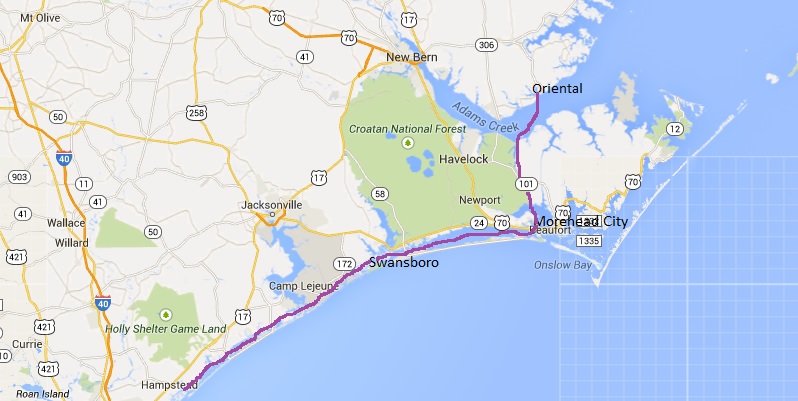
Hampstead - Swansboro - Morehead City - Oriental

Hampstead – Swansboro – Morehead City – Oriental

After a day of incessant and occasionally torrential rain, when even going to the supermarket in the car seemed a challenge, we left Hampstead in crisp, bright sunshine. From having the air-conditioner on at night, we’ve suddenly gone to wondering where the little fan heater is, to aid the process of getting out of bed in the morning.

Leaving Harbor Village, Hampstead, Topsail Beach in the background

Leaving Harbor Village, Hampstead, Topsail Beach in the background

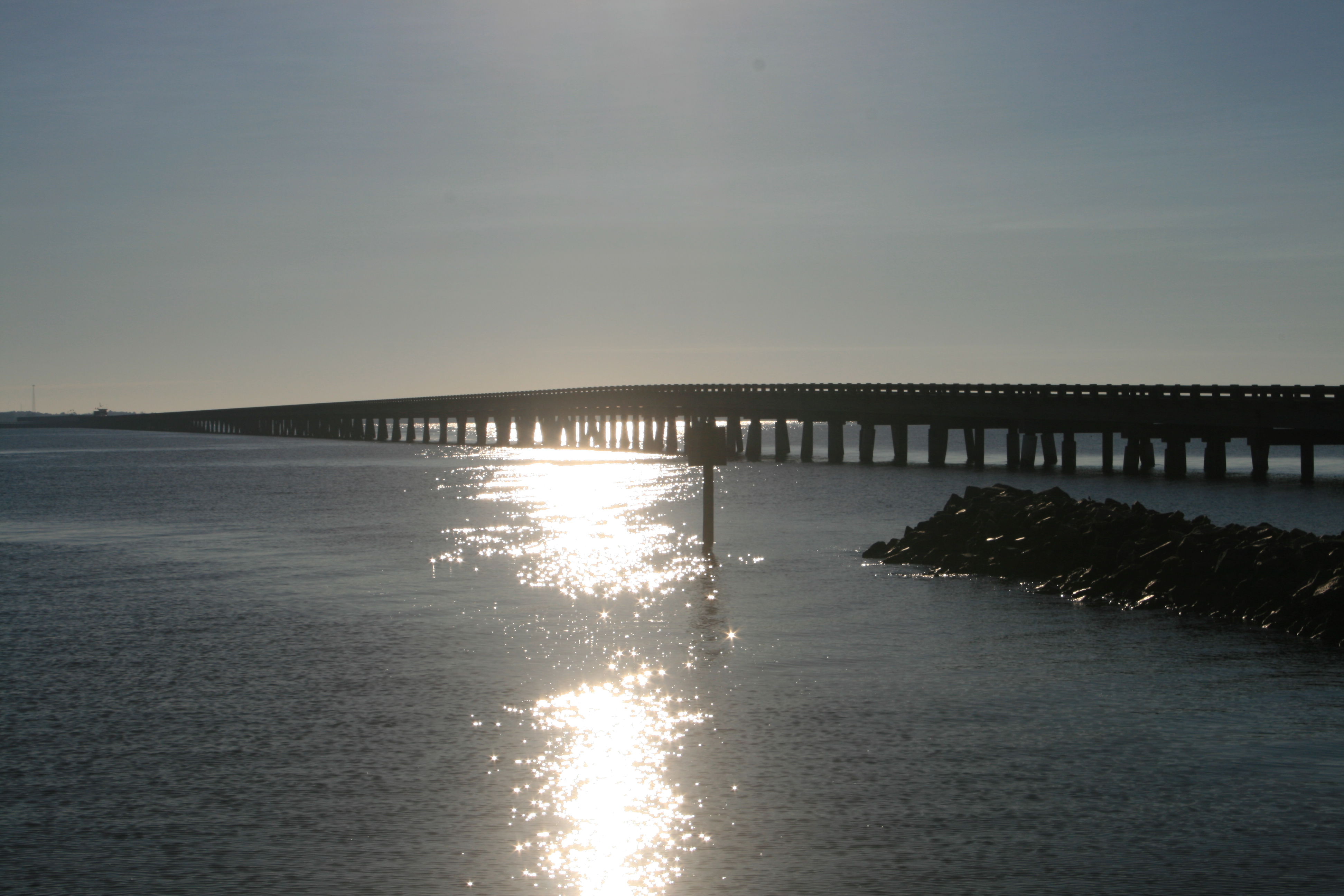
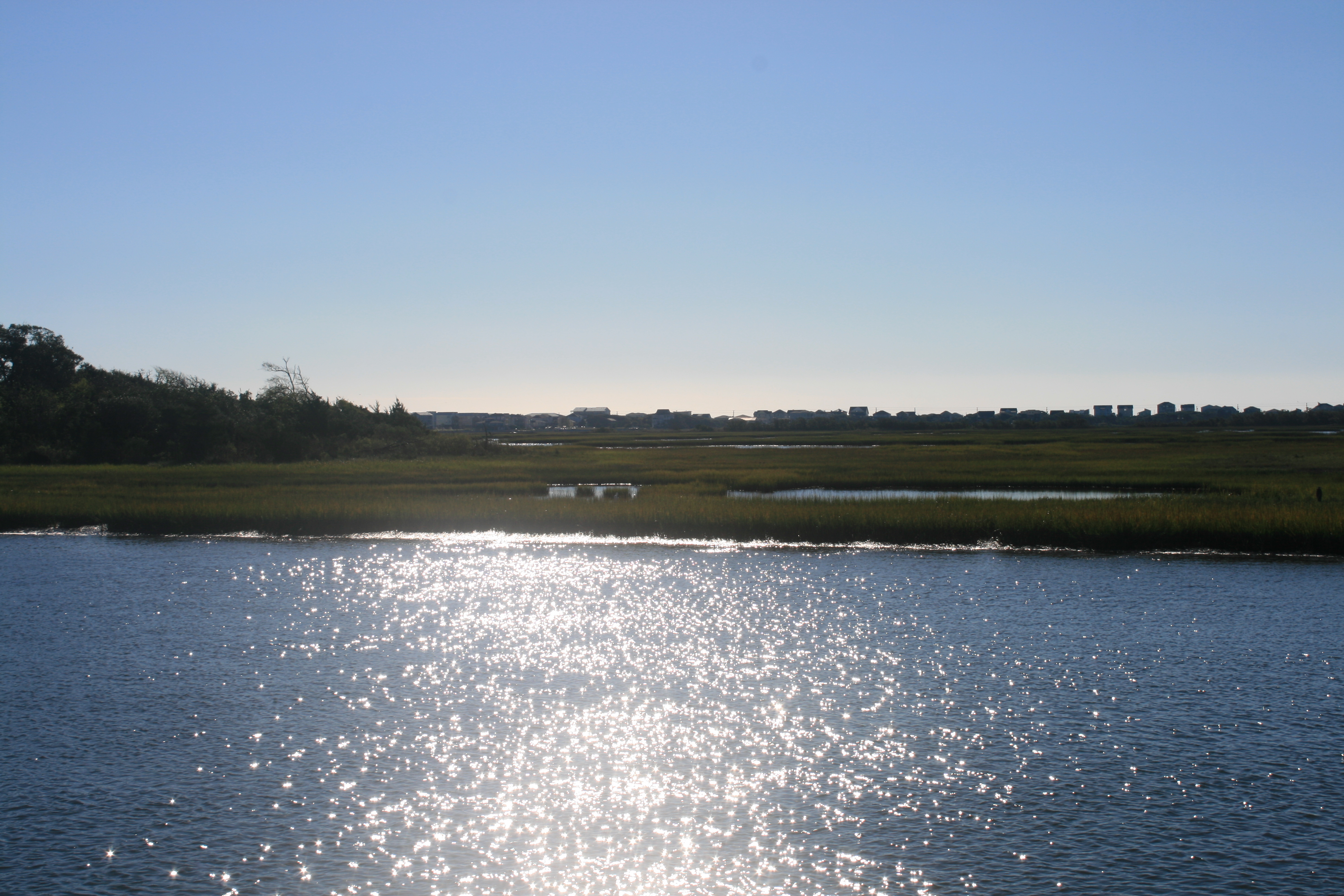
The waterway continued to follow the Atlantic coast very closely, so we often got glimpses of the ocean through the many inlets.

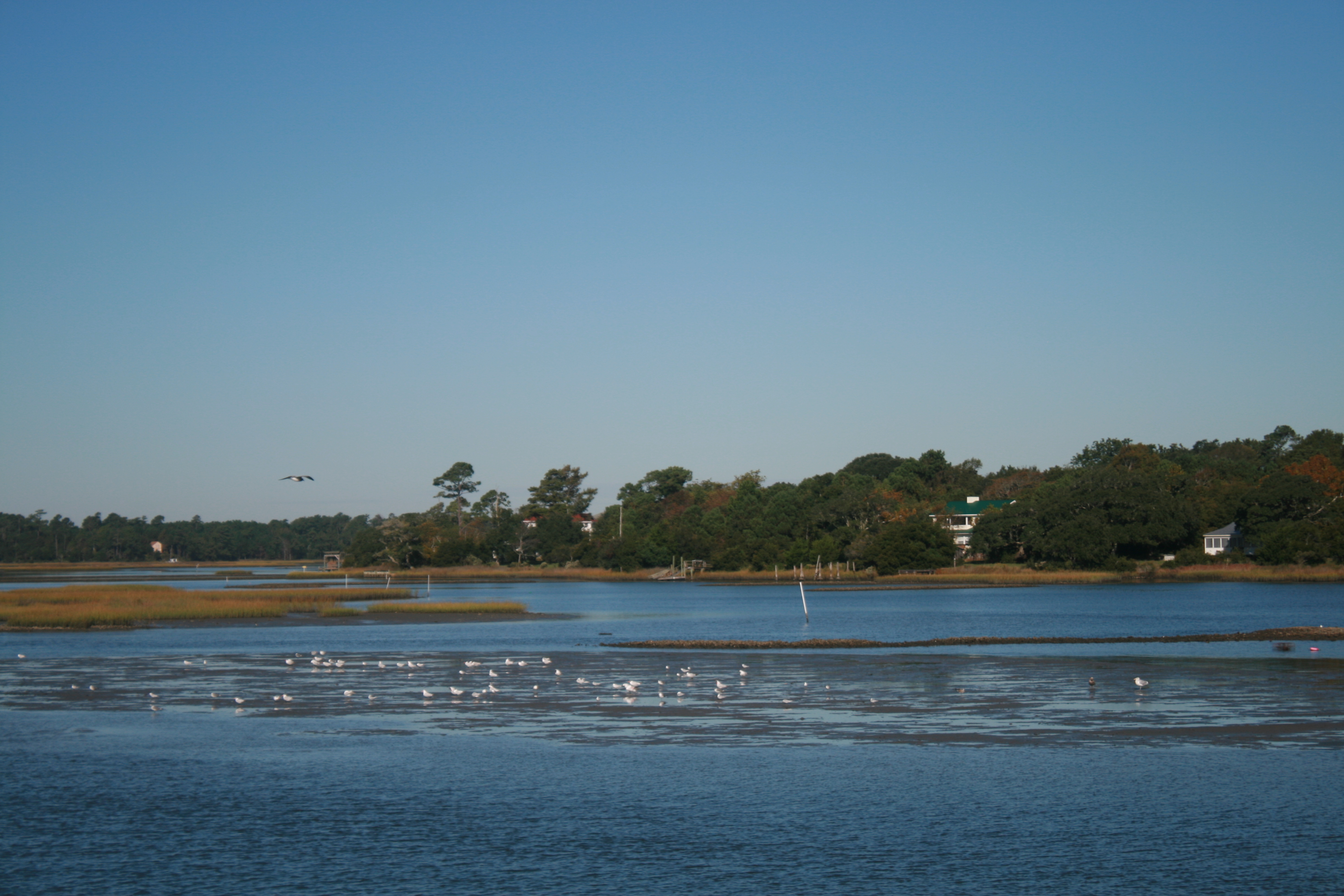
Birds on a sandbank near Topsail Beach

Birds on a sandbank near Topsail Beach

At Sears Landing Swing Bridge, we had to amuse ouselves for 45 minutes waiting for the bridge to open, but we weren’t the only ones who obviously hadn’t read the navigation notes.

Sears Landing Swing Bridge

Sears Landing Swing Bridge

A slightly unusual house

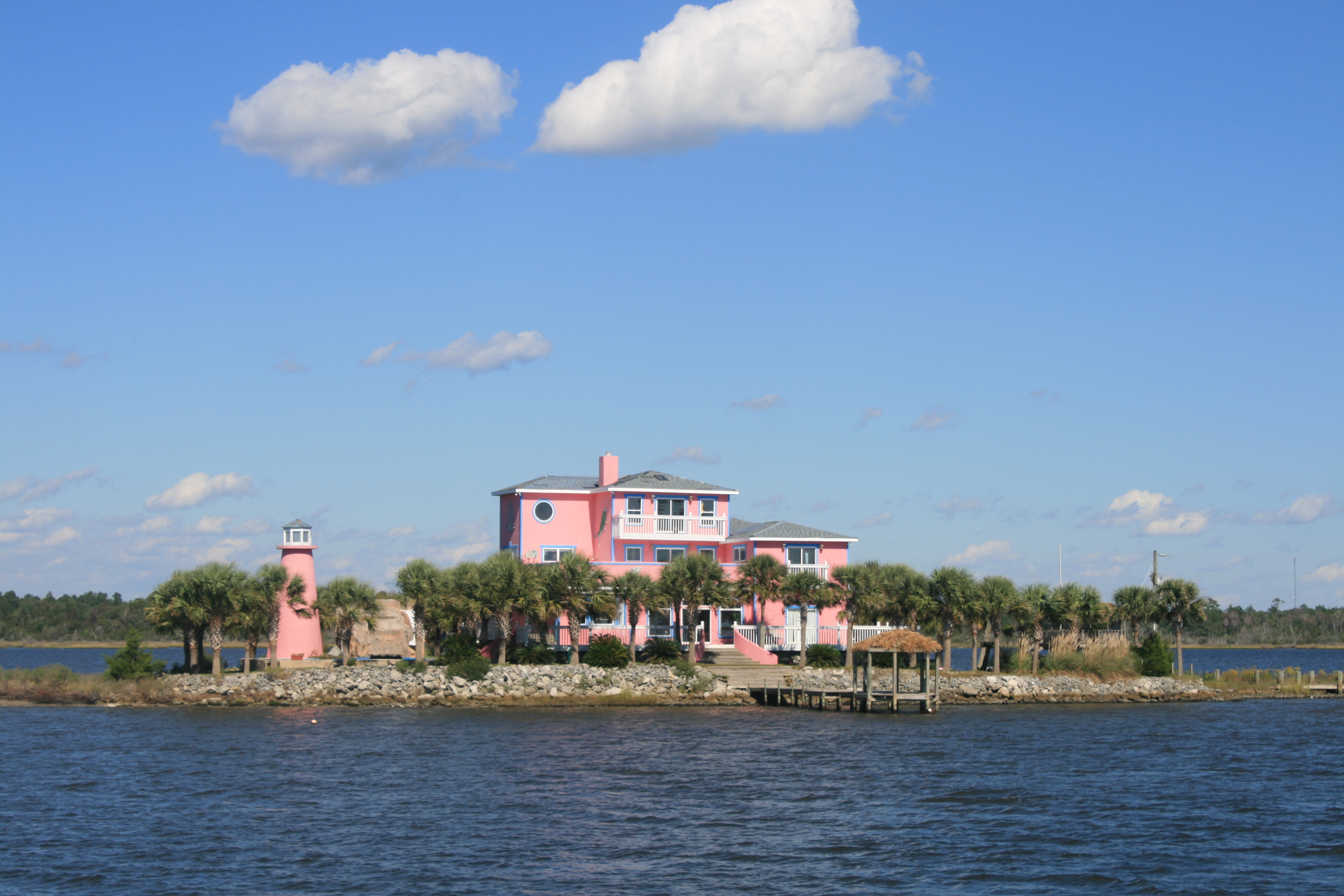
A slightly unusual house

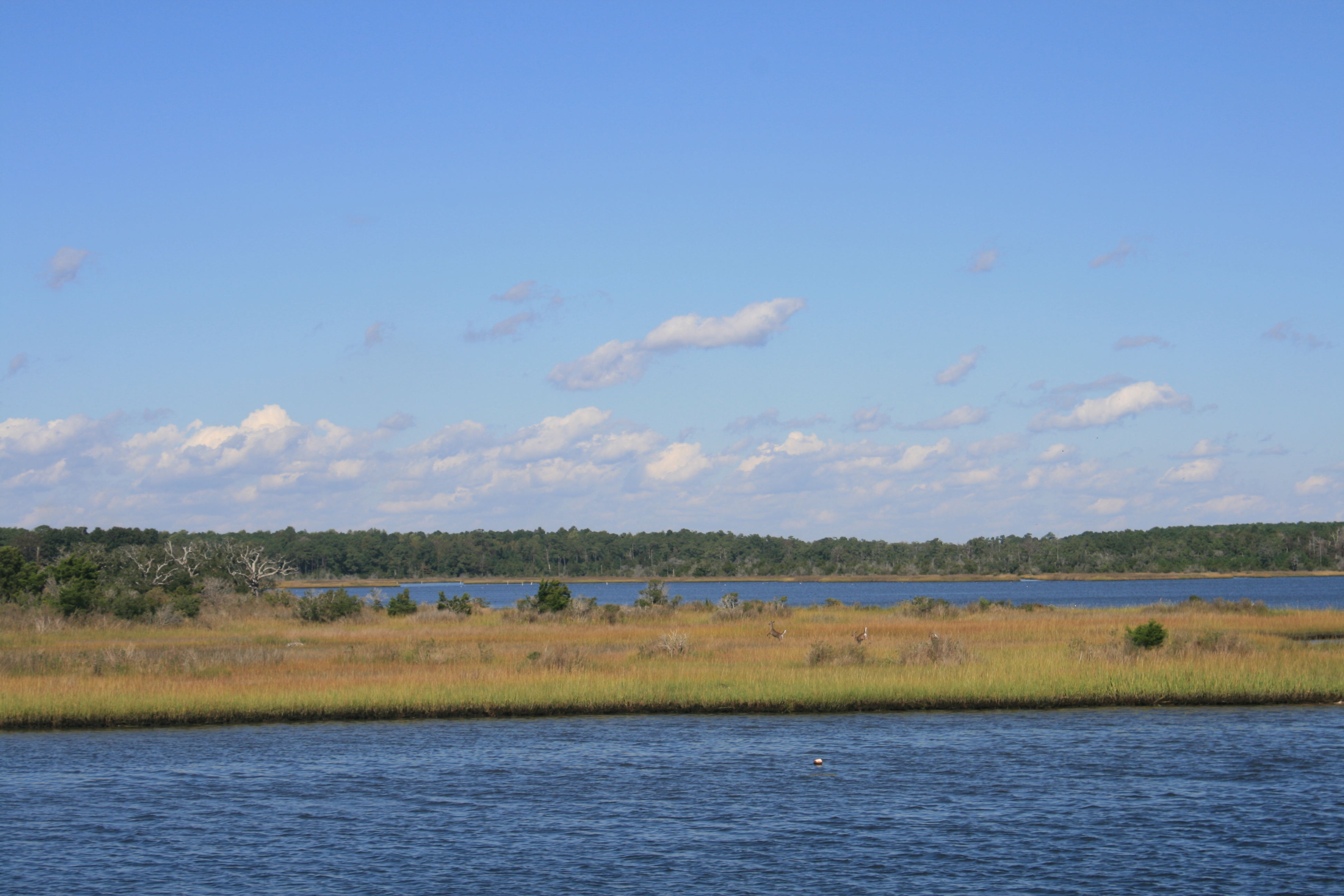
At Alligator Bay, we saw what looked like large brown ducks swimming across the waterway in front of us. We were amazed to see them get out of the water and bound off into the marshy grass. But you’ll need the eye of faith to see them in this photograph – they were young deer. I’m hoping Father Christmas might bring me a telephoto lens this year.

Alligator Bay

Alligator Bay

The route took us past Camp Lejeune, a US Marines training base. In 2008, when we were driving through North Carolina, we had innocently taken the 172 road and been surprised to come upon a road block with an armed sentry who flagged us down.With consummate American politeness, he gently explained the security issues involved, and would we just turn around and go back the way we’d come. We wondered at the time why our trusty Rand McNally Road Atlas hadn’t given any indication that we might not be able to proceed through a high-security establishment, and hoped now that there wouldn’t be any complications on the waterway.

But we saw only some abandoned rocket launchers on the marshes at Onslow Bay, and heard the occasional distant military-sounding boom.

Onslow Bay

Onslow Bay

We found a good anchorage at Swansboro.

From our mooring at Swansboro

From our mooring at Swansboro

Sunset at Swansboro

Sunset at Swansboro

We had a straight run through the next day, to Morehead City, through Bogue Sound.

Morning Sunshine on Bogue Sound

Morning Sunshine on Bogue Sound

Having a go at driving Carina

Having a go at driving Carina

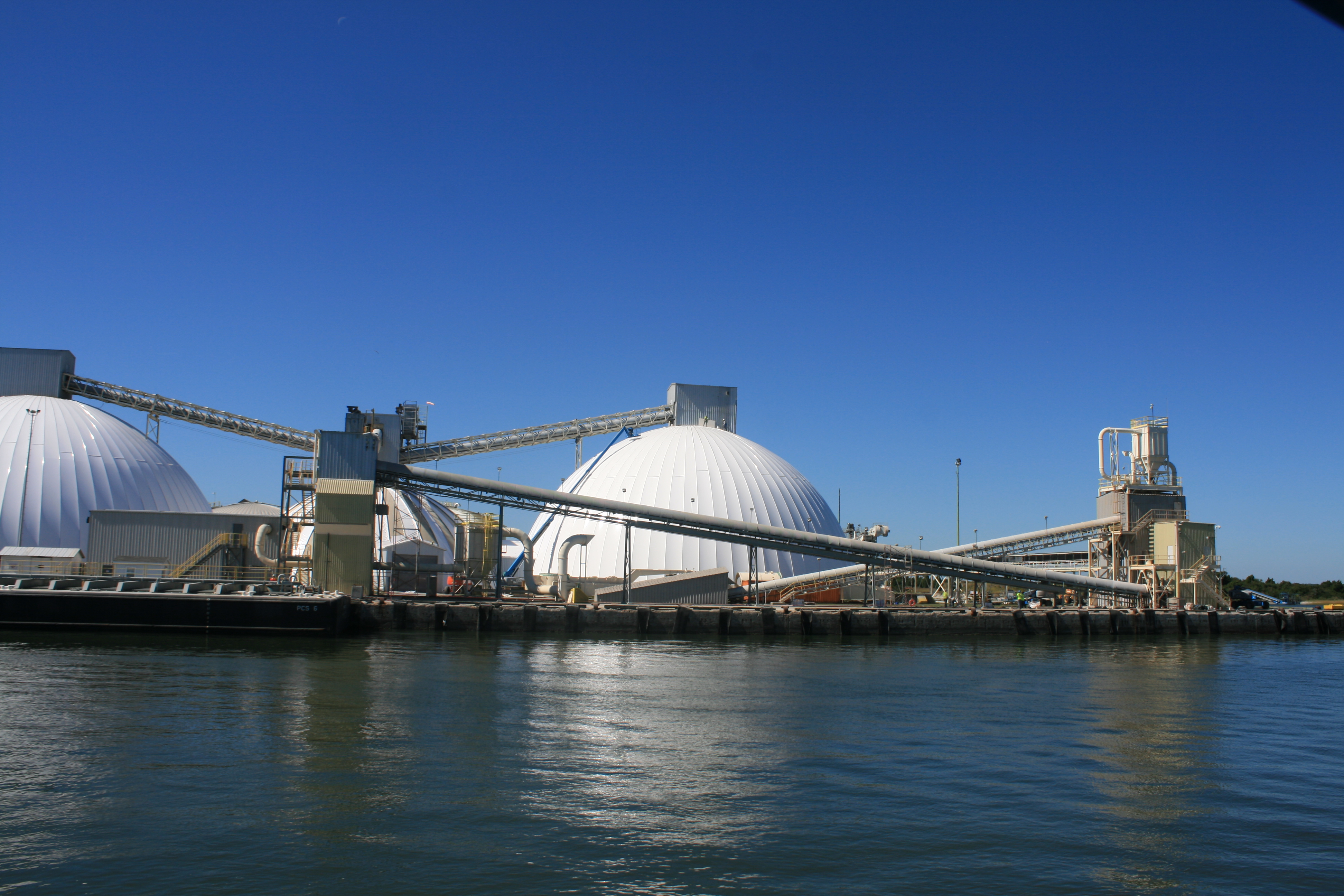
Morehead City had quite a different feel from the other places we’ve visited, its industrial base having a commanding presence.

Phosphate factory, Morehead City

Phosphate factory, Morehead City

We ate at the Sanitary Fish Market and Restaurant, but the food wasn’t really as interesting at the name, and it had the feel of somewhere that was perhaps resting on the laurels of its reputation.

So far on this trip, the navigation has been relatively simple, for the most part confined to rivers and cuts. We’ve  crossed the occasional wide sound, but haven’t had to negotiate anything as nerve-wracking as Tampa Bay or Lake Okeechobee in Florida. But now, looming ahead of us is the prospect of crossing the vast expanses of Pamlico Sound and Albemarle Sound, which stretch out to the North Carolina Outer Banks. The weather has to be carefully monitored , and if necessary, the passage postponed till conditions are easier to manage.

The next couple of days were forecast 25 knots, gusting 30, so after going through the narrow cut of Core Creek and crossing Adams Creek, we stayed a couple of nights in Oriental, waiting for the winds to moderate.

Core Creek

Core Creek

We saw lots of dolphins playing in the water.

Dolphins playing in the water, Core Creek

Dolphins playing in the water, Core Creek

And a working barge from the phosphate factory at Morehead City.

A working boat from the phosphate factfory at Morehead City

A working boat from the phosphate factory at Morehead City

Beach at Adams Creek

Beach at Adams Creek

Although many places in America have the status of a city, despite being fairly small, we haven’t come across many villages. But Oriental is definitely a village, and proud of it too. Beautifully situated, surrounded by water and woodland, and numerous creeks and inlets, as the guide-book puts it, from Oriental you gaze out to the Outer Banks, and beyond them, there’s nothing till you get to England.
As we arrived at the public dock in the early afternoon, we could see a party going on at the marina opposite, and the DJ was playing Don McClean and American Pie. Very atmospheric.

Oriental Marina and Tiki Bar

Oriental Marina and Tiki Bar

Fishing boats at Oriental Public Dock

Fishing boats at Oriental Public Dock

The Captain likes anchoring out, because it’s free. This economic advantage has to be balanced, particularly in a strong wind situation, of the risk of the anchor pulling loose and the possibility of the boat being cast adrift in the middle of the night. At Oriental, the public dock was free, with the bonus that we were safely tied up to sturdy piles.

But there was a snag. When we filled in the registration forms, on the back was a lengthy list of rules. Running a generator was forbidden, and a violation punishable with a $25 fine. My understanding of the ‘electrics’ is compromised by the fact that I still haven’t got round to reading The 12-Volt Bible for Boats, but even I know that if you’re not hooked up to a power supply, and you can’t run the generator, the batteries will quite soon go flat and things won’t work.

The dock was on the main street, with lots of passersby, and next to us there was another boat , whose owners had very kindly helped us tie up, so running the generator anyway, in defiance of the rules, could attract attention. Another boater, Steve, who stopped by to chat, thought that no-one would care, and the singer at the Tiki Bar was making so much noise that it was unlikely that the generator would have been audible. But even so, it probably wasn’t so much the $25 fine as the embarrassment of discovery that stopped us switching it on. We went for a stroll round the village and the waterfront, and when we got back, the batteries were still charged up.

The waterfront at Oriental, looking towards the Outer Banks

The waterfront at Oriental, looking towards the Outer Banks

We went for a drink at the Tiki Bar, and an older couple, Torrey and Joanne, who had retired to Oriental nine years ago and thought it the best place on earth, invited us to join them. Back on the boat an hour and a half later, the fridge was spontaneously defrosting itself and there was a large puddle of water on the cabin floor.

The thought of having to dispose of the entire contents of the fridge tipped the balance, and the Captain surreptitiously put the generator on, hoping that no-one would mind or notice. But by now, the singer had finished his marathon stint at the bar, and all was quiet and still. Early to bed, early to rise seems to be America’s motto, even on a Saturday night.

I got on with cooking the dinner, then suddenly we were aware of flashing blue lights – the cops. It seemed fanciful to imagine that they had come to investigate a possible violation of the dock rules, rather than the youths we had noticed lurking and doing things with their cell-phones, but you never knew. Eventually the cops drove off, and, warily, the Captain switched the generator  back on. Ten minutes later, the cops were back, and the generator quickly went off. This process repeated several times, until the cops went for good and the Captain was confident that the batteries were charged up and the fridge working again.

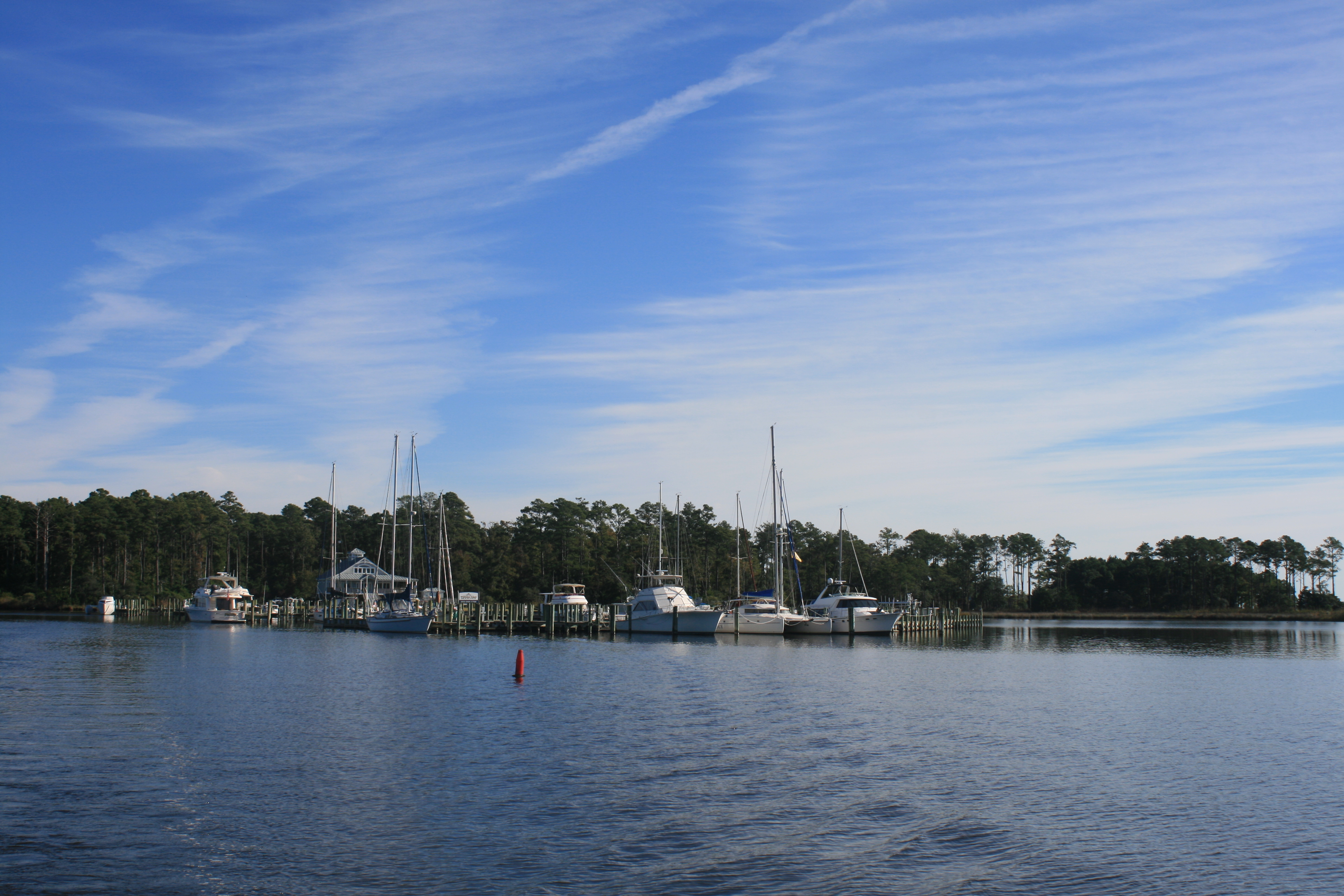
The next morning, the wind was already quite strong, but not strong enough to stop us taking Carina round the corner to the lovely marina at Whitaker Pointe, with electricity, showers, laundry, and a car we could borrow to go shopping. And not expensive, either.

Doing some boat maintenance at Whitaker Pointe Marina

Doing some boat maintenance at Whitaker Pointe Marina


A Beach Club and a Battleship

We arrived at Osprey Landing, Myrtle Beach, via the beautiful Waccamaw River.

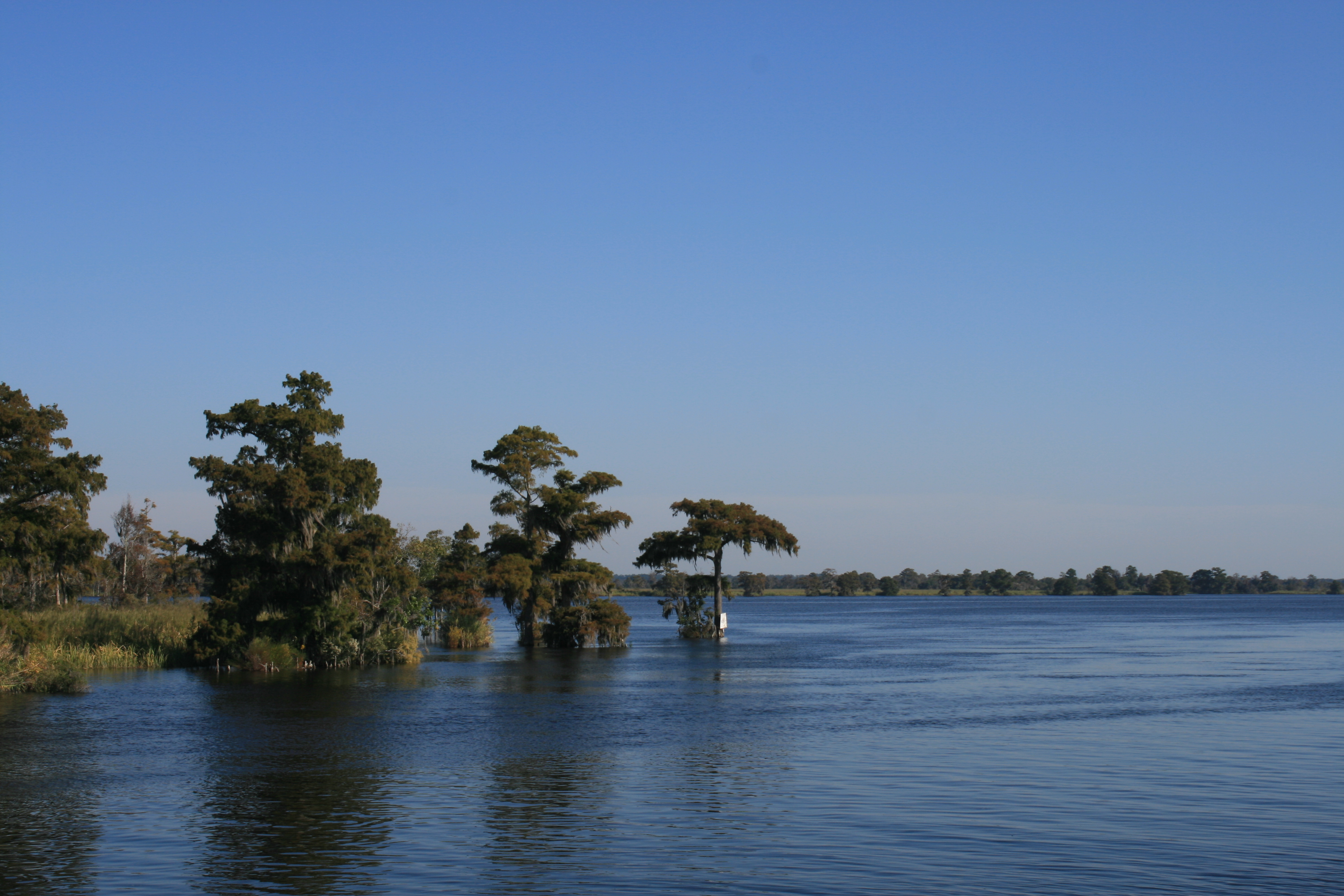
Waccamaw River

Waccamaw River

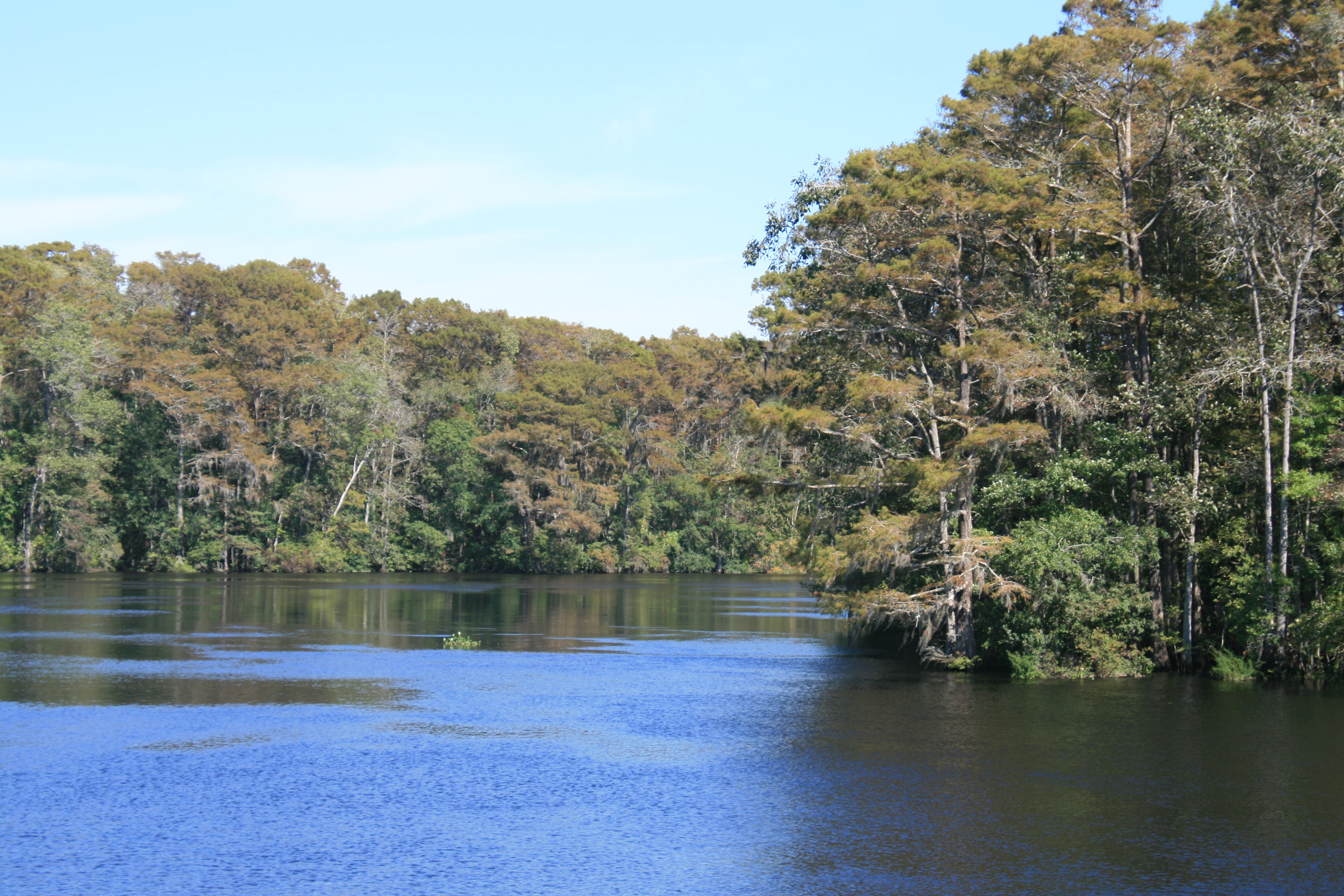
Autumn tints on the Waccamaw River

Autumn tints on the Waccamaw River


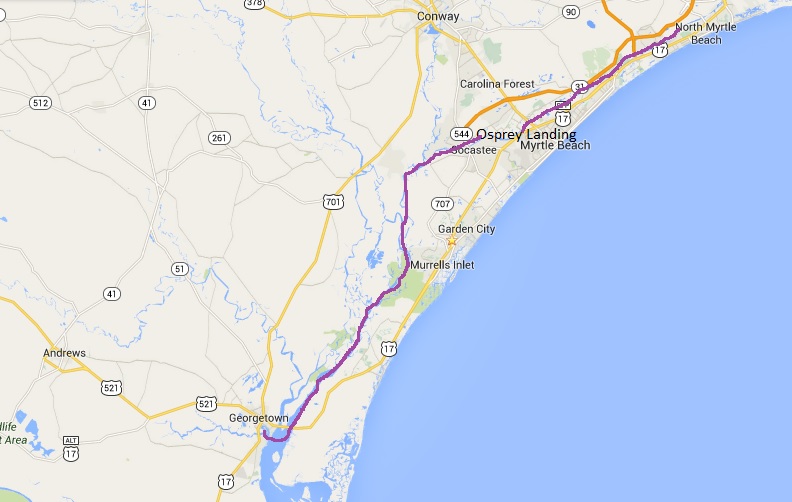
Georgetown to Osprey Landing, Myrtle Beach

Georgetown to Osprey Landing, Myrtle Beach


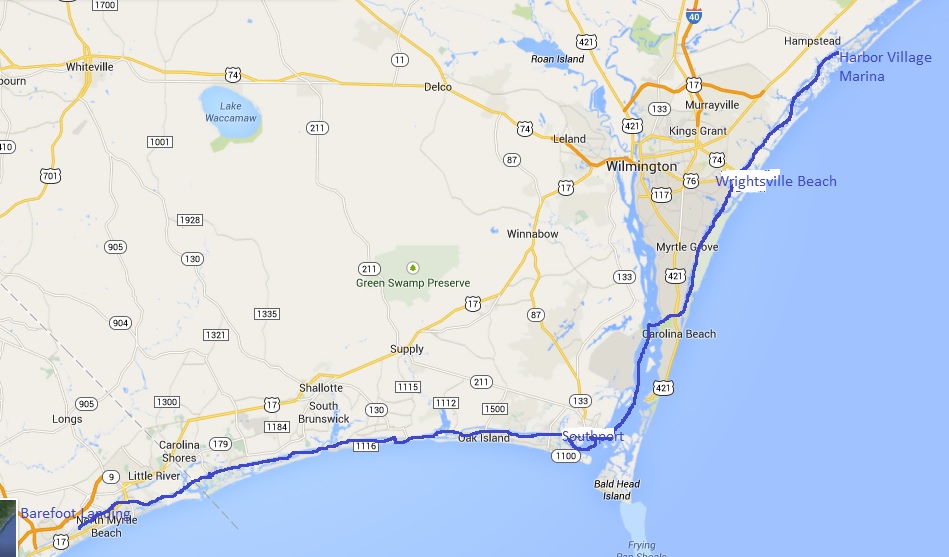
Barefoot Landing - Southport - Wrightsville Beach - Hampstead

Barefoot Landing – Southport – Wrightsville Beach – Hampstead

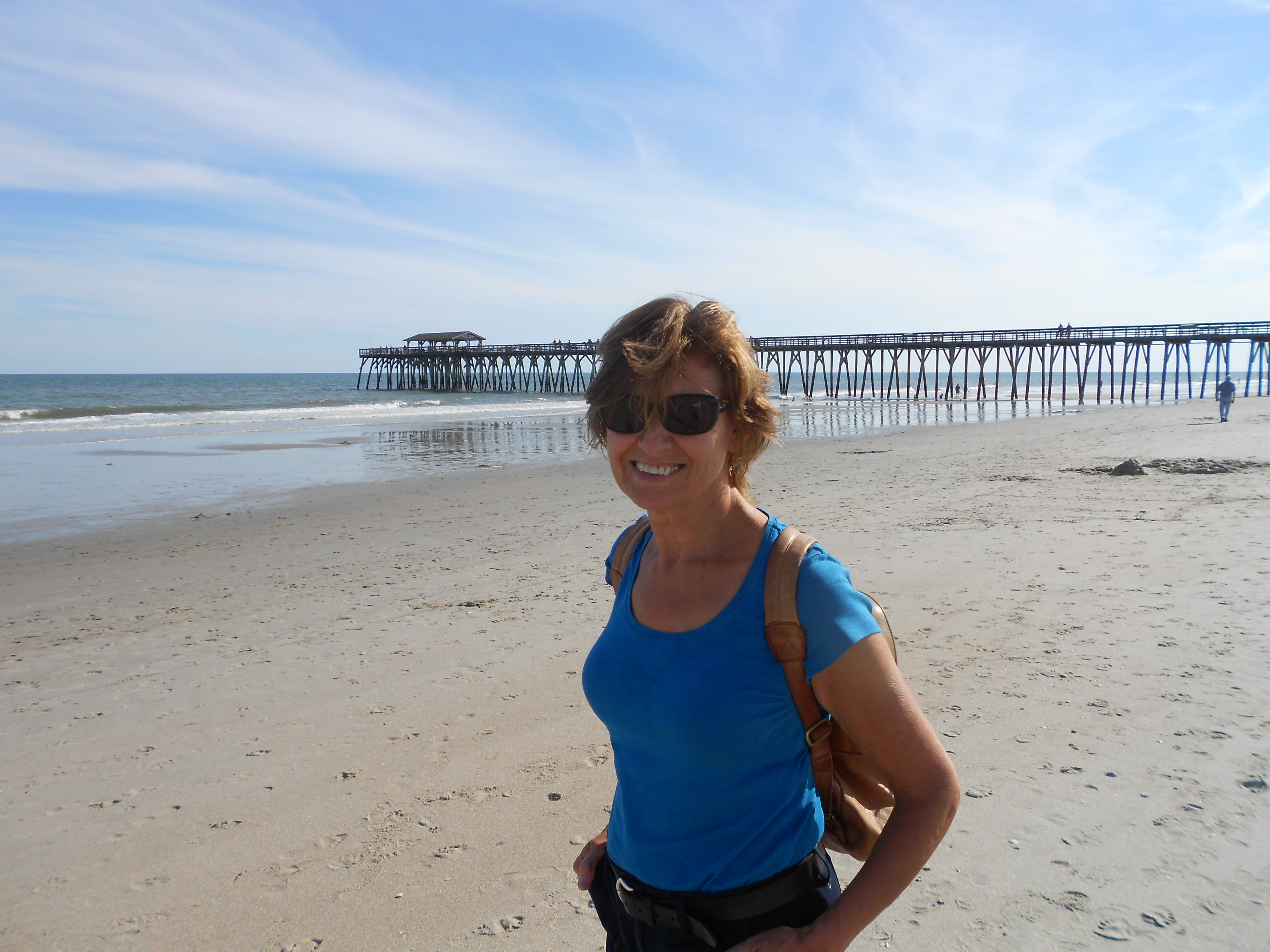
Myrtle Beach is a fun place. There’s fun of all kinds  – shopping malls, restaurants, fast food outlets, bars, clubs, a theatre, amusement arcades, crazy golf courses, and children’s playparks in abundance. We had a quick trip to the beach, but it wasn’t quite Cumberland Island.

Myrtle Beach

Myrtle Beach


Above Osprey Landing, the waterway is a long straight canal with development on both sides, called Pine Island Cut, that lasts for nearly twenty miles to the border with North Carolina.

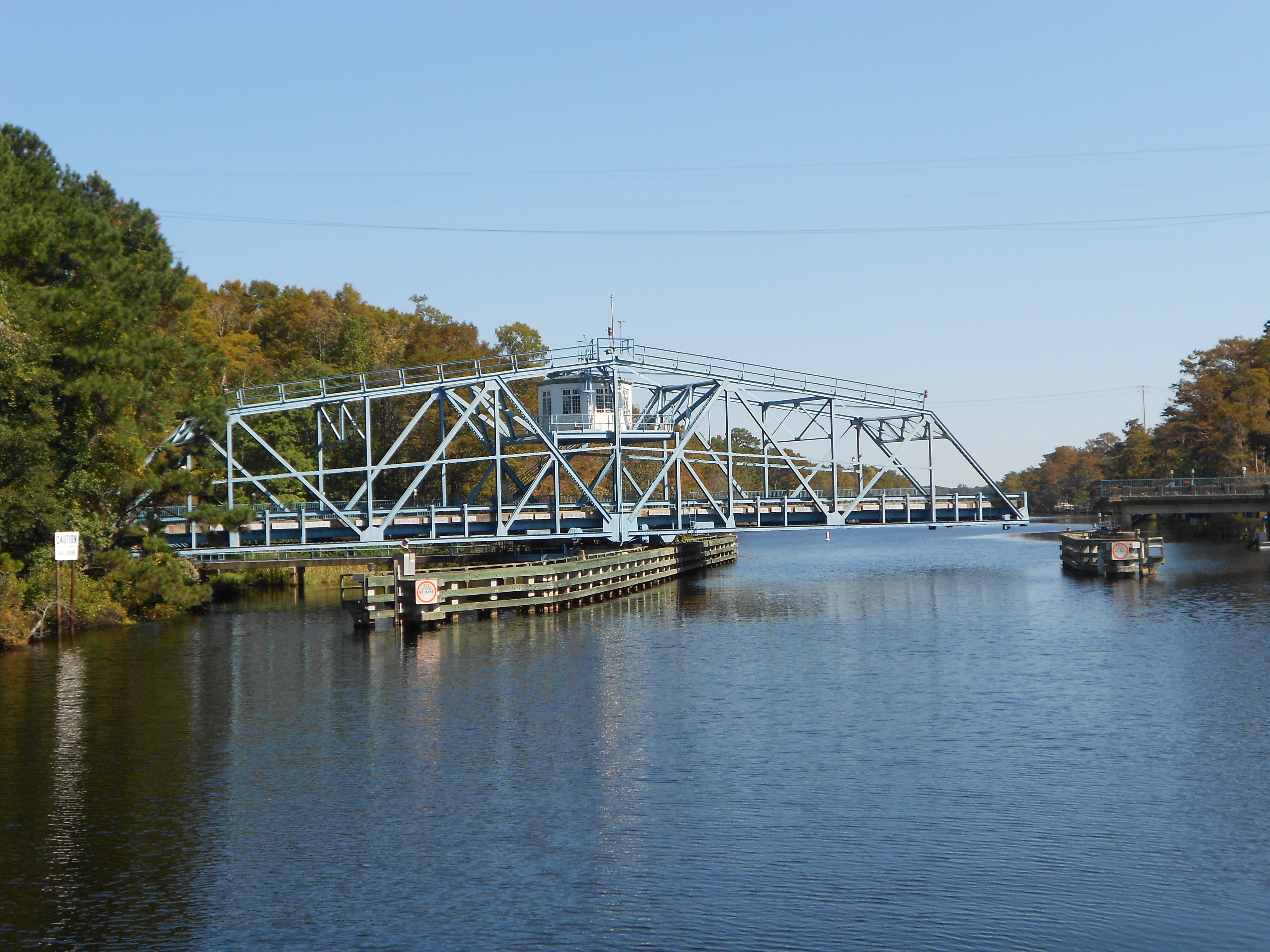
Swing Bridge on Pine Island Cut

Swing Bridge on Pine Island Cut


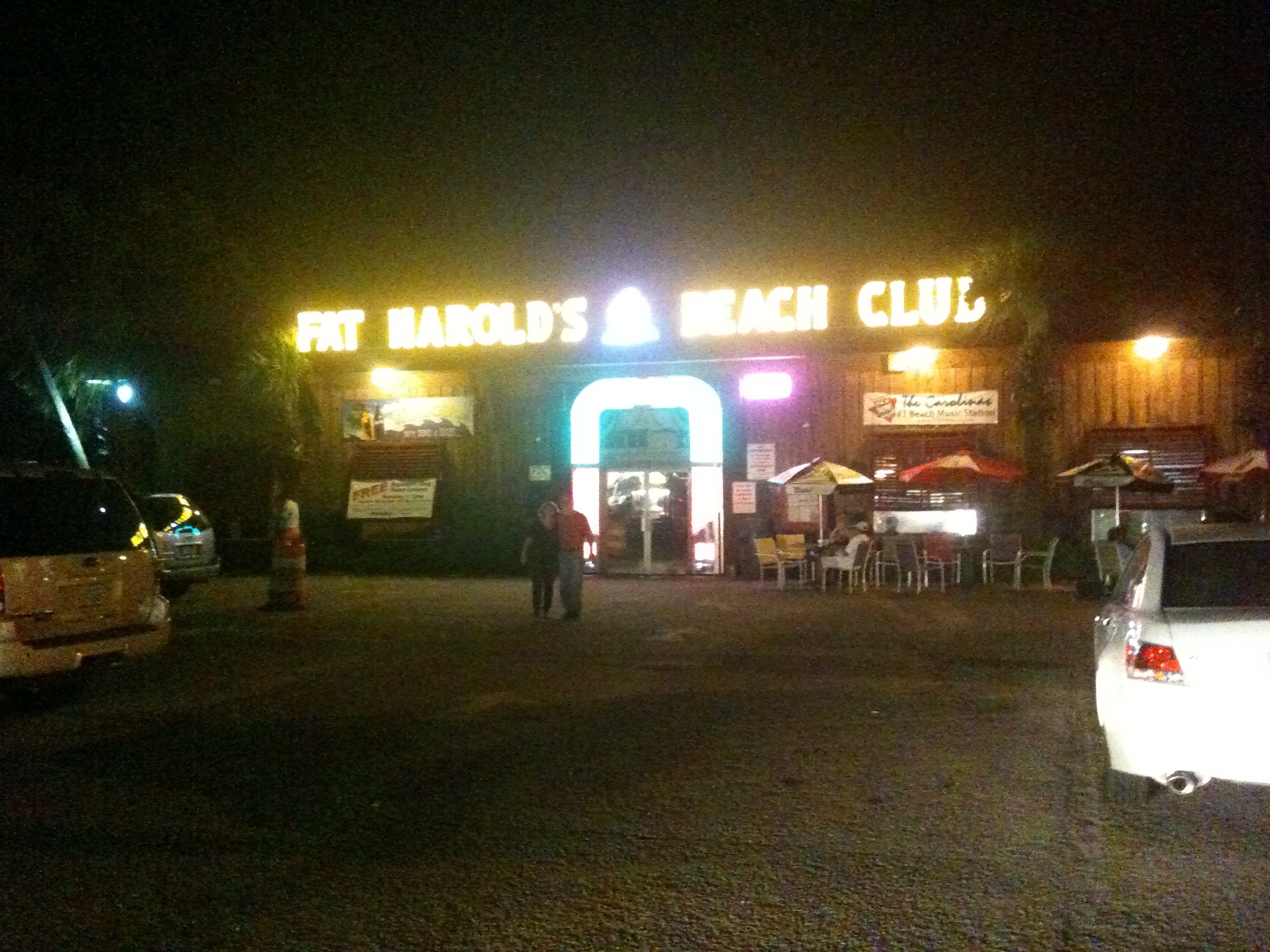
We stopped at Barefoot Landing, North Myrtle Beach, because there was one attraction that had proved irresistible. I can’t really do better than to quote the Lonely Planet:

“Fat Harold’s Beach Club: It’s a gas to watch the graying beach bums groove to doo-wop and old-time rock and roll at this North Myrtle institution, which calls itself ‘Home of the Shag’. The dance, that is. Free shag lessons are offered at 7pm every Tuesday.”

Fat Harold's, N Myrtle Beach

Fat Harold’s, N Myrtle Beach

Unfortunately we were there on Friday night, so apart from one or two jives,  had to content ourselves with drinking our beer and watching the experienced dancers, some of whom were very good indeed.

It was immediately obvious that the term ‘beach bum’ had a different meaning in South Carolina from that listed in the Urban Dictionary. As we arrived, the DJ was playing a special song for a couple celebrating their Golden Wedding, and our fellow groovers, who ranged in age from 40-something to 80-something, were casually but smartly dressed, and apart from one ponytail, and one Bill Clinton look-alike, looked just like the sort of people you see dancing anywhere in the UK.

I had an anxious moment when, during Ian’s absence in the restroom, a gentleman asked me if I knew how to do the Carolina Shag, and it was a relief to be able to reply honestly that I didn’t. But we did have an interesting chat about similarities between the Shag, Eastern Swing, Jive and Cha Cha, and he told us about a big Shag Festival every Spring and Fall. Here’s a link to a video of the Junior Shag Competition.

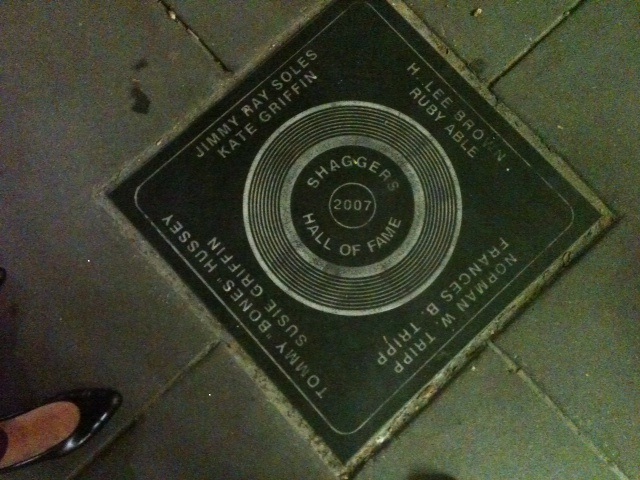
After we left, and were waiting for our taxi, Ian noticed the Shaggers Hall of Fame stars on the pavement.

Pavement, North Myrtle Beach

Pavement, North Myrtle Beach

After the excitement of Fat Harold’s on a Friday night, boating seemed a bit mundane. We continued up the rather monotonous stretch of Pine Island Cut, then the waterway opened out just before the State Line.

Near the State Line

Near the State Line

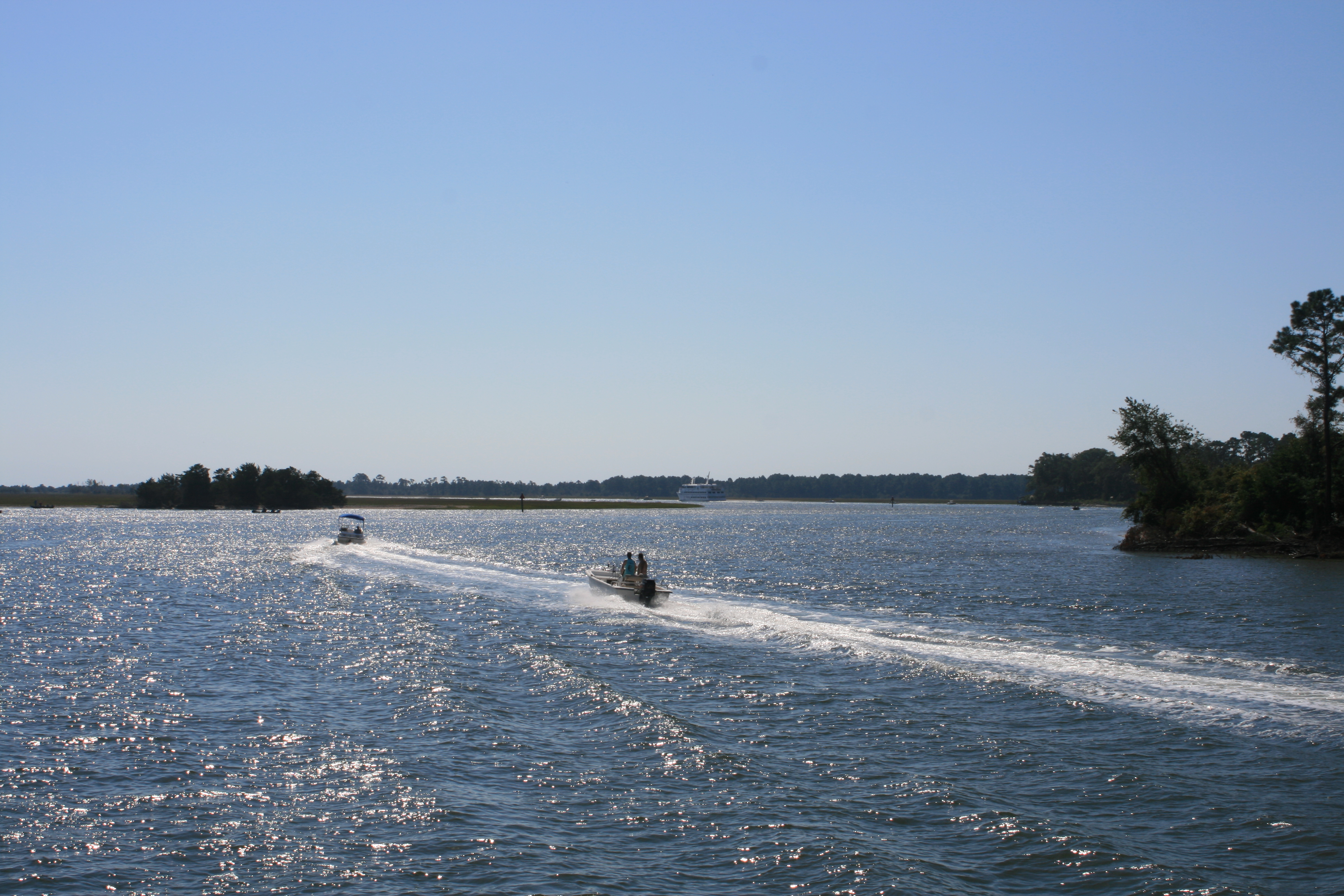
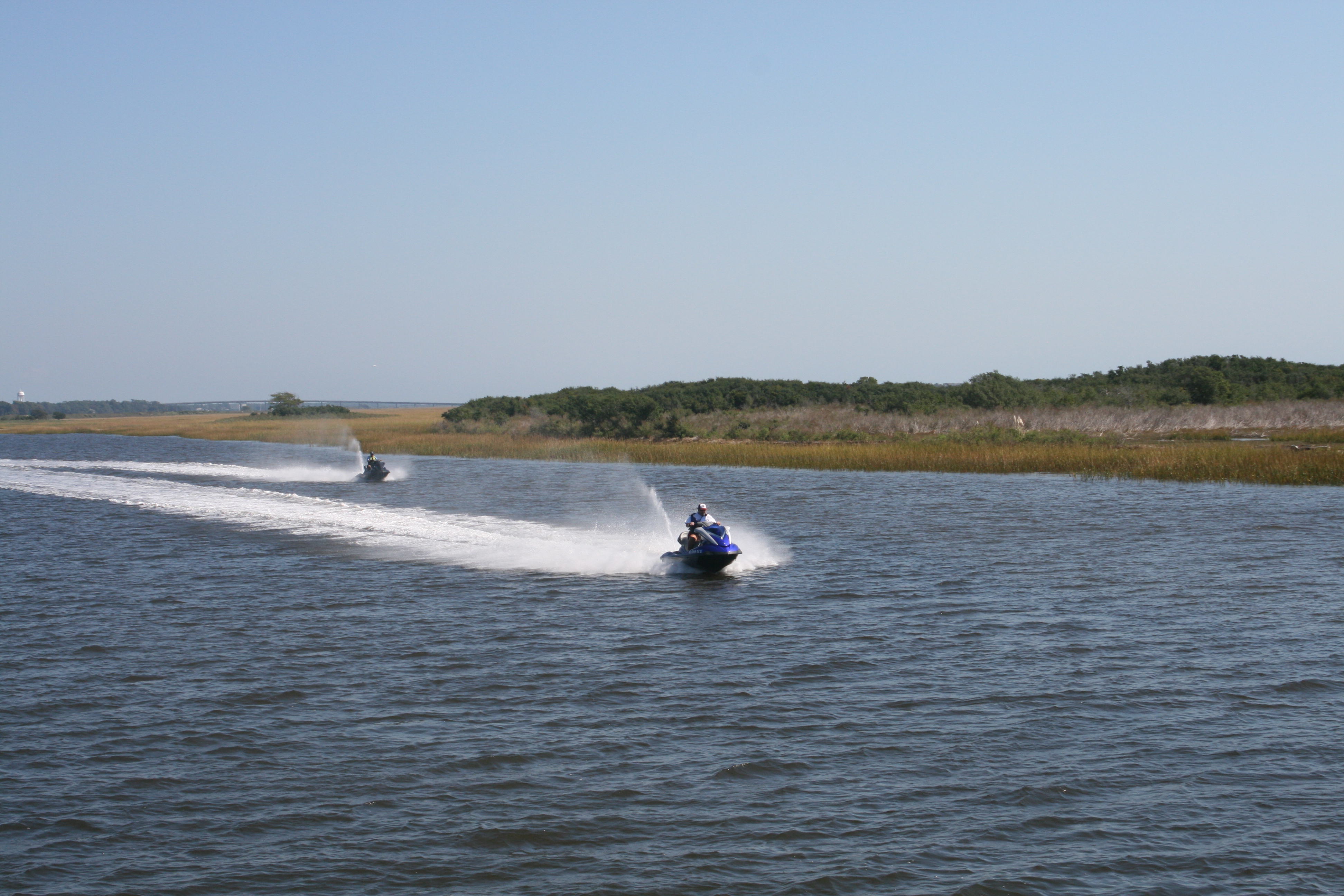
It was a Saturday, and we’ve got used to the noise and speed.

Boy Racers

Boy Racers

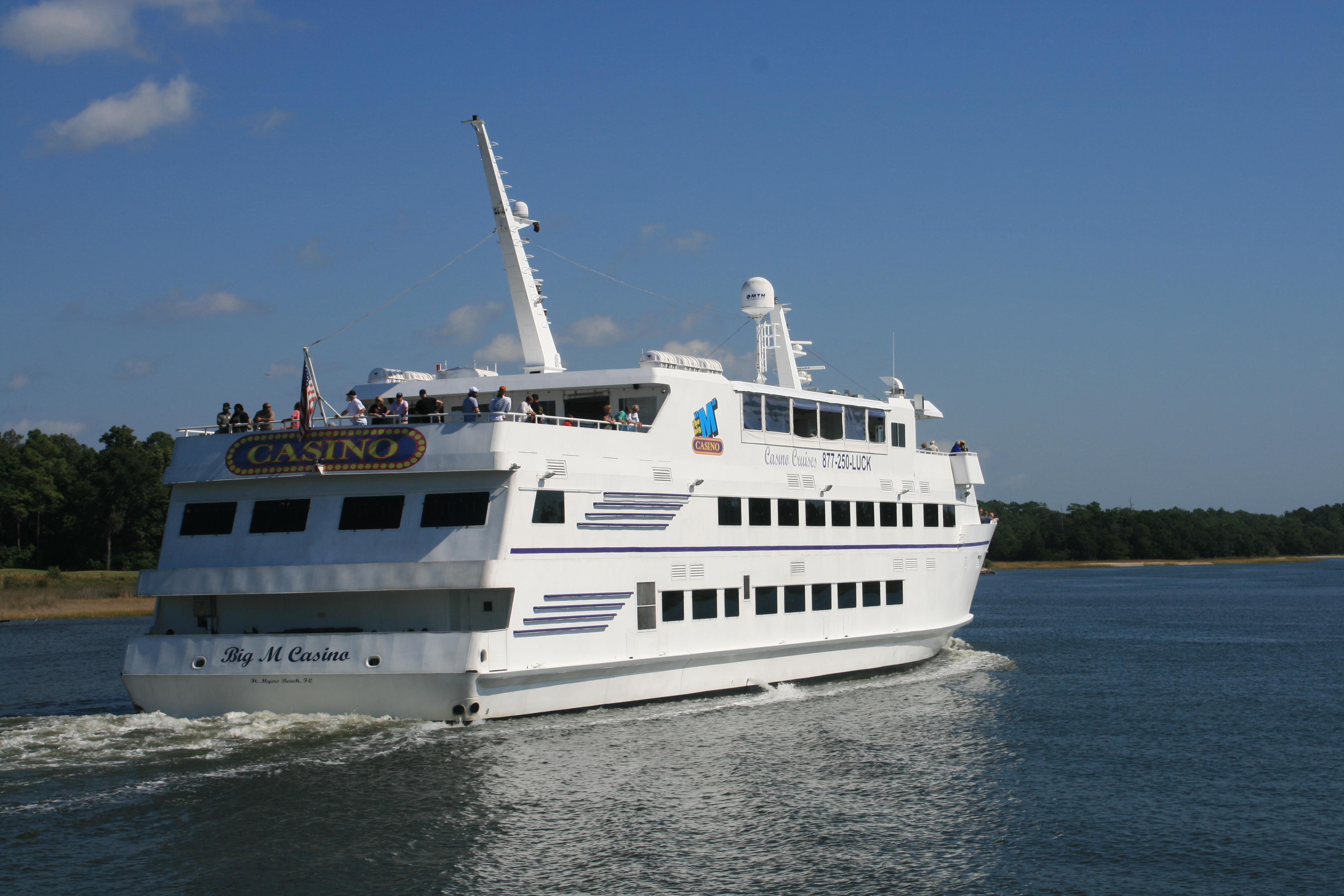
Pleasure Cruise Boat

Pleasure Cruise Boat

This boat seemed typical of Myrtle Beach.

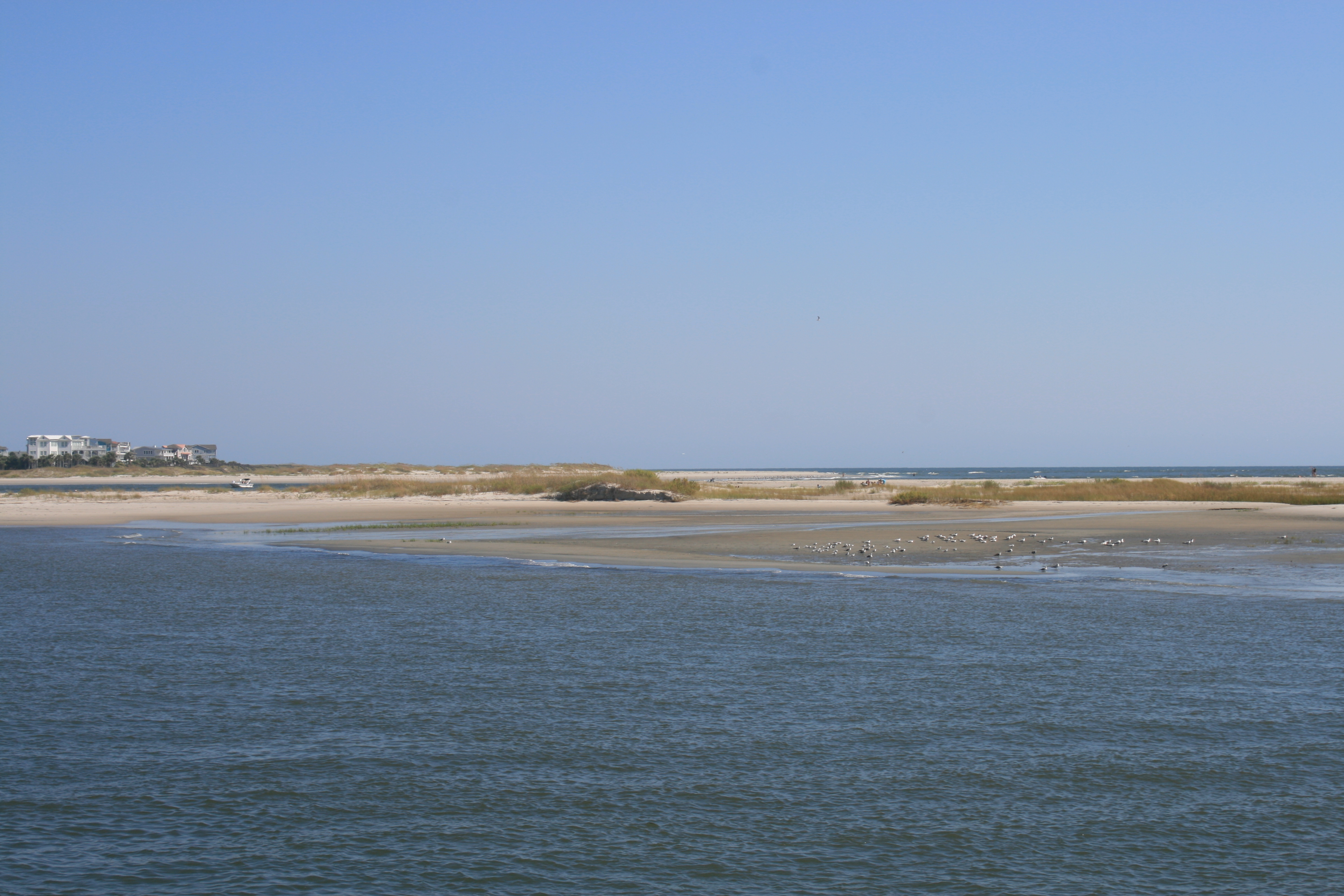
We had glimpses of the ocean at Shallotte Inlet.

Near Shallotte Inlet

Near Shallotte Inlet

Near Shallotte Inlet

Near Shallotte Inlet

Shallotte Inlet

Shallotte Inlet


We stopped overnight at Southport, another old settlement with some lovely houses.

Approaching Lockwood's Folly Inlet, near Southport

Approaching Lockwood’s Folly Inlet, near Southport

But the weather turned cool and cloudy, and as we left Southport the next day to head up the Cape Fear River, the wind was blowing one way and the tide pulling in the opposite direction, resulting in some quite heavy chop.

Leaving Southport in choppy water

Leaving Southport in choppy water

Things calmed down as we turned east along the cut leading towards Carolina Beach and our anchorage at Wrightsville Beach, but the sun stayed resolutely hidden all day.

Arriving at Wrightsville Beach in the gloom

Arriving at Wrightsville Beach in the gloom

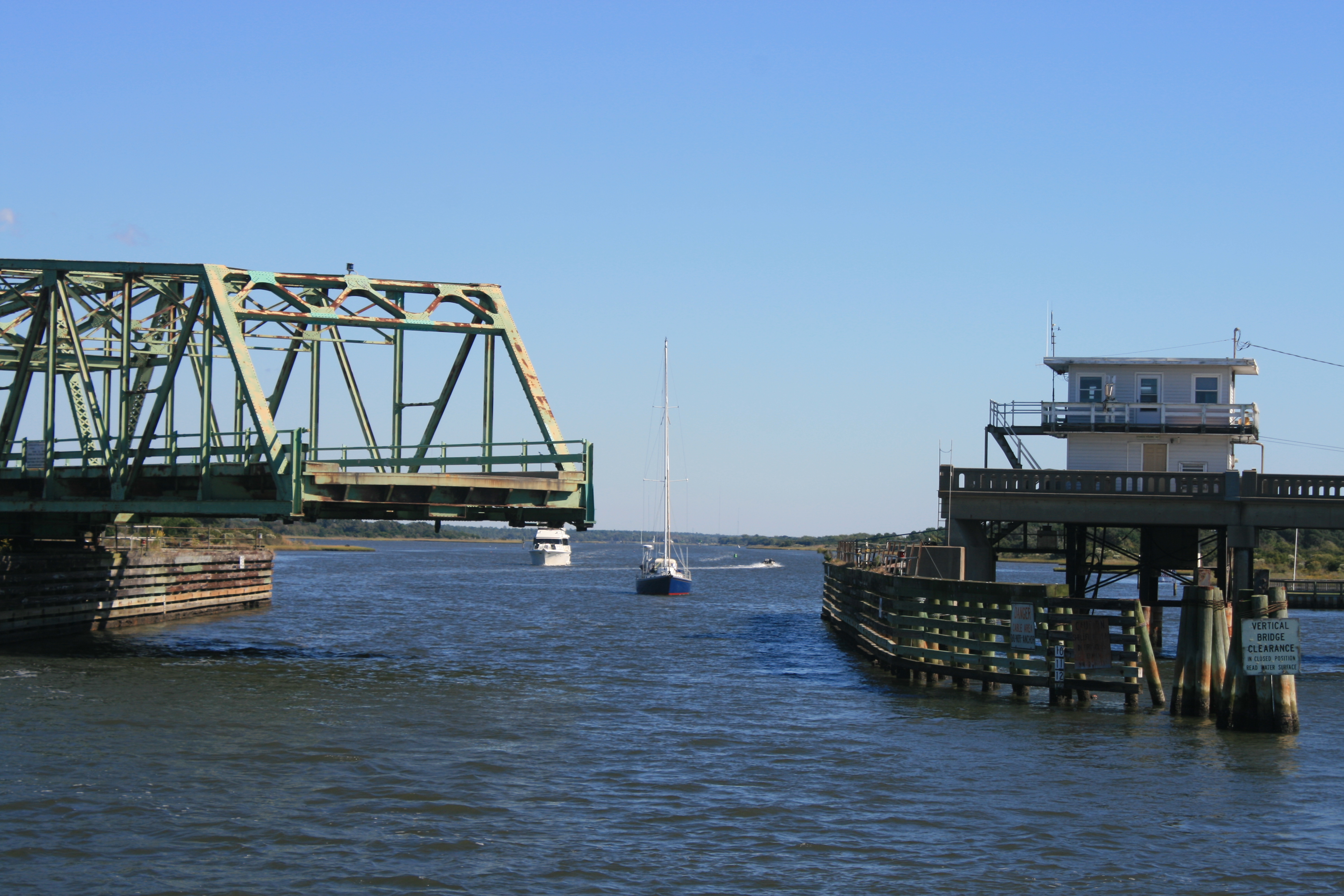
The following day it was brighter, with blue sky over the Atlantic. As the waterway took a sharp right turn, Wrightsville Bascule Bridge, which the Captain had failed to notice when plotting the course the previous day, loomed ahead, looking very low. The sign next to the bridge indicated that it would only open on the hour. The chart claimed that the height of the bridge was 20′, which should have given us a clearance of 3′, but it didn’t look like that from where we were sitting.  However, as there was another 40 minutes to wait before the next opening, we circled round, weighed it up again and ploughed on.

Aaaagh! The bridge visible under the bimini

Aaaagh! The bridge visible just above the bimini

Approaching Wrightsville Bascule Bridge

Approaching Wrightsville Bascule Bridge

Not nearly so dramatic, but it reminded me of the time we arrived in New York on the QM2 in pitch darkness, and the Captain (the QM2’s Captain, that is) guided the huge ship under the Verrazano Suspension Bridge with two feet to spare.

We followed the waterway north eastwards towards Hampstead, with dense woodland to our left. To our right, the marshes, criss-crossed with creeks, stretched to the dunes and breakers of the ocean.

Figure Eight Island, looking towards the ocean

Figure Eight Island, looking towards the ocean

Pages Creek

Pages Creek

Figure Eight Island Swing Bridge

Figure Eight Island Swing Bridge

Near Butler Creek

Near Butler Creek

We had come to North Carolina six years ago, and stayed in this area.We’d looked at the waterway with interest, as at the time we had a share in a narrowboat and enjoyed the waterways at home. We never imagined then, that only a few years later, we’d return to the Intra-coastal Waterway in our own boat.

We moored at Harbor Village Marina, Hampstead and decided to hire a car and have a look round the area.

Carina moored at Harbor Village Marina, Hampstead

Carina moored at Harbor Village Marina, Hampstead

Wilmington, at the mouth of the Cape Fear River, and at one time the State Capital, was described as a hidden gem. It was also the home of USS North Carolina
After a good lunch of pulled pork and locally brewed beer at the Front St Brewery, we drove over the river to the Battleship Memorial.
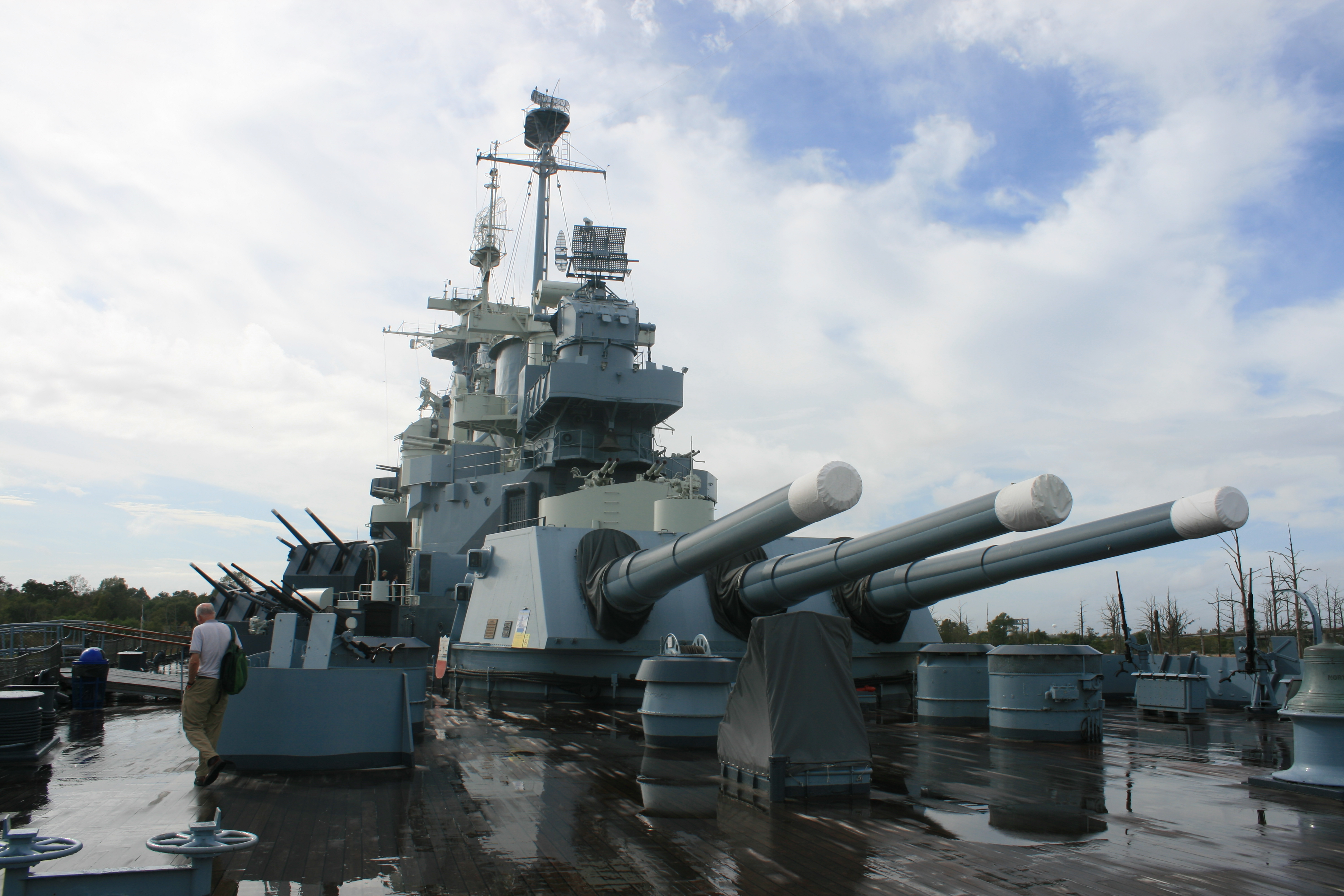
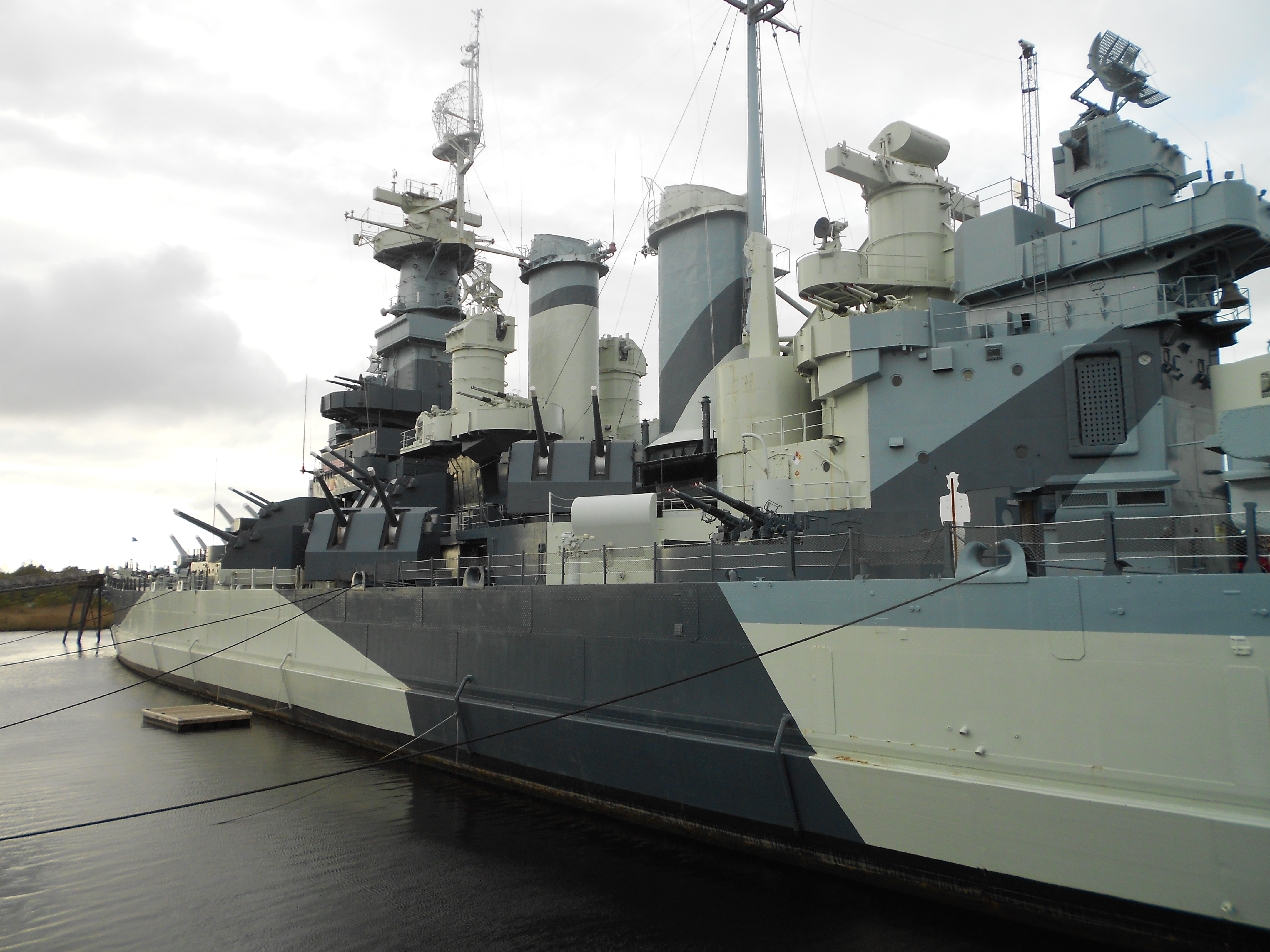
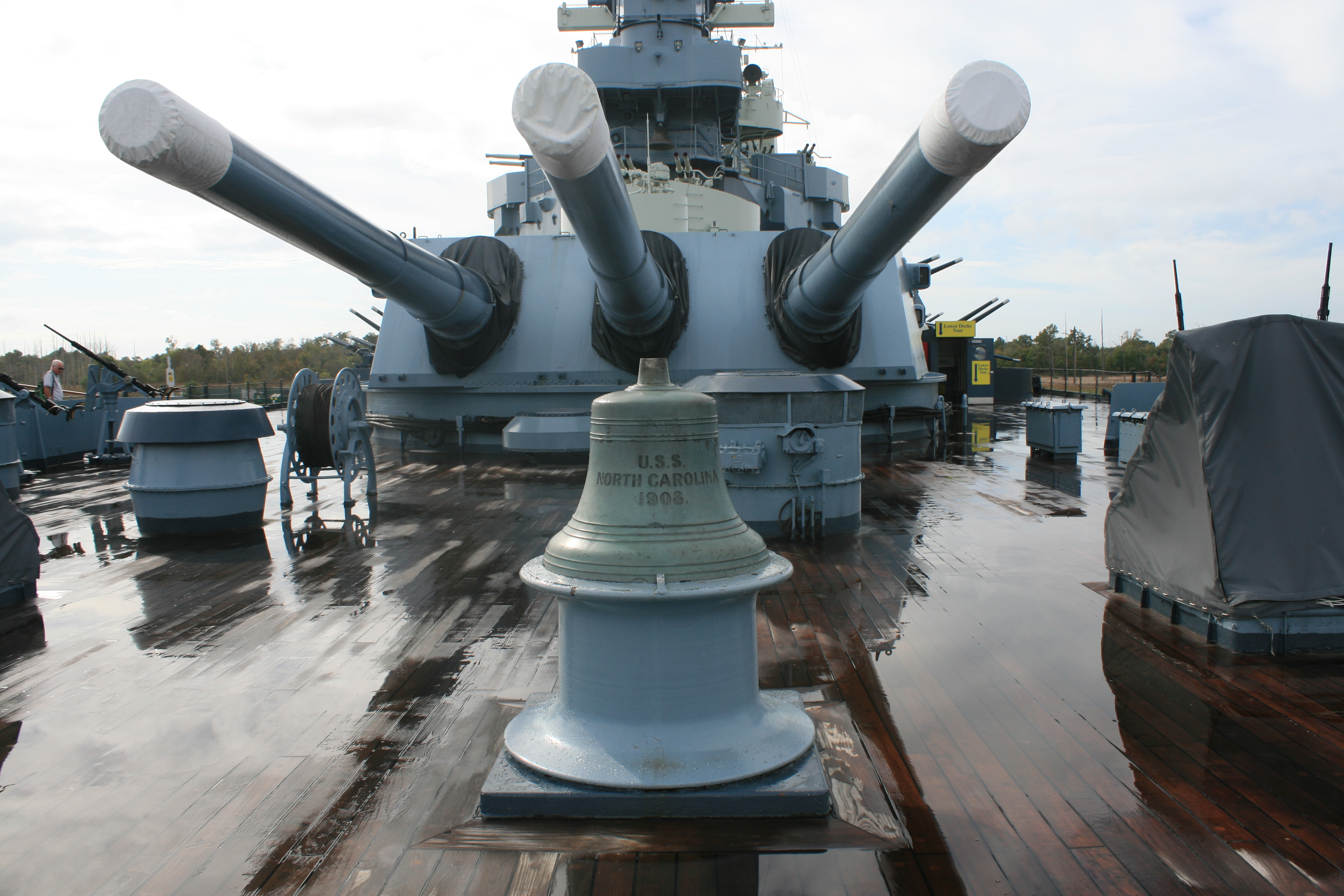
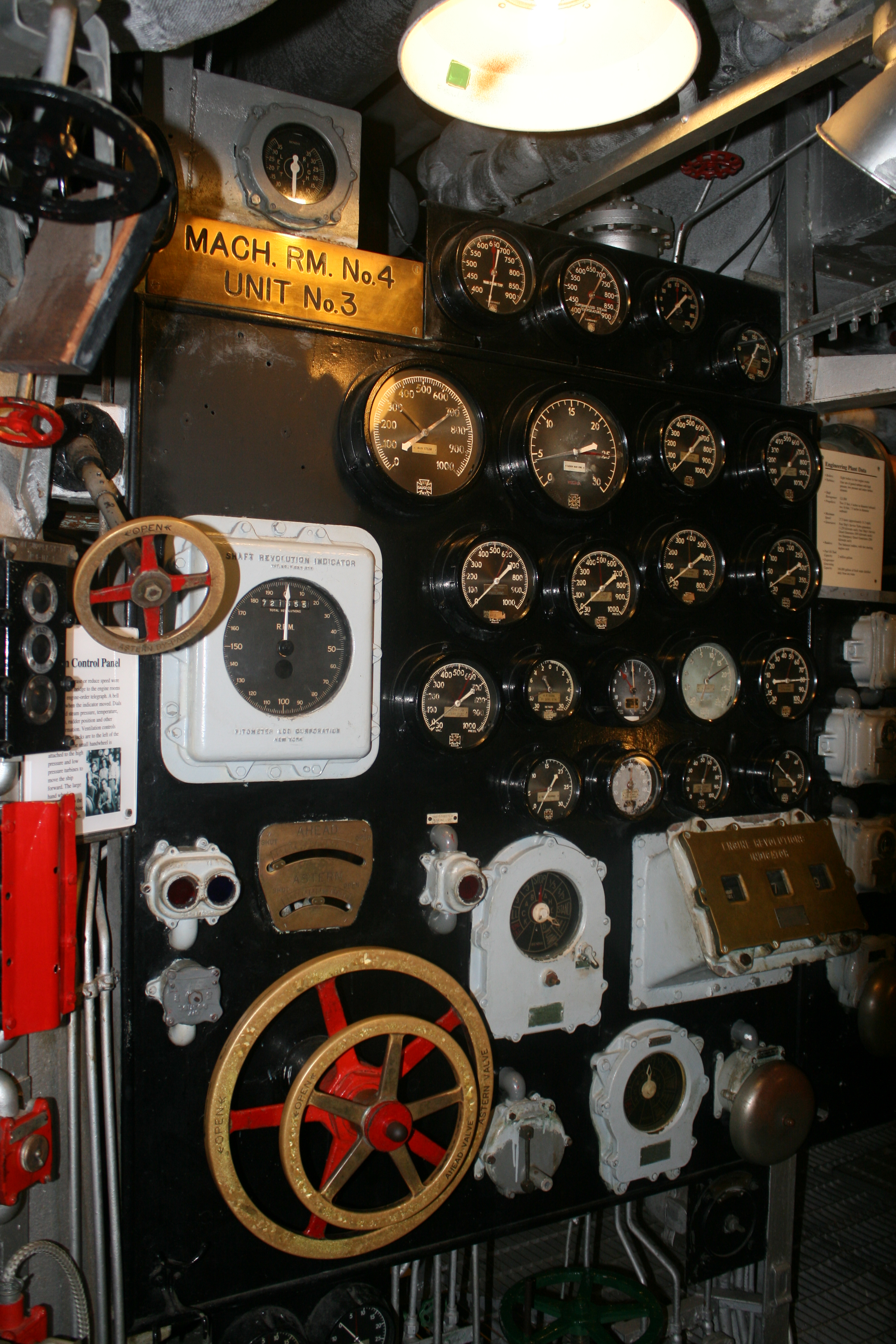
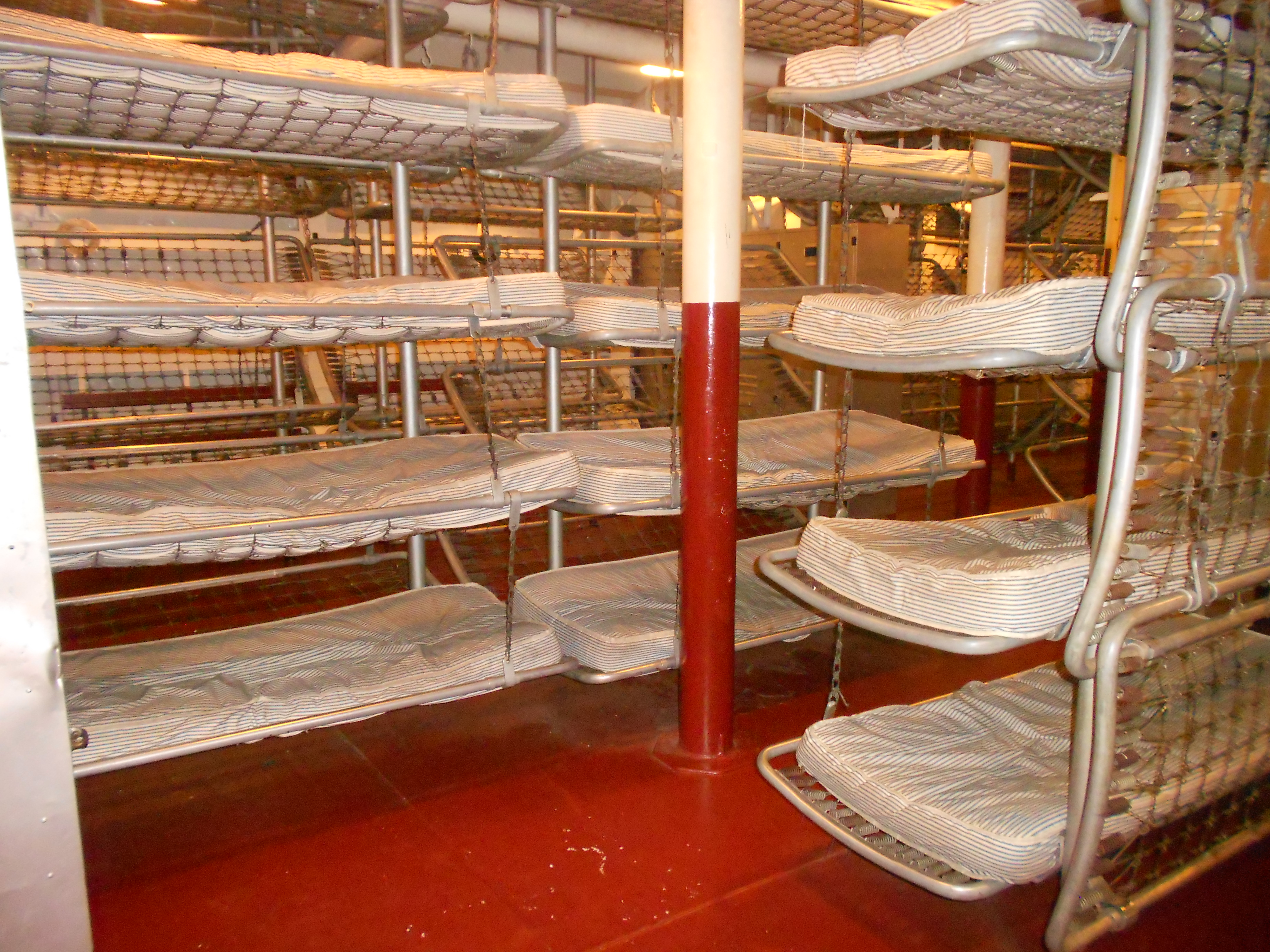
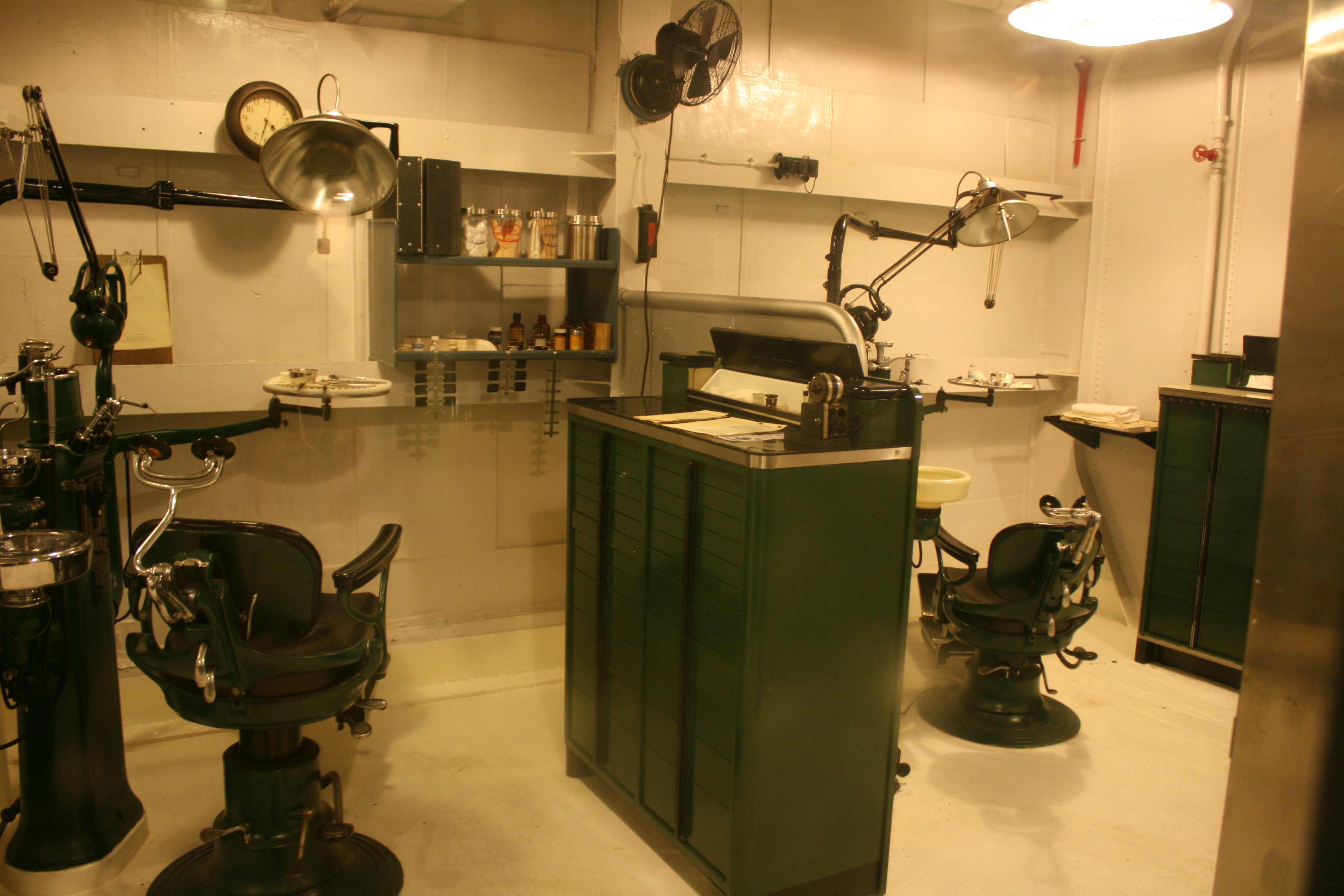
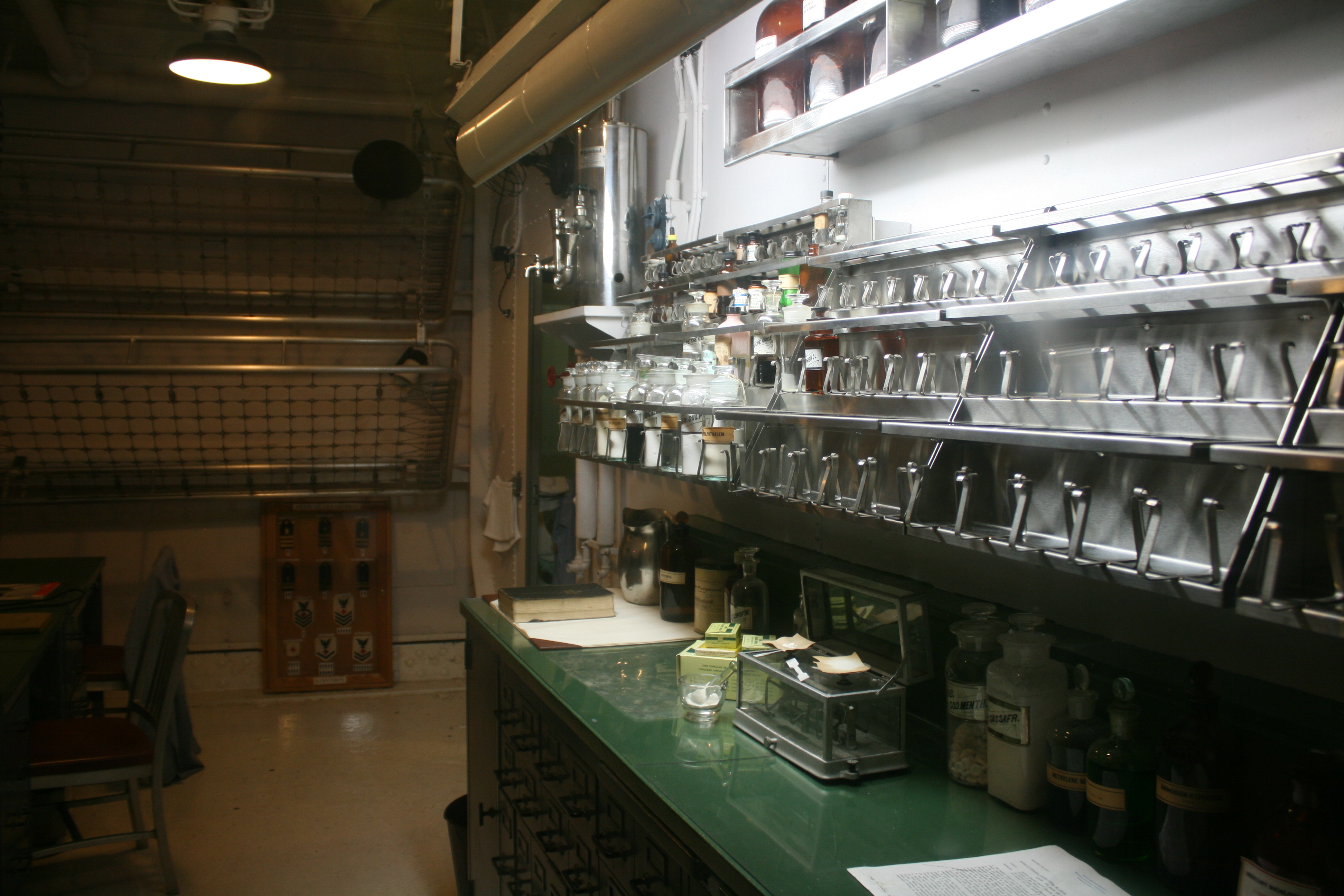
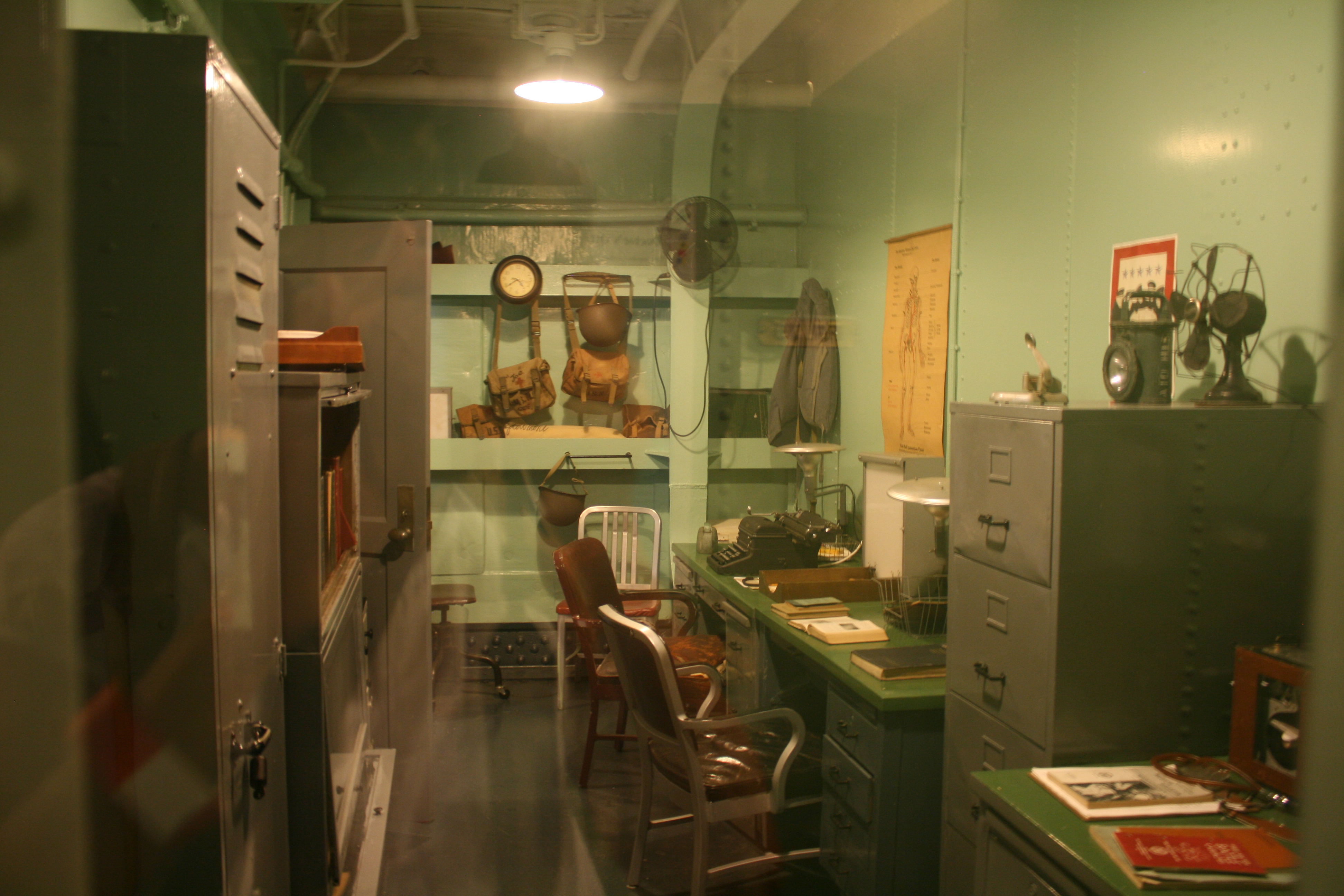
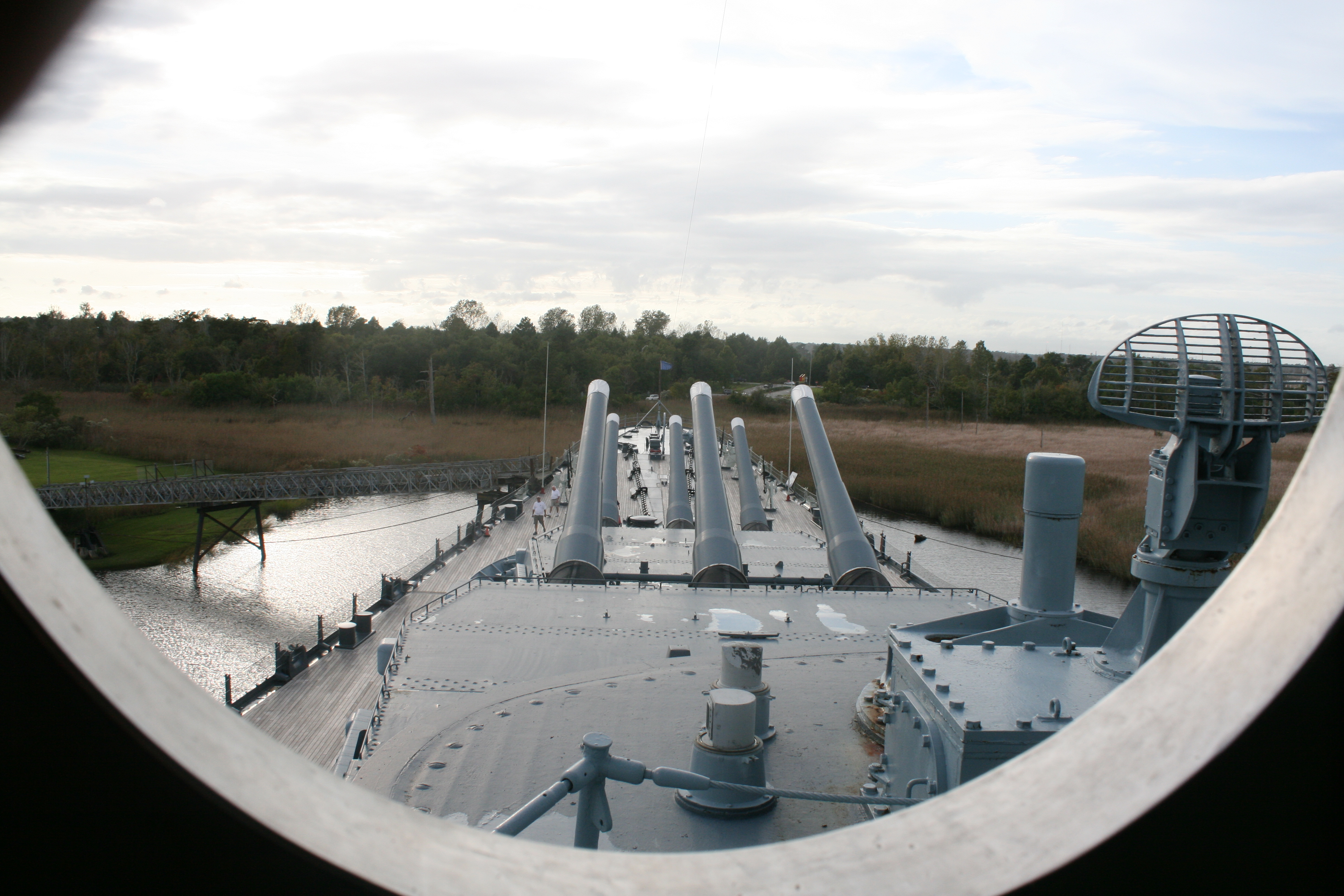
USS North Carolina saw valiant service in WW2 and earned 15 battle stars, more than any other battleship. Although the technical aspects of the ship, and the scale of it, were very impressive, what made the exhibition so outstanding, and so moving, was the insight it gave into the sailors’ daily lives, and how they had responded under duress. The USS North Carolina was torpedoed on September 15th, 1942, with the loss of five men. The personal accounts of that day were harrowing.
The ship was decommissioned in 1947 and 10 years later, the US government announced that the ship would be sold for scrap. North Carolina school children raised $330,000 to save the ship and bring her home to North Carolina, as a memorial to North Carolinians from all the services who were killed in WW2.

USS North Carolina

USS North Carolina

USS North Carolina

USS North Carolina

IMG_8879

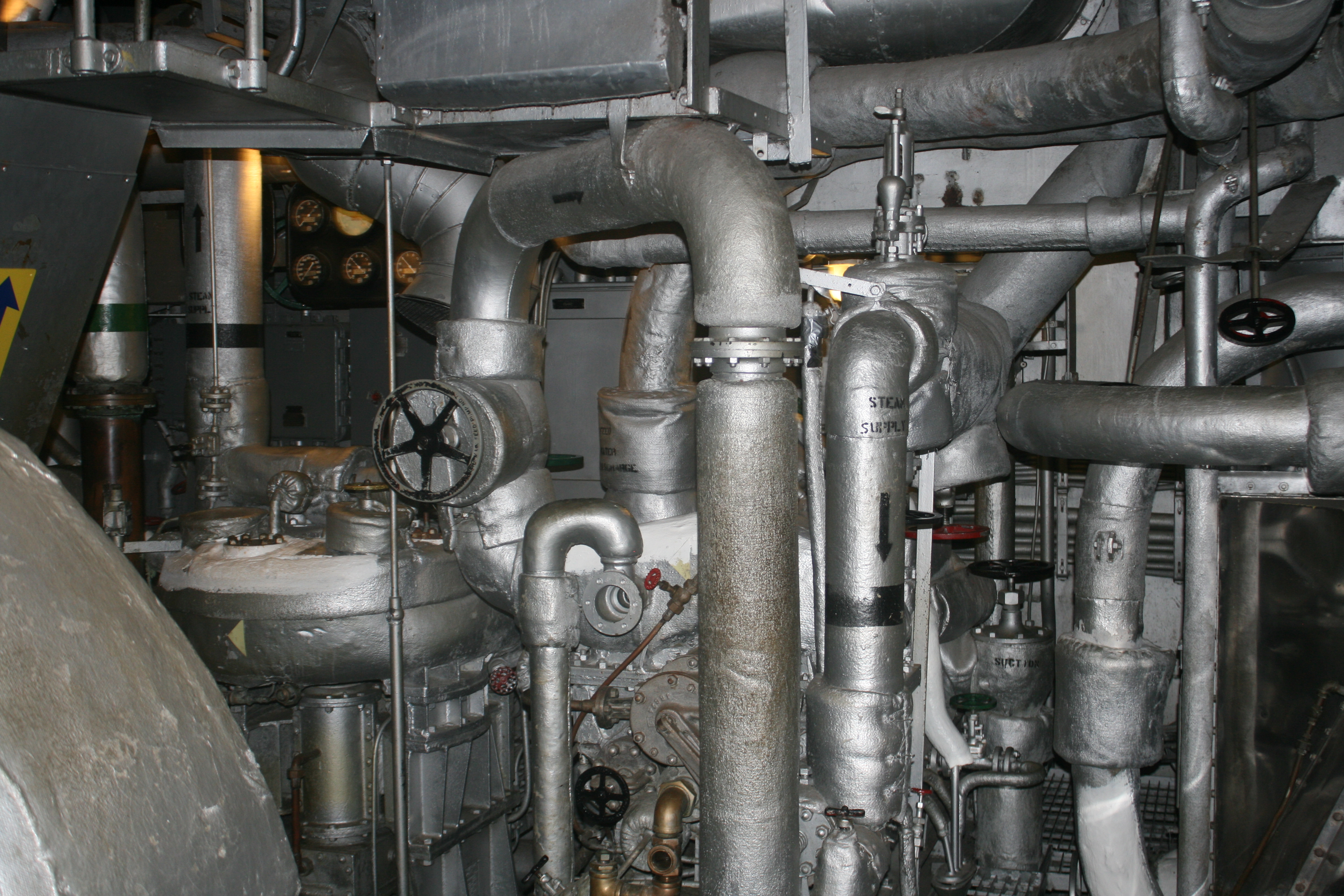
Part of the Engine Room

Part of the Engine Room

Control panel

Control panel

Sleeping quarters

Sleeping quarters

dentist's surgery

dentist’s surgery

dispensary

dispensary

Doctor's office

Doctor’s office

View from the bridge

View from the bridge


Afterwards, we drove round the historic district, following the African-American Heritage Trail. One of the houses listed was the Hubert Eaton House, a modest single-storey dwelling on Orange Street. Hubert Eaton was a doctor  and a good tennis player, who adopted the young Althea Gibson and coached her on the court in his back garden, before her victories in the Women’s Singles at Wimbledon in 1957 and 1958. Somehow though, it seemed a bit of an intrusion to photograph the little house, very obviously someone’s home, and for a tennis fan, it was enough to have been there.


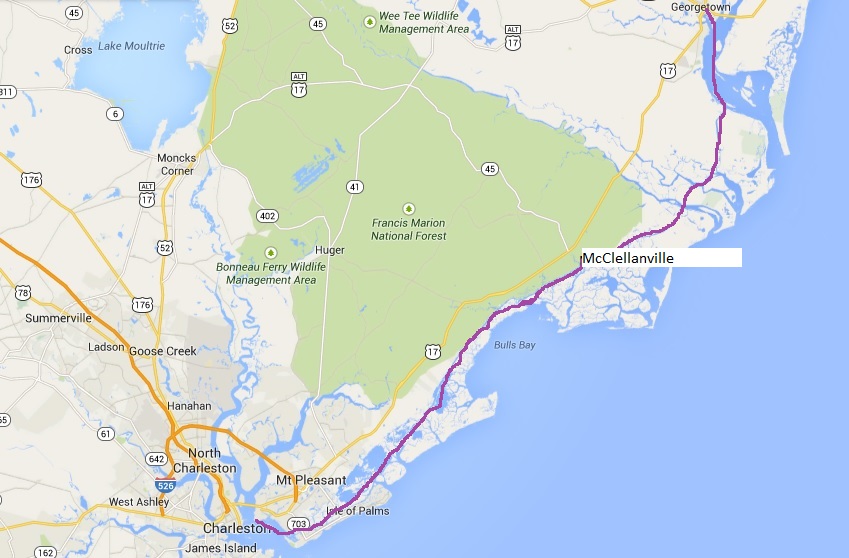
Charleston to McClellanville and Georgetown

Charleston-McLellanville-Georgetown

It was still quite breezy as we left Charleston and headed round the bluff, into the waterway that separates Mount Pleasant from Sullivan Island. Sunday is a busy day for boaters, so we had the pleasure of being passed on both sides by nippy little craft, their bronzed owners waving cheerily, and creating large wakes. It was quite a change after our solitary days in the Lowcountry, but the Captain restrained himself from comment over the VHF radio.

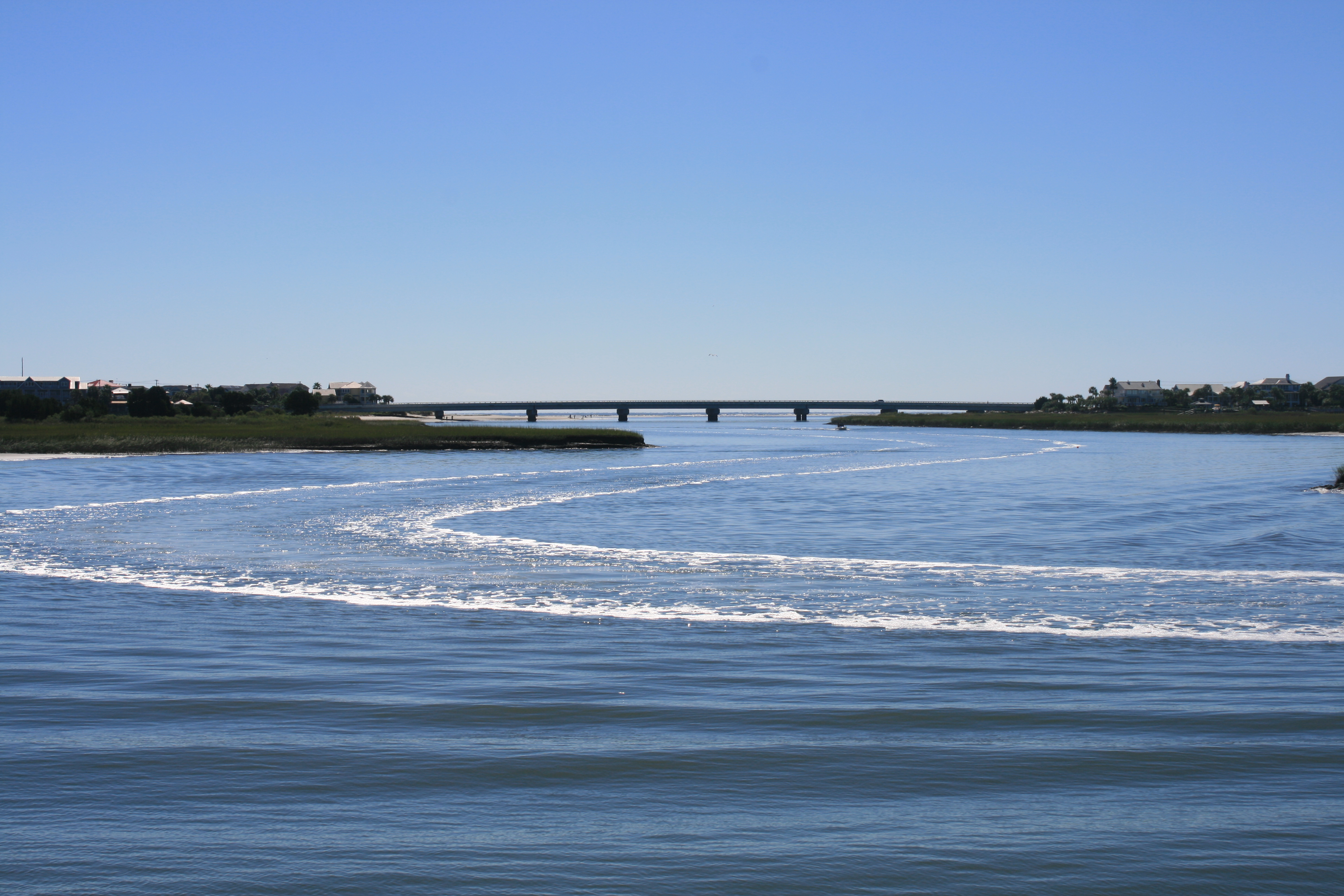
Bridge between Sullivan Island and Isle of Palms

Bridge between Sullivan Island and Isle of Palms

Dee Wee Island and Palm Island, and Atlantic Ocean just visible

Dee Wee Island and Palm Island, and Atlantic Ocean just visible

Price's Creek

Price’s Creek

IMG_8761

IMG_8762

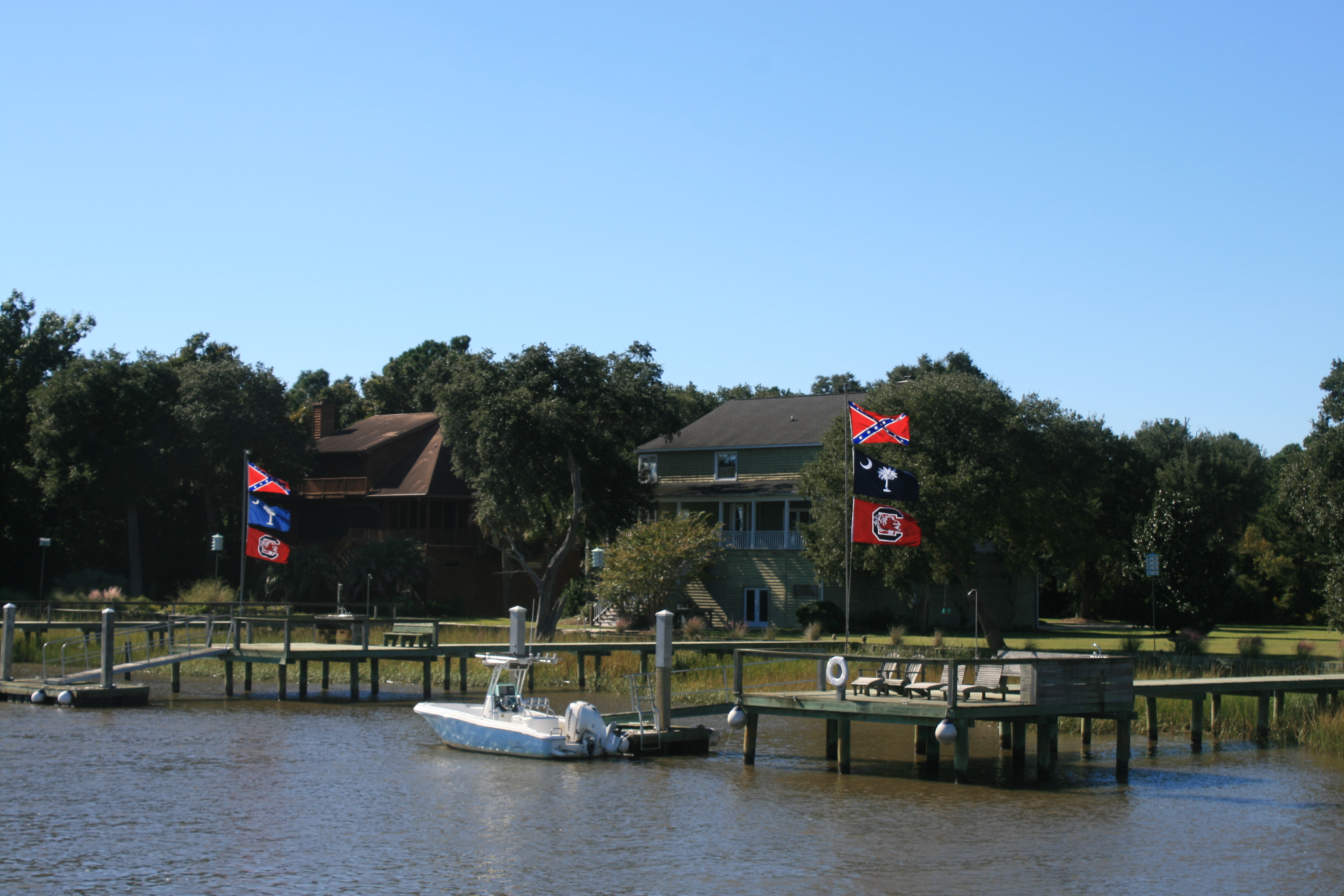
As we passed Bull Bay, there were some lovely houses overlooking the water. The South still has very much its own identity and old loyalties stay strong. I’ve seen the Civil War referred to as The War of Northern Aggression. At Buck Hall, several of the houses were flying the Confederate flag.

Confederate flags outside houses at Buck Hall

Confederate flags outside houses at Buck Hall

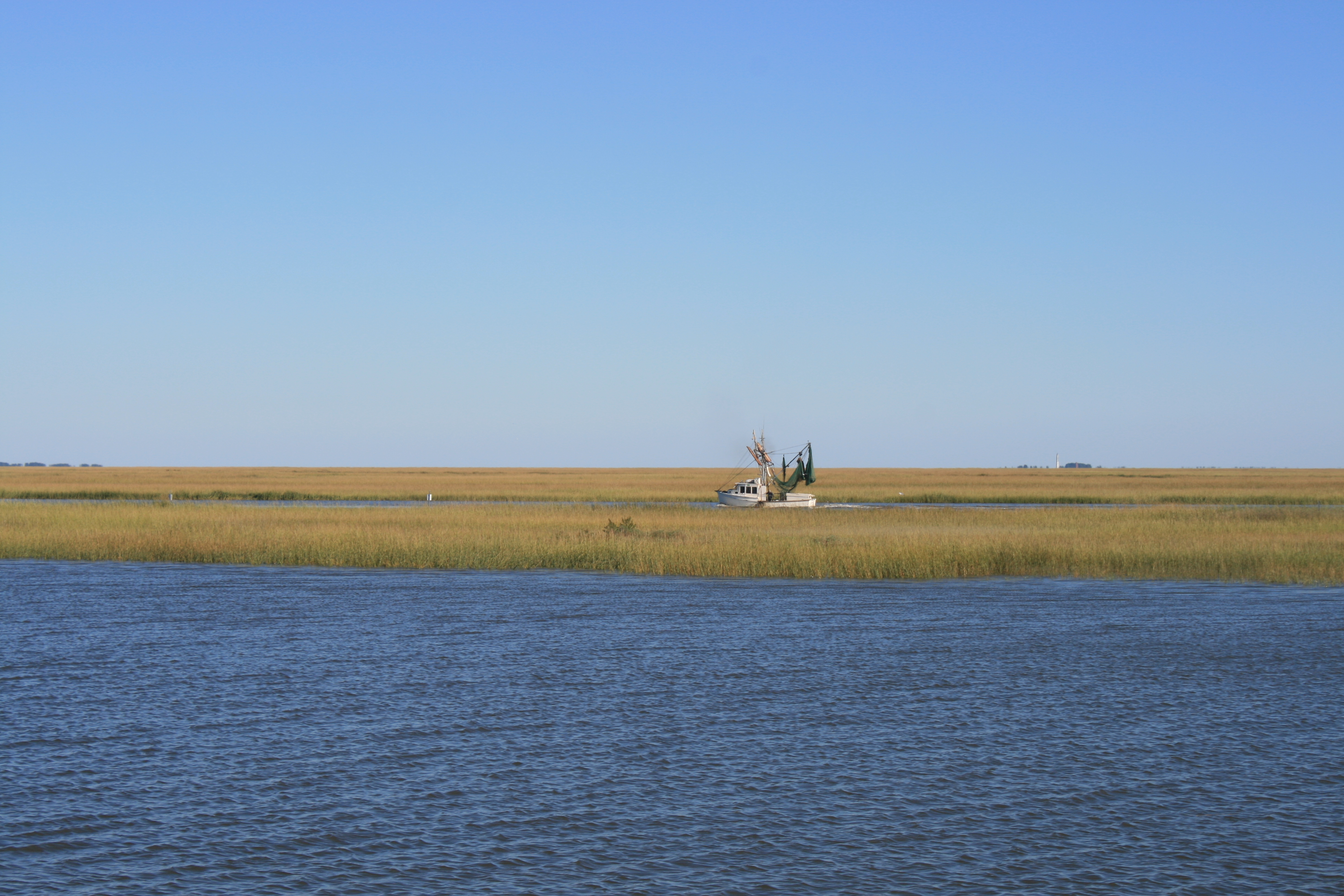
Shrimper

Shrimper

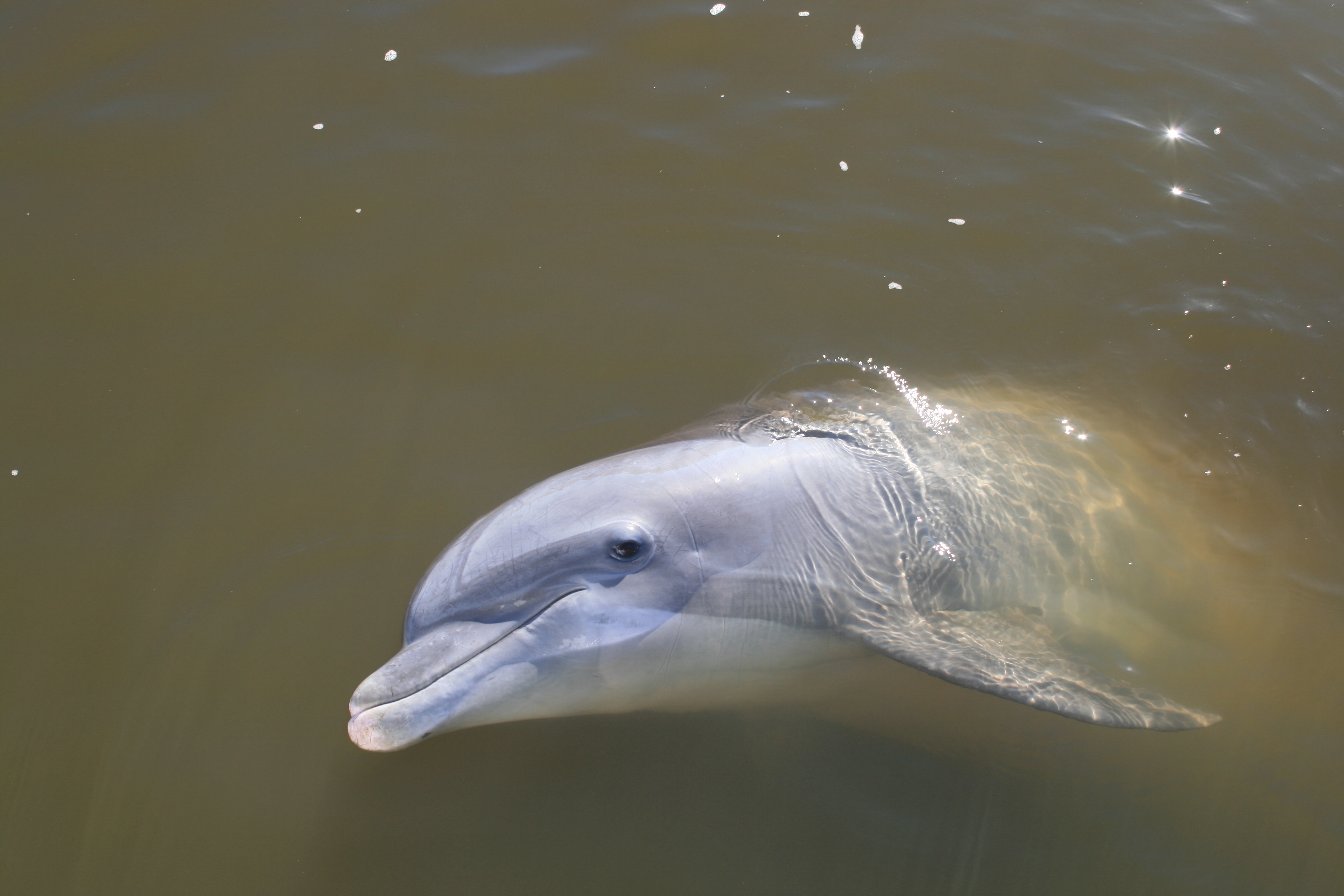
When we got to McClellanville, Chandler, the dockhand, told us to look out for the visiting dolphin. On cue, he appeared on our starboard side, diving below the surface, but looking at us for long enough between dives for us to feel that he was really trying to communicate with us.

IMG_8769

Sadly, what he was trying to communicate was a request for food, and we hadn’t any. He was used to getting tit-bits from the shrimp boats. Eventually he swam off, and we could feel his disappointment.

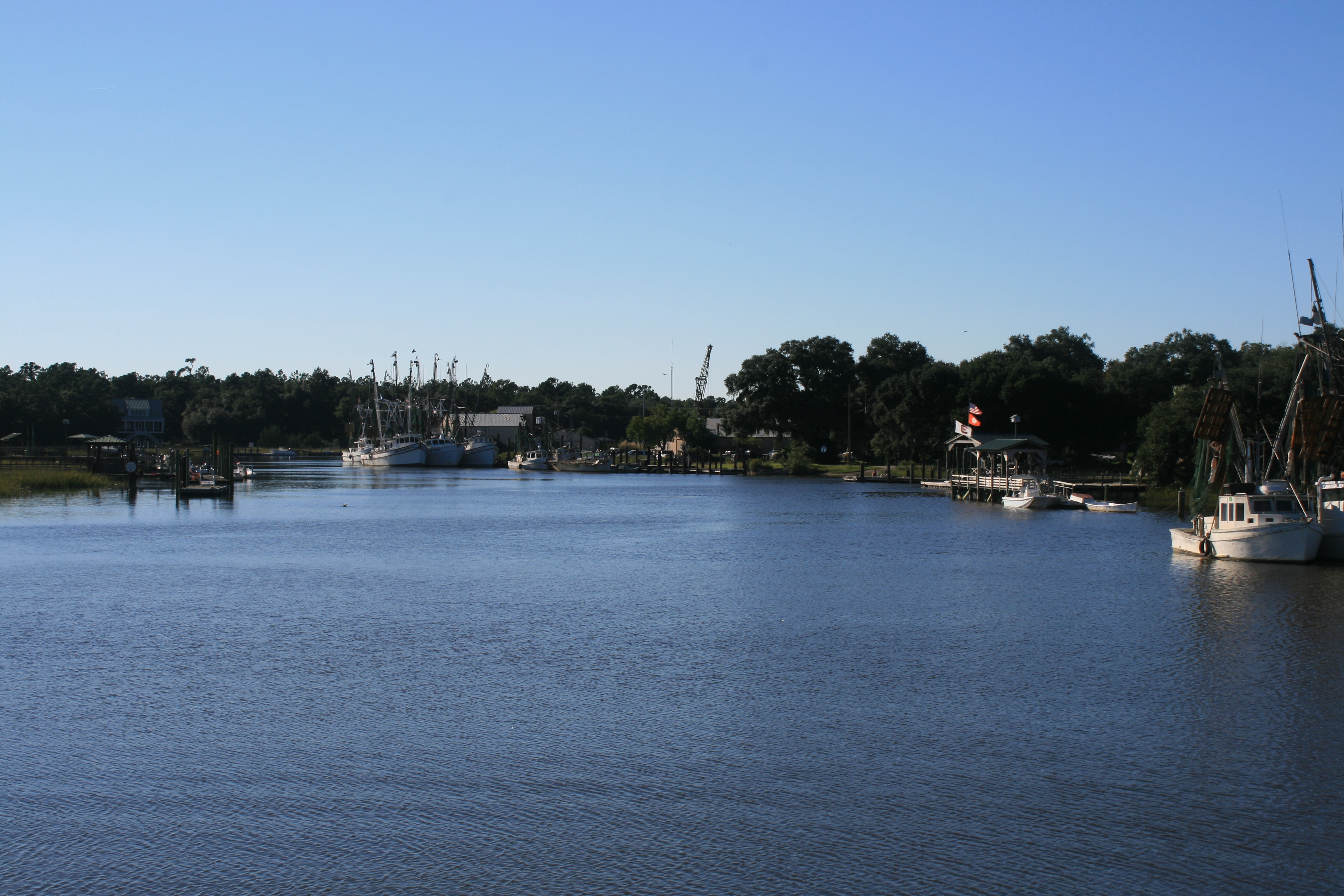
McClellanville

McClellanville

Georgetown, on the confluence of the Sampit, Black, Waccamaw and Great Pee Dee Rivers was our next stop, and we took a day off the boating to absorb a flavour of its history, given its status as the third oldest settlement in South Carolina.

The slaves who came from Africa to South Carolina at the end of the 18th century brought with them many skills, one of which was rice cultivation. The cypress swamps were cleared to make ideal rice paddies, as the tidal rivers would flood the fields with fresh water. In the seven years it took for the cleared swamps to become productive, they grew indigo instead – the dye which was produced from this plant fetching a very high price in Europe. South Carolina quickly became very prosperous.

The docent at the Rice Museum, who gave a very good talk on her subject, said that after the Civil War, many liberated slaves continued to work for the plantation owners. South Carolina was the prime exporter of rice in the US, but towards the end of the 19th century, other states had started to grow rice and were able to mechanise production. This wasn’t possible in South Carolina because of the marshy ground. Then in the 1890’s a series of hurricanes flooded the fields with salt water, making them unusable for seven years.  That effectively ended cultivation for good, though there is still one plantation producing aromatic rice, and we have a bag in the cupboard being saved for a special occasion, as it smells so good.
Georgetown replaced rice cultivation with a steel works and a paper mill, so there is still some industrial landscape.

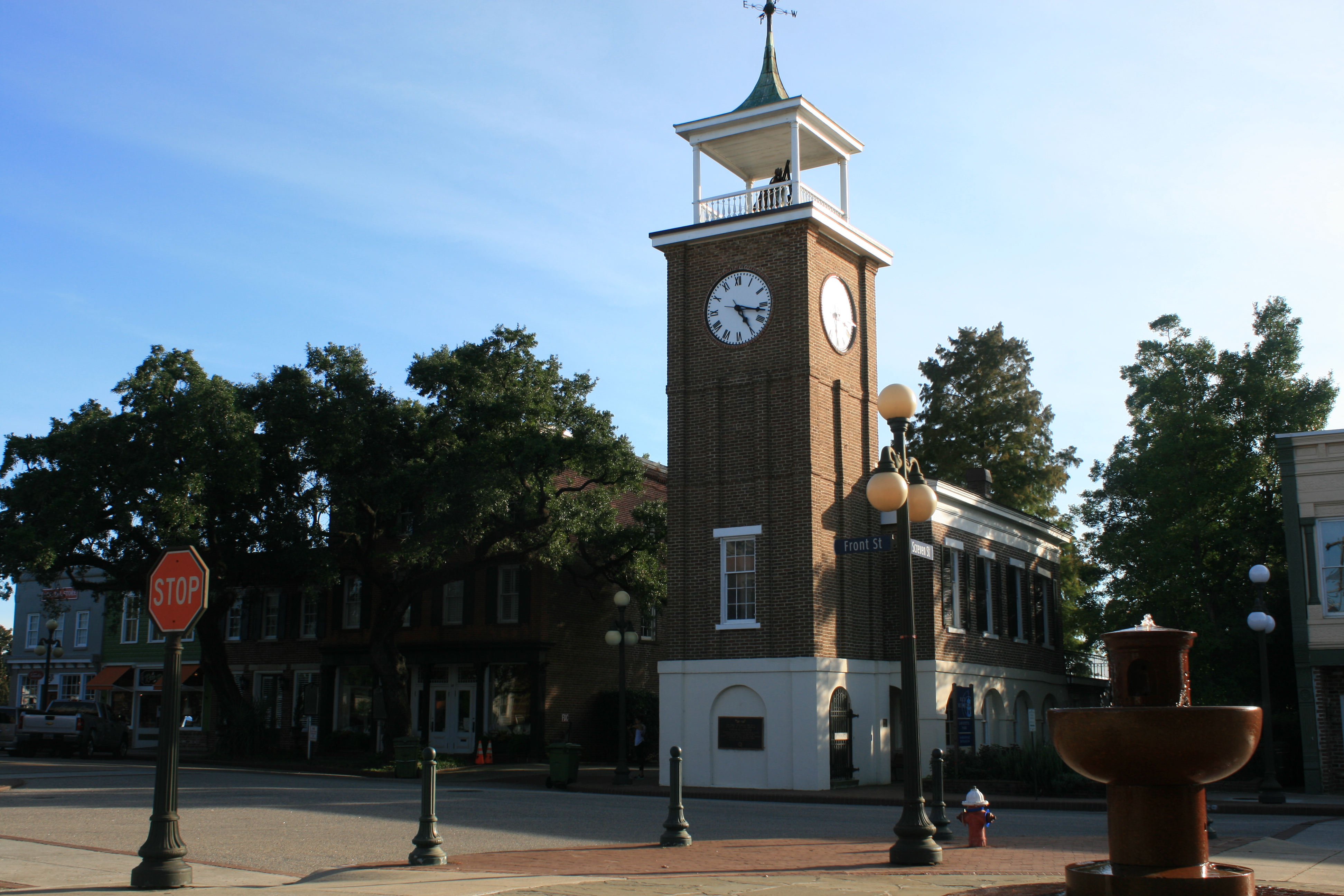
Clock Tower, housing the Rice Museum

Clock Tower, housing the Rice Museum

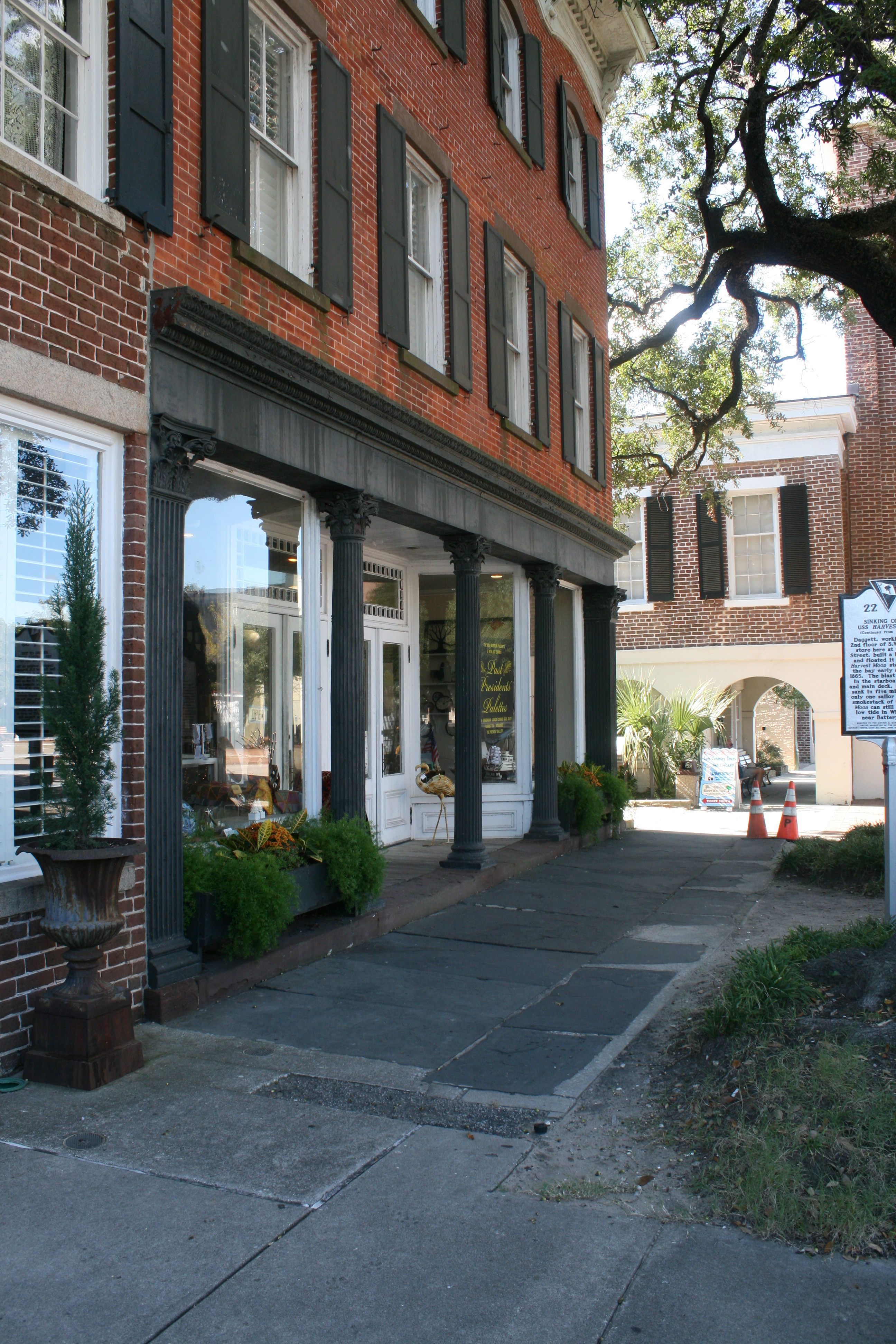
Kaminski Store, now the Rice Museum

Kaminski Store, now the Rice Museum

In the afternoon we were just in time to catch the last tour of the day at the Kaminski House, left to the city in 1972 by Julia Kaminski. Her husband’s family had been merchants in Georgetown and her husband Harold, aged 55, served in the US Navy and on the morning of December 7th 1941, alerted his senior officers to the presence of a Japanese submarine in Pearl Harbour. His report wasn’t taken seriously and in the aftermath and recriminations, Kaminski’s senior officers were discharged from the Navy.

Harold and Julia had no children, and  used their wealth to restore their 18th century house and furnish it with antiques, though there are some interesting 1950’s touches, like Julia’s pink and turquoise bathroom. Twenty years after Julia’s death, the trustees finally got round to having the curtains and the dressing table skirt in her bedroom cleaned. They found, sewn inside the skirt, a diamond brooch, which was valued at $76,000. Unfortunately, Julia had stipulated in her will that if anything from the house was sold, the proceeds would have to be donated to an animal charity. So although the trustees would have liked to have the money for repairs and maintenance to the house, the brooch remains in the safe box.

Another enjoyable visit – guided tours are something the Americans do exceptionally well.

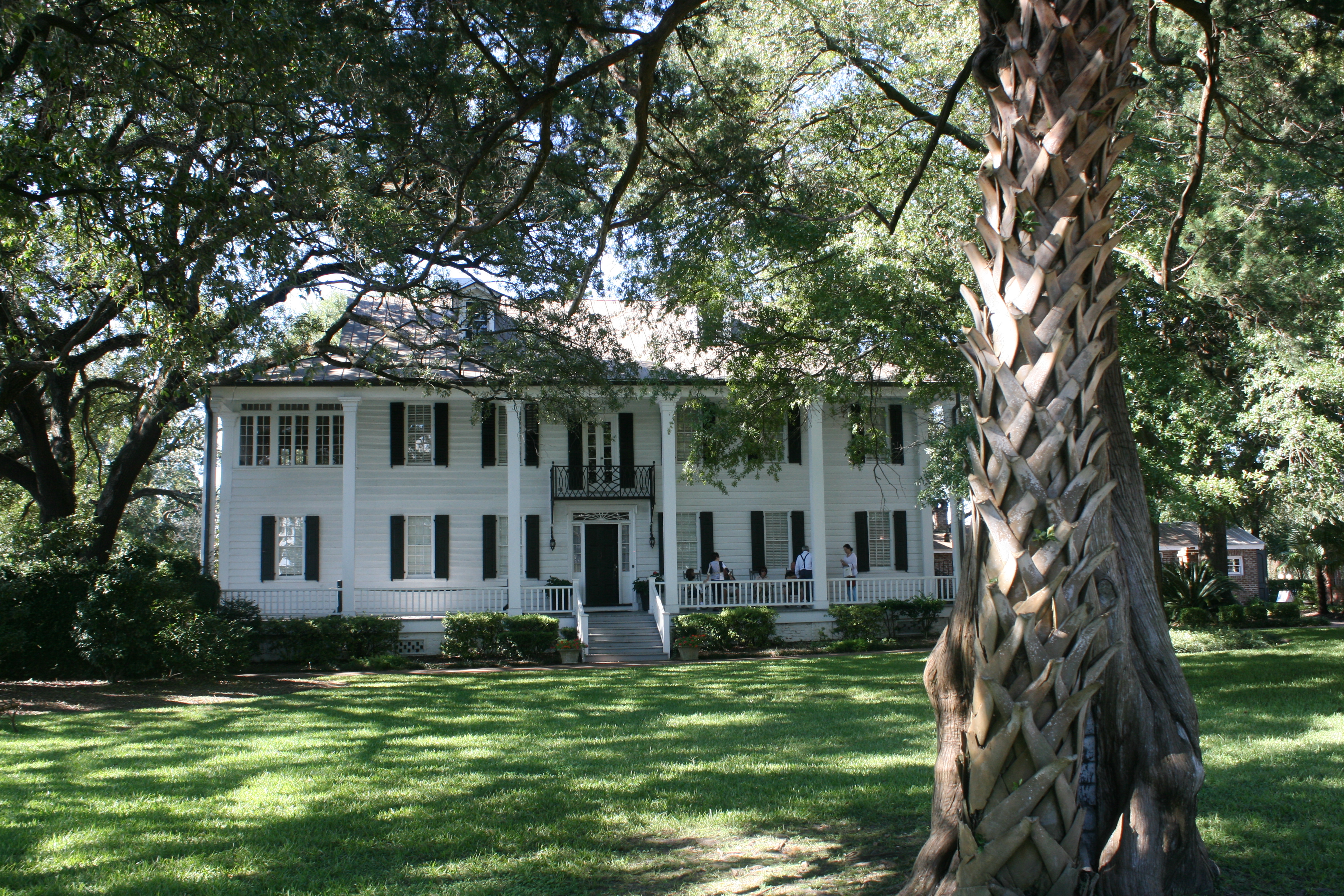
Kaminski House, Georgetown, SC

Kaminski House, Georgetown, SC

Afterwards we strolled round the historic district.

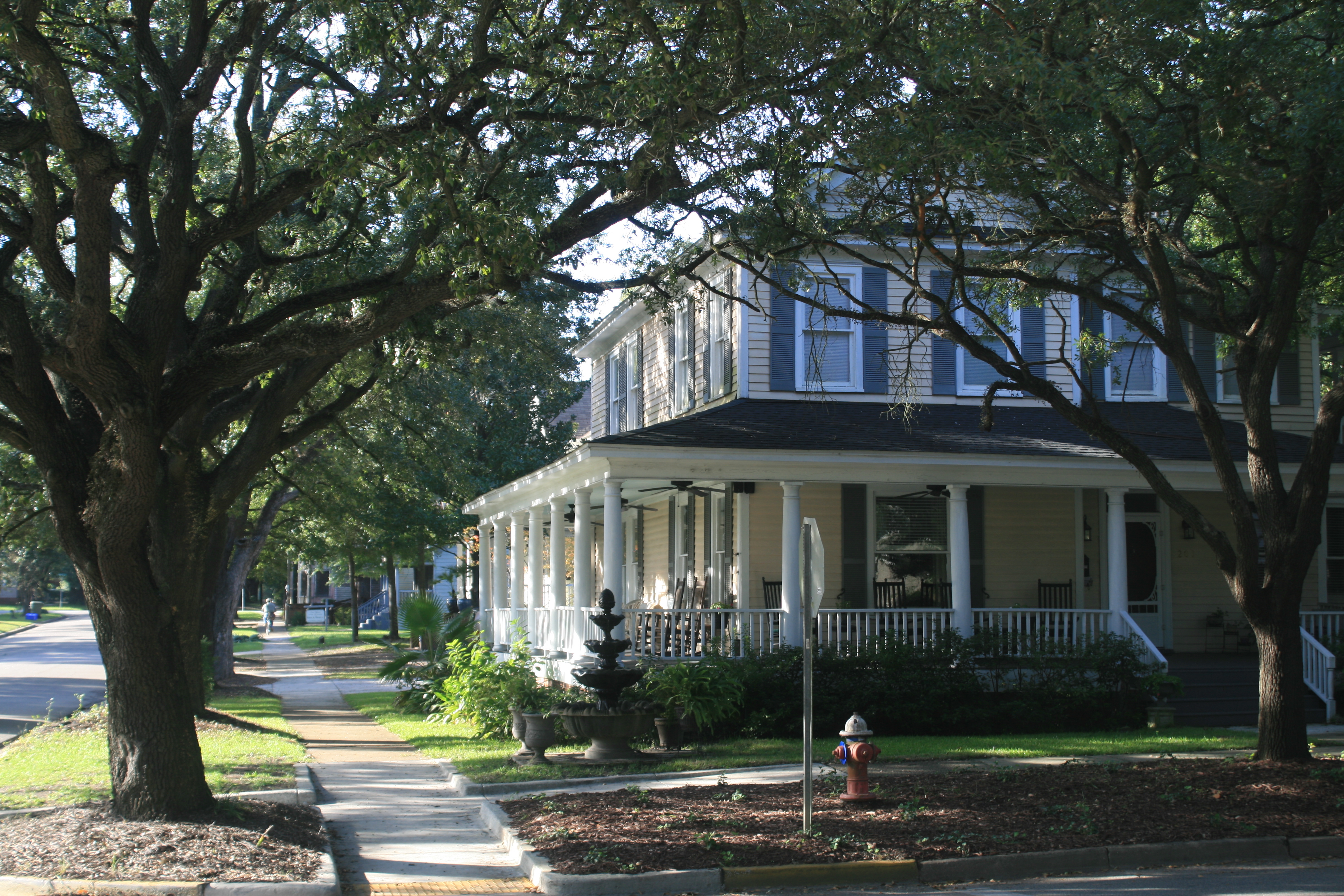
Historic district, Georgetown

Historic district, Georgetown

IMG_8784

IMG_8785

IMG_8786


We had dinner on the verandah of the River Room, which served good local seafood, and with  the steelworks and paper mill lighting up the sunset.

At the River Room, Georgetown, SC

At the River Room, Georgetown, SC

image


Charleston and the Lowcountry

There’s always something going on with an old boat, we’ve found out.

As it was pouring with rain the day after we’d toured Savannah, we decided to stay another night, do the shopping and the laundry, and get someone to fix the alternator.

Alex, the electrician, examined the alternator and pronounced it to be in terminal decline. The most cost effective remedy would be a new one. He delivered it the following lunch-time, slightly later than anticipated, inducing a fair bit of pointless impatience in the Captain, who wanted to be on our way while the tides were favourable.

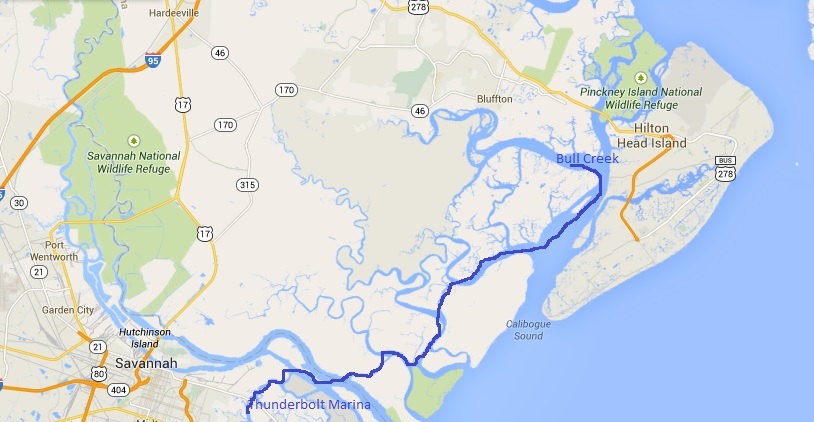
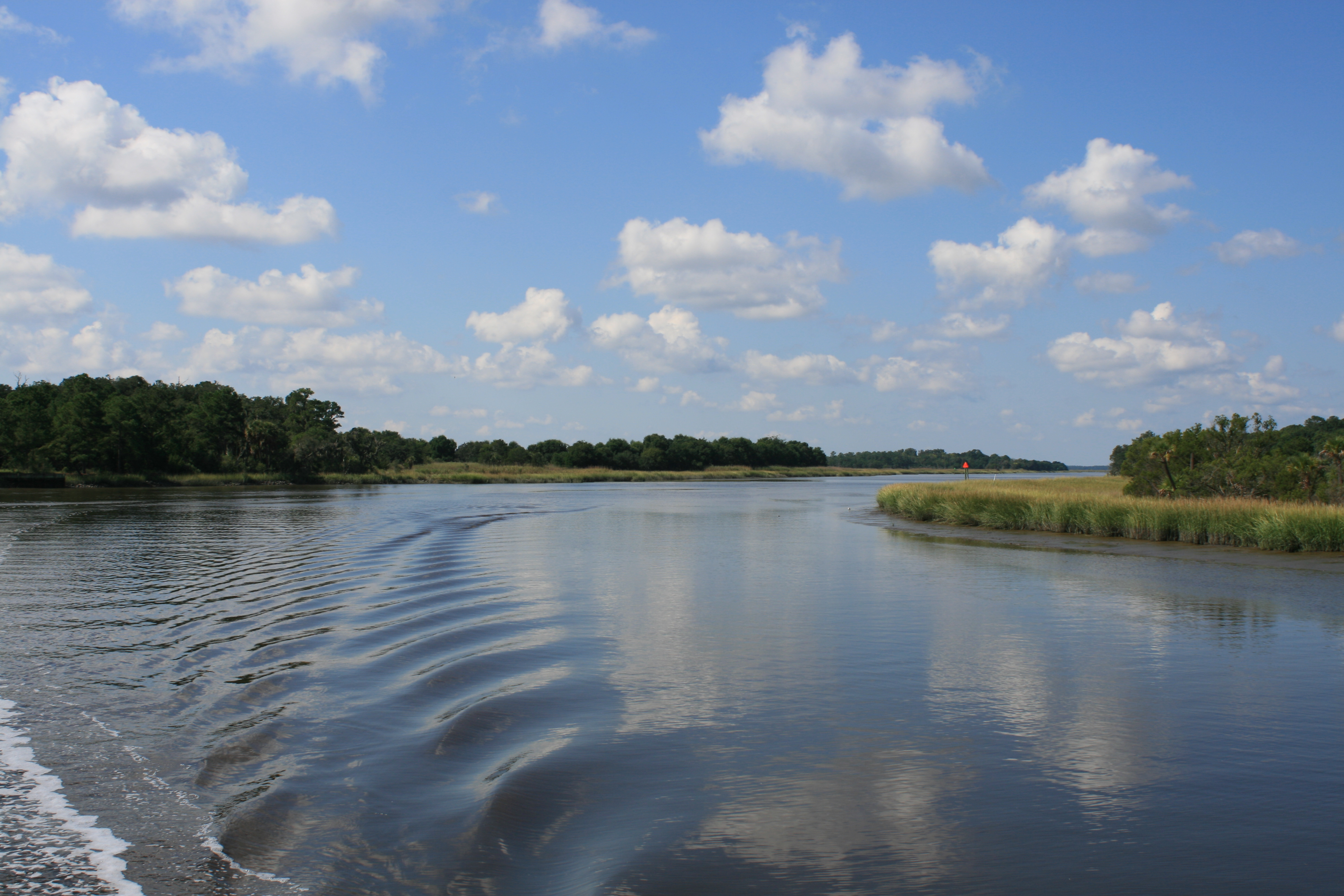
But the sun shone, and at last we left Savannah behind, cruising through the Lowcountry marshes along the Wilmington River, across the Savannah River, past Daufuksie Island and finally anchoring at Bull Creek.

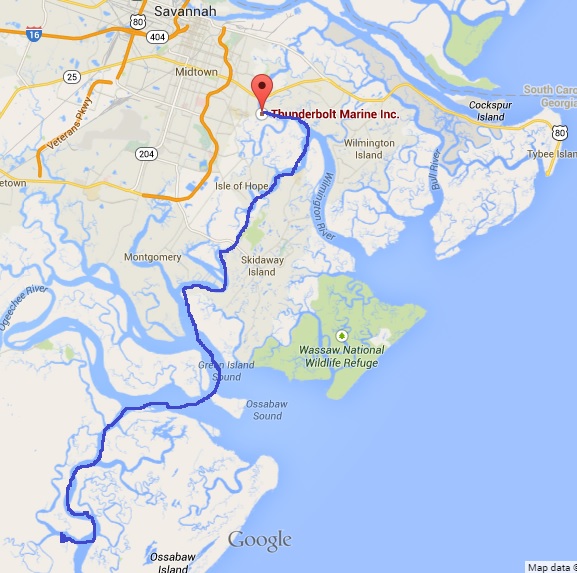
Thunderbolt Marina, Savannah, to Bull Creek

Thunderbolt Marina, Savannah, to Bull Creek

Thunderbolt Marina to Bull Creek

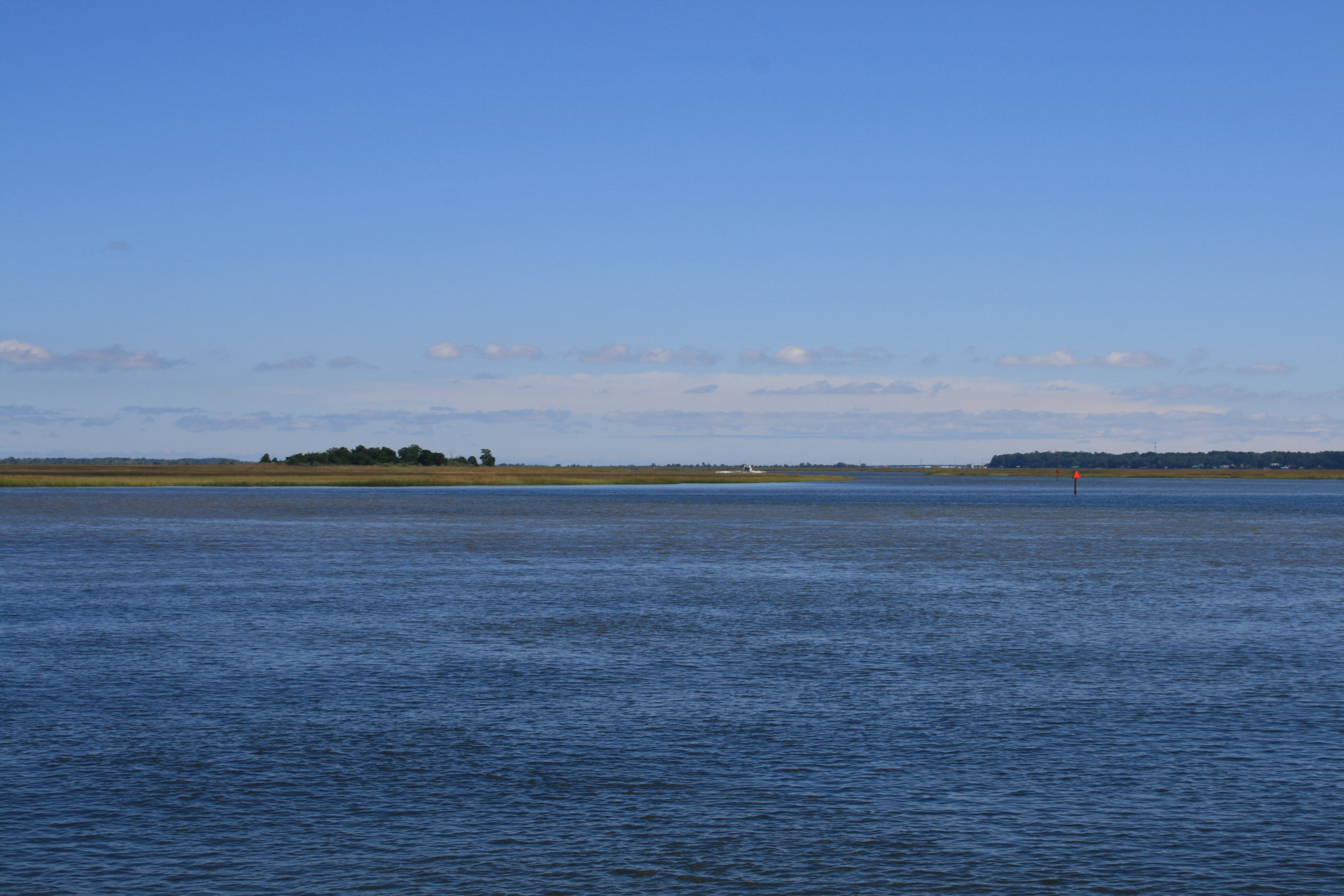
Crossing the Savannah River

IMG_8611

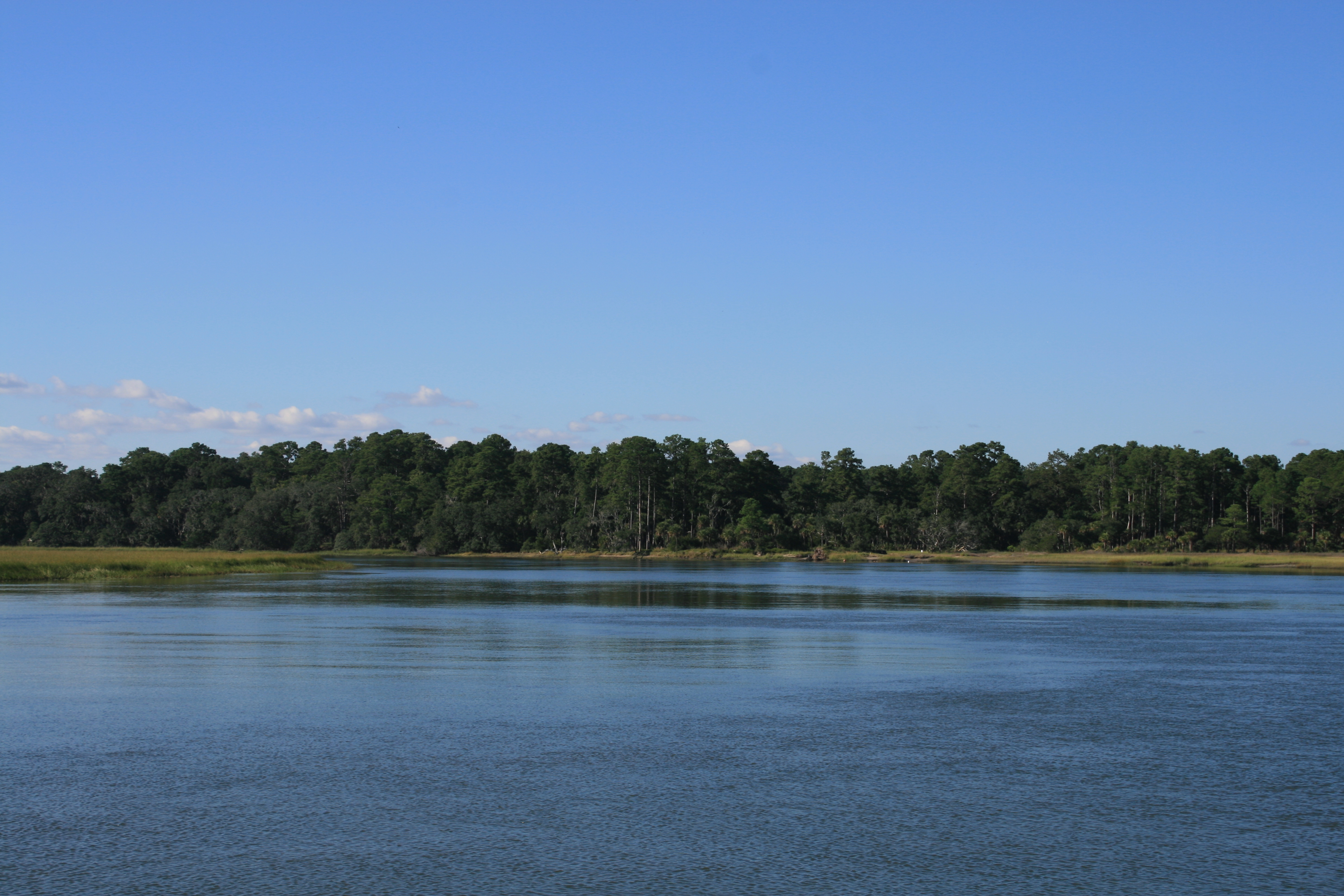
Reflections at Bull Creek

Reflections at Bull Creek

IMG_8640

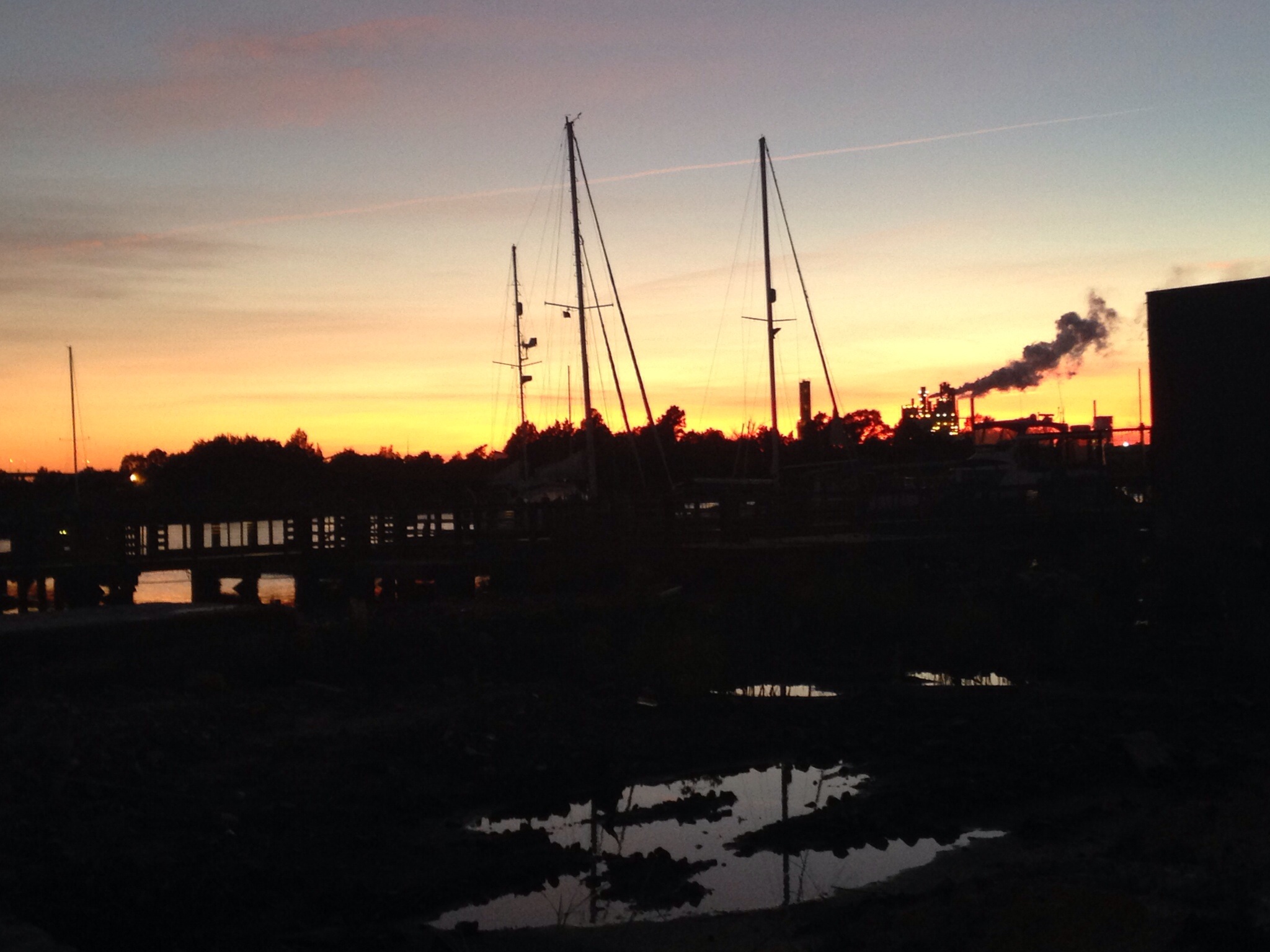
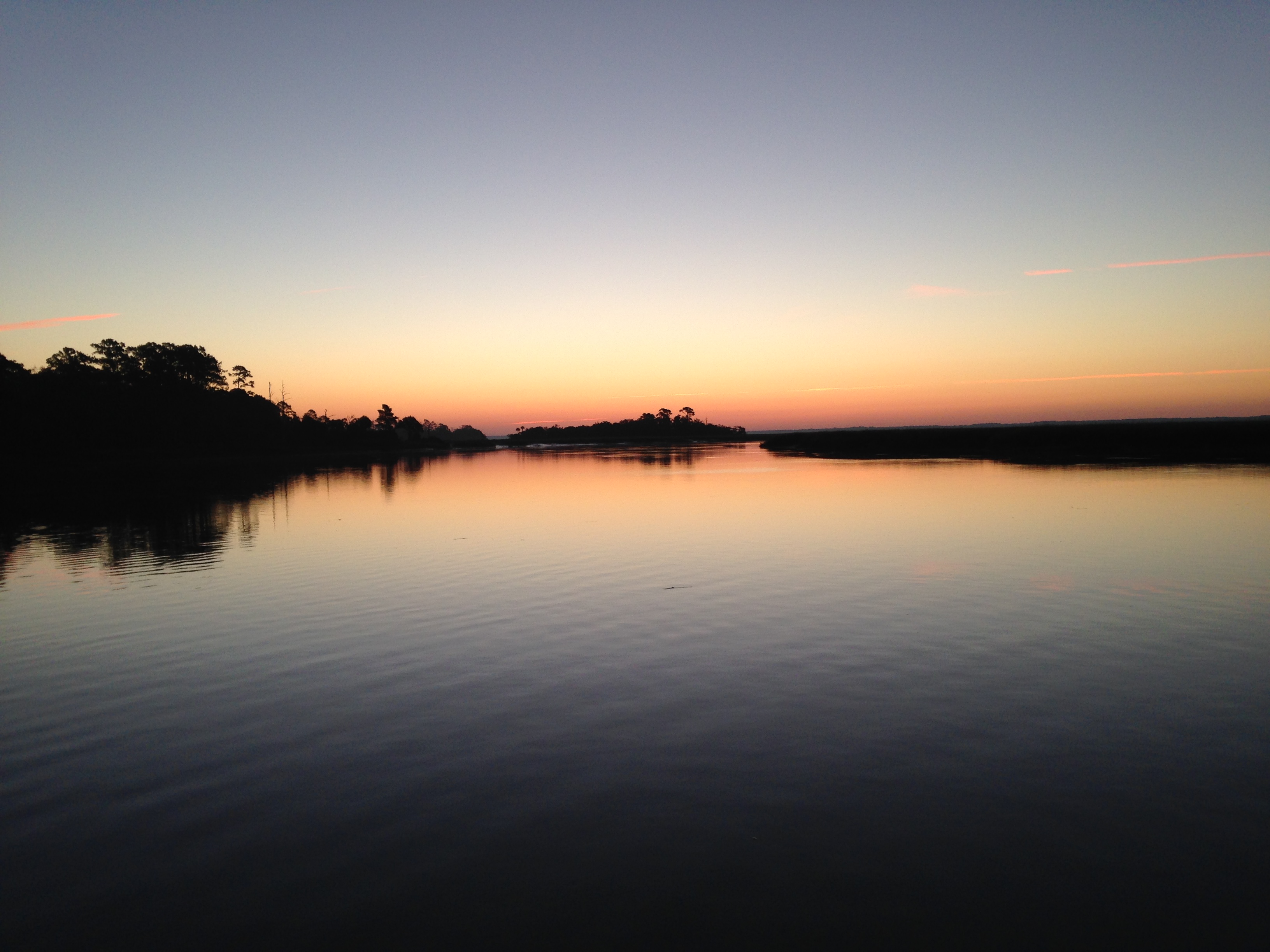
Sunset at Bull Creek

Sunset from our anchorage at Bull Creek

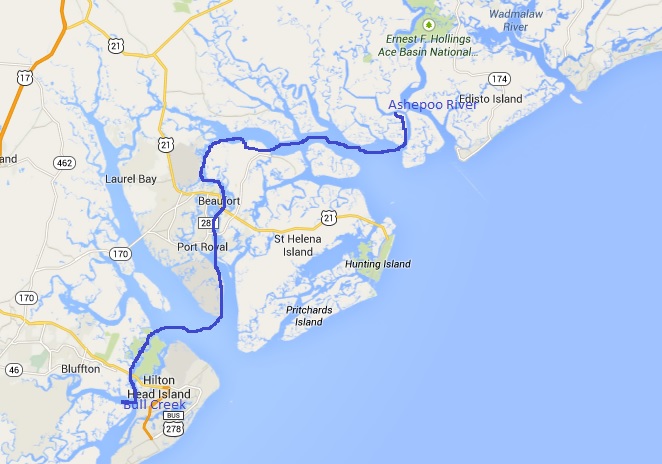
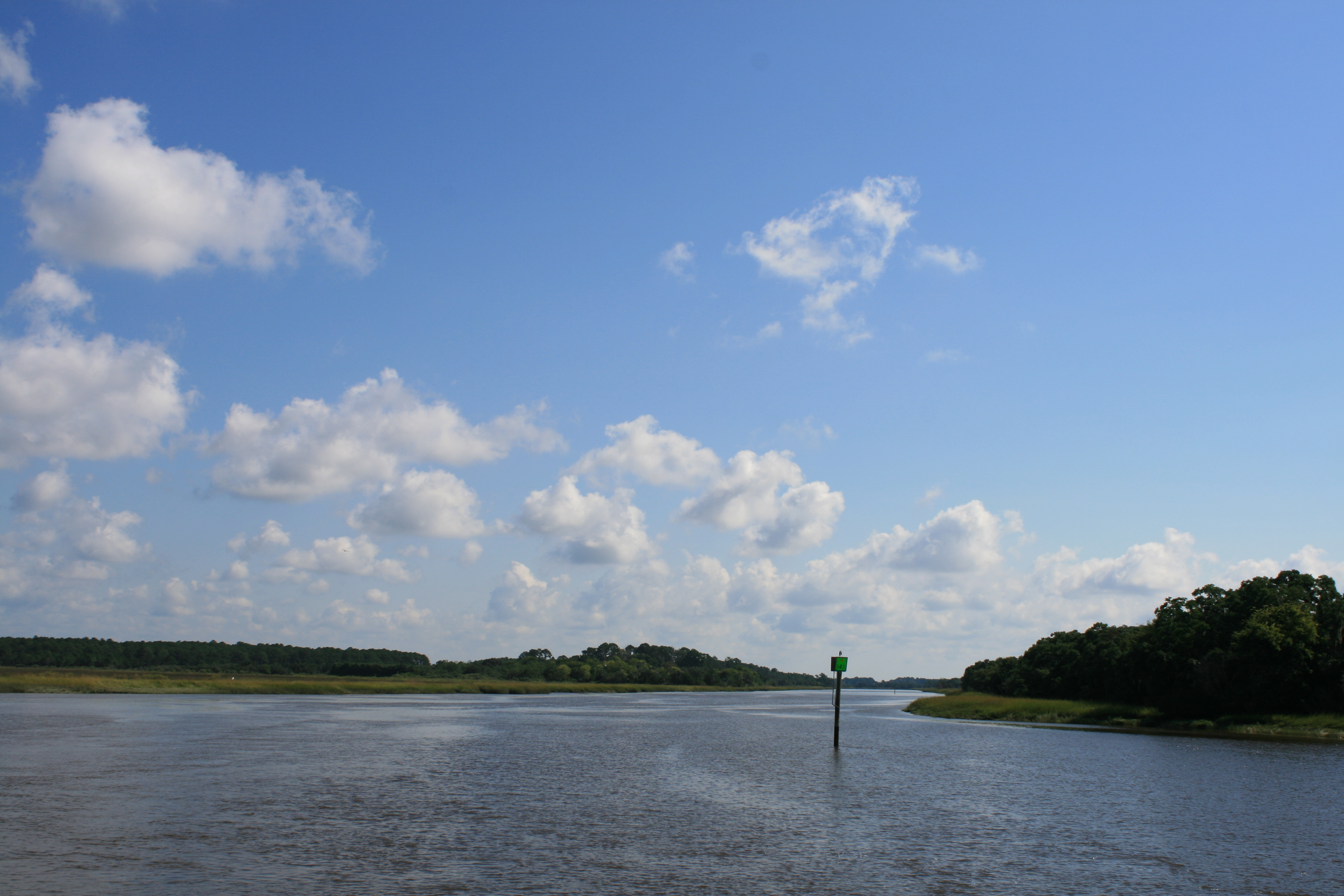
The next day we covered 50 miles, to the Ashepoo River. Apart from the city of Beaufort, the country was largely wilderness, varying between small creeks and rivers and the wide expanses of Port Royal and St Helena Sounds.

Bull Creek to Ashepoo River

Bull Creek to Ashepoo River

Sunrise at Bull Creek

Sunrise at Bull Creek

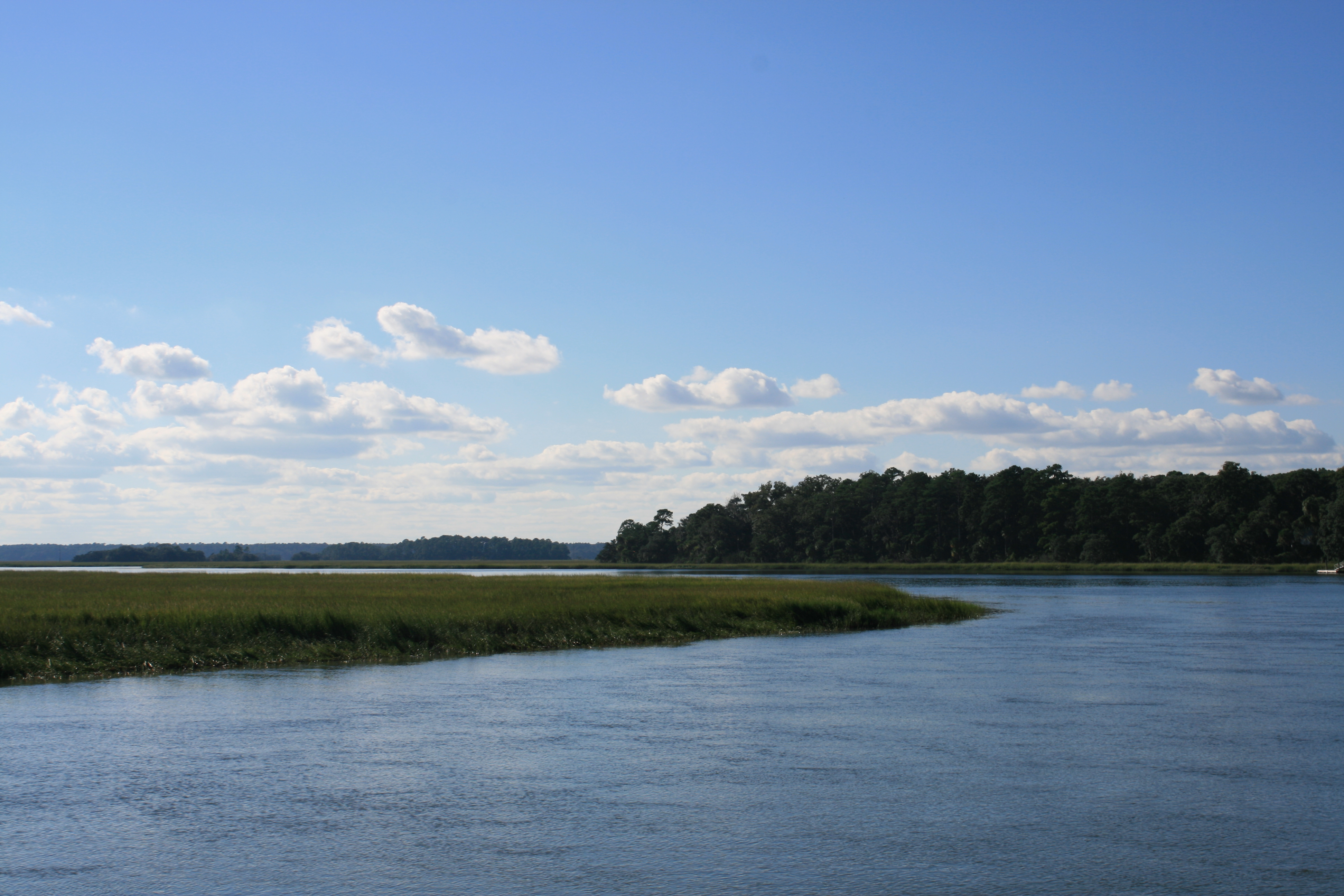
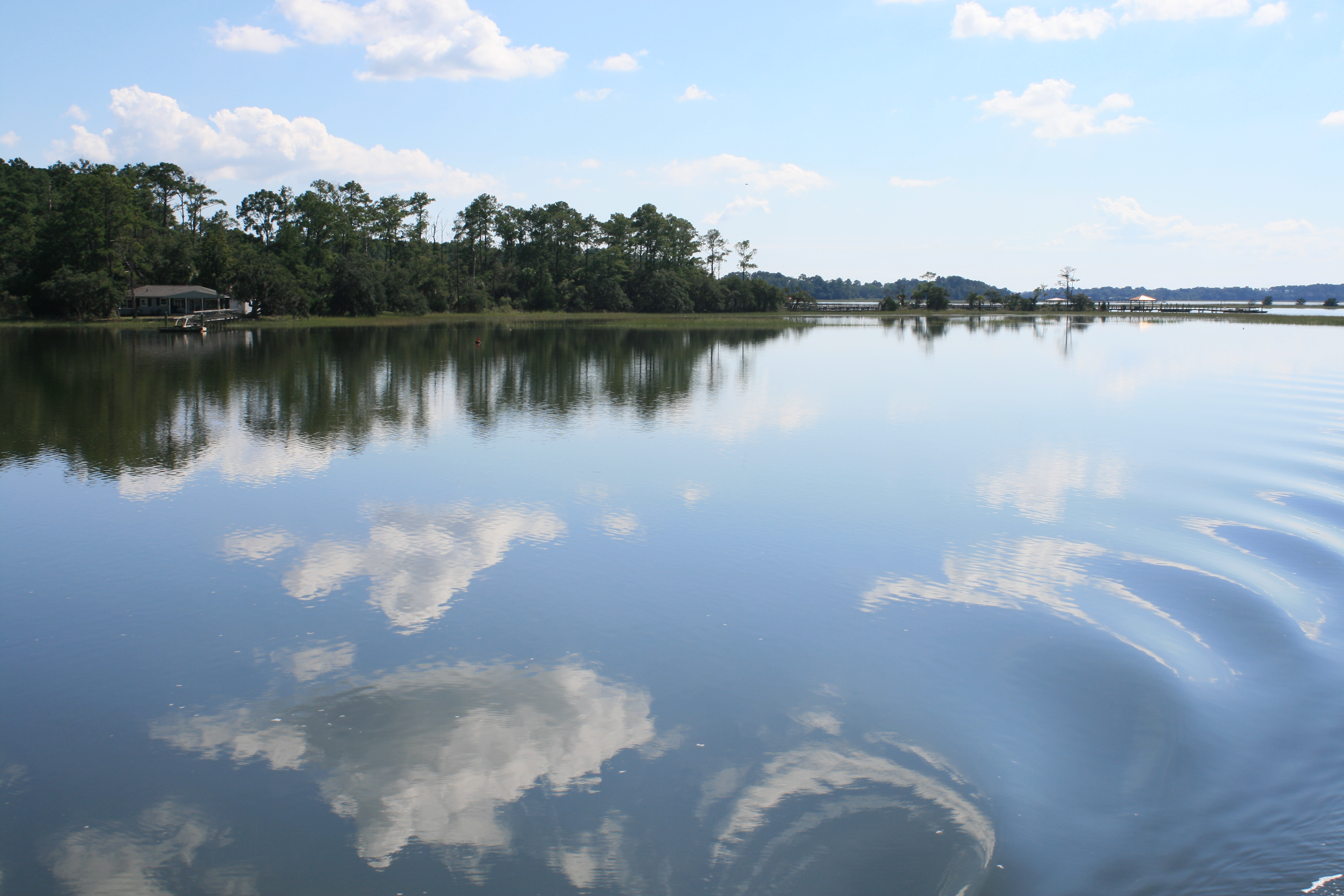
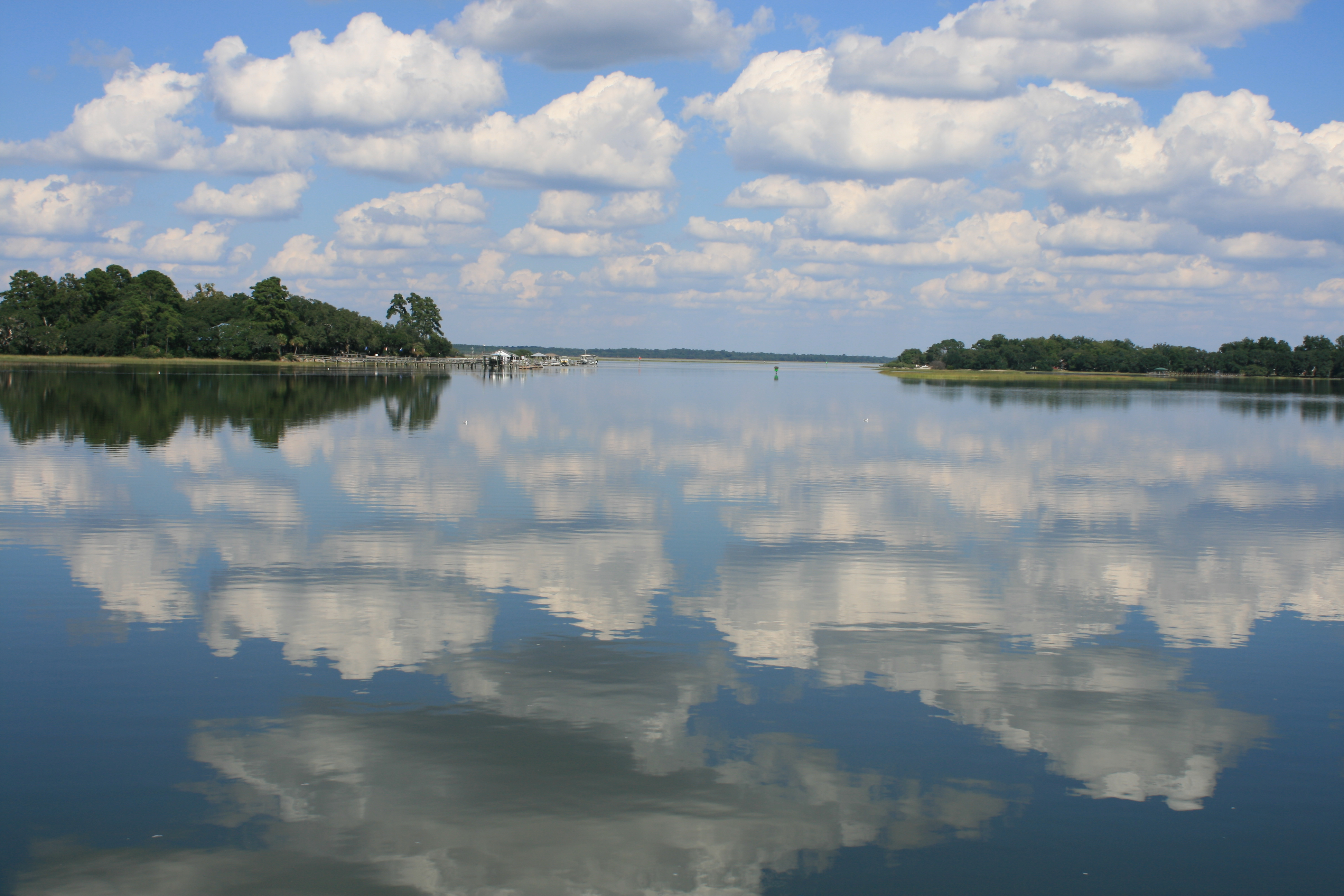
Within the narrower waterways, the water was very calm, giving some beautiful reflections.

IMG_8661

IMG_8659

IMG_8679

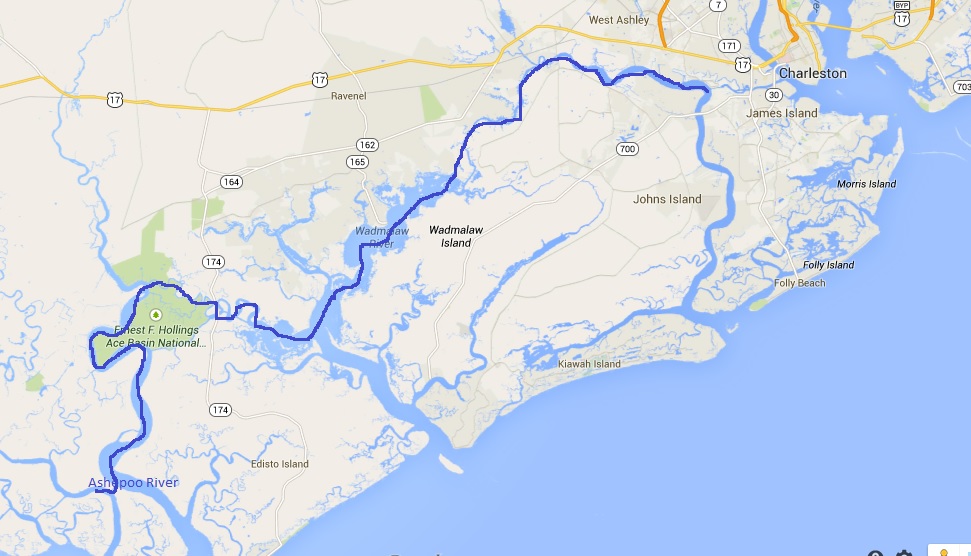
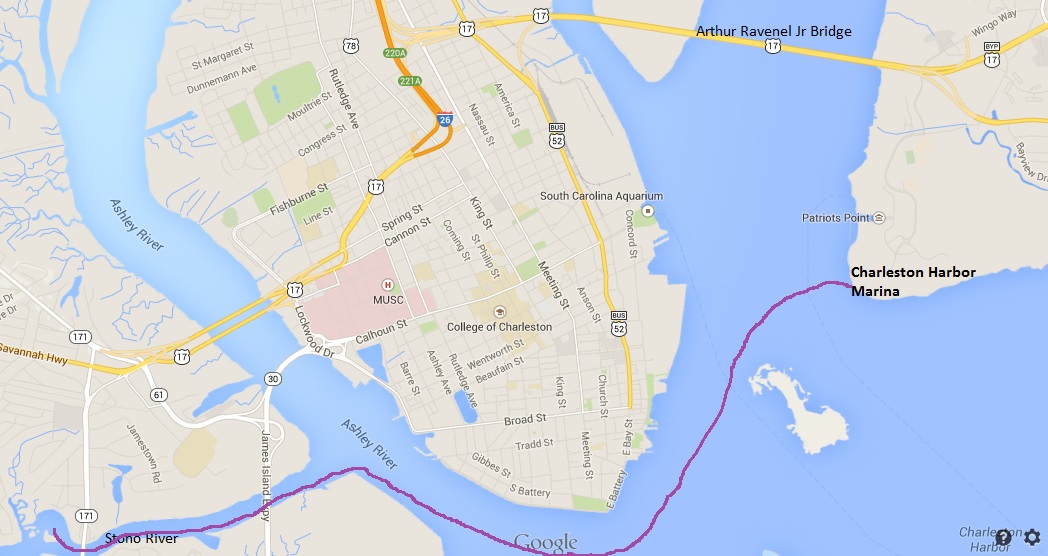
On Thursday we moved on to within two miles of Charleston, via the South Edisto River, Watts Cut, a man-made canal linking the North and South Edisto Rivers,  the Wadmalaw River to the Stono River where we anchored again.

Ashepoo River to Stono River, Charleston

Ashepoo River to Stono River, Charleston

Entering Watts Cut

Entering Watts Cut

IMG_8682


On Friday we covered the short distance to Charleston Harbor Marina, on the east side of Charleston Harbour.

Stono River to Charleston Harbor Marina


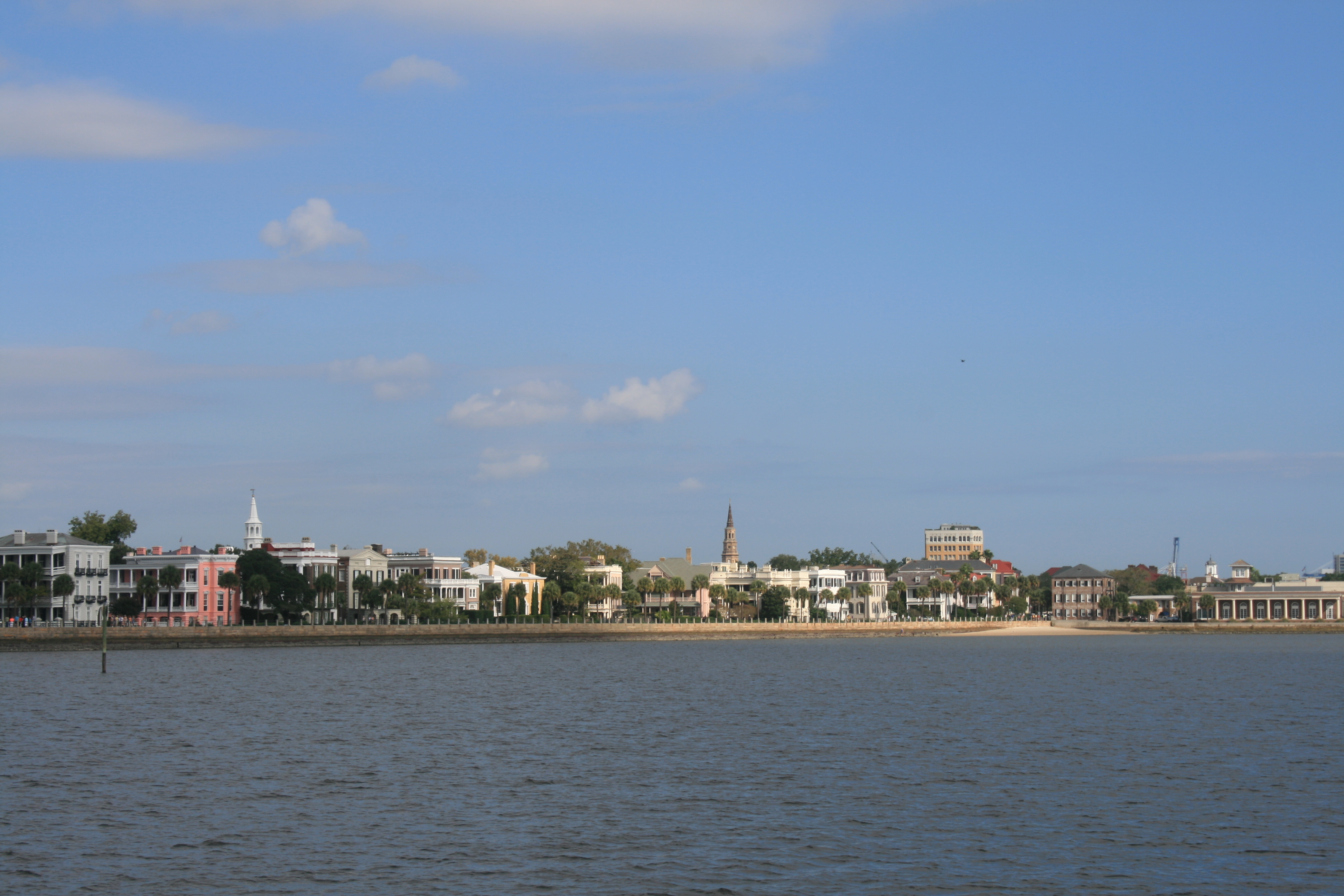
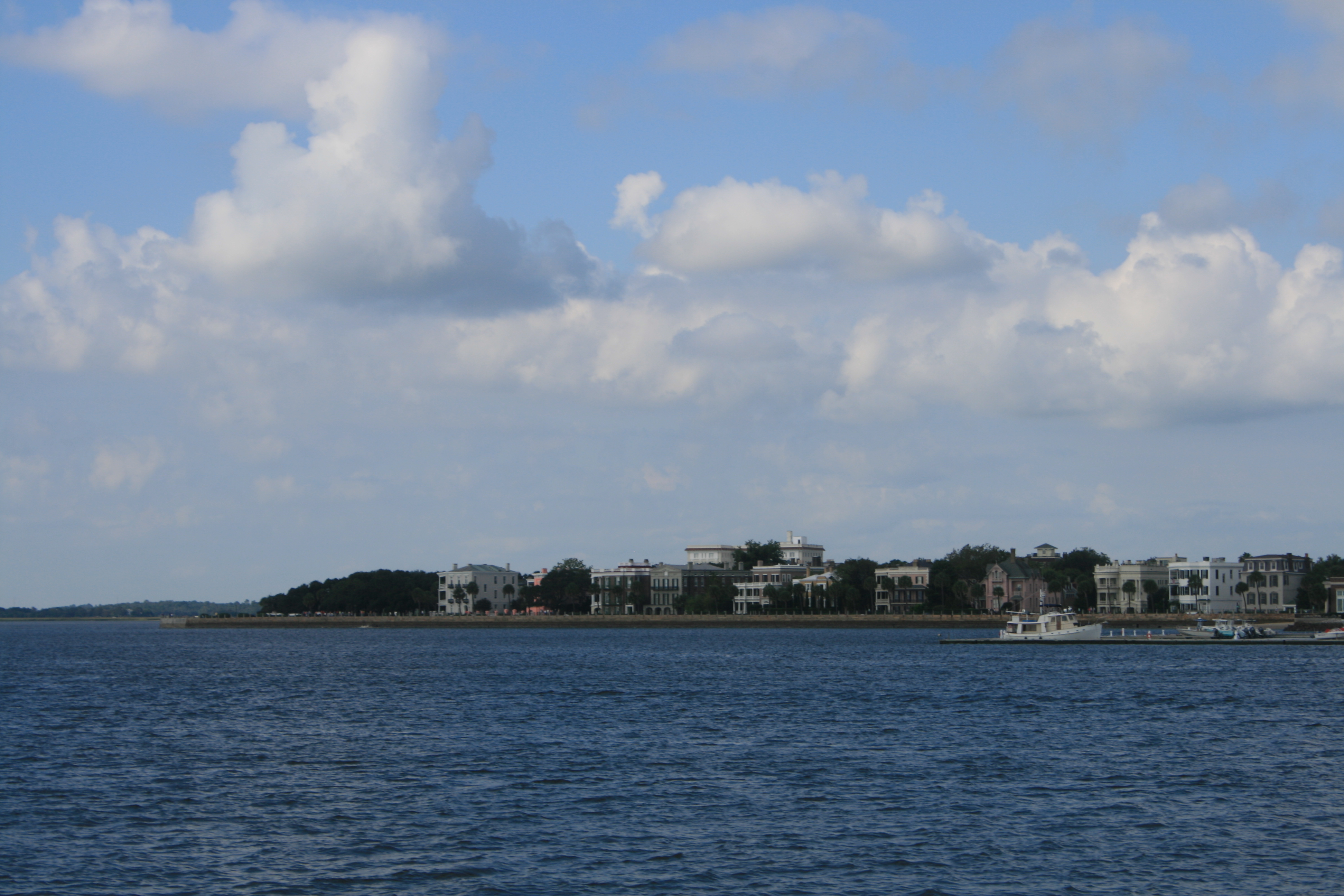
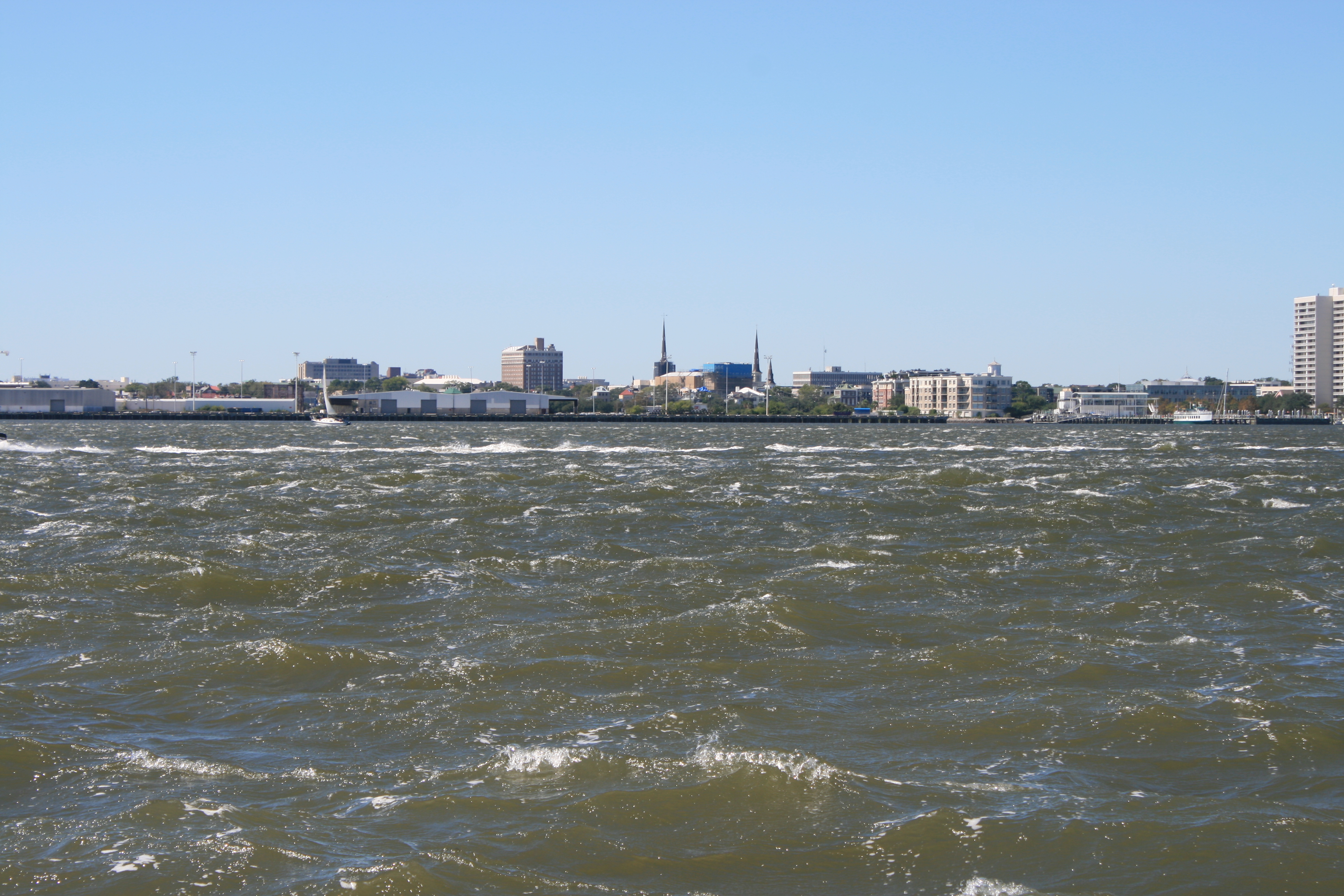
We had a great view of the Antebellum houses of the Battery.

The Battery, Charleston

The Battery, Charleston

The Battery

The Battery


After days of seeing hardly any other boats, suddenly we were up against the big boys.

Not pushing our luck with this one

Not pushing our luck with this one

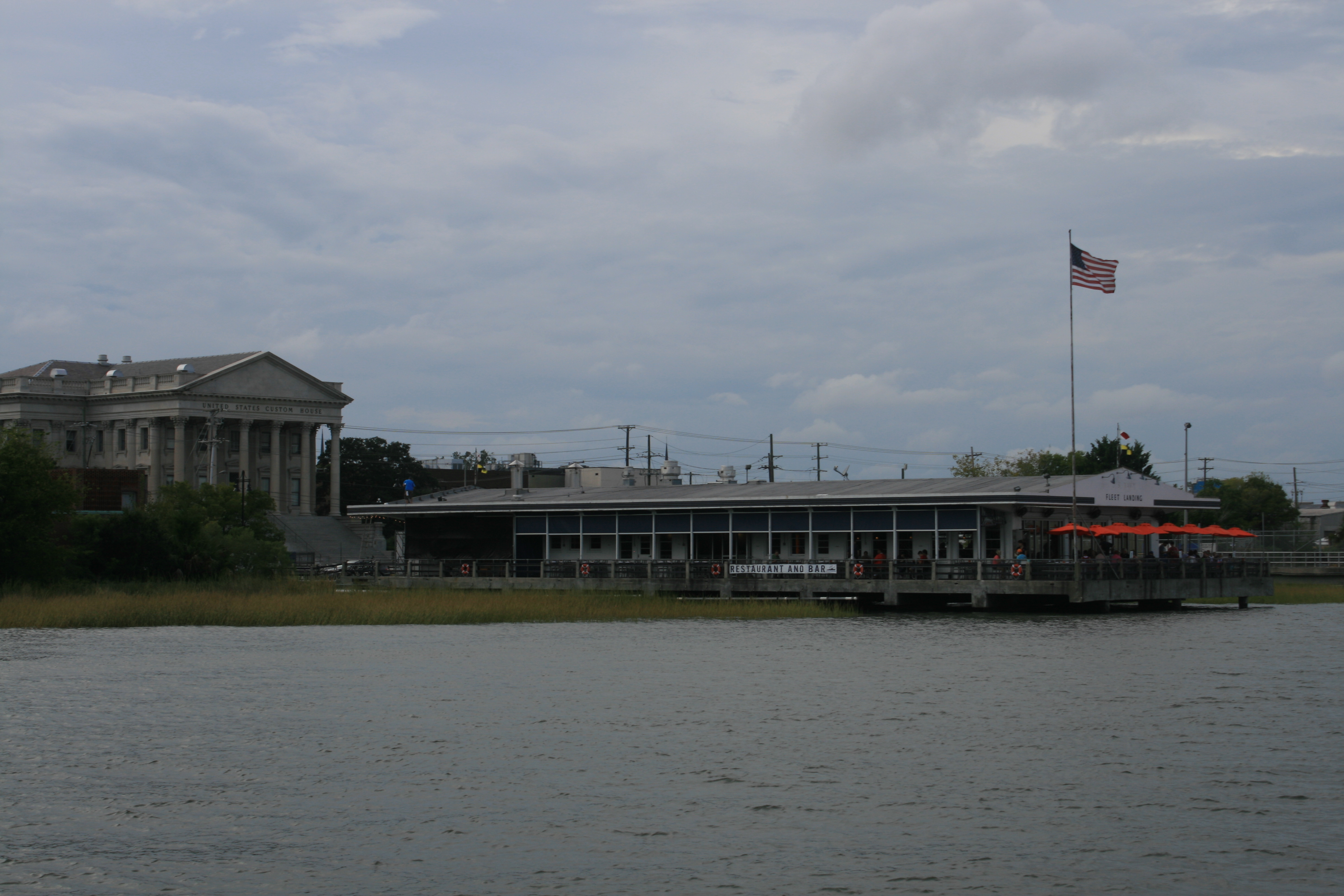
After docking at the marina we took the water taxi across the Cooper River and had lunch at the Fleet Landing, a former US Navy establishment overlooking the river, which is now a bar-restaurant with quite a buzz.

Having had  an unfortunate experience with collard greens last time we were in Charleston, I hadn’t been very adventurous about trying the Lowcountry cuisine, sticking to safe-sounding things like blackened salmon and chocolate pecan pie. It was time to move on and put the collard greens behind me, so I ordered the Shrimp Gumbo. This turned out to be a thick, brown, spicy soup with shrimps, Andalucian sausage, okra, celery and onions, with a dollop of boiled rice on the top. It was delicious.

Fleet Landing, Charleston

Fleet Landing, Charleston, and the US Customs House

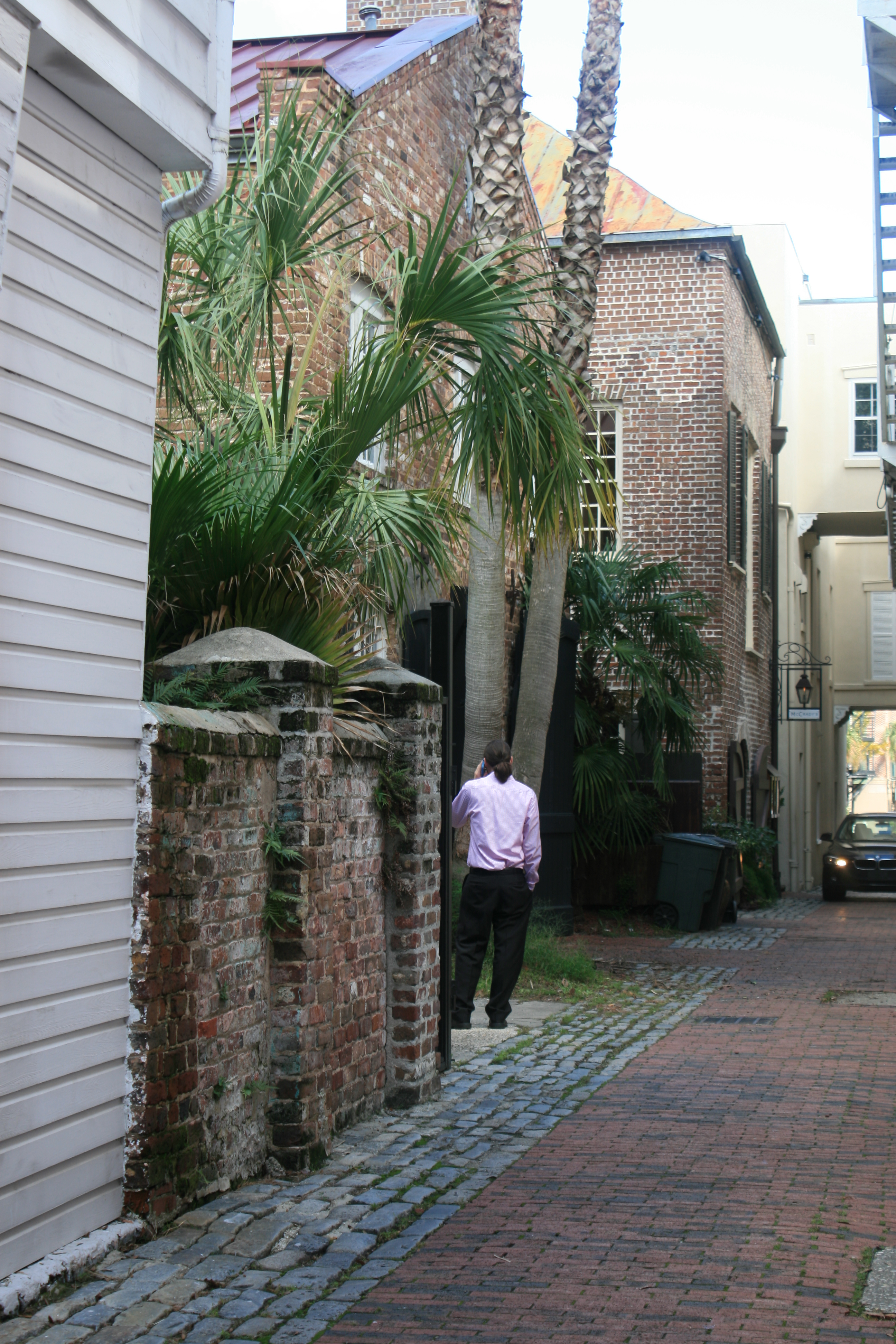
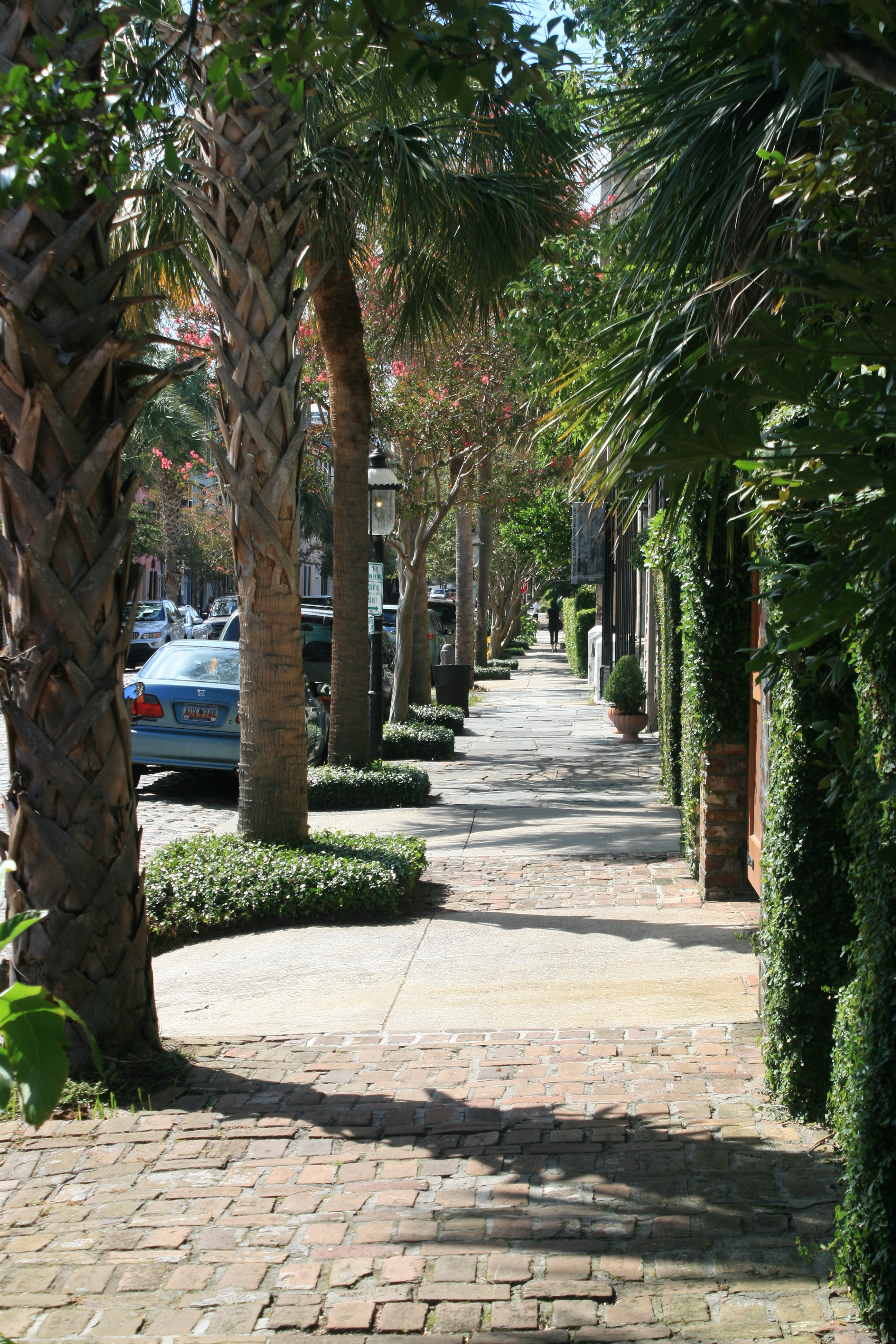
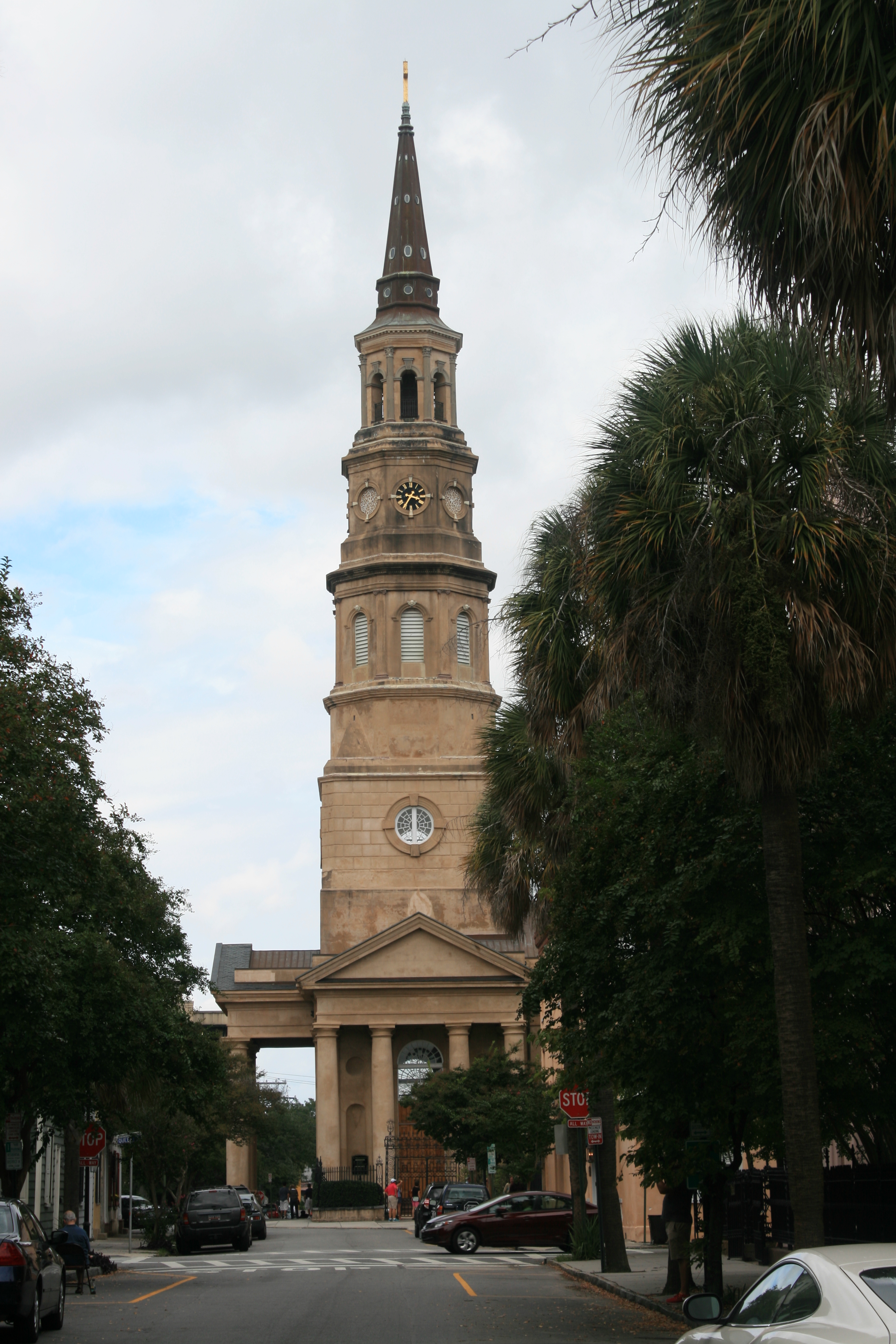
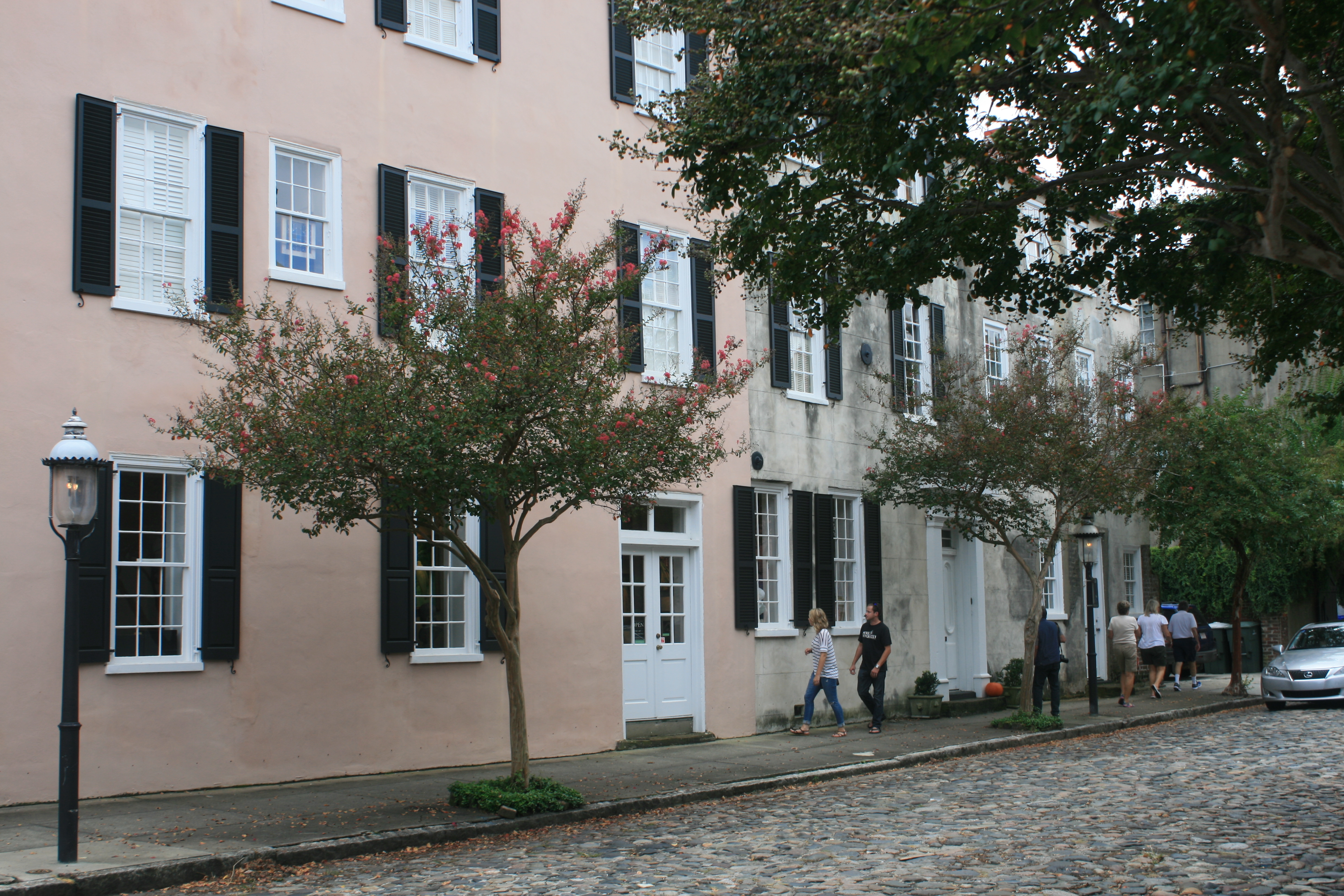
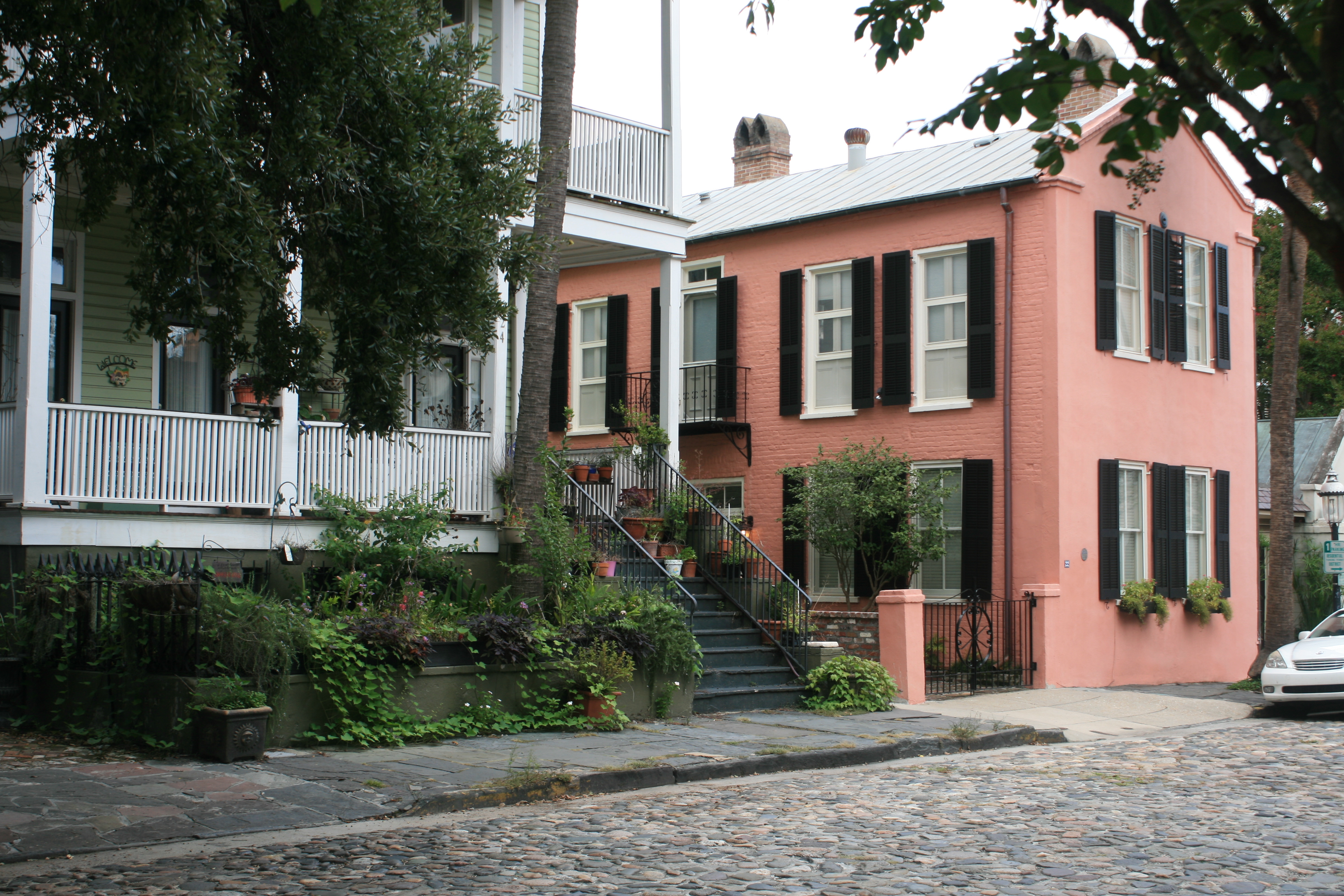
We wandered through the lovely French Quarter.

French Quarter

French Quarter

French Quarter

French Quarter

IMG_8702

IMG_8703

IMG_8704

On Chalmers St we came upon the Old Slave Mart museum. After the international slave trade was abolished, the domestic trade continued away from the waterfront in these new premises. The museum contained few exhibits, mainly photographs and text, but told a chilling story of oppression.

For some light relief, we spent the rest of the afternoon wandering up King Street, the main area for shops and restaurants, and returned to the waterfront on the free trolley to get the watertaxi back to the marina. Ian was a bit envious at the sight of some yachts racing in the harbour.

IMG_8707

Saturday was frighteningly windy – a steady 30 knots – so it was a good thing we had booked another night at the marina.

Windy conditions in Charleston Harbour

Windy conditions in Charleston Harbour

One downside of living on the boat is that mundane household tasks, which at home get fitted into the day around other, more enjoyable ways of spending one’s time, take on a life of their own, and have to  have time specially allocated to them.

So on Saturday morning, while Ian set to and repaired one of the loos, I carted two large bags of washing down to the marina laundry. It’s surprising just how long  washing machines and tumble dryers take when you have to sit there and supervise them, even with a good book to pass the time.

Food shopping is elevated from simply nipping into the Co-op or Waitrose for something on the way home, to devising a carefully estimated food plan for the next few days, and requiring a taxi ride in both directions.

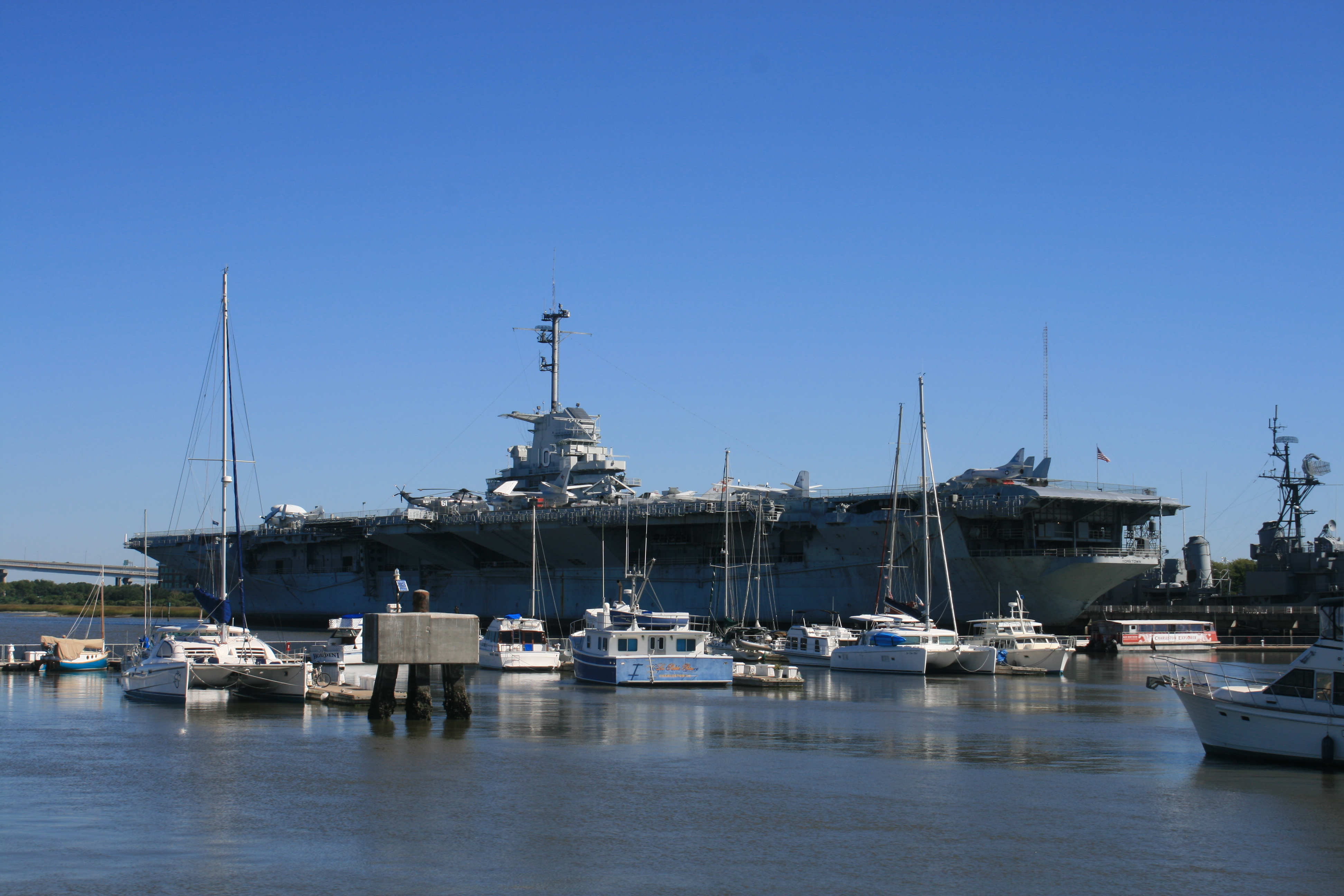
Near to the marina was Patriot Point, the home of USS Yorktown and a renowned Maritime Museum, which Ian wanted to visit. I thought we should go to the museum first, and shop afterwards. Ian wanted to get the shopping out of the way.

By the time we’d got a taxi to West Marine for various boat essentials, looked at everything else in the shop, crossed the six-lane highway to Publix, bought the groceries, got the taxi back to the marina, transferred the groceries to a handcart, wheeled the stuff back to the boat, unloaded everything onto the boat and finally put everything away, lethargy had overtaken us.

So I’m slightly ashamed to say we gave USS Yorktown a miss, and had dinner on the boat and opened a bottle of champagne instead.

On Sunday, the winds had calmed down and we set off north to McClennanville, but Charleston was awesome.

USSYorktown, Patriot Point

USSYorktown, Patriot Point

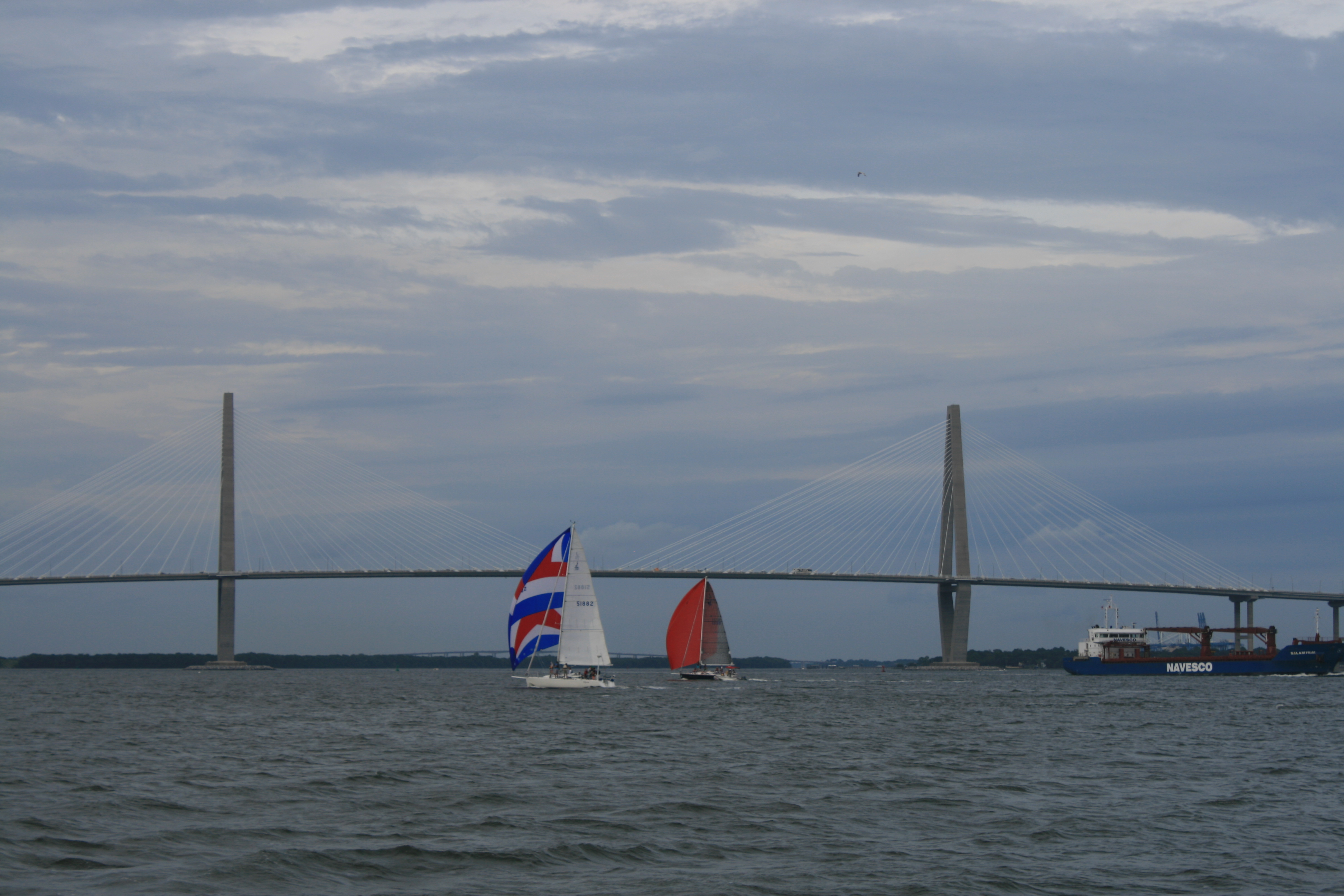
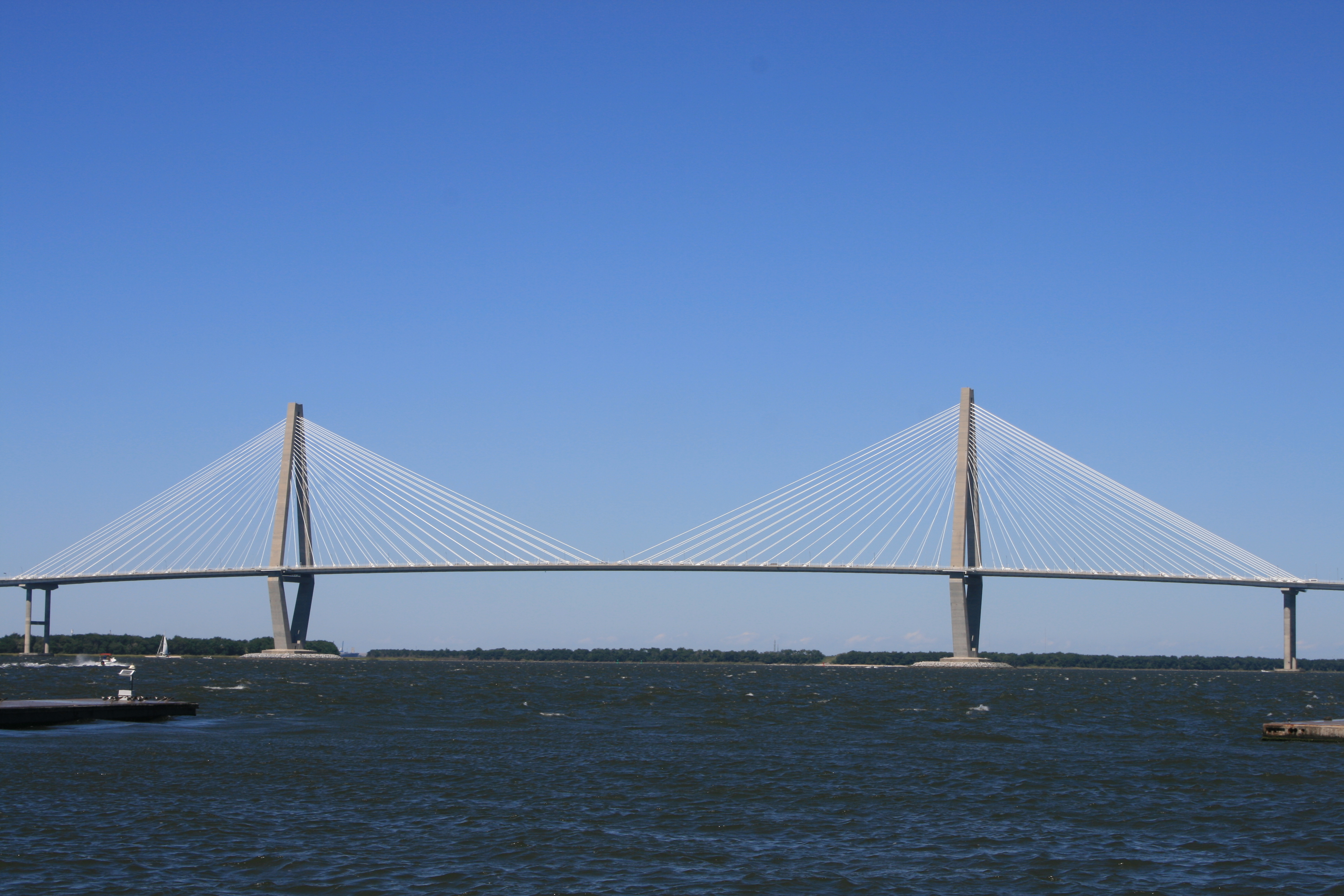
Arthur Ravenel Jr Bridge over the Cooper River

Arthur Ravenel Jr Bridge over the Cooper River


Oh, Savannah

Georgia has answered that occasionally voiced question ‘Why can’t we just go round the States by car?’.
After we left Jekyll Island and passed the Sidney Lanier Bridge to St Simon’s Island, we saw no houses, no roads, no cars, no bridges, and no railways for almost two days, and almost no other boats, except for a few shrimping boats.

Jekyll Island to Crescent River

Jekyll Island to Crescent River

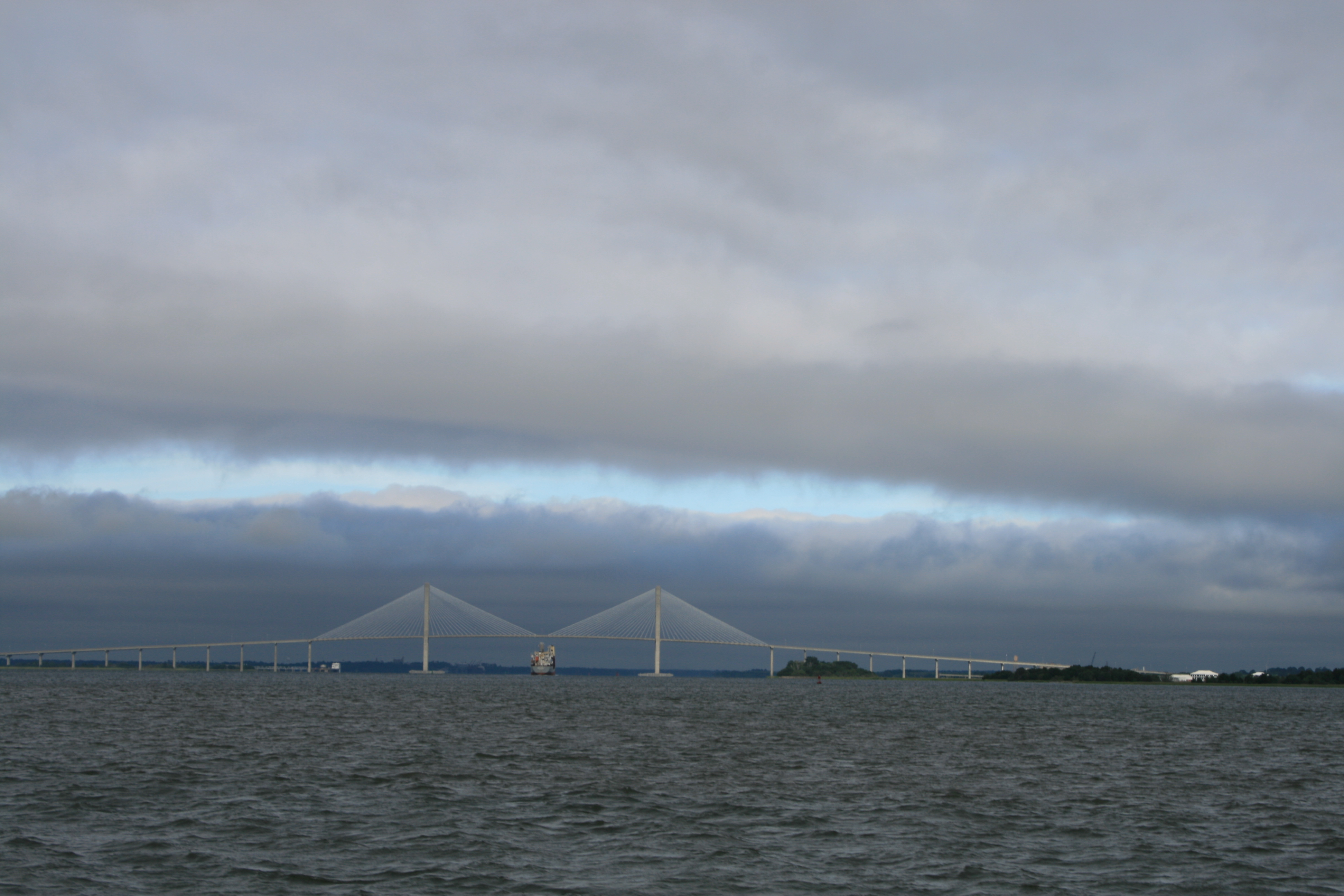
Sidney Lanier Bridge, St Simon's Island

Sidney Lanier Bridge, St Simon’s Island

Under heavy grey clouds we travelled through a maze of winding rivers and creeks, separated only by low grassy marshes, sometimes with a few trees, and other boats occasionally visible above the vegetation. The sun made but a single, brief appearance as we anchored for the night at Crescent River.

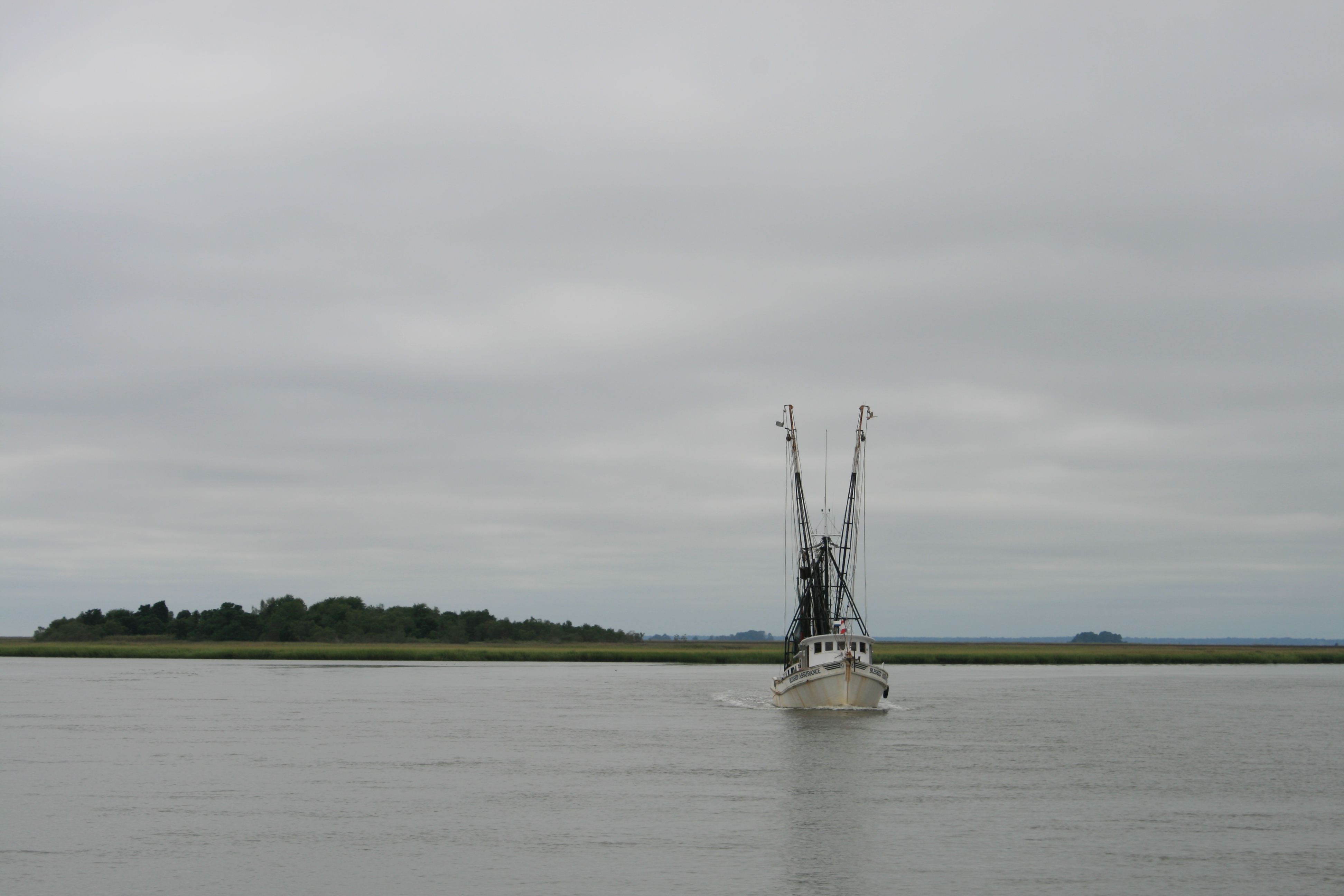
Shrimp Boat

Shrimp Boat

Afternoon tea at Crescent River

Afternoon tea at Crescent River

The next day we went on to Kilkenny.
Crescent River to Kilkenny

IMG_8539
IMG_8558

Arriving at Kilkenny Marina

Arriving at Kilkenny Marina

Kilkenny is only a small place, and we went with some trepidation to the only restaurant, Marker 107, a reference to the nearby Intracoastal Waterway marker. But the food was very good, and the restaurant just busy enough to make you feel that you had gone to a popular place, without the staff being too rushed to give the sort of great service that you quickly get used to in the States.

We finally made it to Savannah on Saturday afternoon. It’s possible to dock in the city centre, but the received wisdom is that it can be noisy at night, and sleep can be disturbed by large wakes from the big boats and ships passing up the Savannah River – Savannah is the second largest container port on the east coast. So we stayed at Thunderbolt Marina, about four miles out of town, for 3 nights.

Kilkenny to Thunderbolt Marina, Savannah

Kilkenny to Thunderbolt Marina, Savannah

On Sunday we decided to take the bus into Savannah, but got lost trying to find the stop. We saw a man in his driveway, doing the sort of things that men do in their driveways on Sunday mornings, and asked him the way. He spotted Ian’s BoatUS cap, and insisted on taking us in his car, not, it soon became apparent, to the bus stop, but right into the city centre. We found we had in common not only boating, but travelling, daughters and grandchildren too, and we gave him our address in the hope that if he and his family are ever in England they will look us up.

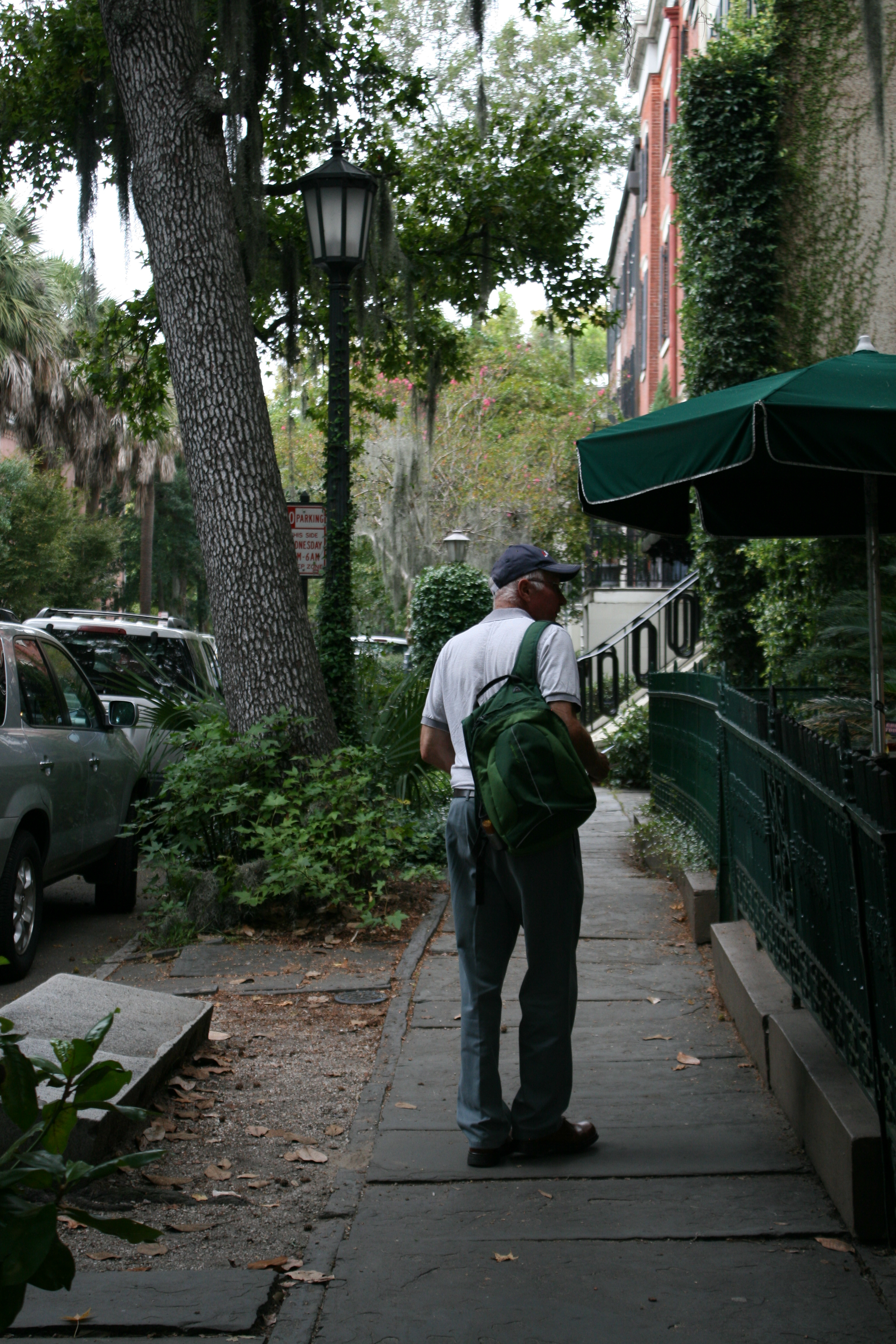
There are lots of tours you can do in Savannah, but we do things the less easy way, looking things up on the internet and consulting the Lonely Planet Guide, and immediately marking ourselves out as tourists by our constant reference to our maps and our smartphones. ‘Hey, where y’all from?’, though kindly meant, and asked with obvious interest, was repeated so often that I began to wonder whether we seemed not just foreign, but odd too. The answer to the initial query has sparked discussions ranging from Hadrian’s Wall and What the Romans Did for You (the nightwatchman at Thunderbolt Marina) to Why would the Scots ever want to leave the UK (William, who gave us the lift to Savannah).

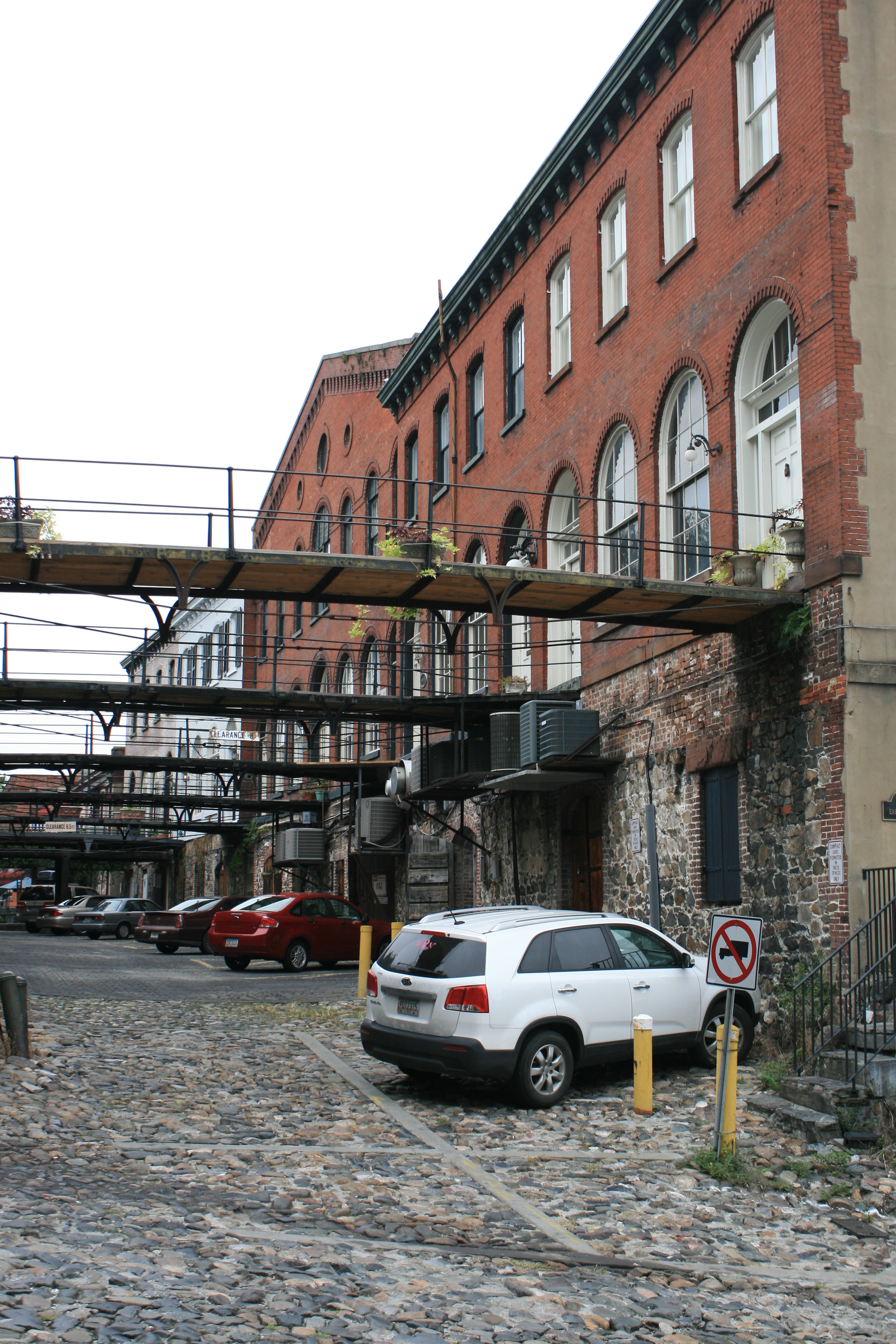
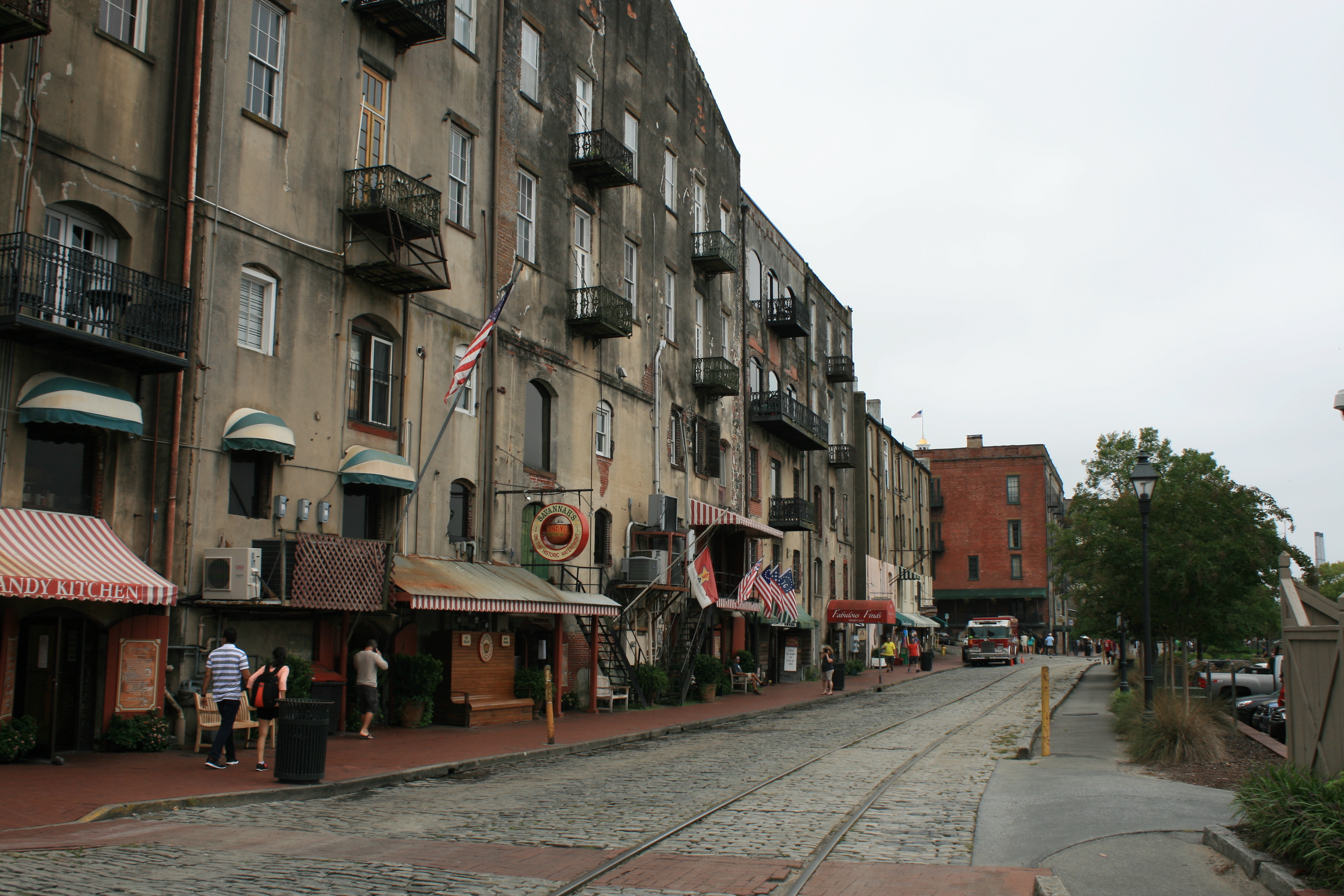
William had dropped us on the waterfront, facing the Savannah River, where the old warehouses line the street. They’re gift shops and restaurants now, but haven’t been over-gentrified and still look like warehouses. The streets are paved with cobbles, made from the ballast from the ships that used to come to Savannah.

Back of the riverside warehouses, Savannah

Back of the riverside warehouses, Savannah

Riverside Warehouses

Riverside Warehouses

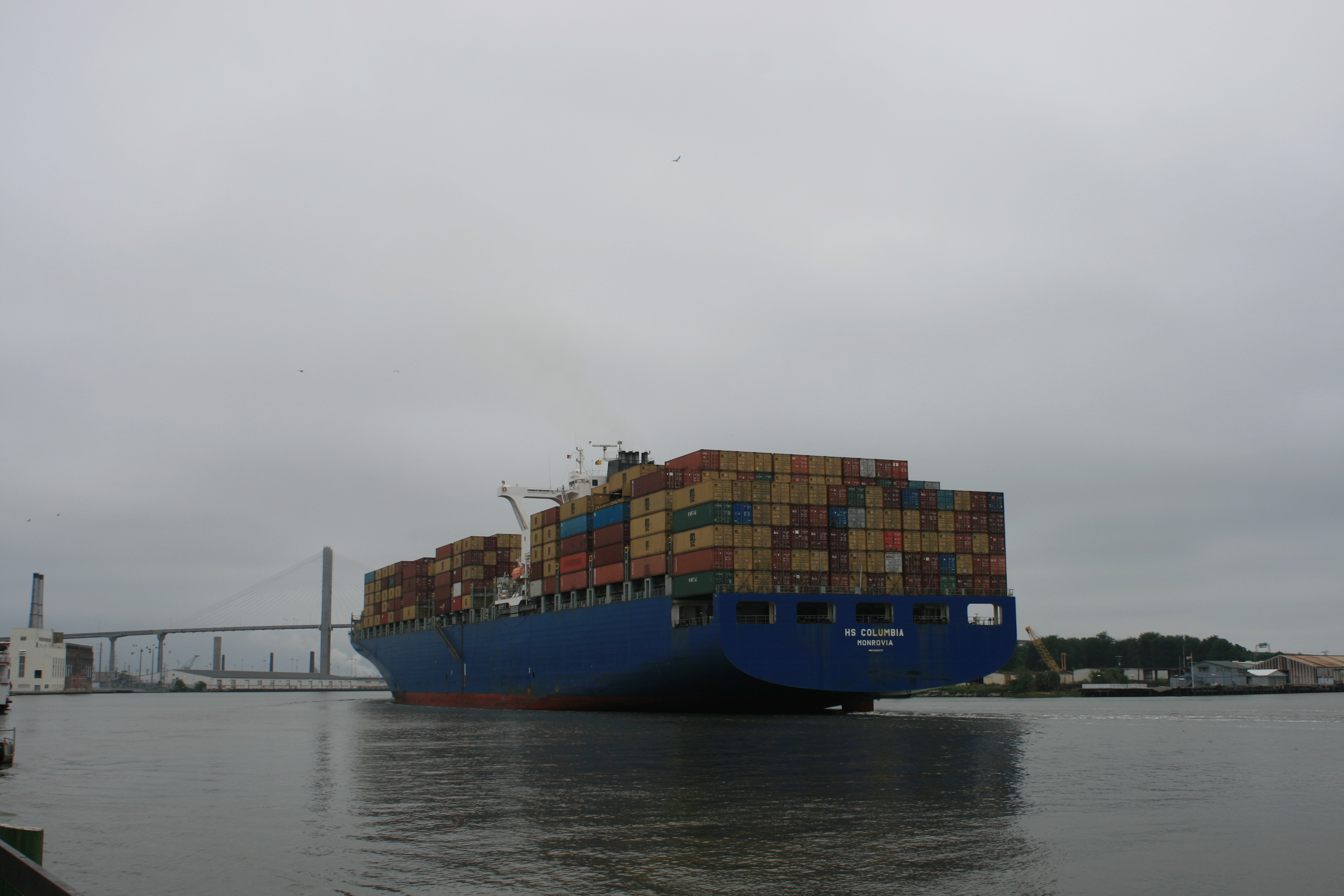
HS Columbia arriving at Savannah

HS Columbia arriving at Savannah

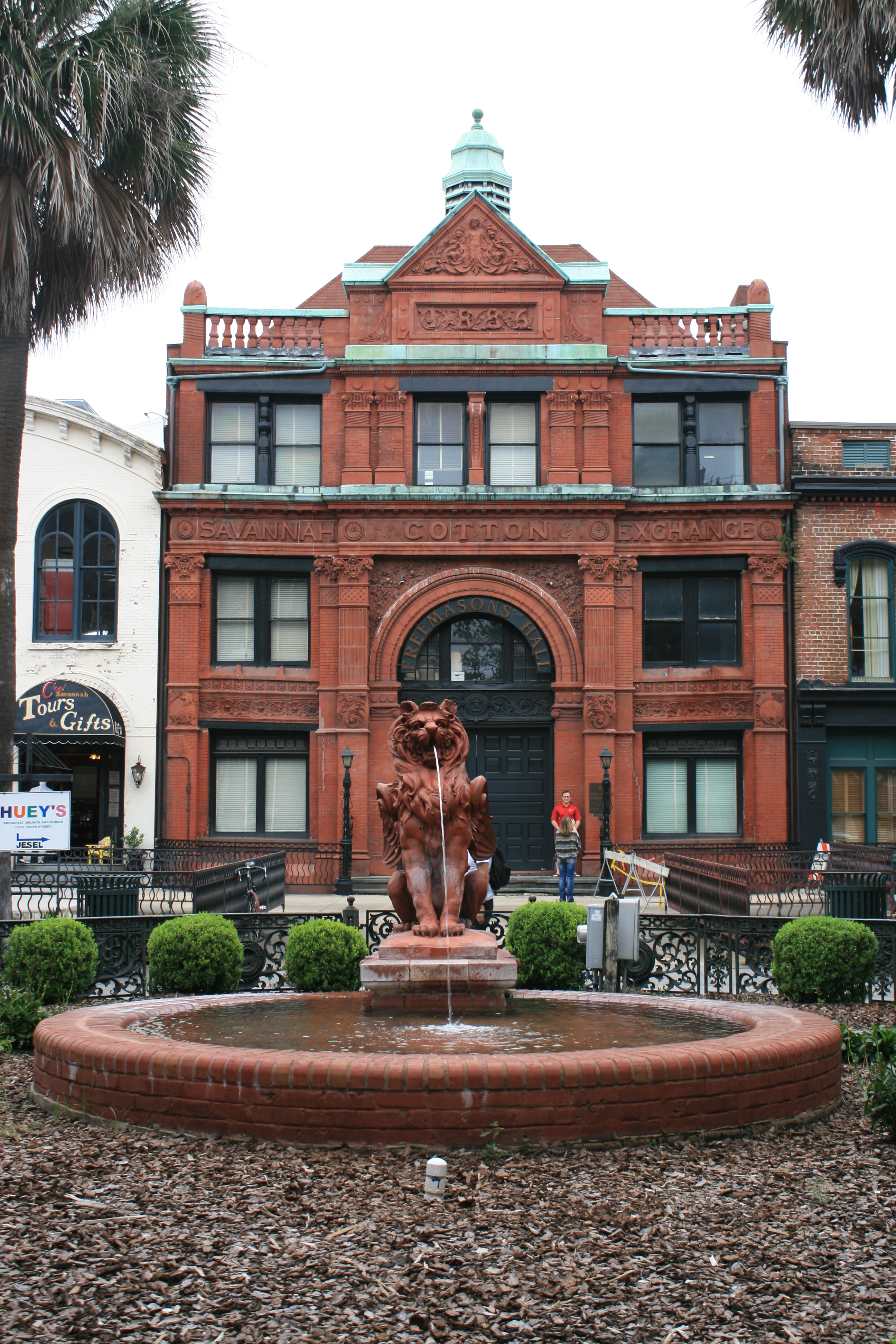
Savannah Cotton Exchange

Savannah Cotton Exchange

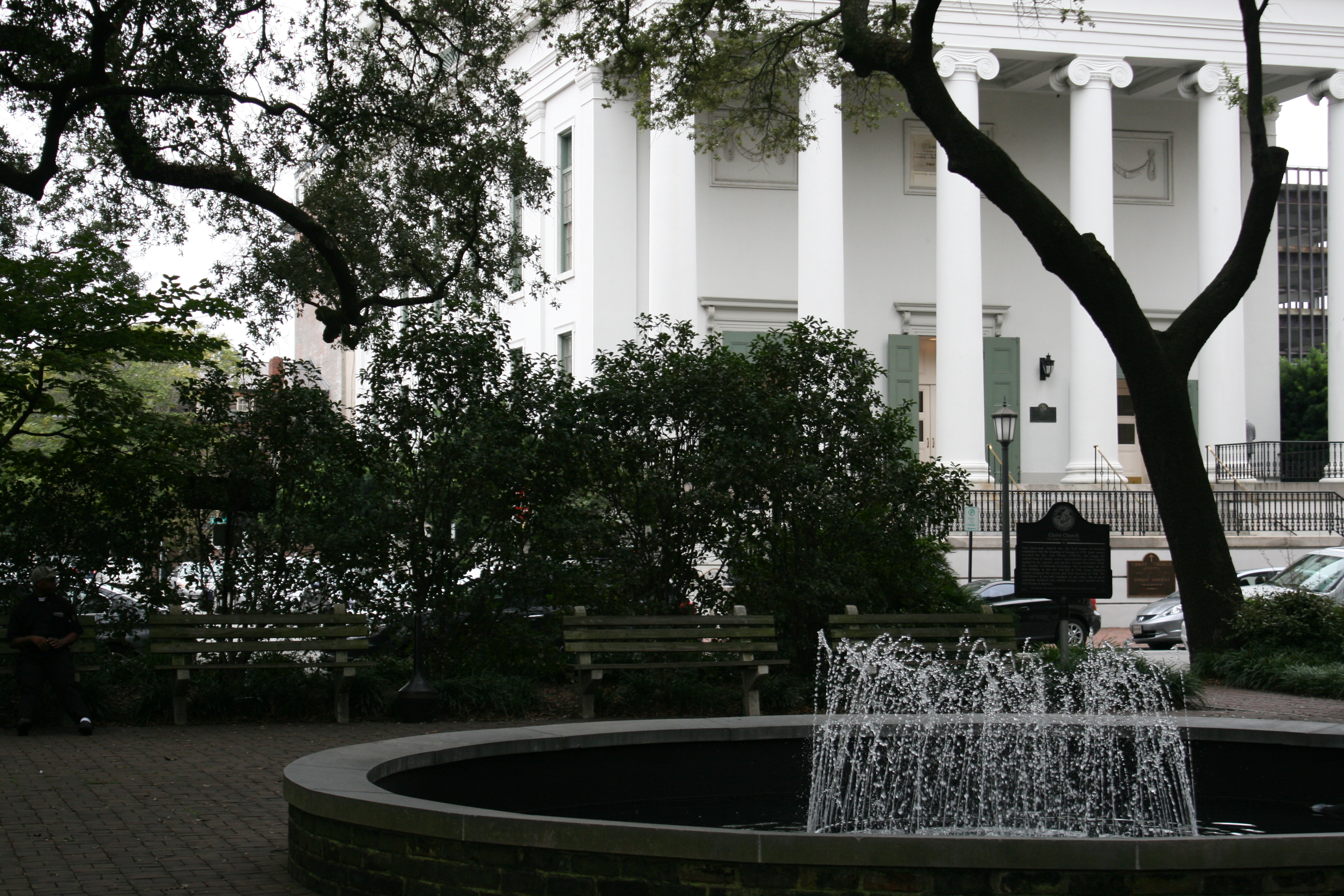
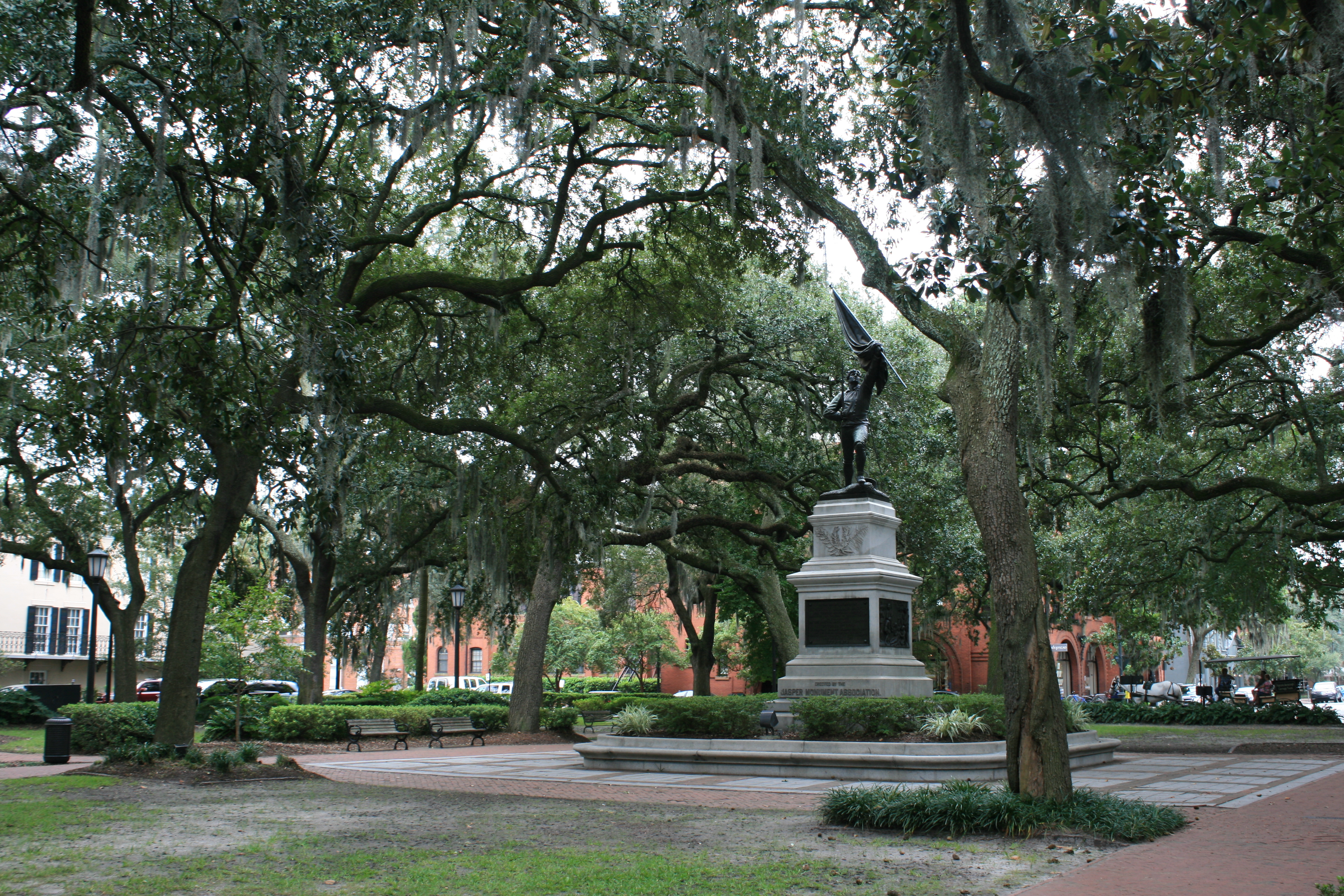
We walked up from the river to the historic district. Savannah was founded in 1733 by James Oglethorpe, a British General, and his design for the city was based on the 21 squares which remain today. Shaded by old trees, the beautiful houses and elegant streets and squares are a joy to wander through.

Johnson Square

Johnson Square

IMG_8580

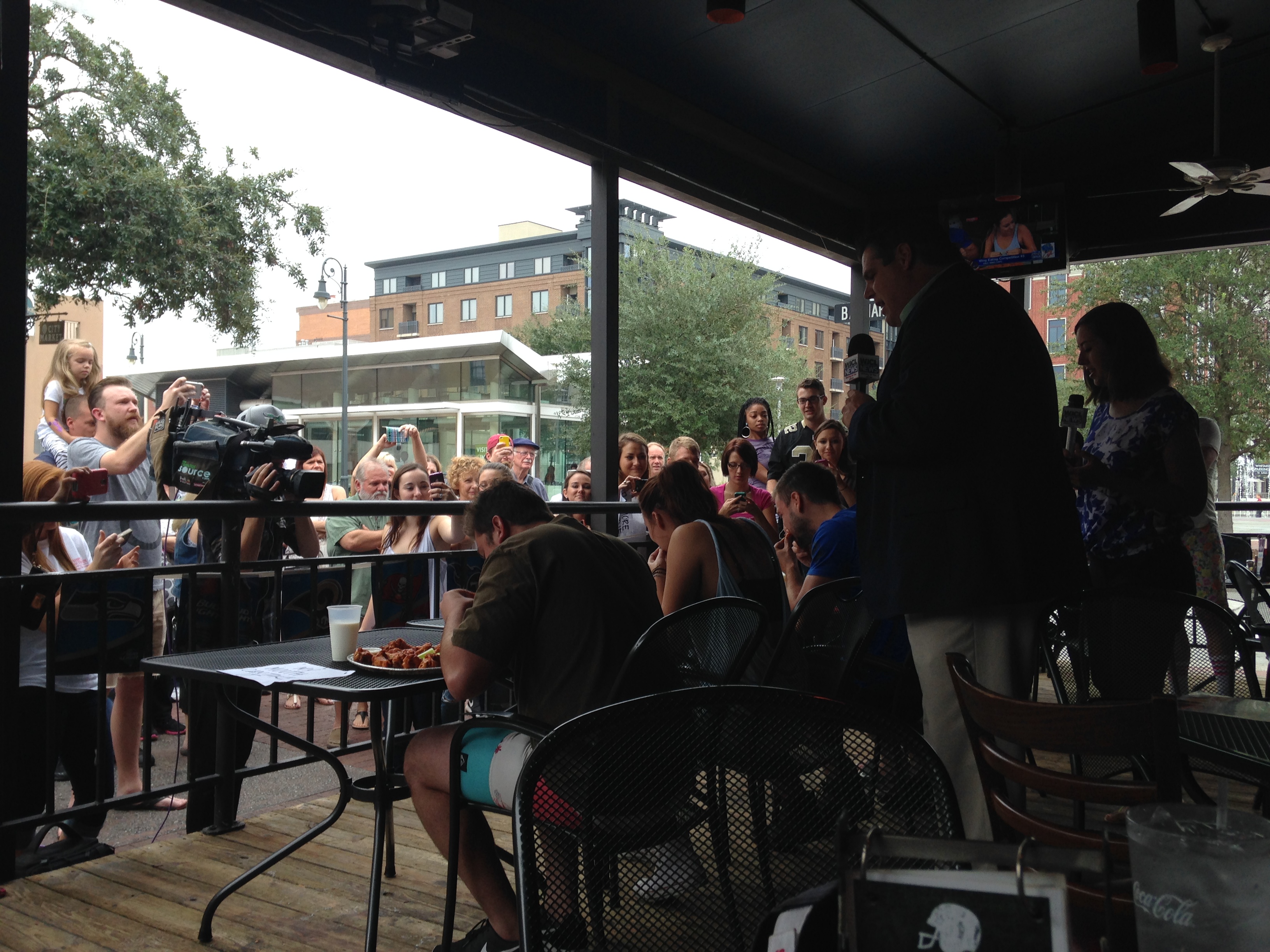
Modern life is never far away though, and we stopped for a coffee just off Ellis Square, where there is a bronze statue of Johnny Mercer (‘Moon River’) at an establishment called Wild Wings. As we sat on the verandah, a small crowd gathered, and a long table set up. We gathered from our server that we were about to witness a Wing-Eating competition, run by a local broadcasting company. Excitement (amongst the onlookers) mounted as a cameraman, a front man and a young woman assistant arrived. The contestants, who strangely looked quite normal, were two young men and a young woman, and they had to eat as many fried chicken wings as they could, in two minutes. This raised the question, in our minds anyway, of how to define a completely eaten chicken wing, and perhaps more importantly, why anyone would want the prize (a year’s supply of fried chicken wings).

Wing-eating competition

Wing-eating competition

We continued our exploration.

Madison Square, Savannah

Madison Square, Savannah

IMG_8584

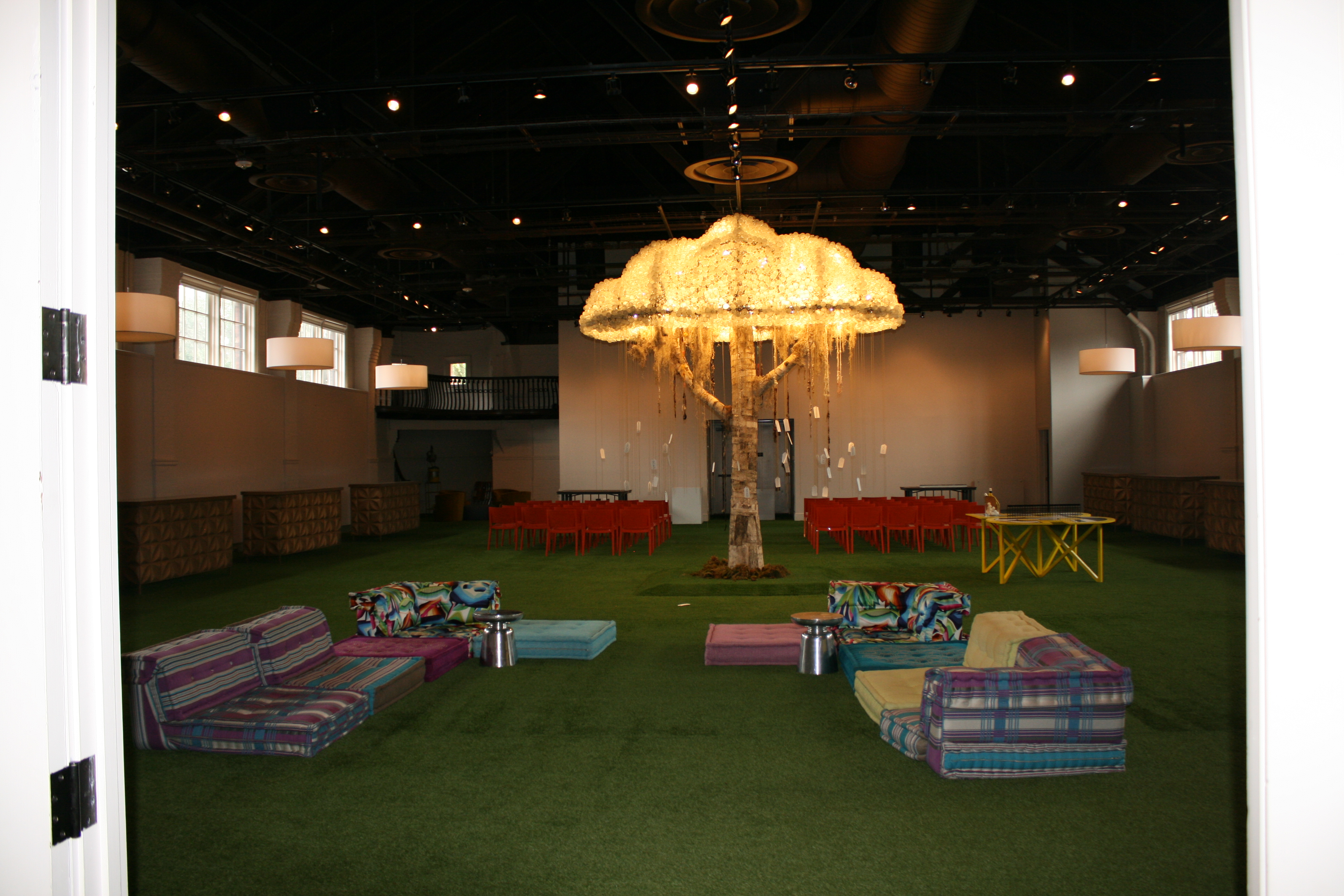
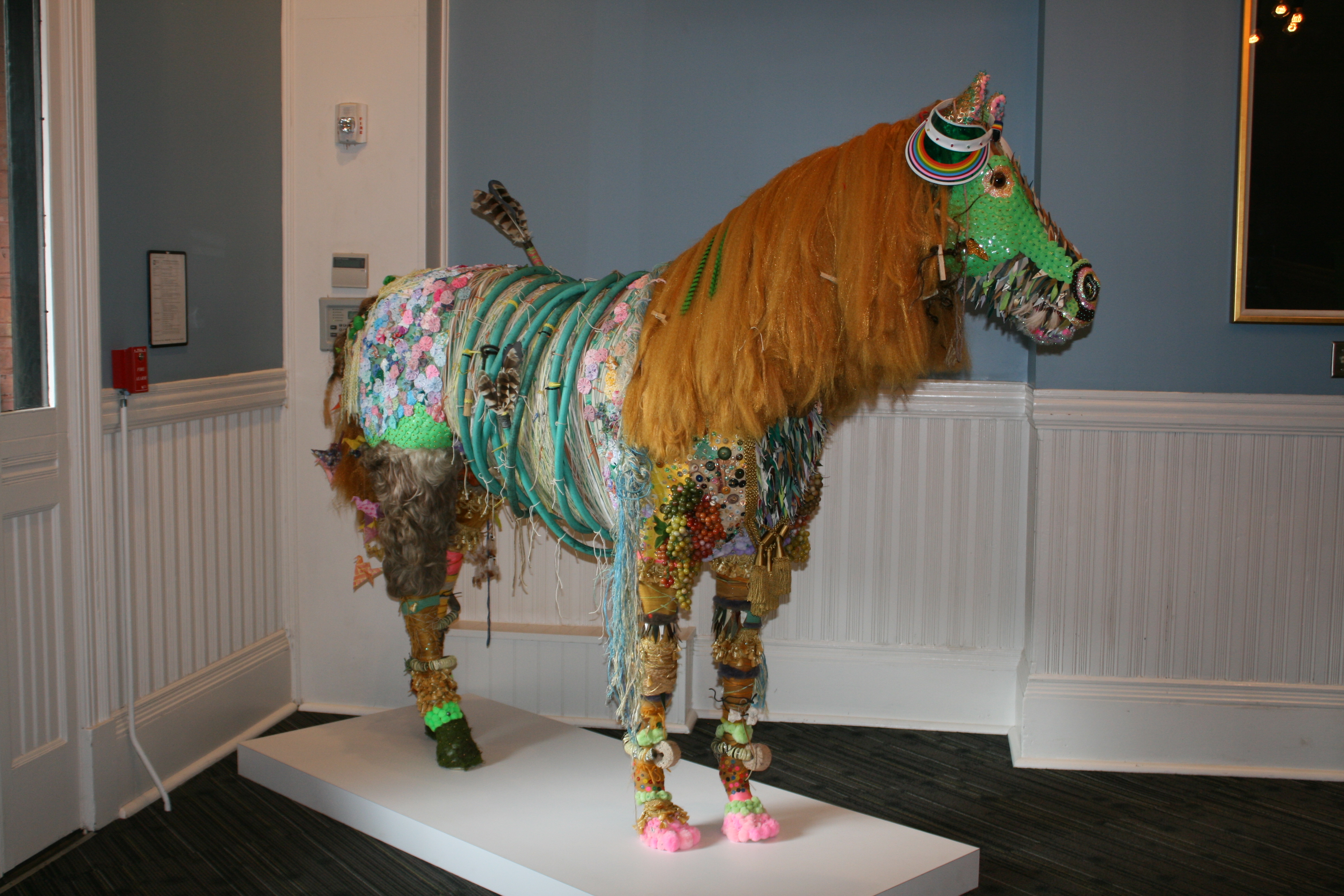
From the many historic houses in Savannah that I would have liked to visit, I chose the Mercer-Williams House in Monterey Square, but on the way there we had a diversion to the Admissions Office of the Savannah College of Art and Design (SCAD). William had told us how it had developed since being founded in 1978, and now has campuses in Atlanta, Hongkong and France, and how it has contributed to Savannah’s renaissance. There was a small display on the ground floor, and the lady on the desk took us upstairs for a special view of the spectacular conference room.

Conference room, Admissions Centre, SCAD

Conference room, Admissions Centre, SCAD

Exhibit in the entrance hall, Admissions Centre, SCAD

Exhibit in the entrance hall, Admissions Centre, SCAD

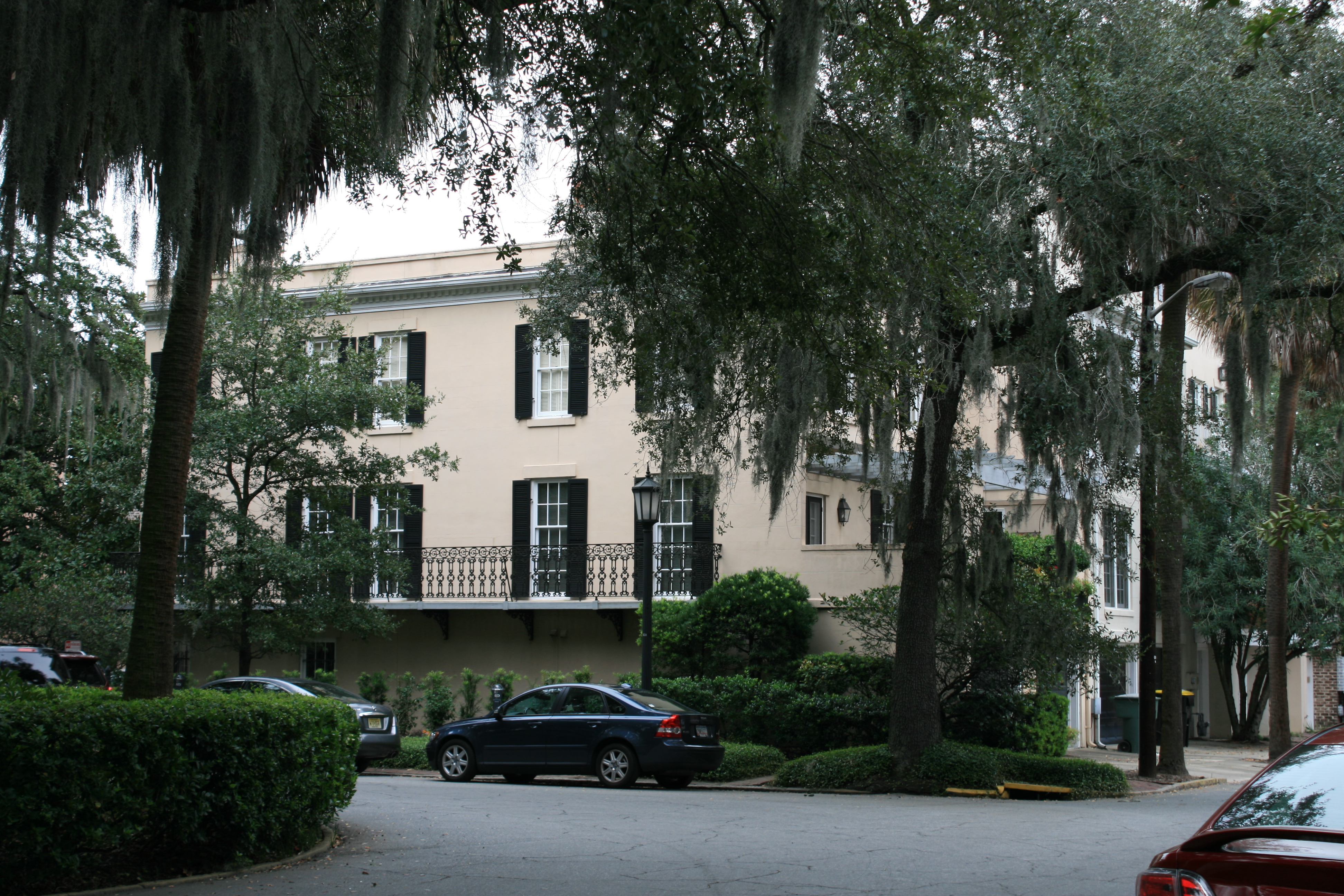
The Mercer-Williams house was the scene of the killing in the 1980s of a young man, Danny Hansford, by Jim Williams, a well-known antique dealer who had restored many houses in Savannah and used the house both as his home and a base for his business of antique restoration. He was tried four times for murder, before being acquitted, then died in 1990. The story was documented in John Berendt’s ‘Midnight in the Garden of Good and Evil’ and I wish I had read the book before visiting the house, which is now the home of Jim Williams’ sister. It is beautifully decorated and furnished, but photography isn’t allowed. Our young guide brimmed with enthusiasm not only for the house and its contents, but also for his employer, Jim Williams’ sister,and her devotion to maintaining the property as he would have wished. But there are suggestions on the internet that this is possibly a distortion of the truth, and that the relationship between Williams and his sister was far from harmonious. So the house retains its mystery.

Monterey Square and the Mercer-Williams House

Monterey Square and the Mercer-Williams House

Monterey Square

Monterey Square

Monterey Square

Monterey Square

Chatham Square

Chatham Square

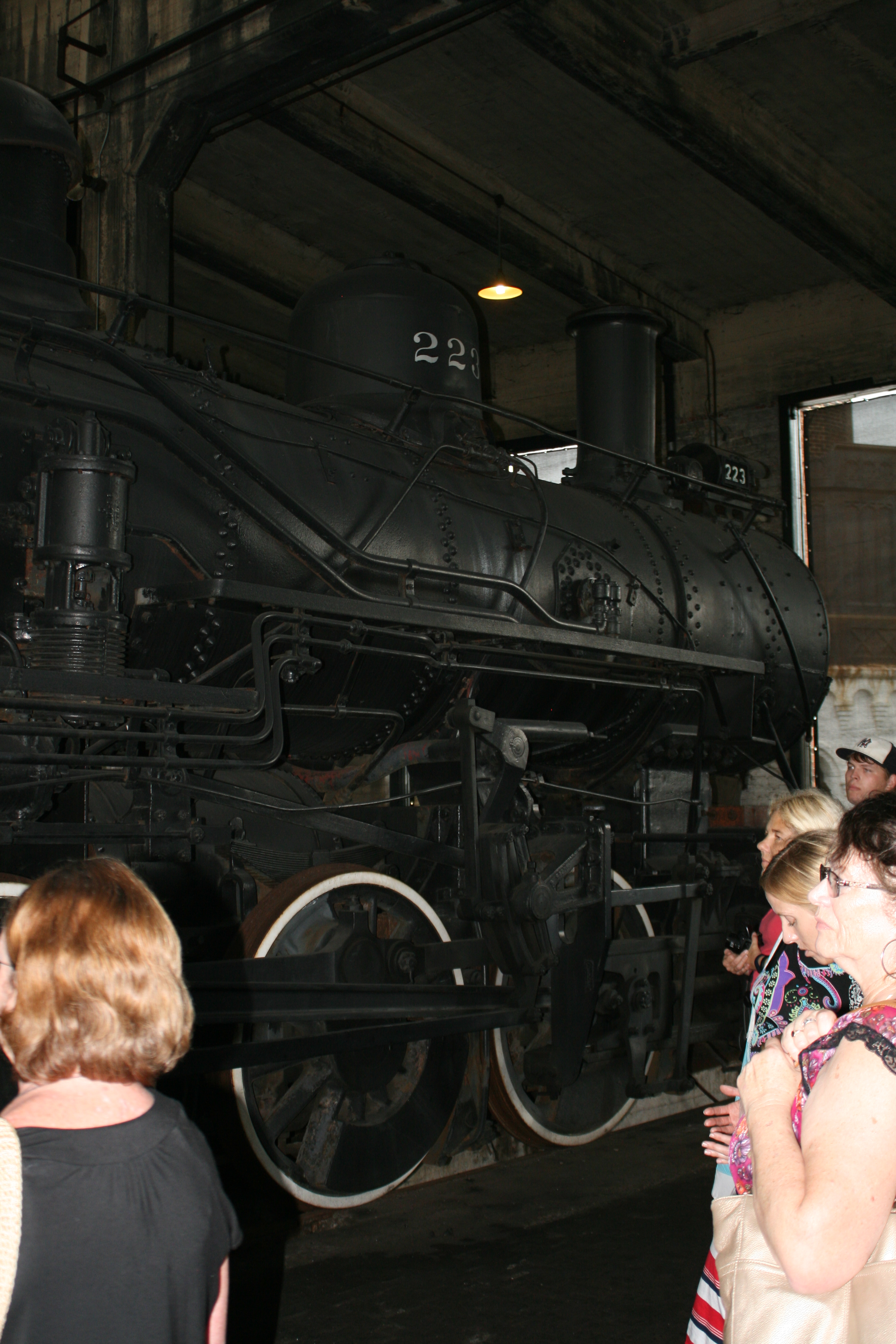
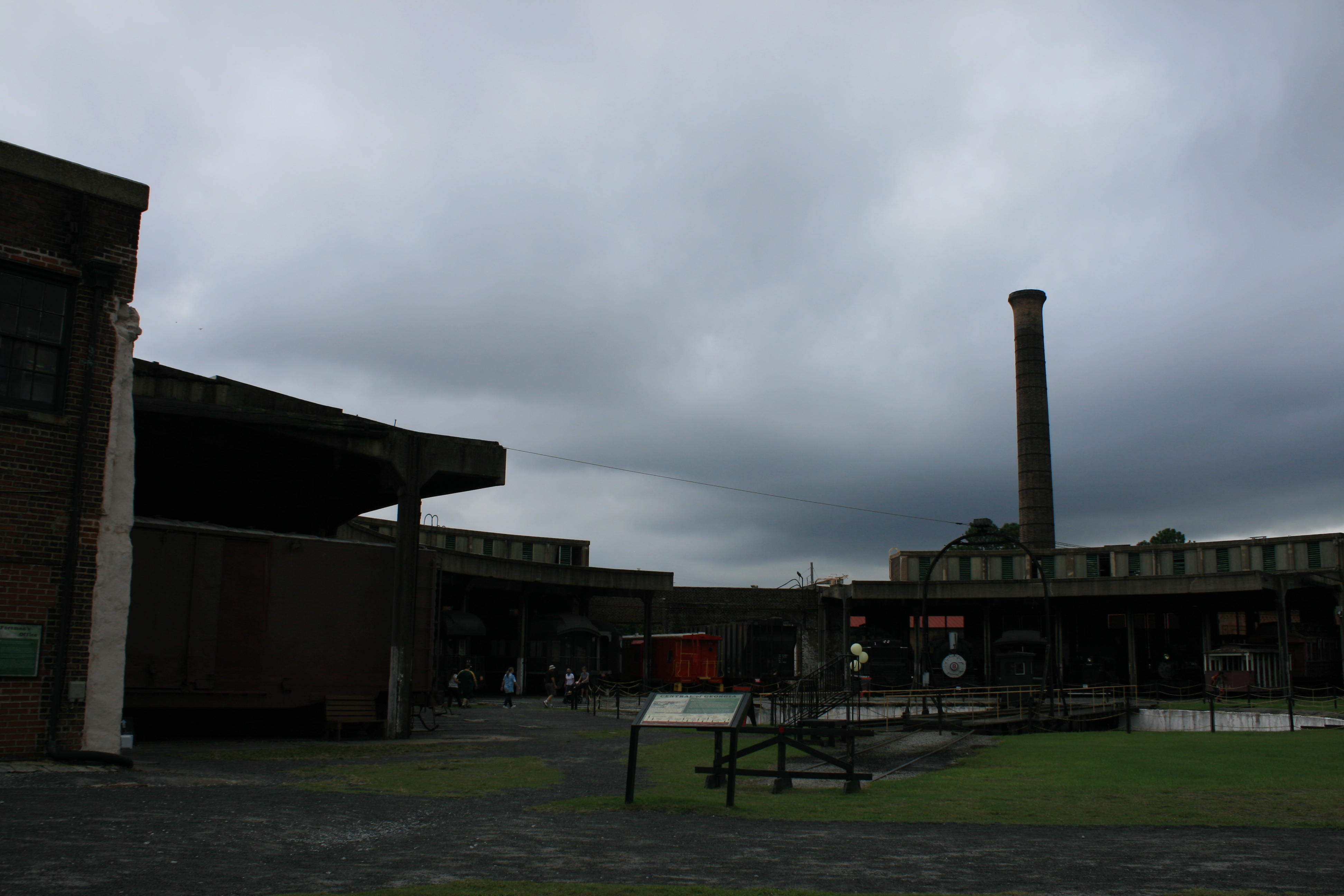
Ian had noticed that the Georgia State Railroad Museum was only a few blocks away from the Mercer-Williams house, so it was hard to counter his suggestion that we visit it. The engines were really quite impressive, and I did learn what the tank (as in Thomas the Tank Engine) was actually for. And because our guide was a few minutes late, he let us ride on the turntable for a quarter turn, as a privilege.

At the Georgia State Railroad Museum

At the Georgia State Railroad Museum

IMG_8605

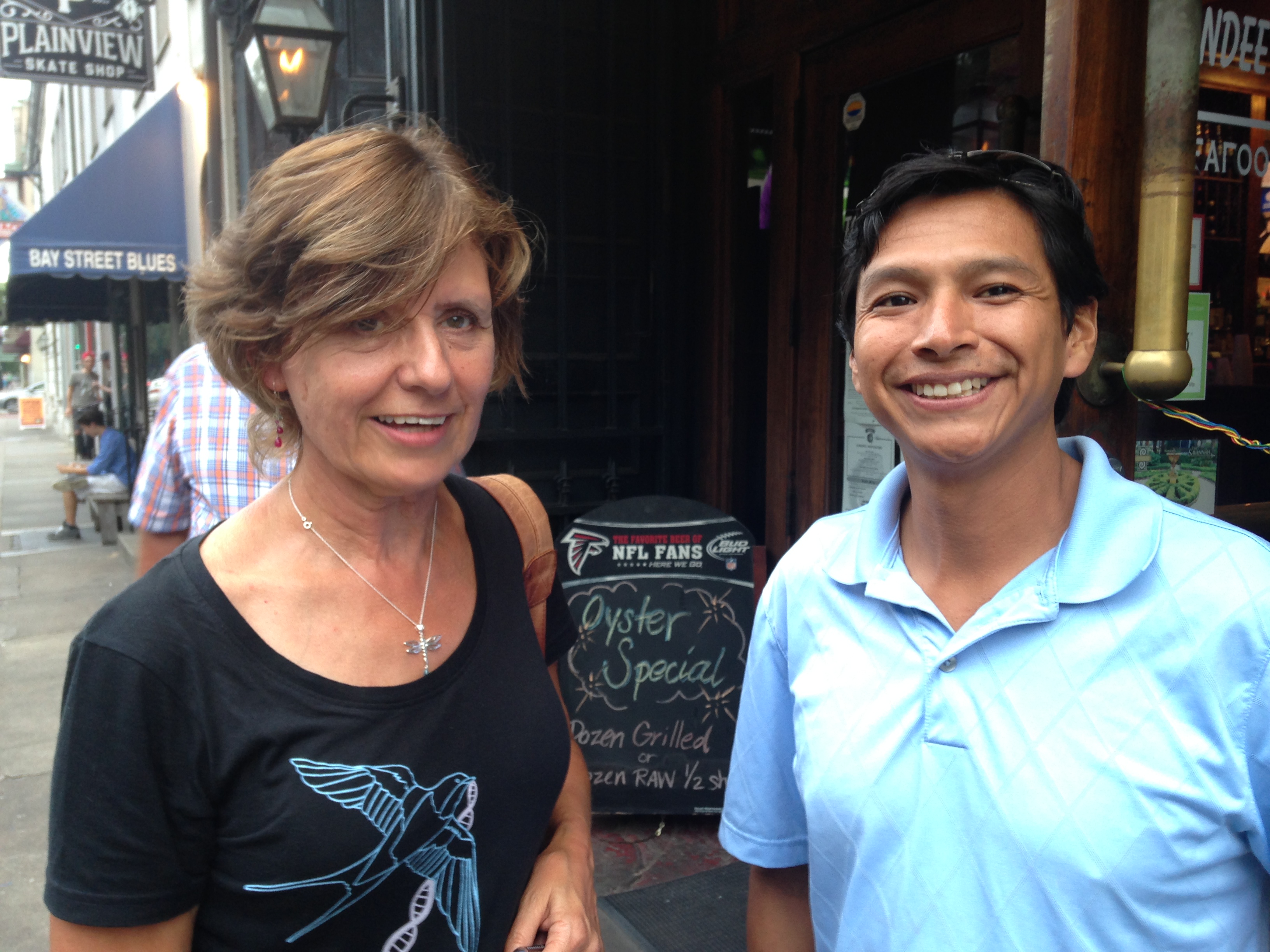
Afterwards we took the excellent, fare-free DOT shuttle express back to the waterfront area, reconnoitreing somewhere to eat in the evening. Outside Tondee’s Tavern, the doorman’s follow-up question to ‘So, where y’all from?’ was ‘So, why do you have the double helix on your t-shirt?’ Impressed with his powers of observation, I explained all about jeansforgenes.org, and another wide-ranging conversation ensued, after which we really needed a beer and went in for a swift one.

Outside Tondee's Tavern and my jeansforgenes.org t-shirt

Outside Tondee’s Tavern and my jeansforgenes.org t-shirt

Seated at the bar, we were entertained by another competition, this time televised log-sawing. Truly.

We’d hoped to find some live music, but Sunday wasn’t a good night for it. But as we walked through City Market after our meal, there was a group playing to a small audience outside Wild Wings, where we had started our morning. A young street dancer began moving to the music, and a 70-something lady joined him. Ian’s anxiety that the temptation to join in might prove too much for me was palpable, but they were playing reggae, which isn’t really my style.

Weathering the weather and other tribulations – Fernandina Beach to St Mary’s, Cumberland Island and Jekyll Island

Fernandina to Jekyll Island

Fernandina to Jekyll Island

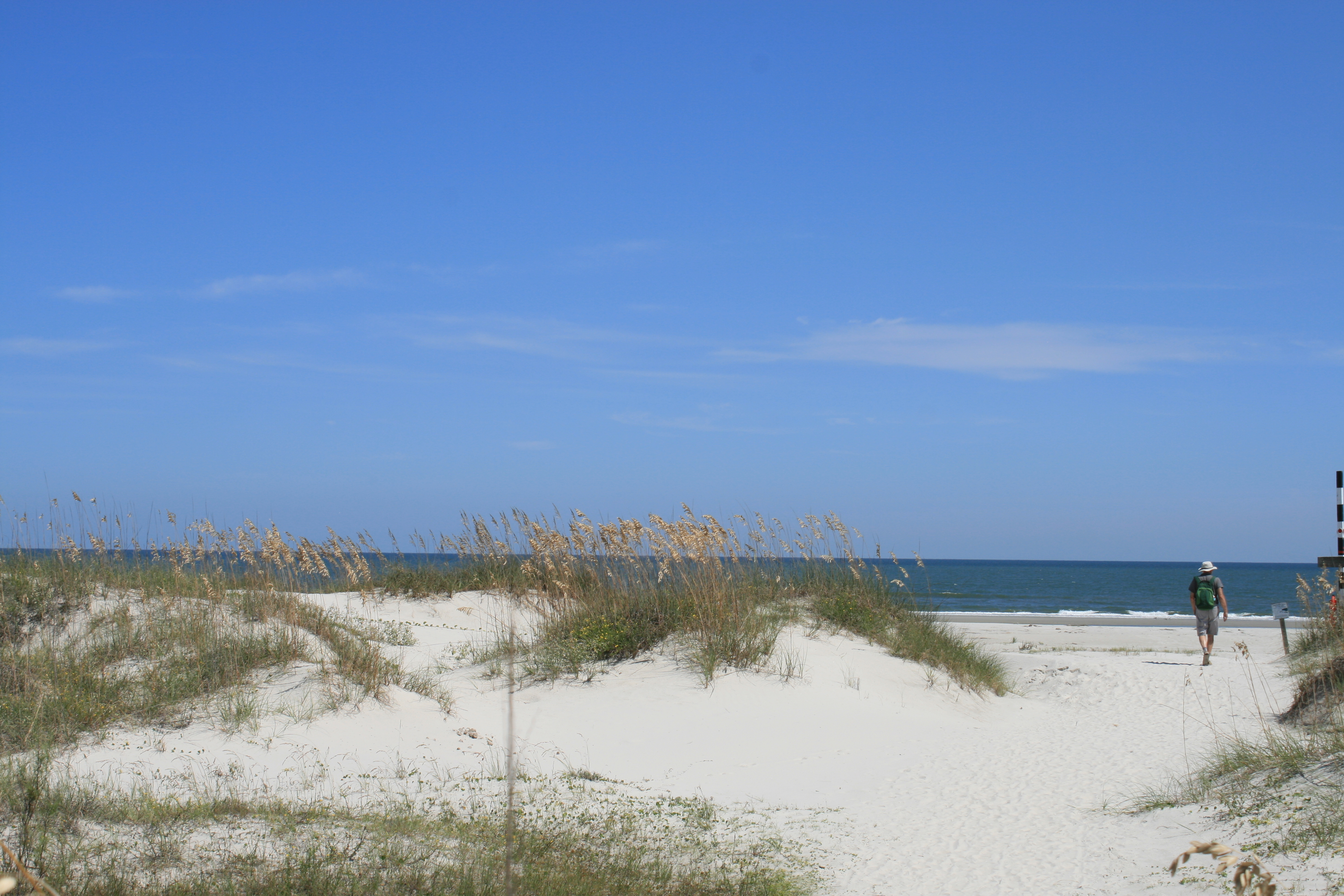
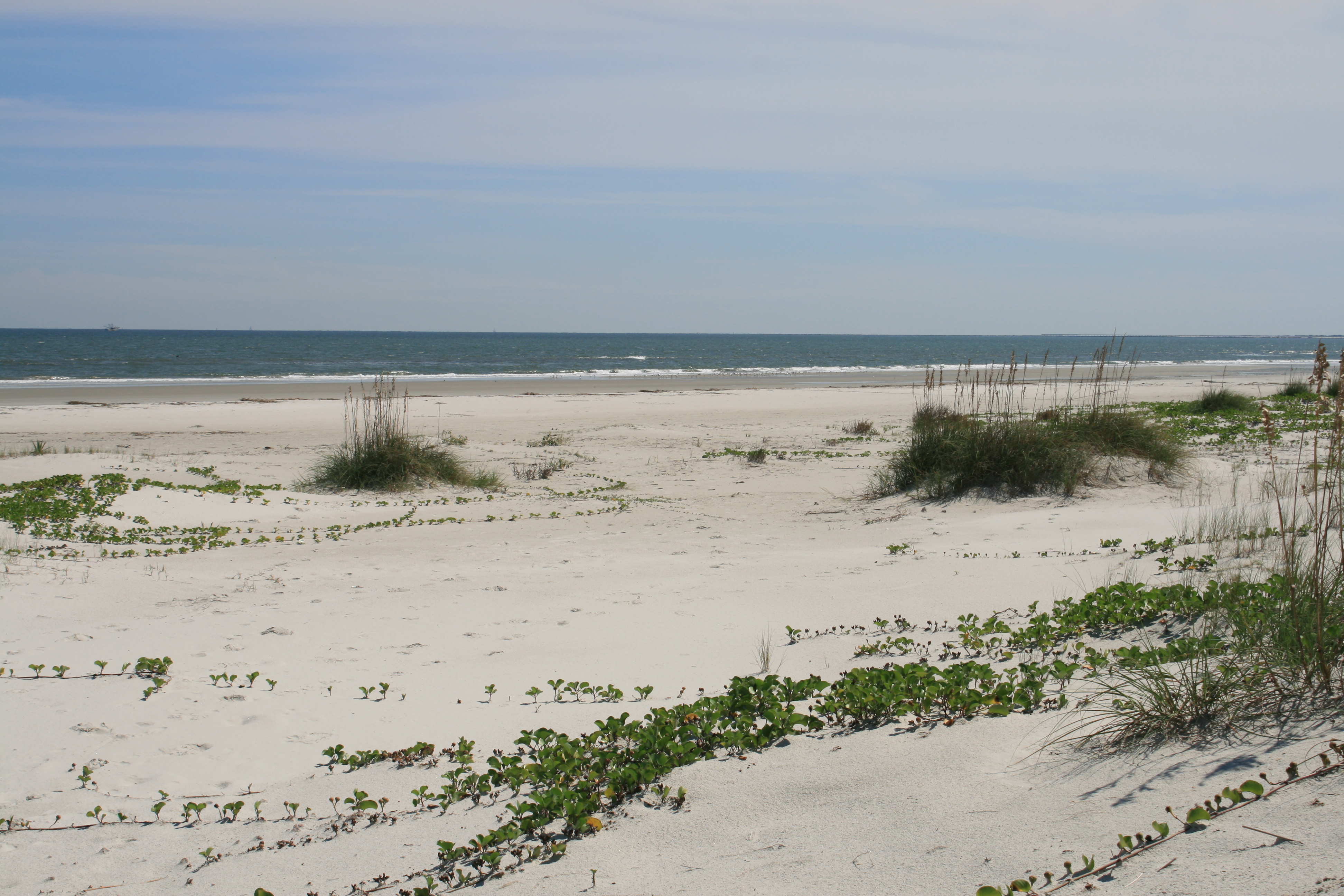
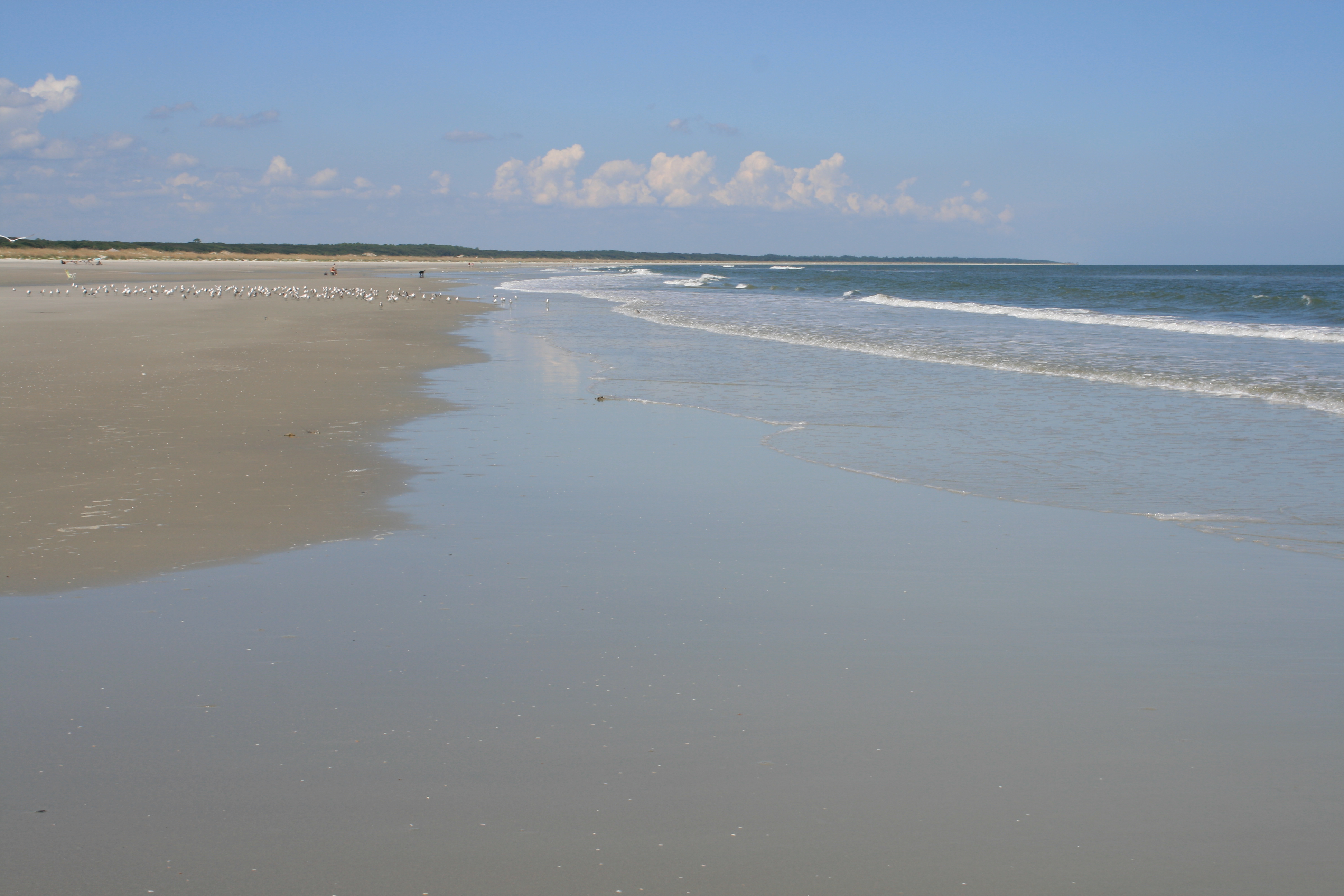
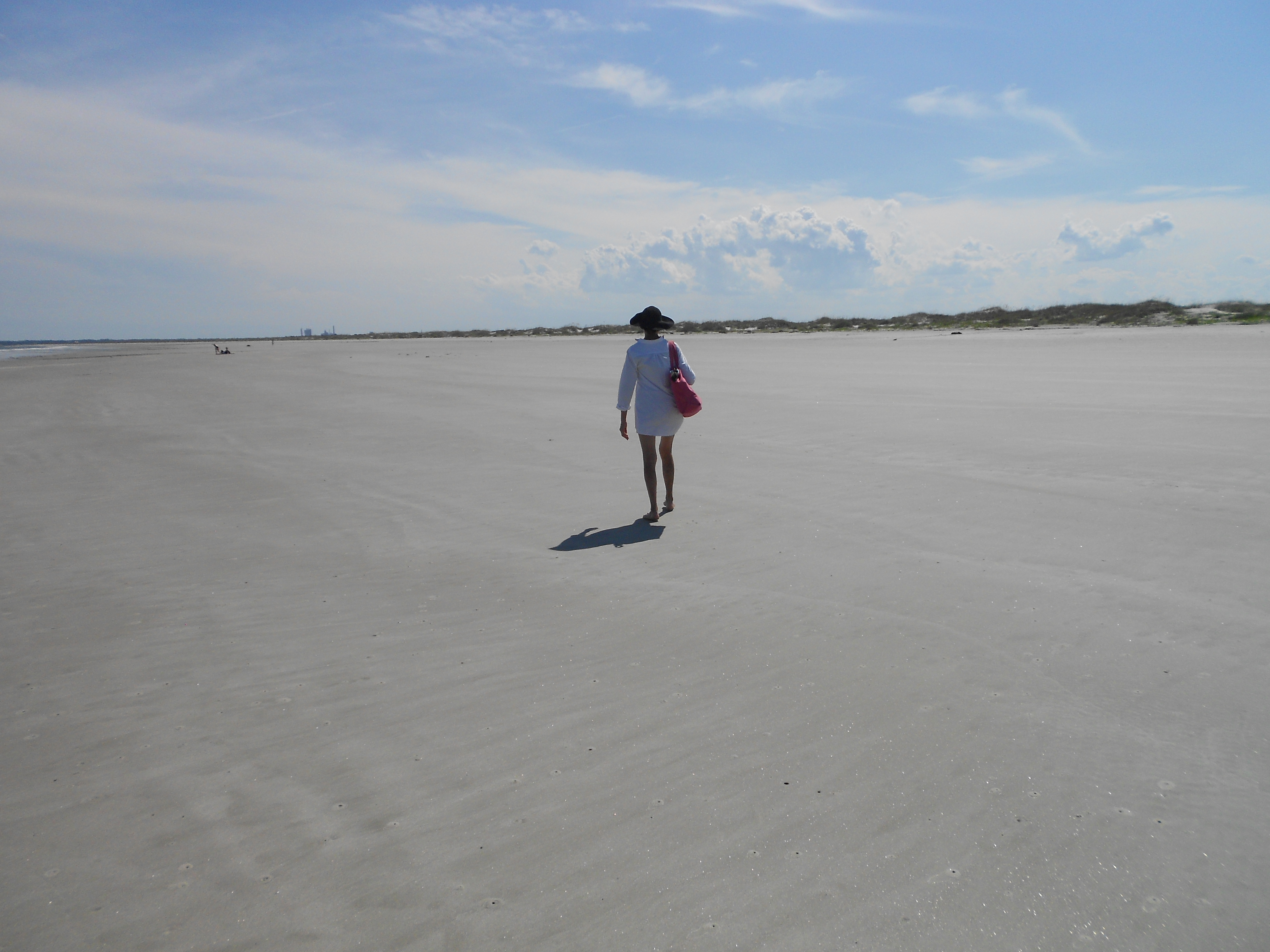
On Monday we walked 4 miles in hot sunshine, through maritime forest, along the Atlantic coast and salt marshes of Cumberland Island, suitably protected from the elements with sunscreen, insect repellant, sunhats, and collared shirts, and with plenty of water to drink.
On Tuesday I woke to the sound of rain on Carina’s roof, and she was pitching so much that I decided it was time to open the Stugeron as a precautionary measure. We were encountering what popular meteorologists now seem to refer to as ‘weather’.

But the journey from Fernandina Beach to St Mary’s on Sunday had been perfect.

Near Fernandina

Near Fernandina

Crossing the State Line into Georgia

Crossing the State Line into Georgia

We crossed the state line into Georgia and a few miles further on, arrived at the marina at St Mary’s, a modest establishment with not many boats or facilities, and seemingly run singlehandedly by an old man called Nat.

Arriving at St Mary's

Arriving at St Mary’s

Although there had been industries in St Mary’s in the past, there’s now little evidence of them, but the old houses and tree-lined streets are very elegant.

Orange Hall, St Mary's

Orange Hall, St Mary’s

DSCN0312

Evening sunshine on the Waterfront, St Mary's

Evening sunshine on the Waterfront, St Mary’s


Sunset at St Mary's

Sunset at St Mary’s

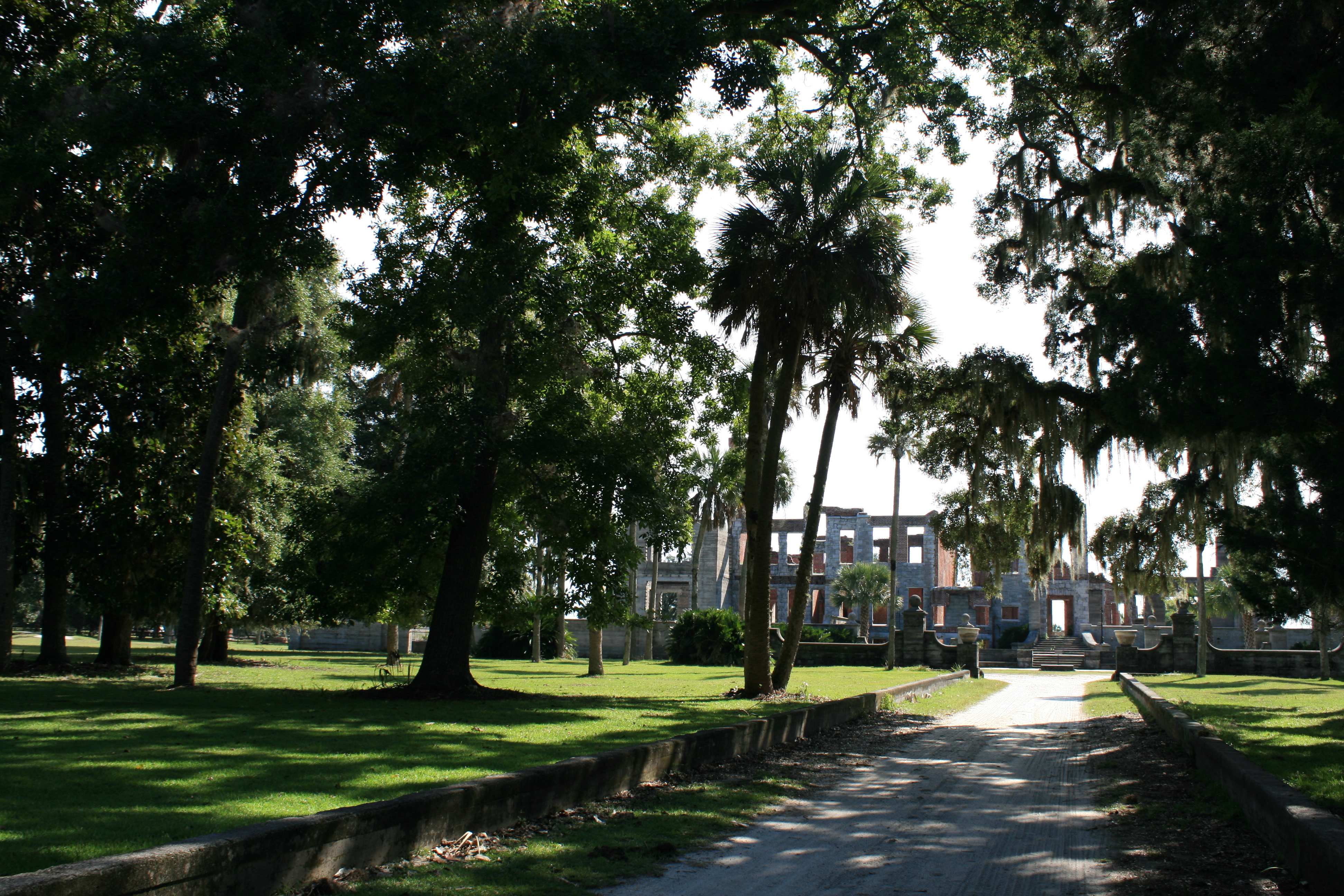
We could have spent another day in St Mary’s, but wanted to see Cumberland Island while the weather was still good. It was only a short journey and we were anchored in Cumberland Sound by 11.30. Cumberland Island is the southernmost of Georgia’s barrier islands and its history dates back 4000 years. Before the Civil War, there were several plantations which were abandoned in the aftermath, and then much of the land was purchased in the 1880s by Thomas Carnegie. He and his wife Lucy built an estate on the southern part of the island known as Dungeness, comprising a grand hall and several other houses for their adult children and staff. They left it at the time of the Great Depression and in 1959 the great house burned down.
Attempts were made to develop the island, but eventually the Carnegie family sold it to the Federal Government and it is now preserved in its natural state, of maritime forest, salt marshes and sea shore.
The only access is by boat, usually a ferry from St Mary’s, but there is a dock where small private boats can tie up.
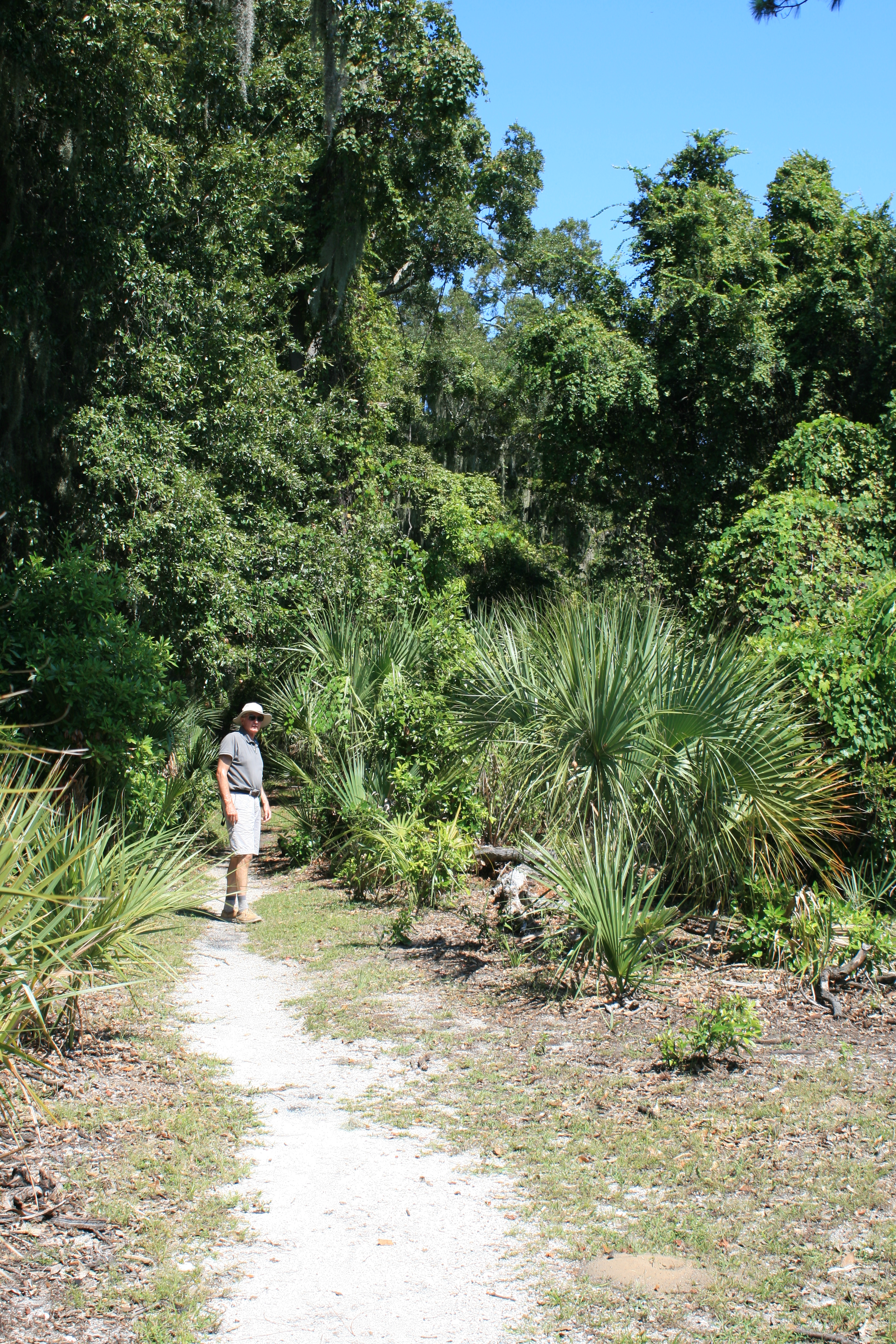
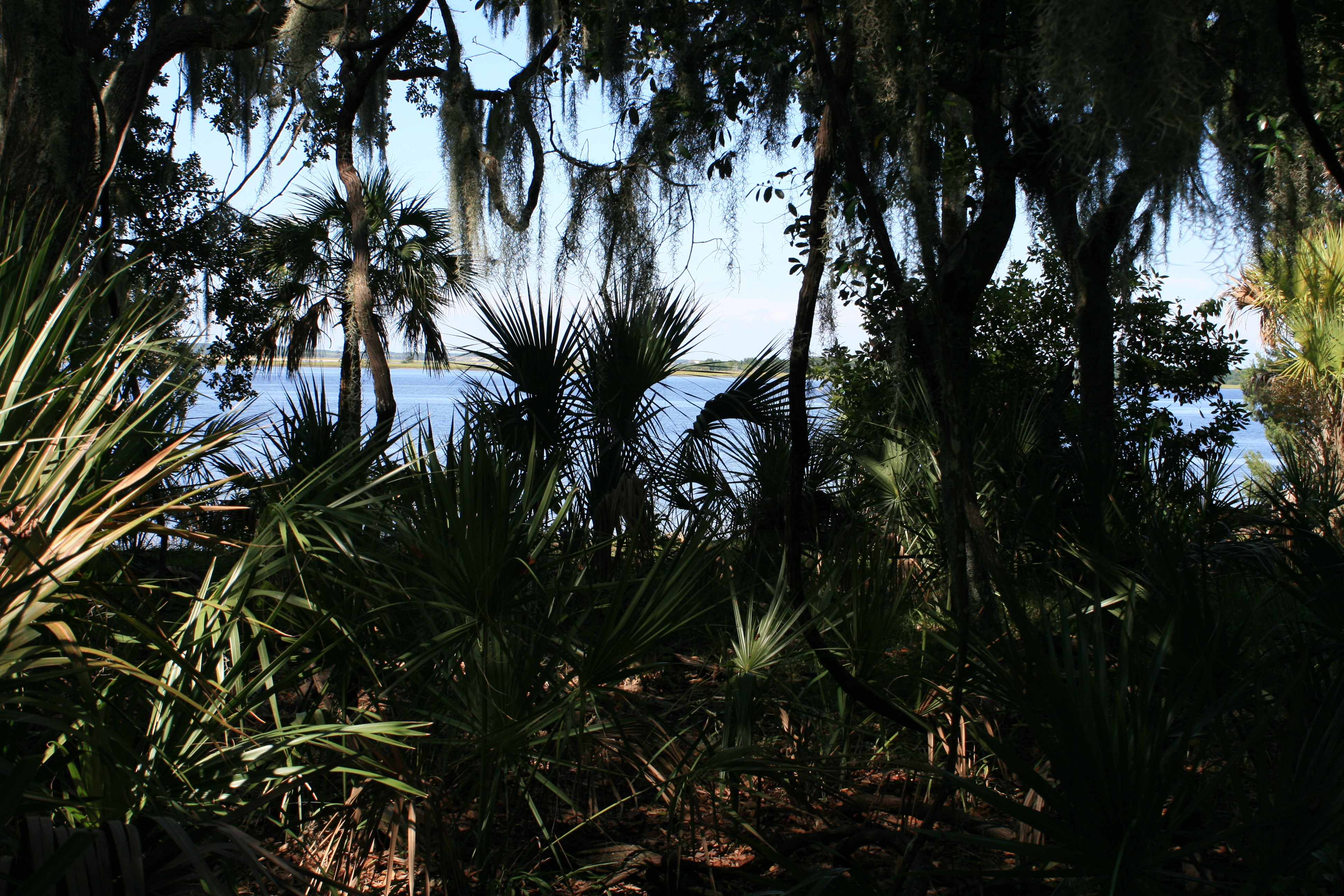
So after a quick lunch we took the dinghy and did a circular walk along the river shore, across to the Atlantic shore and back past Dungeness and the marshes to the dock.

Carina in Cumberland Sound, from Cumberland Island

Carina in Cumberland Sound, from Cumberland Island

The river shore, Cumberland Island

The river shore, Cumberland Island

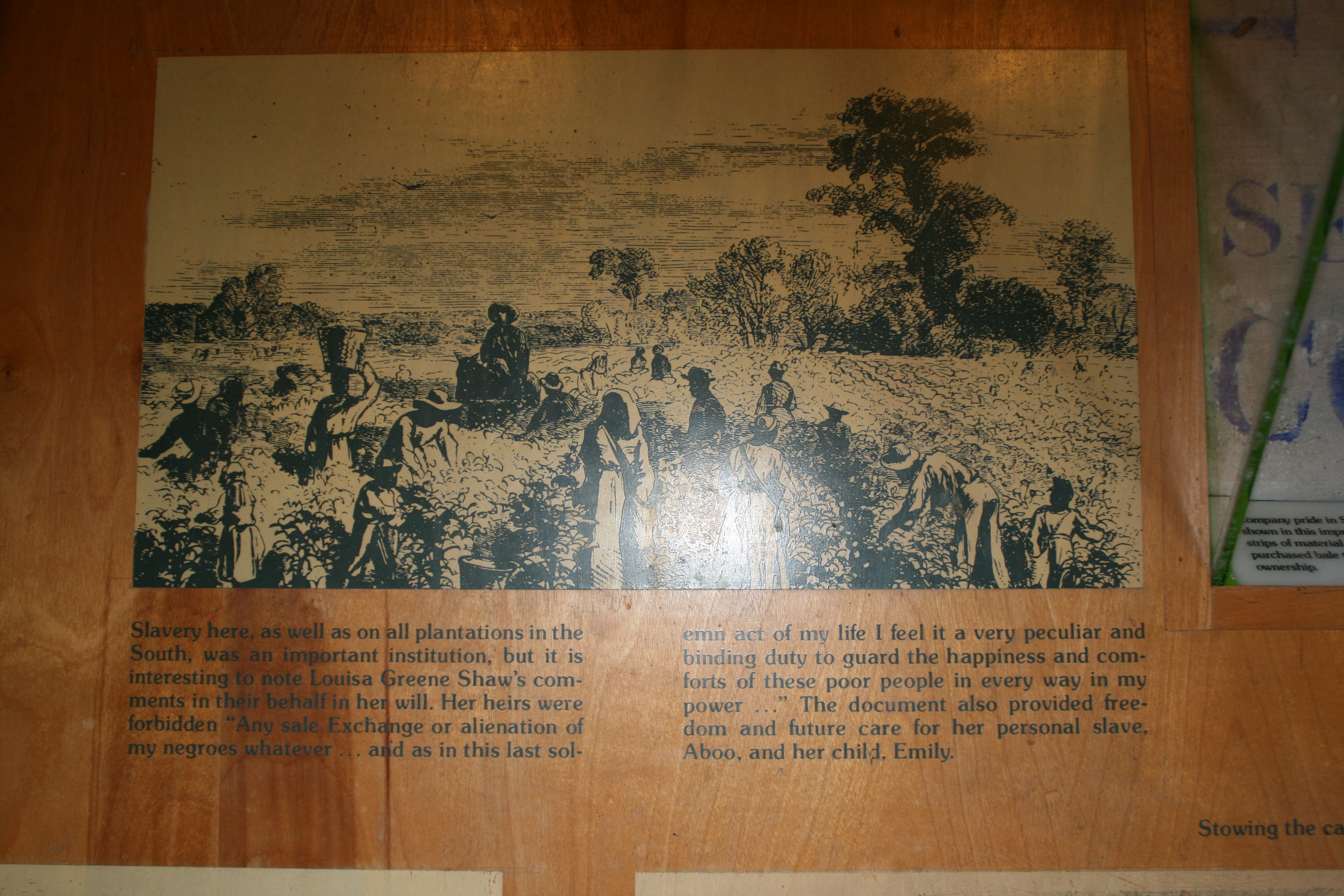
There was a little museum by the dock, relating the island’s history.
IMG_8485

The maritime forest

The maritime forest

IMG_8488
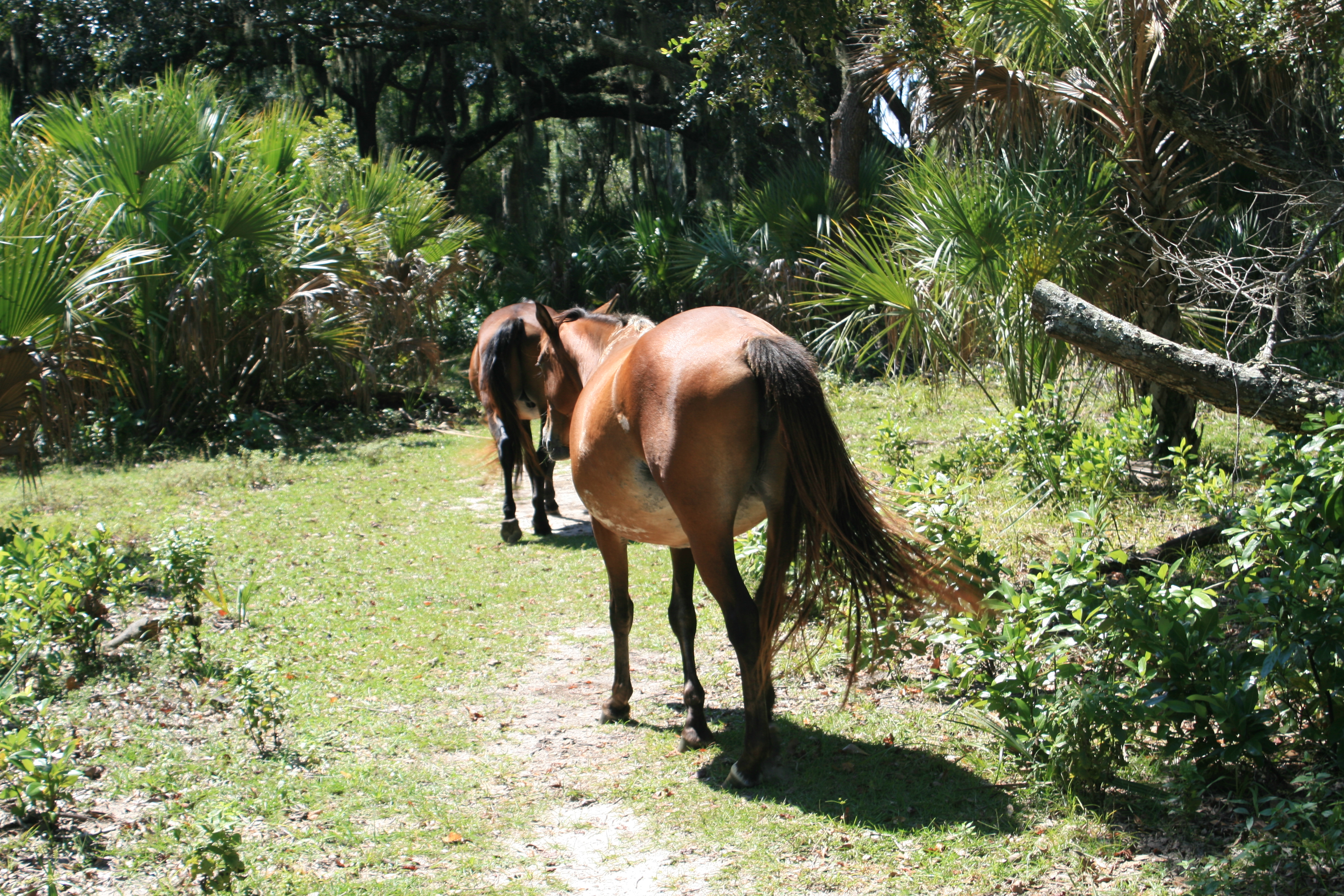
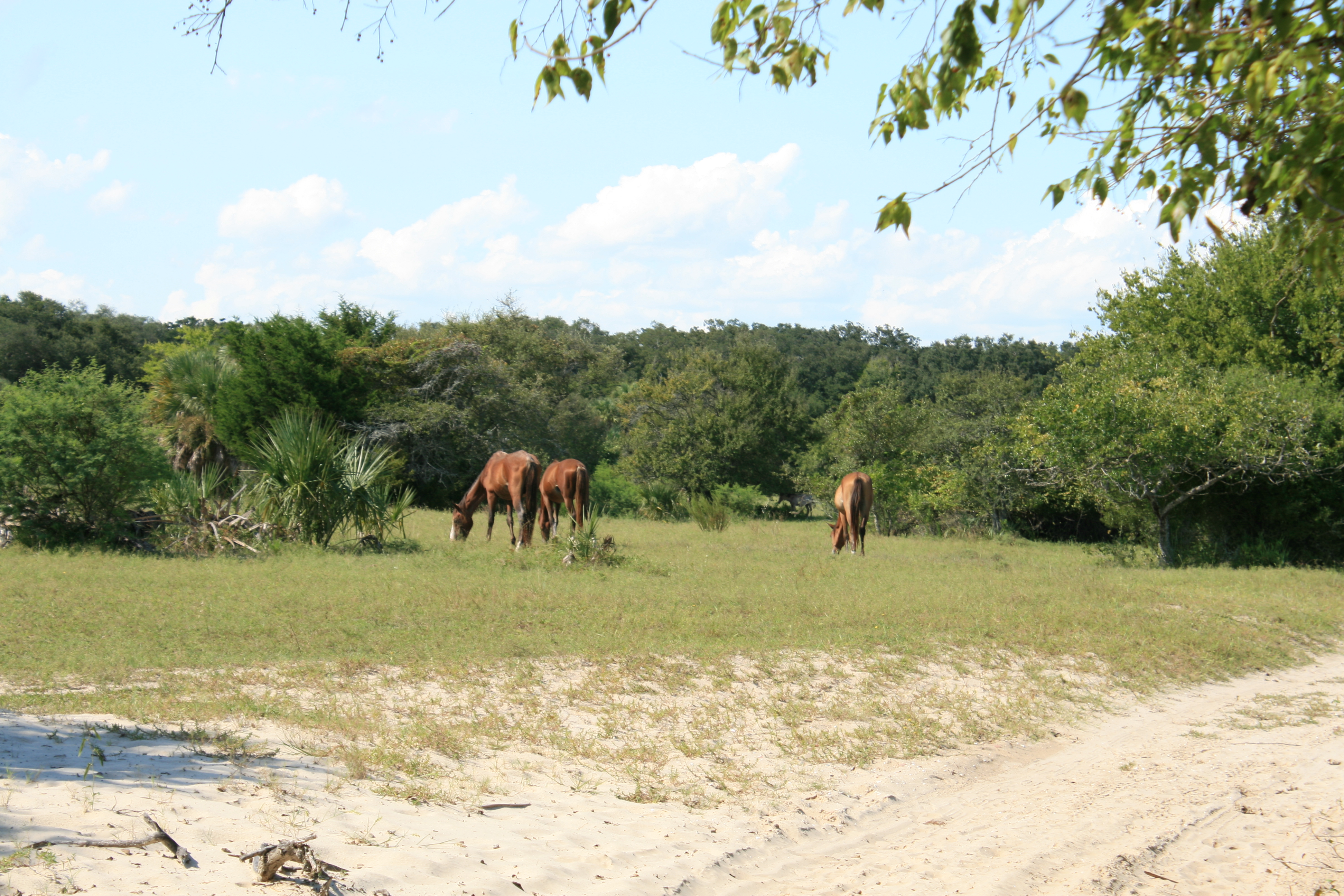
One of the stipulations of Lucy Carnegie’s will had been that after her death, her horses should be allowed to roam free on the island. We had hoped to see some of the feral horses in the distance, and were rather surprised when we rounded a bend in the trail and came face to face with this pair.
Feral horses

Feral horses

The dunes and the Atlantic

The dunes and the Atlantic

IMG_8496

Reflections on the seashore

Reflections on the seashore

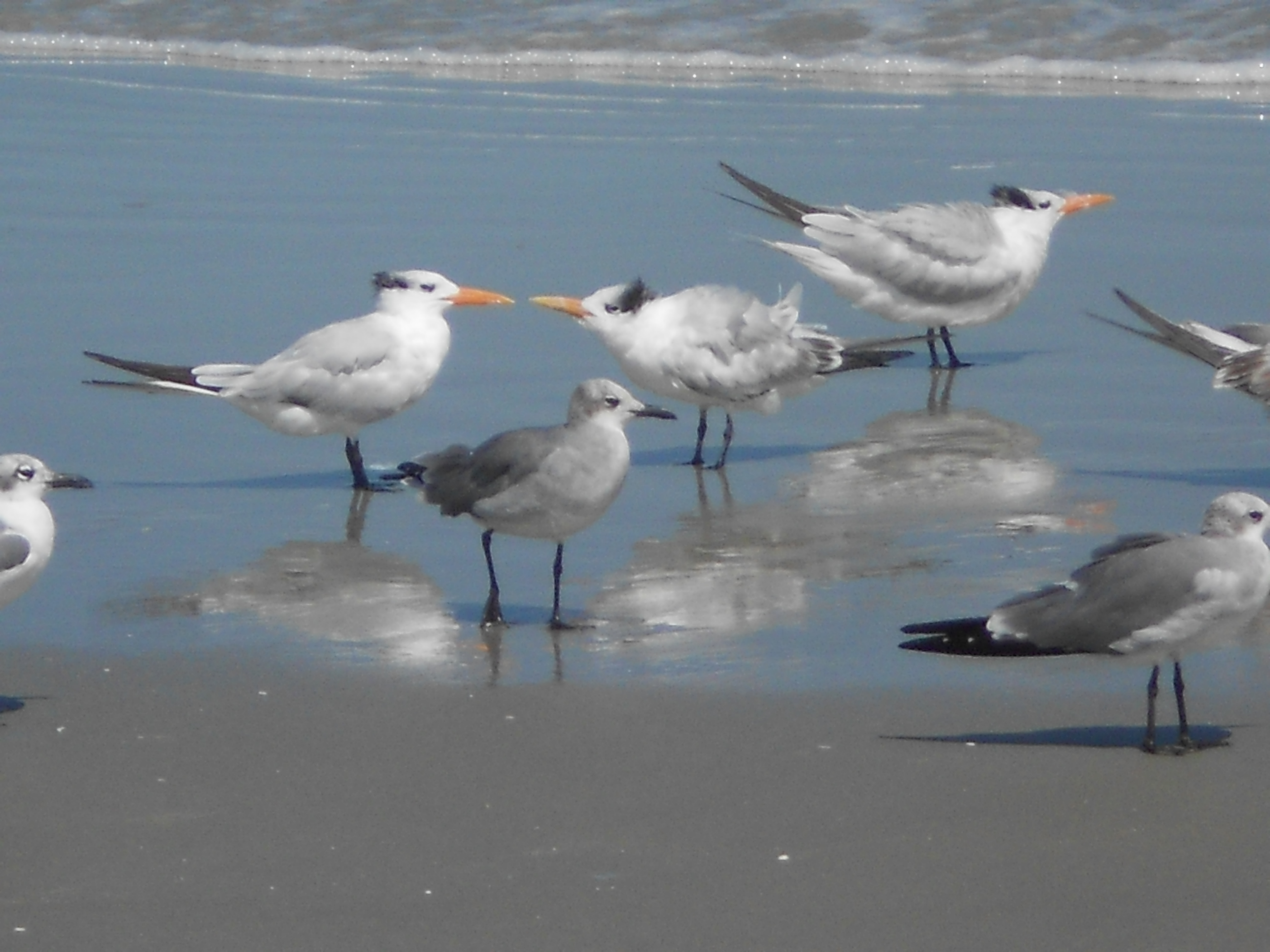
Young tern being fed on the beach

Young tern being fed on the beach

DSCN0331

More feral horses, at a safe distance this time

More feral horses, at a safe distance this time

The ruins of Dungeness

The ruins of Dungeness

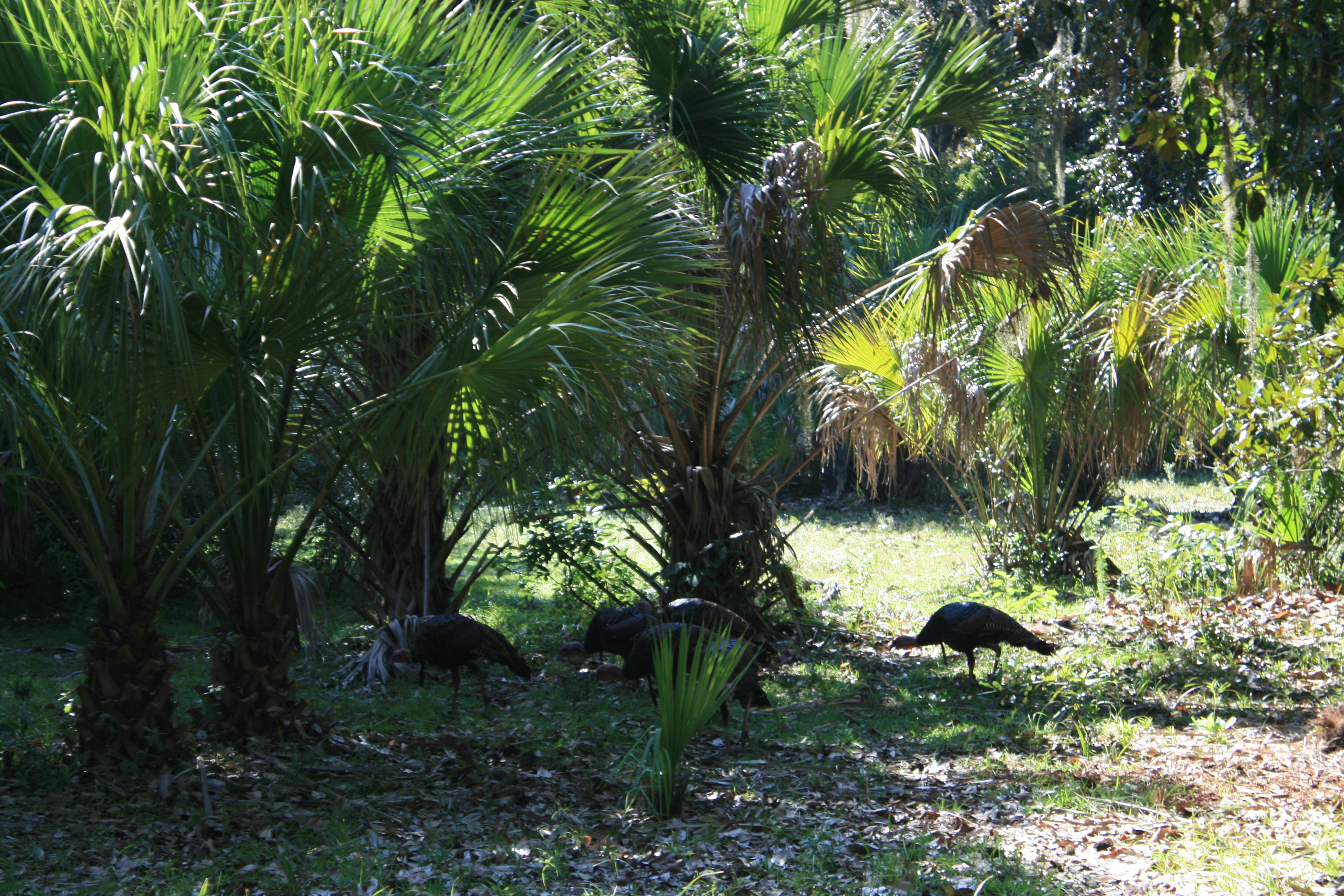
Wild turkeys

Wild turkeys

We decided to move on the next day, because although the weather forecast was bad (wind, heavy rain showers, moderate chop) the day after was even worse, so it seemed sensible to be sheltered in a marina. As promised, belt after belt of rain passed over, but in a way the scenery was even more beautiful.

A storm threatens

A storm threatens

Another one on the way

Another one on the way

The most direct way to Jekyll Island was by crossing St Andrew’s Sound. But in the prevailing north-easterly winds, this was hazardous for small craft. So we took the safer route via Umbrella Creek and the Satilla River, but these were not without hazards of their own. There were a couple of anxious moments when the depth sounder beeped and we almost ground to a halt. Ian had to carefully reverse at low speed to prevent us being stranded in a marshland wilderness at low tide.
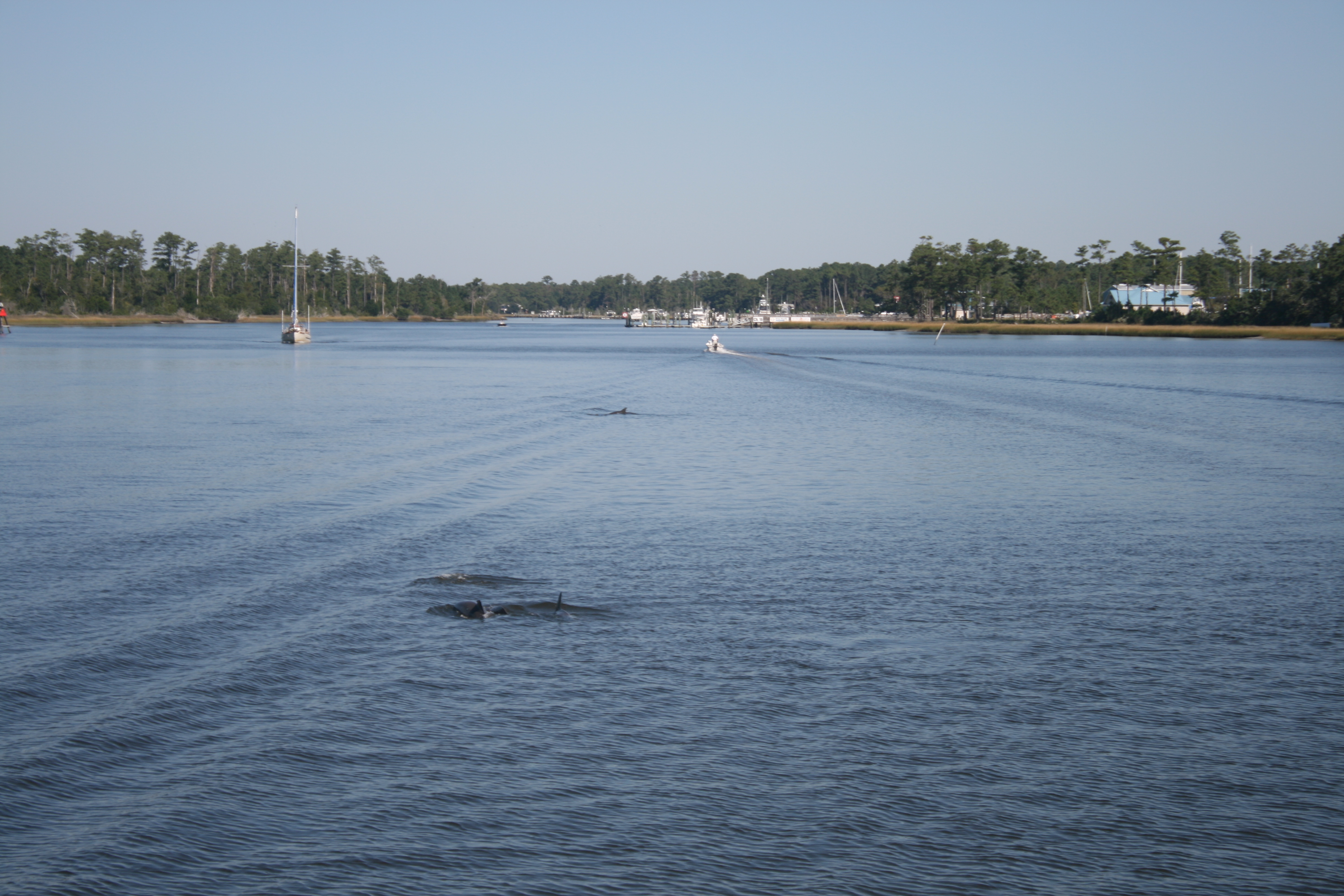
Because of the weather, we decided to have two nights at Jekyll Harbour, which was just as well, as I woke at midnight to the sound of clatterings and bangings from below deck. Ian’s head was just visible above the opening to the engine room.
We had a serious problem.
The bilge pump had made a horrible noise, and then packed up completely. Ian had fitted the spare one, thoughtfully left by the previous owner, but that didn’t work either. For the non-boaters, the bilge pump removes excess water which has made its way by various means into the bilges, compartments along the bottom of the boat. If they can’t be emptied, that’s trouble.
Breakfast wasn’t a happy meal. He tried to phone Seatow, the boating equivalent of the AA, for advice, but reception was so bad that neither Ian, nor the Seatow woman, could hear what the other was saying.
As a last resort, he decided to read the intructions which came with the new pump. ‘Long storage may cause the impeller to become jammed.’
Aha! A quick fiddle with a screwdriver, and lo! the impeller was unjammed, and the bilge pump worked.
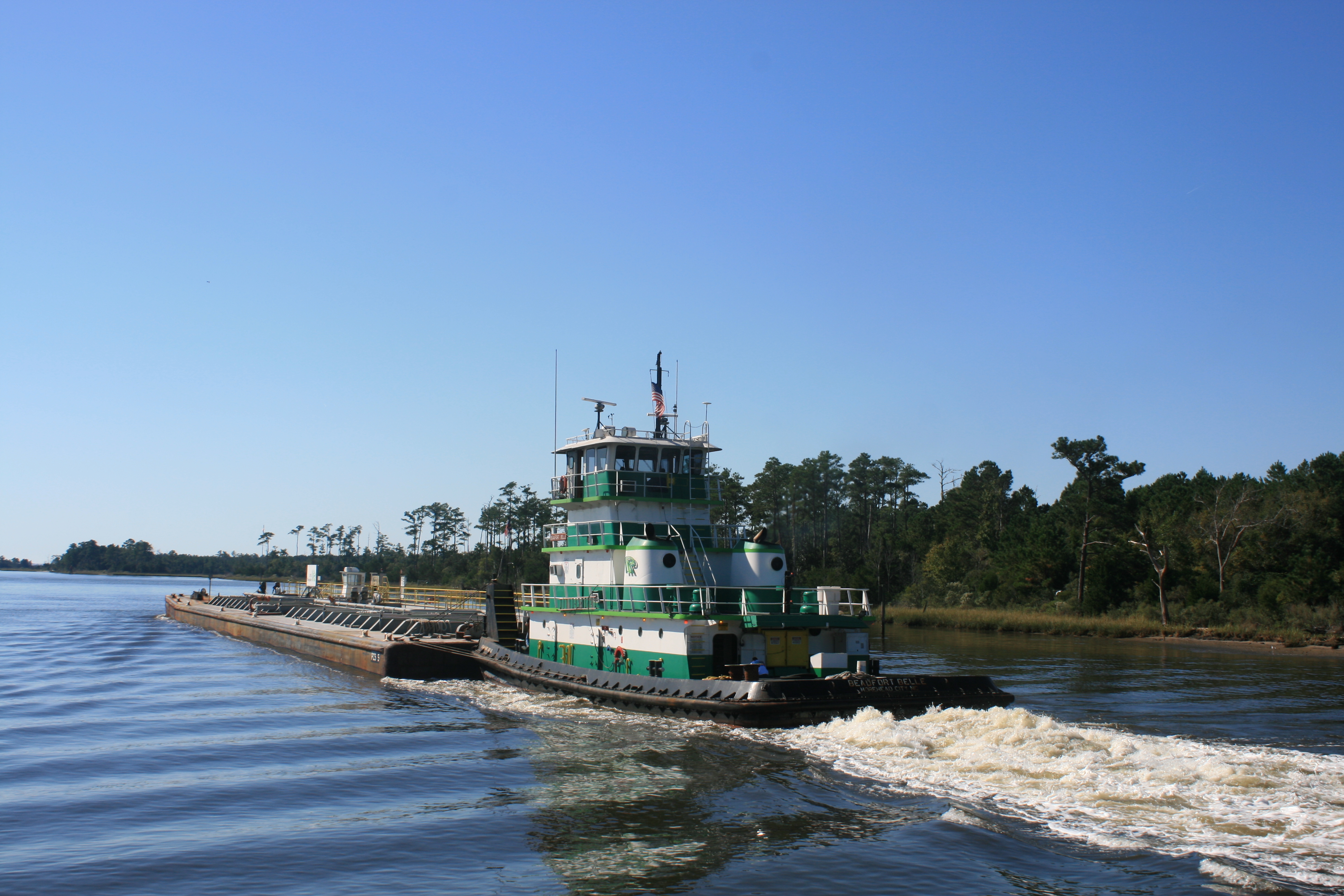
The day improved. In the afternoon we borrowed bikes from the marina and went for a ride round the island,
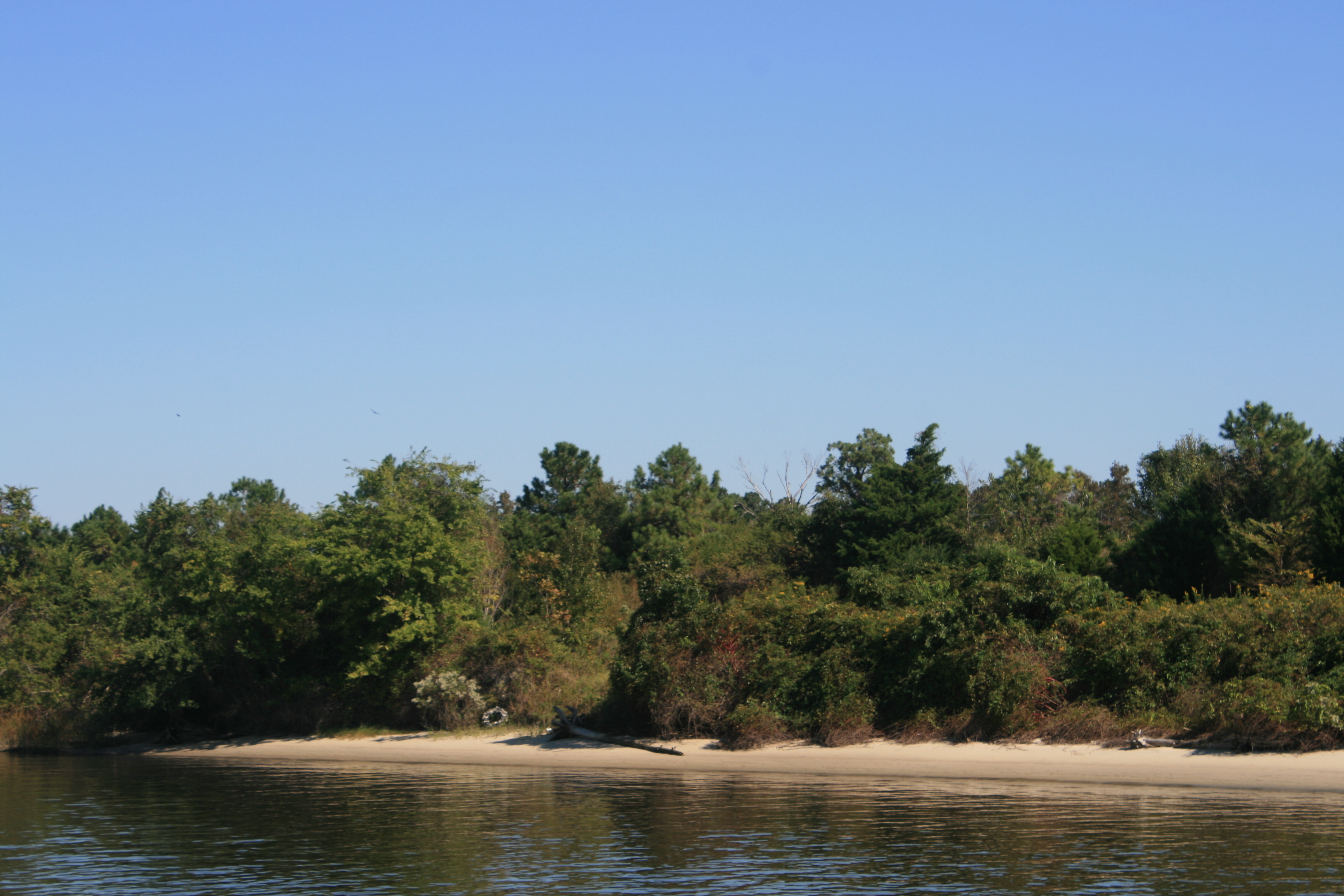
The evening was better still. Scott, the young man at the marina, had advised us that we probably wouldn’t have suitable apparel to go to the Jekyll Island Club Hotel’s main restaurant, (‘I assume you don’t have your dinner jacket on board’) but we would be presentable enough for the Crane Cottage Restaurant, within the Club complex. Not only that, someone would come and pick us up and bring us back to the marina afterwards.
So we decided we would have a treat, and the food, service and ambience were all very good indeed.

Enjoying dinner at the Crane Cottage, Jekyll Island

Enjoying dinner at the Crane Cottage, Jekyll Island